The digital landscape is undergoing a significant transformation, with the advent of "vibe coding" promising to redefine how websites and software applications are brought to life. This innovative methodology, which minimizes traditional line-by-line coding in favor of conversational AI interactions, is rapidly gaining traction for its ability to empower a broader spectrum of individuals and businesses to establish their online presence. By enabling users to articulate their vision in natural language and refine outcomes through dialogue, vibe coding is fostering an environment where good ideas can swiftly translate into functional digital realities.
The Genesis of Vibe Coding: From Concept to Catalyst
The term "vibe coding" was officially coined in February 2025 by Andrej Karpathy, a prominent computer scientist renowned for his foundational work as a co-founder of OpenAI and his previous leadership in AI at Tesla. Karpathy introduced this concept to describe a radical departure from conventional software development, characterizing it as a process where one "say[s] stuff, run[s] stuff, and copy-paste[s] stuff, and it mostly works." This declaration underscored a fundamental shift: rather than meticulously crafting code, developers would primarily interact with AI systems, guiding them to generate the technical implementation.
At its core, vibe coding reconfigures the role of the creator from a hands-on coder to a "creative director." This evolution means the user’s primary focus shifts from the intricacies of syntax, framework compatibility, or debugging to the overarching vision and desired functionality. The conversation-driven nature of vibe coding abstracts away much of the technical complexity, allowing individuals to concentrate on the strategic and creative aspects of their project. This approach is likened to collaborating with an intelligent assistant fluent in both human language and the language of code, streamlining the journey from conceptualization to execution.
Unlocking Potential: What Vibe Coding Can Build
Far from being limited to generating mere code snippets, contemporary AI-powered tools leveraging vibe coding principles are capable of producing a wide array of digital assets. These include, but are not limited to, simple landing pages, comprehensive multi-page websites, sophisticated web applications, analytical dashboards, and bespoke internal business tools. The versatility of this method means that a broad spectrum of digital needs can be addressed with unprecedented speed and accessibility.
Consider the practical application for a small business owner. Instead of grappling with HTML, CSS, JavaScript, or other programming languages, a user could simply prompt an AI with a descriptive command such as: "Create a modern website for a local coffee shop with warm colors, an online menu, customer testimonials, and a contact form." The AI would then interpret these plain English instructions, translating the brand’s essence and functional requirements into a tangible website draft. This conversational approach significantly democratizes website creation, making it an accessible tool for entrepreneurs, freelancers, content creators, and small business owners who possess compelling ideas but may lack extensive coding expertise.
However, it is crucial to recognize that vibe coding does not negate the necessity for human intellect and oversight. While AI excels at technical implementation, the success of a website remains tethered to a clear strategic vision, a profound understanding of the target audience, and diligent review of the AI’s output before deployment. Industry analysts project that the integration of AI will elevate human roles, allowing creators to focus on higher-level strategic thinking and quality assurance, rather than being mired in routine coding tasks.
The Transformative Advantages of AI-Driven Web Development
The momentum behind vibe coding is propelled by several key benefits that are reshaping the traditional paradigms of website creation:
-
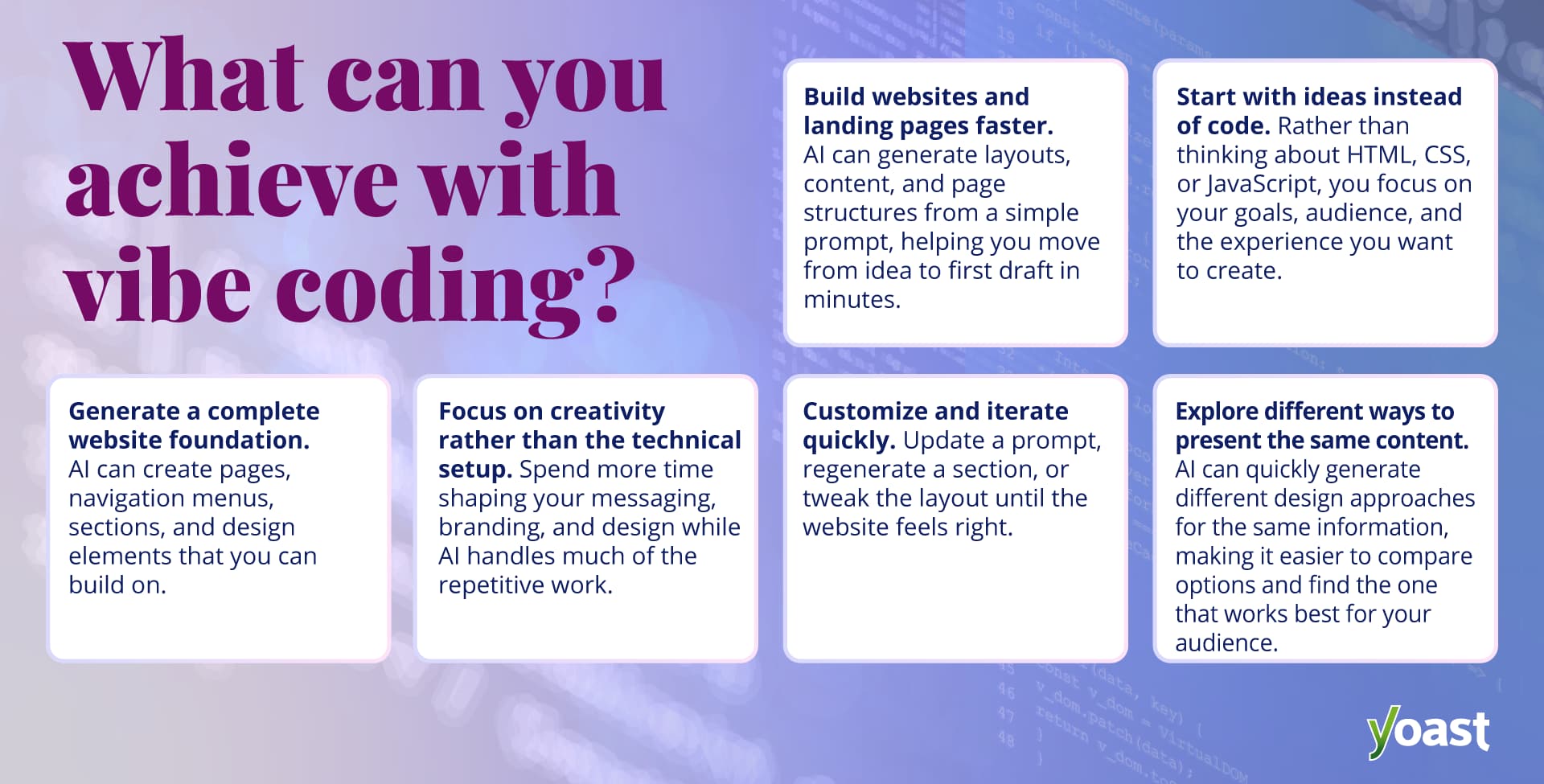
Accelerated Development Cycles: The most striking advantage is the drastic reduction in time from ideation to a functional first draft. Traditionally, launching a website could take weeks or even months. Vibe coding compresses this timeline significantly, enabling AI to generate a functional prototype within minutes. This rapid prototyping capability allows for quicker validation of ideas, expedited collection of user feedback, and a faster market entry for businesses. This agility is particularly beneficial in fast-paced digital economies where speed to market can be a critical differentiator.
-
Enhanced Experimentation and Prototyping: Vibe coding empowers users to experiment with various designs, layouts, and functionalities without substantial time or resource investment. Whether exploring different aesthetic directions, validating a new business concept, or developing a client proposal, the ability to generate and iterate on prototypes rapidly fosters a culture of innovation. This iterative refinement process, driven by conversational prompts, minimizes the risk associated with committing to a single design too early, leading to more robust and user-centric final products.
-
Conversational Iteration: The core innovation lies in transforming website building into an ongoing dialogue. Instead of manual code adjustments, users can simply instruct the AI to "redesign the hero section," "rewrite the homepage copy to be more engaging," "add a testimonials carousel," or "make the overall layout feel more minimalist." Each subsequent prompt refines the previous output, allowing the website to evolve organically and precisely align with the user’s vision. This intuitive interaction model simplifies complex design and content adjustments.
-
Lowering the Barrier to Entry: Perhaps the most profound impact of vibe coding is its capacity to democratize web development. By abstracting away the complexities of coding languages, it makes professional website creation accessible to a vast demographic that was previously excluded due to technical hurdles. This includes small business owners, artists, non-profit organizations, and anyone with a creative vision but limited programming skills, fostering greater digital inclusivity.
-
Empowering Experienced Developers: While primarily benefiting non-coders, vibe coding also offers significant advantages for seasoned developers. It provides a powerful tool for rapid prototyping, automating repetitive coding tasks, and generating boilerplate code, thereby freeing up developers to focus on more complex, bespoke functionalities and innovative problem-solving. This synergy allows for greater efficiency and creativity across the development spectrum.
A Step-by-Step Guide to Vibe Coding a Website
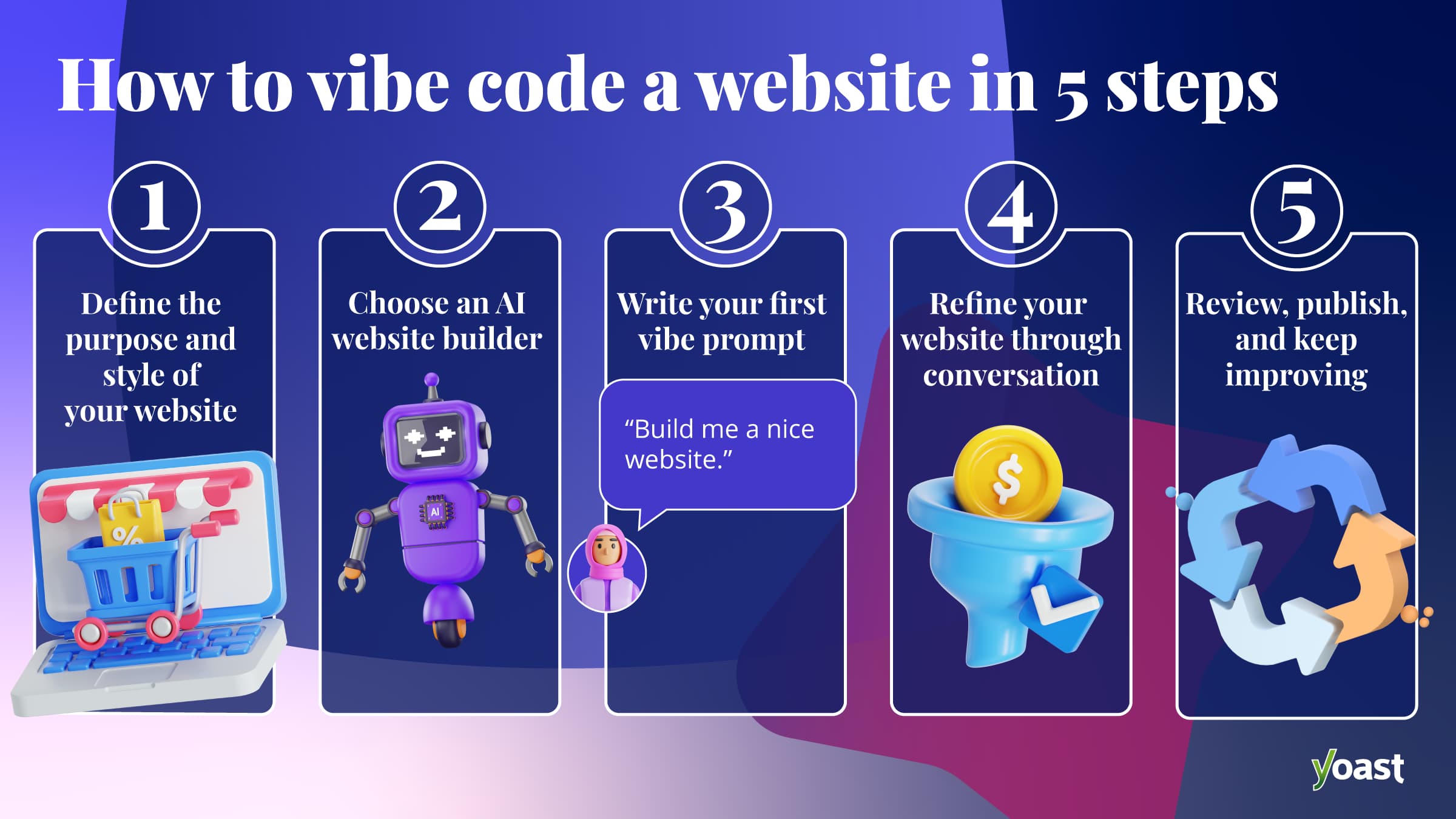
Building a website with vibe coding is less about mastering a perfect initial prompt and more about adhering to a structured, iterative process. Clarity in communication and diligent refinement of results are paramount to achieving the desired outcome.
-
1. Defining Purpose and Style: Before engaging with any AI tool, a critical preliminary step involves clearly articulating the website’s purpose, target audience, core functionalities, and aesthetic preferences. This foundational clarity guides the AI effectively. For instance, a vague prompt like "Build me a business website" yields generic results. A more descriptive prompt, such as "Create a modern website for a boutique coffee roastery. Use warm earth tones, clean typography, and large product images. Include a homepage, About page, online shop, customer reviews, and a contact form. The overall style should feel welcoming, premium, and easy to navigate," provides the AI with sufficient context to generate a highly tailored and effective initial design. This detailed brief ensures the website aligns with brand identity and search intent, critical for discoverability.
-
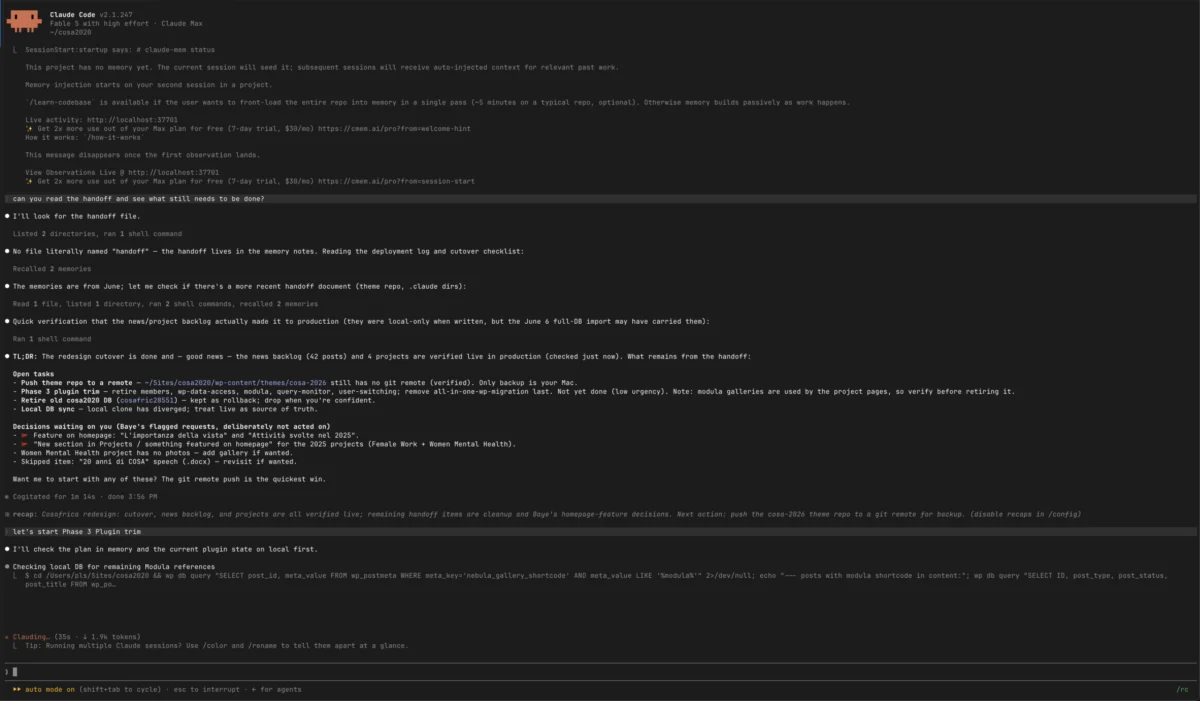
2. Selecting an AI Website Builder: The market offers various AI tools that support website development. Some, like advanced coding agents such as Claude Code, operate within development environments or command-line interfaces, requiring a degree of technical proficiency. More accessible options, however, are dedicated AI website builders that provide a user-friendly conversational interface. Platforms like the Bluehost AI Website Builder exemplify this, integrating AI-driven design with hosting capabilities to streamline the entire process from concept to live site, removing the need for juggling multiple tools or complex technical setups.
-
3. Crafting the Initial Vibe Prompt: The first prompt is foundational, establishing the context for the AI. This is where "context engineering" becomes vital. Instead of attempting to embed every instruction into a single, complex prompt, users should focus on providing comprehensive information about the project: what is being built, for whom, its desired look and feel, essential pages, and key calls-to-action. This context can be built iteratively, allowing the AI to make informed decisions and reduce the likelihood of misinterpretations.
-
4. Iterative Refinement Through Dialogue: It is unrealistic to expect a perfect website from the first prompt. Vibe coding thrives on iterative refinement. Users should engage in a continuous conversation with the AI, making small, focused improvements. Examples include asking the AI to "adjust the color palette to be more vibrant," "add a call-to-action button to the hero section," "expand on the services description," or "make the layout more responsive for mobile devices." This systematic, incremental approach typically yields superior results compared to requesting numerous unrelated changes simultaneously, guiding the website closer to the original vision with each interaction.
-
5. Review, Publish, and Continuous Improvement: Prior to publication, a thorough review of the AI-generated website is imperative. This involves verifying content accuracy, testing all links and forms, ensuring responsive design across various devices, and replacing any placeholder text with final, branded content. Once satisfied, the website can be connected to a custom domain and launched. A significant advantage of vibe coding is that the development process does not cease at launch. Subsequent updates, new features, or campaign-specific landing pages can be seamlessly integrated by simply returning to the AI website builder and continuing the conversational refinement process.
Navigating the "Vibe Coding Doom Loop"
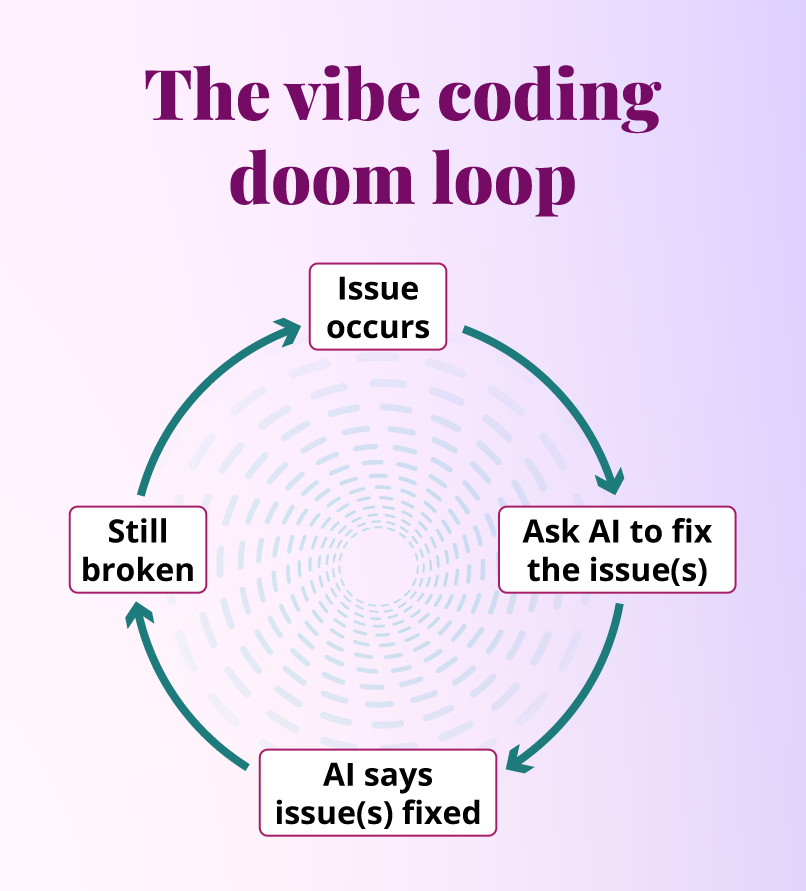
While vibe coding offers immense speed and flexibility, users may encounter what is colloquially known as the "vibe coding doom loop." This phenomenon occurs when the AI repeatedly attempts to resolve an issue without effectively fixing it, often introducing new problems or reverting to previous states. This circular predicament can hinder progress and lead to frustration.
-
Understanding the Doom Loop: The doom loop typically arises when the AI loses situational awareness or the broader context of the project. This can be triggered by vague initial prompts, frequent and drastic changes in direction midway through the development process, or an overload of unrelated requests within a single conversational turn. As the interaction becomes increasingly complex, the AI may struggle to maintain coherence, resulting in inconsistent or regressive outputs.
-
Strategies for Mitigation: Fortunately, the doom loop is largely avoidable through disciplined practices.
- Clarity and Context: Reinforcing the principle of context engineering is key. Before requesting changes, users should ensure they have provided the AI with ample context regarding the desired outcome, the target audience, messaging, and user experience implications. For example, when refining a homepage, articulating the specific objective—e.g., "increase lead generation" or "enhance brand storytelling"—provides the AI with a clearer basis for making effective modifications.
- Managed Expectations and Oversight: It is crucial to approach AI outputs as drafts rather than final solutions. Each suggestion should be meticulously reviewed before proceeding. Making one improvement at a time and not hesitating to undo or rephrase a prompt if the output is unsatisfactory can prevent minor issues from escalating into significant setbacks. Proactive oversight is paramount in maintaining control over the development trajectory.
Vibe Coding vs. Traditional Development: A New Synergy
Vibe coding does not render traditional coding obsolete; rather, it introduces an alternative interaction model within the broader spectrum of web development. While traditional coding, utilizing languages like HTML, CSS, JavaScript, and PHP, remains indispensable for highly customized, complex web applications demanding granular control over every aspect of the codebase, vibe coding excels in its focus on speed, accessibility, and abstracting technical details. Both methodologies are capable of producing excellent websites, with the primary distinction lying in the developmental pathway chosen.
| Website Aspect | Traditional Coding | Vibe Coding |
|---|---|---|
| Primary Input | Programming languages (HTML, CSS, JS, PHP) | Natural language prompts |
| Required Skills | Coding proficiency, web development knowledge | Clear communication, prompt engineering |
| Development Process | Manual coding, debugging, framework management | AI-assisted generation, conversational refinement |
| Time to First Draft | Usually longer, dependent on complexity | Usually much faster, often minutes |
| Customization | Unlimited, absolute control | High, dependent on AI tool capabilities |
| Best Suited For | Complex, bespoke applications, unique features | Business websites, portfolios, landing pages, MVPs, rapid prototyping |
| Barrier to Entry | Higher, requiring specialized education | Lower, highly accessible to non-coders |
The Evolving Landscape of Web Presence and SEO
Creating a website, whether through traditional means or vibe coding, is merely the initial step. For any digital presence to be effective, it must be discovered by its target audience, which underscores the enduring importance of Search Engine Optimization (SEO). In today’s dynamic digital ecosystem, websites are not only indexed by conventional search engines but are also interpreted by AI assistants and other intelligent systems that leverage content to answer queries, recommend services, and surface relevant information. Consequently, a website must be optimized to communicate clearly and effectively with both human users and sophisticated machine intelligences.
For WordPress websites, robust SEO tools like Yoast SEO Premium play a crucial role. This platform automatically generates structured data, which helps search engines and AI systems better comprehend the context of pages, content, and the website’s authority. Features such as schema aggregation create a unified, machine-readable view of a website’s structured data, while the Bot Blocker provides granular control over which AI systems can access and potentially utilize content for training purposes, addressing emerging concerns around data usage and intellectual property.
Moreover, SEO is an ongoing endeavor. The continuous task of crafting optimized titles and meta descriptions for every page, especially as a website expands, can be time-consuming. Yoast SEO Premium streamlines this process by offering AI-powered suggestions for drafting SEO titles and meta descriptions, both for individual pages and in bulk. These suggestions are fully editable, ensuring that the final output aligns perfectly with brand messaging and SEO strategy before publication. As vibe coding makes website creation more accessible, complementary AI-powered SEO tools ensure that these new digital presences are not just built, but also found and understood in an increasingly AI-driven world.