The landscape of digital interaction is undergoing a seismic shift with the advent of generative artificial intelligence (AI) models like ChatGPT and Claude. Launched less than four years ago, these powerful tools have rapidly integrated into user workflows, yet a significant data gap persists regarding consumer interaction patterns – specifically, the prompts users employ and the intricate methodologies platforms use to generate responses. This opacity has left search engine optimization (SEO) professionals and marketers largely reliant on traditional search query data to infer the nature of these burgeoning generative AI interactions. Until recently, Bing stood as a solitary beacon of transparency, offering insights into the "Grounding Queries" that fueled its AI-driven "fan out" responses. However, a recent development suggests a significant step forward in understanding user engagement with Google’s own AI initiatives.
New evidence indicates that Google’s AI Mode, a feature that integrates generative AI capabilities directly into search, meticulously records both initial and follow-up prompts as discernible search queries within Google Search Console. This revelation, initially surfaced through an observation by Anastasia Kourou, SEO Manager at Greece-based Relevance Digital Agency, and subsequently confirmed by Google’s John Mueller, has profound implications for how SEO professionals can analyze and optimize for this new era of search.
The Genesis of Discovery: A LinkedIn Exchange
The crucial insight emerged from a LinkedIn interaction. Kourou, noticing peculiar entries in her Google Search Console data – queries such as "yes" and "yes, pricing" appearing alongside traditional search terms – reached out to John Mueller, a prominent figure in Google’s search advocacy team. She inquired about the presence of these seemingly conversational, short-form queries within the Search Console’s performance reports, which typically track organic search traffic.
Mueller’s response was direct and illuminating: these were not anomalies but rather indicative of follow-up prompts from users interacting with Google’s AI Mode. This confirmation validated Kourou’s suspicion and underscored a critical point: the data necessary to understand AI prompt behavior was already being captured, albeit indirectly, within the familiar confines of Search Console. This confirmation effectively bridged a gap in understanding, suggesting that the distinction between traditional search queries and AI prompts was becoming increasingly blurred within Google’s ecosystem.
Navigating the Data Maze: Identifying AI Prompts in Search Console
The immediate challenge for SEO professionals is to identify these AI-driven prompts within the vast datasets of Search Console. While Google has not yet introduced a dedicated filter for "AI Prompts," the structure and nature of these interactions offer clues. Traditional search queries are typically more keyword-focused and transactional, whereas AI prompts often exhibit characteristics of natural language, conversational flow, and iterative refinement.

Leveraging Regular Expressions for Prompt Discovery
One of the most effective methods for uncovering these AI-like queries involves the strategic use of regular expressions (regex) within Search Console’s performance reporting. Regex are powerful pattern-matching tools that can filter data based on complex criteria, far beyond simple keyword matching.
For those looking to identify longer, more conversational queries that are characteristic of AI prompts, a foundational regex pattern can be applied. By navigating to "Performance" in Search Console, then selecting "Add filter," followed by "Query" and "Custom (regex)," users can input the following expression:
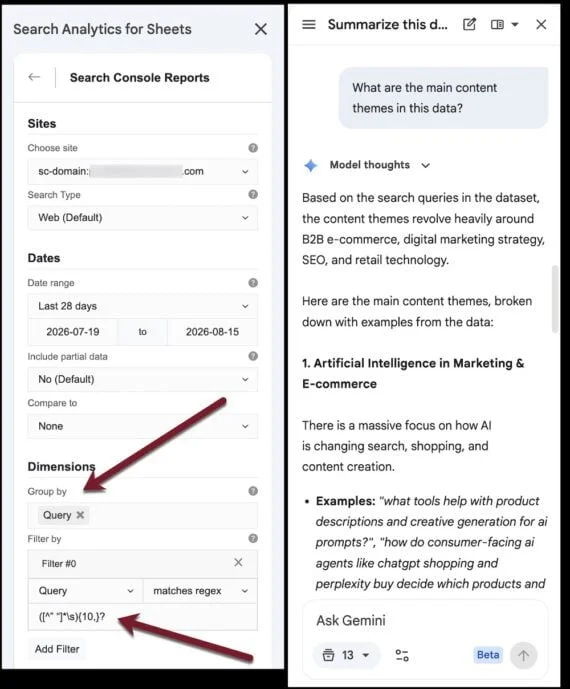
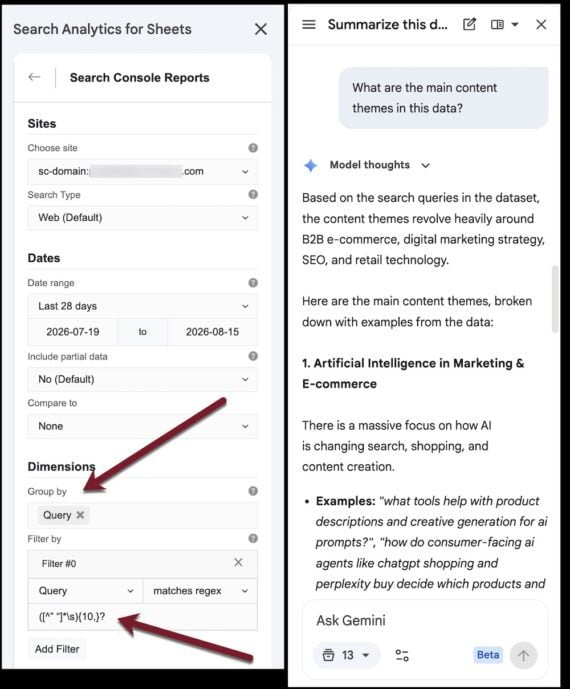
([^" “]*s)10,?
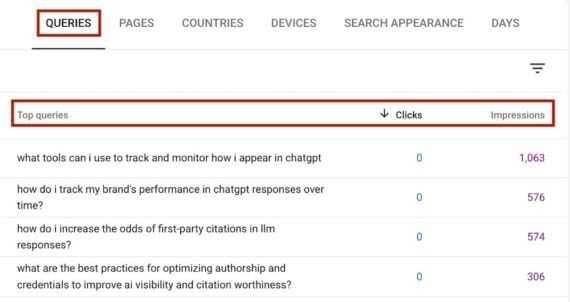
This regex is designed to identify queries that consist of ten or more words, often indicative of a more detailed, sentence-like structure typical of a user posing a question or instruction to an AI. The output of this filter will reveal queries that are significantly longer than conventional search terms, often appearing conversational and detailed. Many of these long queries may show a substantial number of impressions but zero clicks, a pattern that aligns with AI Mode interactions where the answer is directly provided within the AI interface, rather than leading to an external website.
Beyond simple length, more sophisticated regex patterns can be employed to capture the nuances of follow-up prompts. Jean-Christophe Chouinard, an SEO strategist at Tripadvisor, has shared more advanced regex expressions on LinkedIn that are capable of identifying these iterative interactions. These patterns can help detect queries that are shorter and more context-dependent, such as "yes, please" or "tell me more," which serve as continuations of an ongoing AI conversation. The ability to filter for these specific types of short, affirmative, or elaborative queries is crucial for understanding the full spectrum of user engagement with AI Mode.
The Role of External Tools and API Access
While Search Console’s interface offers powerful filtering capabilities, its API provides access to a more granular level of data. For SEO professionals who may not have the technical expertise to directly work with APIs, third-party tools can bridge this gap. These external platforms can connect to Search Console’s API, extract the raw data, and present it in a more digestible format, often with advanced filtering and analysis features.
The primary benefit of utilizing these tools lies in their ability to unlock richer datasets and provide specialized functionalities, such as the identification of prompt-like queries based on length and linguistic patterns. Tools like "Search Analytics for Sheets" can export Search Console data directly into Google Sheets, enabling users to apply custom formulas and regex filters with greater ease. This integration allows for the sophisticated analysis of query length, word count, and other linguistic characteristics that can signal AI prompt behavior.
While there is a consideration of data privacy when sharing confidential Search Console data with third-party applications, the advantages in terms of enhanced insights and analytical capabilities often outweigh this concern for many businesses. These tools can also offer export capabilities, allowing for further analysis and integration with other marketing data sources.
Extracting Value: Applying AI Prompt Data for Optimization
The core challenge for SEO professionals now lies in interpreting this newly accessible data and translating it into actionable optimization strategies. Search Console, by its nature, does not explicitly label queries as "AI Prompts." The identification relies on inferential analysis of query characteristics.
Key Indicators of Potential AI Prompts:
- Query Length and Structure: Significantly longer queries, often phrased as complete sentences or questions, are strong indicators.
- Conversational Tone: The use of natural language, colloquialisms, and conversational phrasing.
- Follow-up Nature: Short, affirmative responses or requests for elaboration (e.g., "yes," "more details," "continue").
- Zero Click-Through Rate (CTR) with High Impressions: This is a critical signal, suggesting the user received their answer directly within the AI interface and did not need to click through to a website.
- Uniqueness and Lack of Categorization: Prompts that do not easily fit into predefined keyword categories or traditional search intent buckets.
Strategic Implications and Actions:
The implications of understanding AI prompt behavior are far-reaching for SEO. It signifies a shift from optimizing for keyword-based search intent to optimizing for conversational intent and information synthesis.
-
Content Strategy Evolution:
- Focus on Comprehensive Answers: Content should aim to provide direct, comprehensive answers to complex questions, mirroring the expected output of AI. This means structuring content for clarity, using headings, subheadings, and bullet points to break down information logically.
- Address "How-to" and Explanatory Queries: AI excels at explaining concepts and providing step-by-step instructions. Content that directly addresses these types of queries will be more likely to be surfaced by AI models.
- Embrace Nuance and Detail: AI can process and synthesize vast amounts of information. Content that offers nuanced perspectives, detailed explanations, and diverse viewpoints will be valuable.
-
Technical SEO Adjustments:
- Schema Markup Enhancement: Robust schema markup becomes even more critical. By clearly defining entities, relationships, and factual information within your content, you provide AI models with structured data that can be easily understood and integrated into their responses. This includes using schema for FAQs, How-Tos, and even conversational AI interactions.
- Page Experience Optimization: While always important, a fast-loading, mobile-friendly, and secure website experience is paramount. AI models are likely to prioritize surfacing content from sites that offer a superior user experience, especially for users seeking quick, direct answers.
-
Understanding Competitive Landscape:
- Monitoring Competitor AI Interactions: Even if a competitor’s prompts are generated by prompt-tracking software rather than human users, this data is invaluable. It can reveal what aspects of your industry or offerings are being actively explored and monitored by competitors within AI contexts. This offers a unique window into emerging trends and competitive focus areas.
- Identifying Unmet Information Needs: By analyzing the types of questions users are asking AI, businesses can identify gaps in their own content offerings or areas where competitors are excelling.
-
Adapting Keyword Research:
- Beyond Keywords to Concepts: Traditional keyword research will need to evolve to encompass a broader understanding of user intent and conceptual search. This involves looking for clusters of related queries that indicate a deeper information need.
- Natural Language Processing (NLP) Focus: Understanding how users phrase questions in natural language will become as important as identifying specific keywords. Tools that analyze linguistic patterns and semantic relationships will gain prominence.
-
Future of Search and Conversational Commerce:
- Direct Answer Optimization: The trend towards direct answers within search results, amplified by AI, means that the goal for many queries will be to be the source of that direct answer. This requires content that is not only informative but also authoritative and easily digestible by AI.
- Personalized AI Experiences: As AI models become more sophisticated, they will offer increasingly personalized responses. Understanding the types of prompts that lead to personalized outcomes can inform content creation and user journey mapping.
The advent of generative AI is not merely an evolution of search; it represents a fundamental paradigm shift. The ability to now peer into the mechanisms of AI interaction through Google Search Console data offers an unprecedented opportunity for SEO professionals to adapt and thrive. By embracing these new analytical techniques and adjusting content and technical strategies accordingly, businesses can position themselves to be at the forefront of this transformative era in digital information discovery and user engagement. The journey is ongoing, and the ability to interpret and act upon these nascent signals will be a key differentiator for success in the years to come.