
 rifanmuazin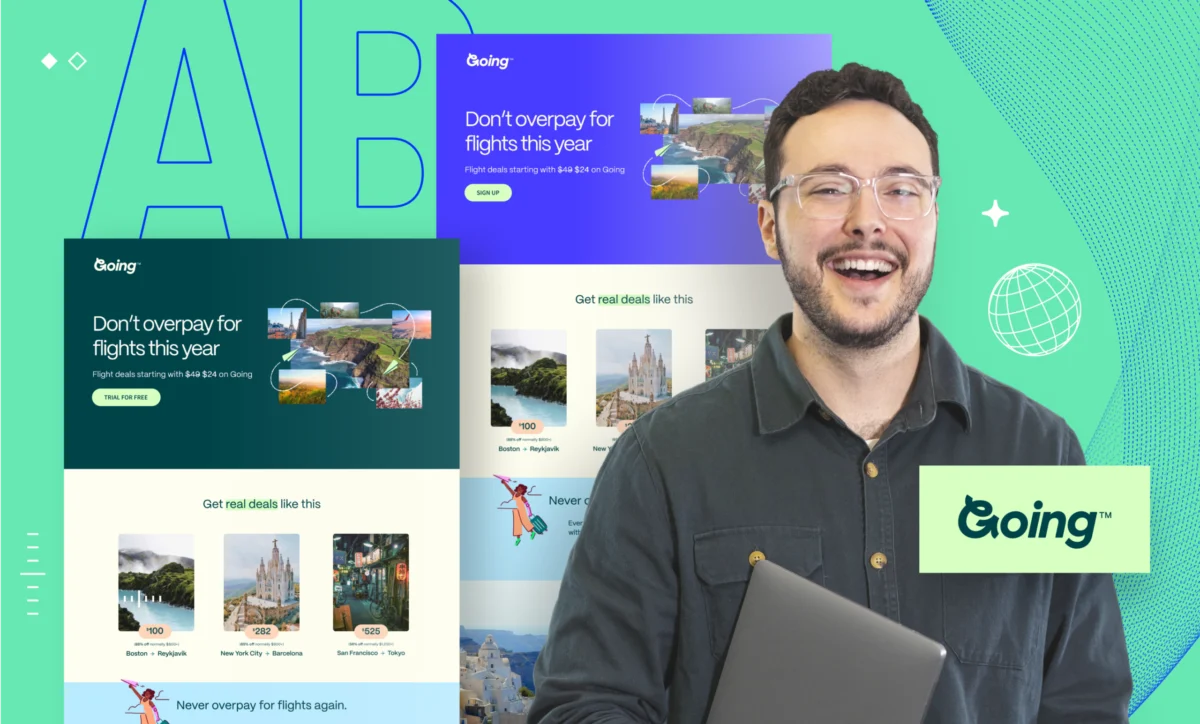
The global digital marketing landscape has undergone a fundamental transformation as of mid-2025, moving away from a decade-long obsession with raw traffic toward a sophisticated focus on conversion marketing. As customer acquisition costs (CAC) continue to climb across major advertising platforms like Google, Meta, and Amazon, businesses are increasingly realizing that increasing website traffic is no longer the most efficient path to profitability. Instead, the industry is pivoting toward Conversion Rate Optimization (CRO) and conversion marketing—the strategic practice of turning existing website visitors into active customers or leads. This shift represents a move from quantitative reach to qualitative engagement, prioritizing the value of every individual interaction over the sheer volume of users.
The Economic Imperative for Conversion Marketing
The primary driver behind the surge in conversion marketing is the diminishing return on investment (ROI) from traditional traffic acquisition. Data from the first half of 2025 indicates that the average Cost Per Click (CPC) across competitive industries has risen by nearly 18% year-over-year. In this environment, pouring additional capital into top-of-funnel traffic without a robust conversion strategy is increasingly viewed by financial analysts as an inefficient use of capital.
Conversion marketing addresses this by focusing on the efficiency of the "middle" and "bottom" of the marketing funnel. The mathematical logic is compelling: if a website receives 10,000 monthly visitors with a 2% conversion rate, it generates 200 conversions. By optimizing the user experience to increase that conversion rate to 4%, the business doubles its results without spending an additional cent on advertising. This efficiency allows companies to remain competitive even as ad auctions become more crowded and expensive.
The Evolution of Conversion Strategies: A Chronology
To understand the current state of conversion marketing, it is necessary to look at the technological and strategic milestones that have led to the 2025 landscape.
2010–2015: The Era of A/B Testing Infancy
Early digital marketers relied on basic A/B testing, often focusing on superficial elements like button colors or font sizes. Tools were limited, and data collection was often siloed from broader business objectives.
2016–2021: Data Integration and User Experience (UX)
The focus shifted toward holistic user experience. Marketers began using heatmaps and session recordings to understand visitor behavior. The rise of mobile-first indexing by Google forced a massive overhaul of site speed and mobile usability, which became foundational to conversion success.
2022–2024: The Privacy Shift and AI Integration
With the depreciation of third-party cookies and the tightening of global privacy regulations (GDPR, CCPA), brands lost the ability to track users across the web with high precision. This forced a "return to the homestead," where optimizing the first-party experience on the brand’s own website became the only reliable way to drive growth. Artificial Intelligence (AI) began to play a role in predicting user intent and automating layout adjustments.
2025: The Age of Hyper-Personalization
Today, conversion marketing is defined by real-time personalization. AI-driven platforms now route traffic to specific landing page variants based on the user’s past behavior, referral source, and even local time, ensuring that the most relevant offer is presented at the optimal moment.
Key Metrics and Performance Benchmarks
Success in conversion marketing is measured through a combination of macro and micro-conversion goals. Macro-conversions are the primary objectives, such as a completed purchase or a signed contract. Micro-conversions are the smaller steps that indicate a user is moving toward the final goal, such as signing up for a newsletter, downloading a whitepaper, or viewing a product demo.
Industry benchmarks for 2025 show significant variance across sectors, highlighting that "good" performance is relative to the business model:
- SaaS (Software as a Service): Average conversion rates for free trials or demos range between 2% and 5%.
- Ecommerce: Purchase conversion rates typically hover between 1% and 4%, though high-end luxury brands often see lower rates with higher average order values.
- Finance and Insurance: High-intent lead generation in these sectors can see conversion rates as high as 5% to 10% due to the specialized nature of the traffic.
Psychological Drivers of the Modern Consumer
Professional conversion marketers now operate at the intersection of data science and behavioral psychology. To drive action, a digital presence must overcome three primary psychological hurdles: friction, anxiety, and lack of motivation.
The Power of the Value Proposition
The value proposition is the core of any conversion strategy. It must answer the visitor’s fundamental question: "What is in it for me?" Experts suggest that a value proposition must be communicated within the first 10 seconds of a page load. Clarity consistently outperforms "cleverness" in this regard. If a visitor has to decode what a company offers, they are likely to bounce.
Trust Signals and Social Proof
In an era of deepfakes and digital skepticism, trust is the most valuable currency. High-converting sites utilize "social proof"—the psychological phenomenon where people mirror the actions of others in an attempt to reflect correct behavior. This is manifested through:
- Detailed Customer Reviews: Specific feedback addressing pain points (e.g., "This tool saved me 10 hours a week") is 40% more effective than generic praise.
- Trust Badges: Security certifications and industry awards provide a safety net for anxious buyers.
- Case Studies: Real-world examples of success provide the "proof of concept" required for high-ticket B2B conversions.
Urgency and Incentives
Human psychology is wired to avoid loss (loss aversion). Strategic use of urgency—such as limited-time offers or low-stock alerts—can act as a catalyst for decision-making. However, industry analysts warn that "fake urgency" (perpetual countdown timers) can permanently damage brand reputation. Genuine incentives, such as free shipping, exclusive bonuses, or loyalty rewards, remain the most effective tools for pushing a hesitant visitor toward a conversion.
Technical Infrastructure and Usability
No amount of persuasive copy can overcome a poor technical experience. Data from 2025 suggests that a one-second delay in page load time can result in a 7% reduction in conversions. Modern conversion marketing requires a "mobile-perfect" approach. With over 60% of web traffic now originating from mobile devices, elements like "thumb-friendly" buttons and simplified forms are non-negotiable.

Forms, in particular, are a major point of friction. Research indicates that 27% of users abandon a conversion process due to excessive form length. Reducing a form from six fields to three can increase completion rates by as much as 50%. The current trend in 2025 is toward "multi-step" forms that ask one question at a time, which feels less overwhelming to the user and increases the "sunk cost" commitment to finishing the process.
The Role of Multimedia and Interactive Content
The shift toward visual and interactive storytelling has fundamentally changed landing page design. Video content, when used correctly, is a significant engagement magnet.
- Explainer Videos: A 60-to-90-second video above the fold can increase conversion rates by up to 80% for complex products.
- Interactive Tools: Calculators, quizzes, and configurators allow users to "self-segment," providing the business with valuable data while giving the user a personalized recommendation.
- Smart Popups: While often maligned, "exit-intent" popups—which appear only when a user is about to leave the site—have been shown to recover up to 15% of abandoning visitors by offering a last-minute incentive or a simpler micro-conversion.
Implementing a Data-Driven Optimization Cycle
Conversion marketing is not a one-time project but a continuous cycle of improvement. The industry-standard process for 2025 involves a six-step loop:
- Data Collection: Gathering quantitative data (Google Analytics) and qualitative data (heatmaps and user recordings).
- Hypothesis Formation: Identifying a specific problem and proposing a solution (e.g., "Changing the headline to focus on savings will increase sign-ups").
- A/B Testing: Running two versions of a page simultaneously to see which performs better.
- Analysis: Using statistical significance to determine if the change actually caused the improvement.
- Implementation: Deploying the winning version as the new baseline.
- Iteration: Starting the process over to find the next incremental gain.
Broader Impact and Future Implications
The rise of conversion marketing has broader implications for the global economy. As businesses become more efficient at converting traffic, the "barrier to entry" for new startups changes. While it is more expensive than ever to buy an audience, it is also easier than ever to build a highly efficient "sales machine" using no-code tools and AI-driven optimization platforms.
Industry leaders, including founders of major marketing technology firms, suggest that the future of the field lies in "predictive conversion." By 2026, it is expected that websites will not just react to user behavior but predict it, adjusting the entire site architecture in real-time to meet the specific needs of the individual visitor.
In conclusion, conversion marketing has moved from a niche technical discipline to the center of the modern business strategy. For companies operating in the digital-first economy of 2025, the ability to maximize the value of every visitor is no longer a competitive advantage—it is a requirement for survival. By focusing on the psychology of the user, the efficiency of the platform, and the integrity of the data, brands can ensure sustainable growth in an increasingly expensive digital world.








