

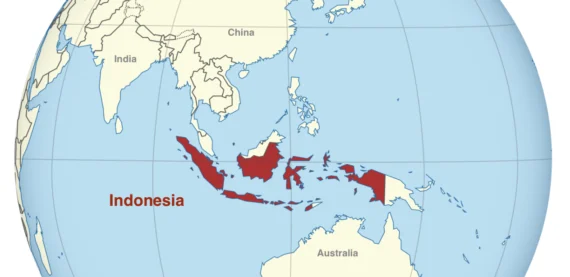
The United Nations has identified Indonesia as the fourth most populous nation globally in 2026, with a burgeoning population of 288 million residents. This places the archipelago nation behind India (1.46 billion), China (1.41 billion), and the United States (345 million). While Indonesia boasts a substantial internet user base, its current retail sales figures, when compared to its population size, suggest a significant untapped potential for e-commerce growth. This dynamic presents a compelling opportunity for both domestic and international businesses looking to penetrate a rapidly evolving digital marketplace.
Understanding Indonesia’s Economic Footprint
Quantifying retail sales across nations is often complex due to variations in data collection methodologies and the inherent diversity of economic structures. A widely accepted proxy for consumer spending is the World Bank’s "Household Final Consumption Expenditure" metric, which captures the market value of all goods and services purchased by households. Based on the most recently compiled data for 2024, the United States leads this category with $19.8 trillion in household spending. China follows with $7.48 trillion, and India accounts for $2.4 trillion. In stark contrast, Indonesia’s household final consumption expenditure stands at $773.6 billion. This figure, while substantial in absolute terms, represents a fraction of the spending seen in the other leading economies, especially when adjusted for population.
The Digital Divide: High Internet Penetration, Lower Retail Sales
The landscape of online retail sales further illuminates Indonesia’s unique position. DataReportal, a reputable aggregator of global internet statistics, reported that as of 2025, China had an estimated 1.3 billion internet users, representing a 92% penetration rate. India followed with 1 billion users (68% penetration), and the United States with 323.9 million users (94% penetration). Indonesia, meanwhile, reported 230.4 million internet users, achieving an 80% penetration rate.
This high internet penetration, coupled with relatively lower retail sales figures, strongly indicates that Indonesia is a market ripe for online commerce expansion. The vast majority of Indonesians are digitally connected, yet their current spending patterns suggest a significant portion of their consumption may not yet be happening through formal e-commerce channels. This gap represents a substantial opportunity for businesses to capture market share as digital adoption continues to accelerate.
The Ascent of E-commerce in Indonesia: Marketplaces and Social Commerce Dominate
Foreign brands seeking to establish a presence in Indonesia’s e-commerce sector often find that leveraging existing online marketplaces is the most effective initial strategy. These platforms provide immediate access to a large consumer base and established logistical networks. Over time, many successful brands diversify by partnering with local distributors and developing their own branded e-commerce websites to enhance brand control and customer engagement.
Navigating the Indonesian market, however, comes with its own set of challenges. The archipelago’s vast geographical expanse and linguistic diversity can pose logistical and communication hurdles. Furthermore, like in India, Indonesia has implemented stringent regulations governing foreign investment and business operations, requiring careful adherence to legal and compliance frameworks.
The dominance of local marketplaces is a defining characteristic of Indonesia’s online retail scene. According to Asialink, an Australia-based consultancy, Shopee Indonesia, Tokopedia, and Lazada collectively capture an impressive 76% of all online sales. These platforms not only facilitate third-party sales but also engage in first-party retail, offering a comprehensive e-commerce experience. A wide array of international brands have already recognized this potential and are actively selling through these Indonesian marketplaces. Notable examples include L’Oréal Paris, Nivea, Garnier, La Roche-Posay, Maybelline (cosmetics and personal care); Adidas, Puma (apparel and footwear); Samsung, Xiaomi (electronics); Philips, Tefal (home appliances); Nestlé, and Kellogg’s (food and beverage).
Beyond traditional e-commerce platforms, social commerce is also experiencing significant traction in Indonesia. Consumers are increasingly making purchases directly through social media channels such as WhatsApp, Instagram, Facebook, and TikTok Shop. This trend underscores the importance of a multi-channel approach for brands aiming to connect with Indonesian consumers.
The Greater Jakarta metropolitan area, with its population of 32 million, stands out as the most populous urban center and consequently, a primary hub for e-commerce activity. Businesses often prioritize this region for initial market penetration due to its concentrated consumer base and developed infrastructure.
Strategic Entry Points for Foreign Brands
Foreign businesses have several viable pathways to enter the Indonesian e-commerce market. These include cross-border sales, operating on established marketplaces, or working through local distribution networks. Each of these approaches necessitates navigating a complex regulatory environment. However, for brands seeking direct and independent control over their operations, establishing a PT PMA (Perseroan Terbatas Penanaman Modal Asing) is the most comprehensive legal structure.

To establish a PT PMA, foreign companies must meet specific criteria, including having at least two shareholders, with one being foreign, and committing a minimum capital investment of $150,000, among other regulatory requirements. Successfully establishing a PT PMA grants the business a Nomor Induk Berusaha (NIB), or Business Identification Number, which is a mandatory prerequisite for operating an e-commerce business in Indonesia.
A common and effective strategy for foreign e-commerce brands in Indonesia is to adopt an omnichannel approach. This typically involves collaborating with local distributors to secure market access and build brand presence, while simultaneously utilizing marketplaces and social commerce channels to capitalize on high-volume consumer demand.
Developing a branded e-commerce website and establishing a physical retail presence can significantly enhance brand equity and provide valuable customer data. However, these strategies often entail higher compliance burdens and increased market entry costs. Partnering with local importers can streamline customs procedures and mitigate the complexities of international trade regulations.
In Indonesia, the term "distributors" generally refers to entities that purchase sector-specific inventory wholesale and then resell it to retailers. Prominent examples of such distributors include DKSH Indonesia and Enseval, which play a crucial role in bridging the gap between international suppliers and the local market.
Distinct from distributors are "e-commerce enablers." These specialized service providers manage a brand’s official store on marketplaces, handling crucial functions such as marketing, sales, and order fulfillment. Jet Commerce and SCI Group are notable examples of e-commerce enablers that assist foreign brands in optimizing their presence on Indonesian digital platforms.
A critical legal requirement for all e-commerce operations in Indonesia is the mandatory use of Bahasa Indonesia in product descriptions. This ensures clarity and accessibility for the local consumer base. Furthermore, a significant obligation for foreign brands involves a minimum wholesale value of $100 per unit for goods entering the country. This regulation effectively renders low-cost, high-volume cross-border trade impractical for many product categories, thus encouraging local sourcing or more substantial import operations.
Broader Implications and Future Outlook
The Indonesian e-commerce market represents a compelling case study in emerging market dynamics. The confluence of a large, increasingly connected population and a relatively underdeveloped retail sales landscape points towards a period of accelerated growth and innovation. For international businesses, understanding the nuances of the Indonesian market, from its regulatory framework to its consumer behavior, is paramount for success.
The mandated use of Bahasa Indonesia in product descriptions, while a compliance hurdle, also serves to foster a more inclusive and localized digital marketplace. The minimum wholesale value regulation, though seemingly restrictive, encourages brands to invest more significantly in their Indonesian operations, potentially leading to the establishment of local warehousing, distribution networks, and even manufacturing facilities over the long term.
The continued expansion of internet penetration, coupled with the increasing adoption of smartphones, will undoubtedly fuel further growth in e-commerce and social commerce. As more Indonesians become comfortable with online transactions, the demand for a wider variety of goods and services delivered through digital channels is expected to surge. This presents a fertile ground for foreign brands that can adapt their strategies to meet the specific needs and preferences of the Indonesian consumer.
The development of robust digital infrastructure, including improved logistics and payment systems, will also be critical in unlocking the full potential of Indonesia’s e-commerce market. Government initiatives aimed at fostering digital inclusion and supporting small and medium-sized enterprises (SMEs) in adopting e-commerce will further accelerate this transformation.
In conclusion, Indonesia’s e-commerce market, characterized by its vast population, high internet usage, and comparatively nascent retail sales figures, stands as a significant growth frontier. The strategic entry points, dominated by marketplaces and social commerce, coupled with evolving regulatory landscapes, offer both challenges and immense opportunities for businesses prepared to invest in understanding and adapting to this dynamic environment. The coming years are poised to witness a substantial shift in consumer behavior, with e-commerce playing an increasingly pivotal role in the Indonesian economy.








