Nana
The adage that those who fail to learn from history are doomed to repeat it holds particular resonance in the dynamic realm of email marketing. Each year, the intensely competitive holiday sale season, epitomized by events like Black Friday and Cyber Monday, offers critical insights that invariably shape the tactical approaches for the subsequent year. These learnings are crucial for fostering a continuous cycle of improved performance and enhanced revenue generation. As the 2026 holiday sales season rapidly approaches, email marketers are diligently scrutinizing past trends to strategize effectively for optimal inbox placement.
Validity, a leading provider of email deliverability solutions, has leveraged its extensive Validity Intelligence Network (VIN) to conduct a comprehensive analysis of the key inbox placement rate (IPR) trends observed during the 2025 holiday period. This in-depth review aims to predict the likelihood of these trends recurring in 2026 and, more importantly, to provide actionable strategies for senders across all industries to maximize their seasonal email campaigns. The analysis delves into critical metrics such as sending volume, spam complaints, unknown user rates, and email rejections, offering a panoramic view of the challenges and opportunities.
The Emergence of the "Danger Window" in Q4 2025
Validity’s 2025 data revealed several intriguing trends, some of which diverged from established email marketing conventions, highlighting the evolving landscape of deliverability. The fourth quarter (Q4) of 2025, encompassing the crucial Black Friday and Cyber Monday periods, presented a distinct "danger window" characterized by heightened risks to inbox placement.
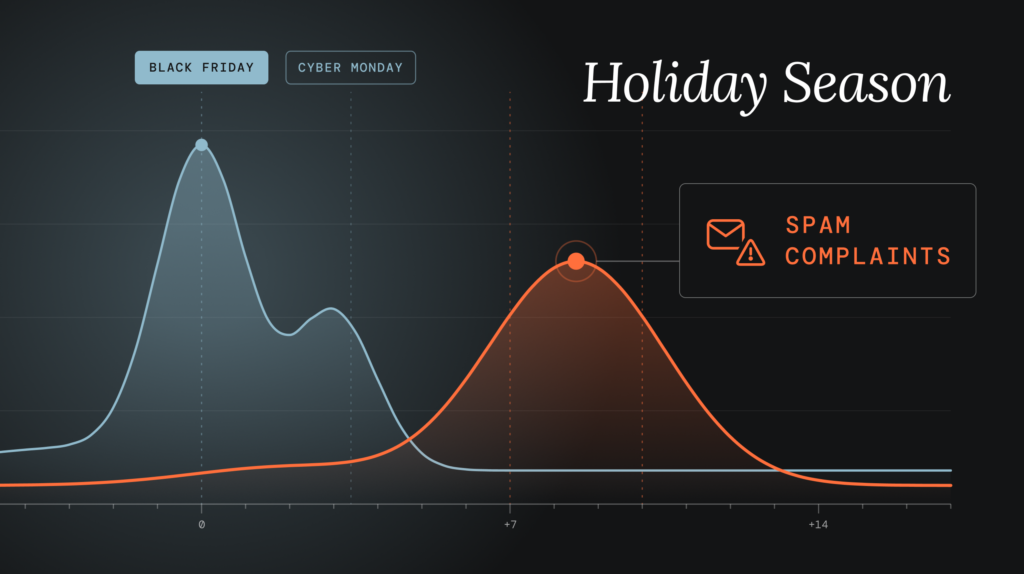
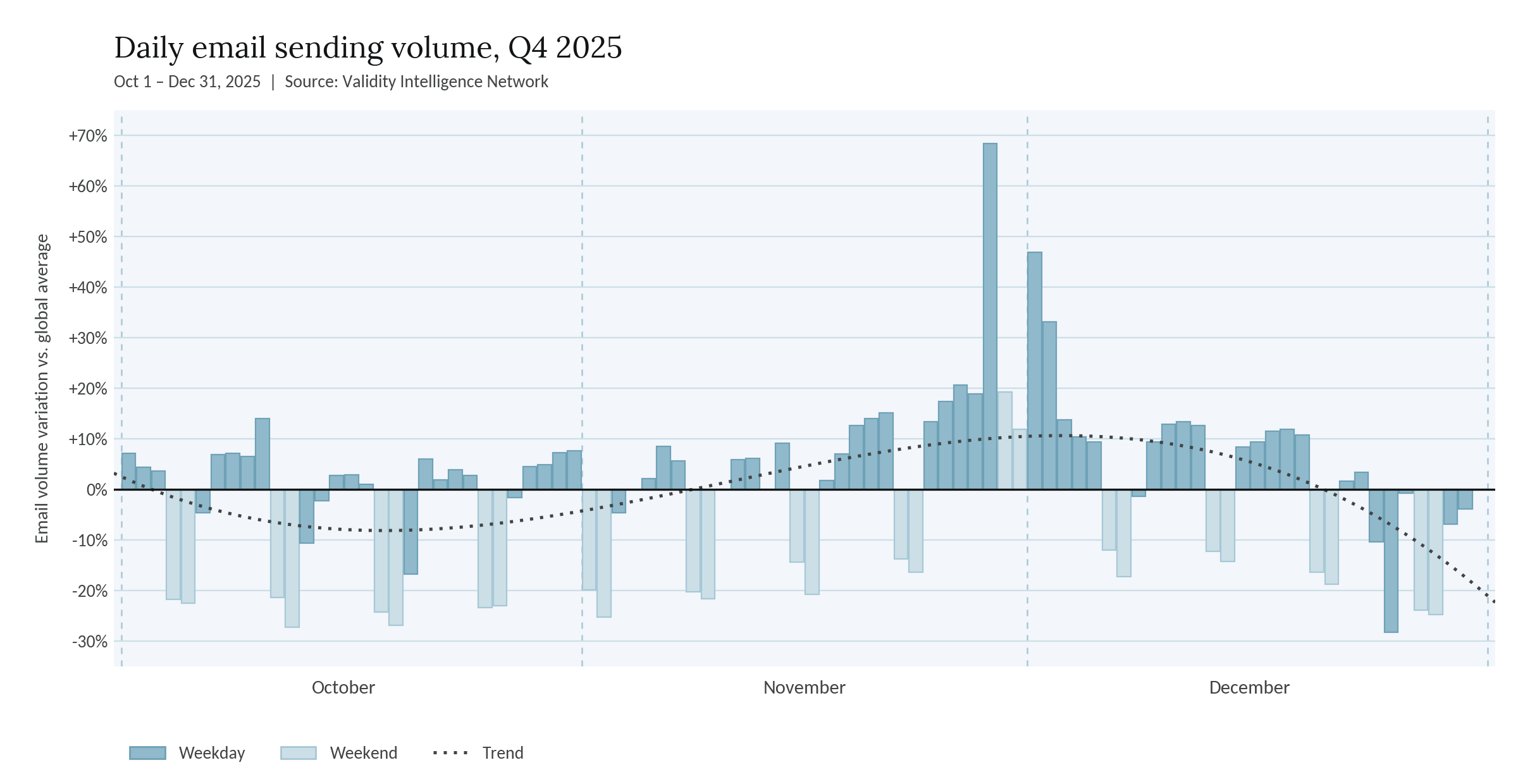
Analysis of sending volume across the Validity Intelligence Network demonstrated a significant surge in email traffic beginning in early November and peaking sharply around Black Friday (November 28th, 2025) and Cyber Monday (December 1st, 2025). This period saw an average increase of 45% in daily sending volume compared to the pre-holiday baseline in October. While expected, this volume spike was accompanied by a disproportionate rise in negative sender reputation indicators. Specifically, spam complaints began to climb in the week leading up to Black Friday, reaching a peak of 0.8% of all sent emails on Black Friday itself – a 30% increase from the Q3 average. This surge indicates that many senders, in their zeal to capitalize on the shopping frenzy, either overwhelmed their subscribers or targeted less engaged segments of their lists.
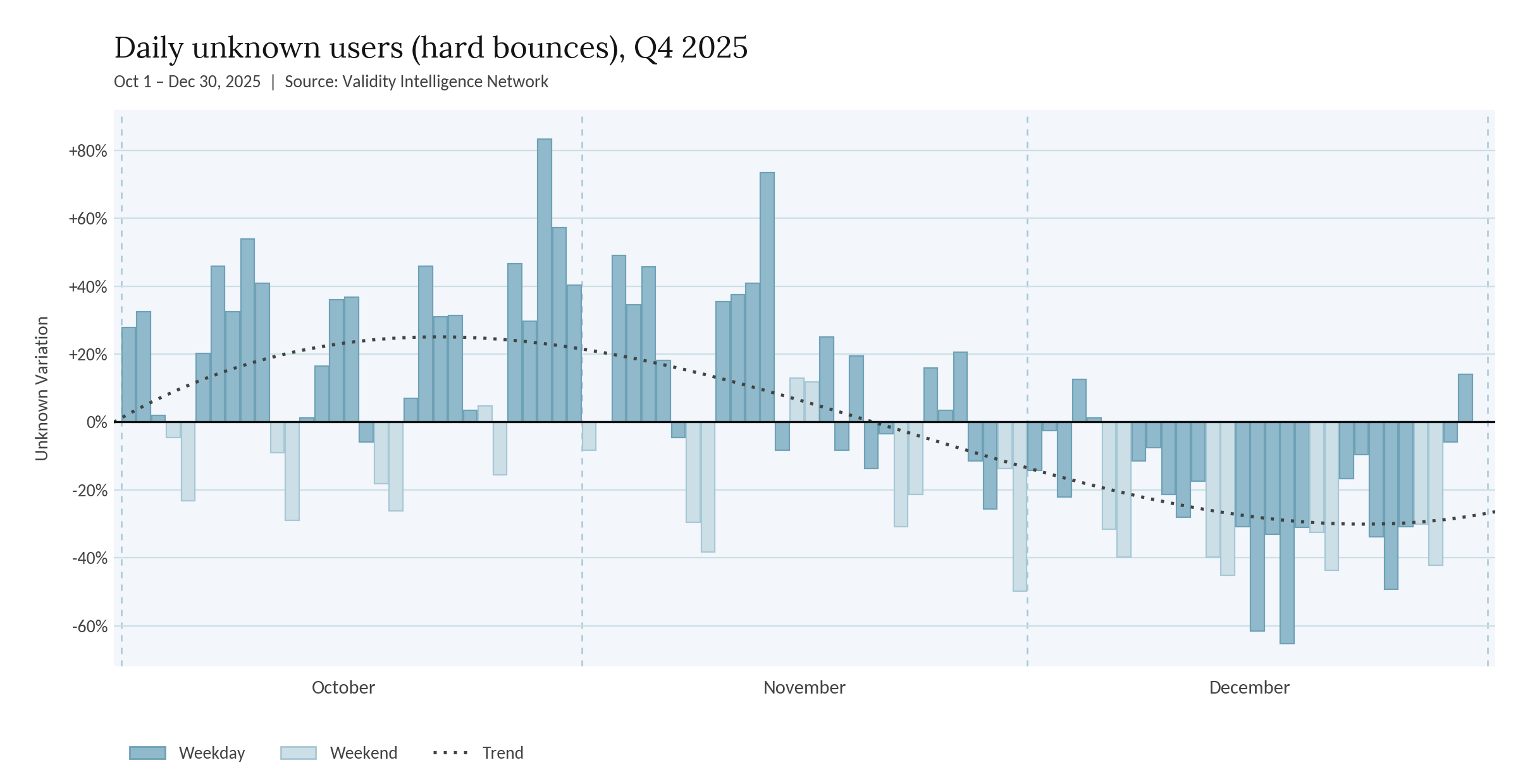
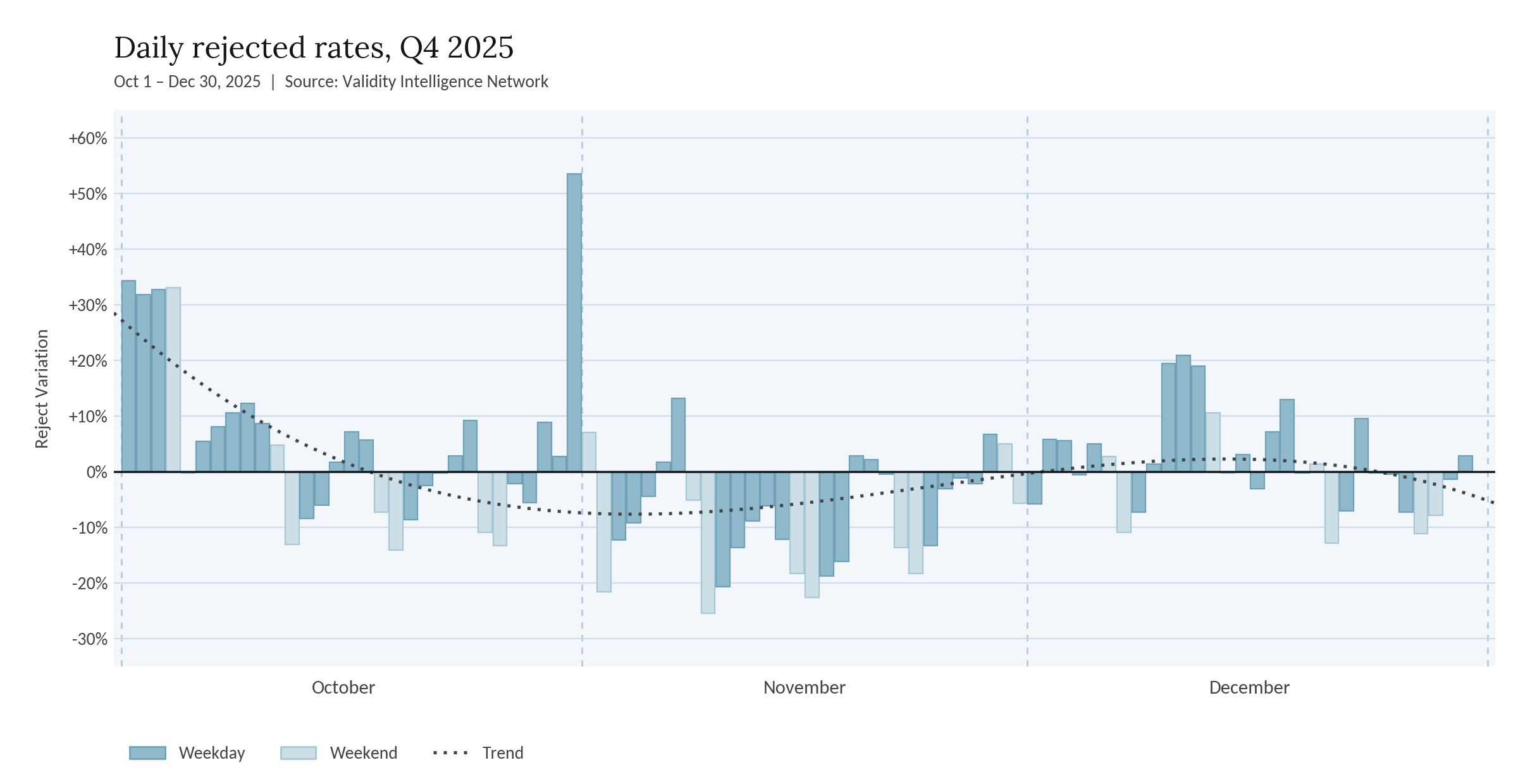
Furthermore, the rate of emails sent to "unknown users" – email addresses that no longer exist or are invalid – also showed an upward trajectory during this period. Validity’s data indicated a 15% increase in unknown user rates during the last two weeks of November, suggesting that some marketers neglected crucial list hygiene practices in their rush to deploy campaigns. This directly contributed to higher rejection rates by mailbox providers, which spiked by an average of 10% during the peak sales week. These rejections, often a precursor to broader deliverability issues, signal to Internet Service Providers (ISPs) that a sender’s list quality is subpar, potentially triggering stricter filtering for subsequent campaigns. Collectively, the confluence of increased volume, higher spam complaints, elevated unknown user rates, and rising rejections defined the critical "danger window" where sender reputation was most vulnerable.
B2B vs. B2C: A Diverging Holiday Readiness
A notable finding from the 2025 data concerned the contrasting performance of Business-to-Consumer (B2C) and Business-to-Business (B2B) senders during the holiday period. While deliverability challenges for both sectors have converged significantly in recent years – largely due to the widespread adoption of Office 365 and Google Workspace by B2B subscribers, which utilize similar placement and filtering infrastructures as B2C providers – a distinct "holiday readiness" gap emerged. The primary additional barrier for B2B senders remains corporate spam filters, such as Proofpoint, which often employ more stringent rules.
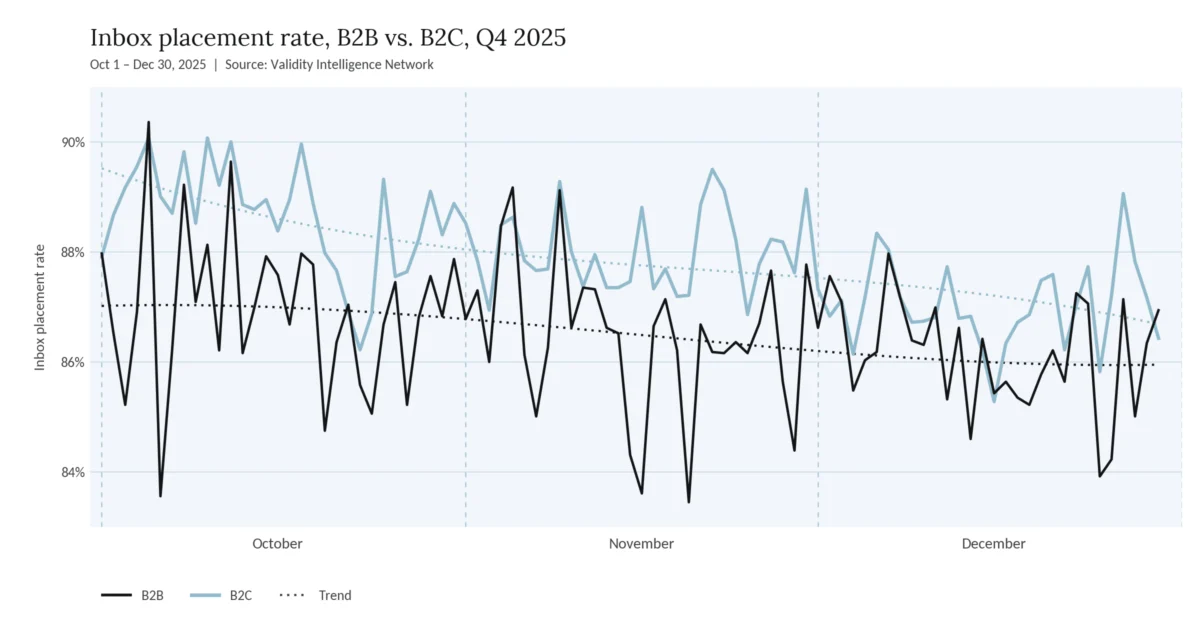
Validity’s analysis revealed that general inbox placement trends for B2B closely mirrored B2C for much of Q4 2025. However, a significant divergence occurred precisely on Black Friday. While B2C placement saw a commendable rise of approximately three percent on Black Friday itself, indicating effective engagement strategies and well-managed lists, B2B placement experienced a notable decline of seven percent.
This disparity can be attributed to several factors. B2C senders are generally more attuned to the intensified reputation management required during peak promotional periods. Their marketing calendars are often built around these events, leading to more strategic list segmentation, pre-warming of IPs, and careful monitoring of engagement metrics. Conversely, many B2B senders may not possess offerings directly relevant to Black Friday or Cyber Monday, and their attempts to participate in the general holiday rush might be perceived as irrelevant by their professional audience, leading to lower engagement and higher complaint rates. This suggests that B2B entities might benefit from a more targeted approach, potentially avoiding the core Black Friday weekend if their products or services do not align, or by adapting their messaging to professional holiday needs. The insights gleaned from successful B2C campaigns, as highlighted in Validity’s recent conversation with Peloton on "State of Email Tactics," offer valuable lessons for B2B marketers looking to refine their holiday sending strategies, emphasizing the importance of relevance and timing.
The Lasting Ramifications of "Panic Sending"
The temptation to "panic send" – aggressively ramping up email volume and frequency in hopes of capturing last-minute sales – proved to have lasting negative consequences in 2025. In previous years, such tactics often led to degraded sender reputation and diminished deliverability extending well into the new year. While the overall email deliverability landscape was already becoming more challenging for all senders in late 2025, making the direct cause-and-effect harder to isolate, Validity’s data clearly showed that less disciplined sending exacerbated the decline.
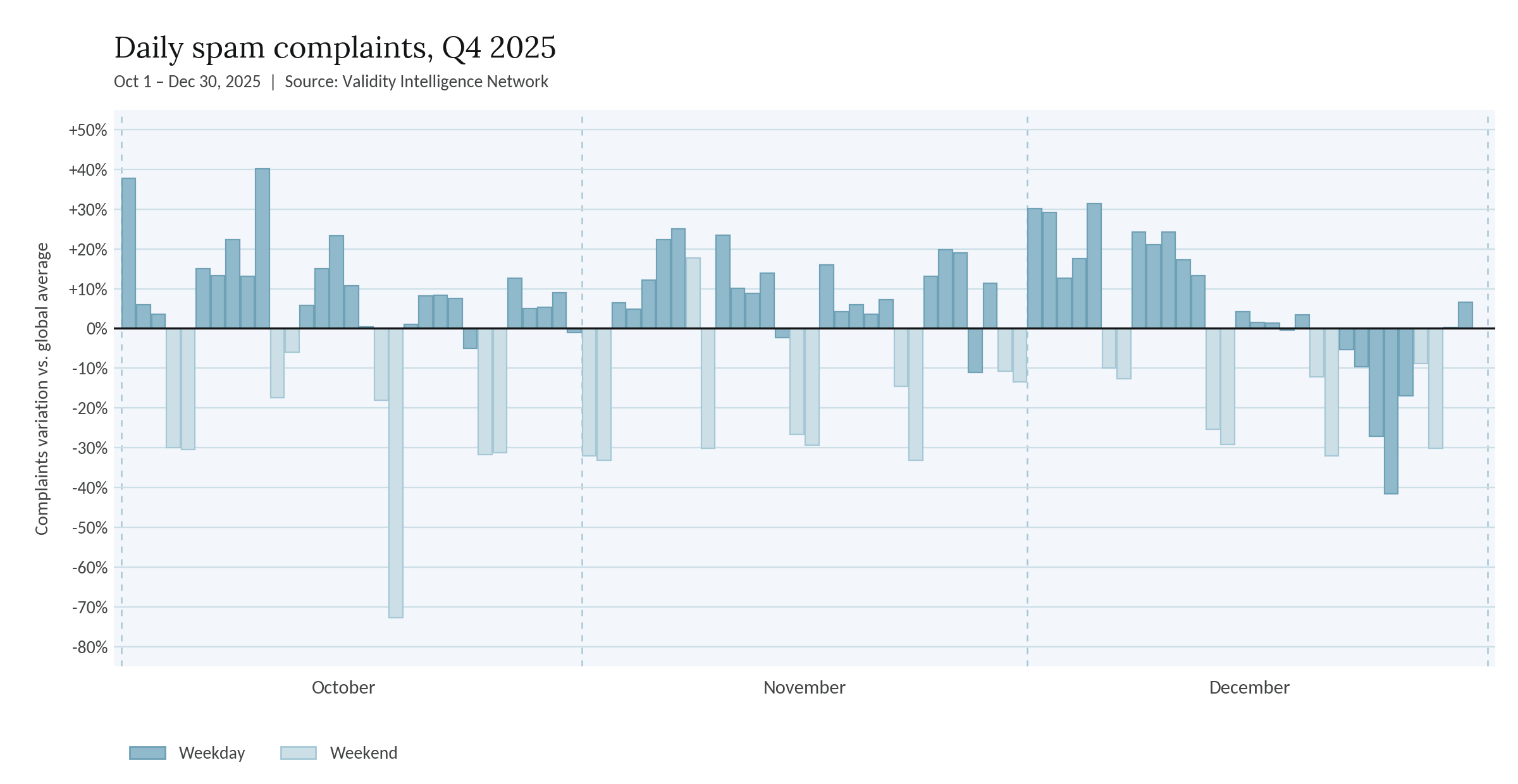
Specifically, the inbox placement decline was almost three times greater for higher-frequency, higher-volume Black Friday senders compared to their more judicious counterparts. These aggressive senders experienced a daily inbox placement decline of 0.019 percent, as opposed to a 0.007 percent decline for those maintaining more moderate sending patterns. While these figures appear small in absolute terms, their cumulative effect over time is substantial. Projecting this trend over a full year, less disciplined senders could face an additional 4.6 percent loss in inbox placement (a total of 6.9 percent decline versus 2.6 percent for more disciplined senders).
For marketing and revenue leaders, these dips carry a tangible price tag. At an estimated five cents of revenue per email, the additional 4.6 percent loss in inbox placement translates to a significant cost of $2,300 per one million emails sent by the end of the year. This financial impact underscores the critical need for strategic, data-driven sending rather than reactive, volume-driven tactics. The long-term damage to sender reputation and the subsequent erosion of deliverability can far outweigh any short-term gains from excessive sending.
Navigating 2026: Anticipating New Challenges and Trends
While the lessons from 2025 provide a crucial foundation, the email marketing landscape is constantly evolving, meaning a direct replication of 2025 trends in 2026 is not guaranteed. Several major changes are poised to make the upcoming year significantly different. Mailbox providers like Google and Yahoo have implemented stringent new sender requirements, effective early 2024, which mandate stronger email authentication (DMARC, SPF, DKIM), easier one-click unsubscribe options, and a commitment to maintaining low spam complaint rates (below 0.3%). Non-compliance with these rules could lead to severe filtering or outright rejection of emails.
Validity’s year-to-date (YTD) analysis for Gmail inbox placement in 2026 already reflects these shifts. Early data indicates a slight but measurable dip in overall Gmail IPR for many senders who have not fully adapted to the new requirements, with an average IPR for bulk senders seeing a 2% decrease compared to the same period in 2025. This suggests that the baseline for deliverability is becoming stricter, placing even greater emphasis on sender compliance and best practices. The increasing sophistication of AI-powered spam filters and the continued evolution of privacy regulations also contribute to a more complex environment. Senders must be prepared to adapt quickly to these changes, ensuring their infrastructure and practices align with the latest industry standards.
The Positive Impact of Privacy Regulations on Deliverability
Amidst these challenges, one trend offers a silver lining: the positive correlation between adherence to new-generation privacy laws, such as GDPR (General Data Protection Regulation) and CCPA (California Consumer Privacy Act), and improved inbox placement rates. Validity’s separate research consistently shows that email programs operating under stringent privacy frameworks enjoy significantly better IPRs.
This is not coincidental. Stronger consent mechanisms, greater transparency in data usage, and broader subscriber choice – all tenets of modern privacy laws – inherently align with what mailbox providers seek from responsible senders. When subscribers explicitly opt-in, understand what they are signing up for, and have easy ways to manage their preferences or unsubscribe, they are far less likely to mark emails as spam. This active engagement and respect for subscriber autonomy build a positive sender reputation with ISPs. Consequently, implementing these tactics proactively, regardless of geographical mandates, is an essential strategy for future-proofing deliverability and fostering a healthier email ecosystem.
Strategic Imperatives for Successful Sending in 2026
Drawing from the comprehensive data provided by the Validity Intelligence Network, understanding the lessons from 2025, and anticipating the shifts in 2026, marketers can build a robust strategy for the upcoming holiday season. The key is to move beyond reactive tactics and embrace a proactive, data-driven approach to email deliverability.
- Prioritize List Hygiene Rigorously: Before any seasonal volume increases, conduct thorough list cleaning. Remove unengaged subscribers, hard bounces, and known unknown users. A clean list ensures emails reach active, interested recipients, reducing rejections and improving engagement metrics. This directly combats the rise in unknown user rates observed in Q4 2025.
- Strategic Volume and Frequency Management: Avoid the temptation of "panic sending." Instead, plan your sending volume and frequency based on historical engagement data and subscriber segments. Gradually increase volume if necessary, rather than sudden spikes, to avoid triggering spam filters. Respect subscriber preferences and avoid overwhelming inboxes, which contributed to higher spam complaints last year.
- Enhance Email Authentication: With new mandates from major mailbox providers, robust email authentication (SPF, DKIM, DMARC) is no longer optional but a baseline requirement. Ensure all sending domains are correctly authenticated to build trust and prevent spoofing. This is fundamental to ensuring your emails even have a chance at the inbox.
- Monitor Deliverability Metrics Continuously: Implement real-time monitoring of key metrics including inbox placement rate (IPR), spam complaint rates, bounce rates, and blocklist status. Early detection of issues allows for swift corrective action, preventing minor problems from escalating into major deliverability crises.
- Segment and Personalize Aggressively: Leverage your customer data to segment your audience and tailor your messaging. Highly relevant and personalized content drives higher engagement, reducing the likelihood of emails being marked as spam. This strategy is particularly effective for B2B senders seeking to stand out during a generally B2C-focused holiday period.
- Warm Up New IPs/Domains: If you plan to use new IP addresses or sending domains for increased holiday volume, start the warming process well in advance. Gradually increase sending volume over several weeks to establish a positive sender reputation with ISPs before the peak season.
- Implement One-Click Unsubscribe: Adhere to the new requirements for easy unsubscribes. Providing a clear, single-click unsubscribe option within your email headers not only ensures compliance but also reduces spam complaints by offering a frictionless way for disengaged subscribers to opt out.
- Focus on Engagement Over Volume: Mailbox providers increasingly prioritize positive engagement (opens, clicks, replies) as a key factor in deliverability. Design compelling content, clear calls to action, and subject lines that encourage interaction. An engaged list is your best defense against the spam folder.
- Conduct A/B Testing for Deliverability: Test different subject lines, content variations, and sending times to see what resonates best with your audience and achieves optimal inbox placement. Small improvements can lead to significant gains during high-volume periods.
- Embrace Privacy-Centric Practices: Adopt the principles of privacy regulations regardless of your location. Strong consent, transparency, and subscriber control build trust with both recipients and mailbox providers, leading to better long-term deliverability.
Keeping track of this extensive list of strategy recommendations can be daunting, especially during the high-pressure holiday season. This is where specialized tools become invaluable. Validity Engage offers a comprehensive solution designed to alleviate much of this burden. Engage automates crucial pre-send checks on data quality, email verification, and rendering, ensuring campaigns are optimized before they even leave the sender’s system. Furthermore, it continuously monitors deliverability across every send, allowing problems to be identified and addressed proactively, often before they reach subscribers. By leveraging such a platform, marketers can ensure their peak season revenue stays intact and their sender reputation remains robust.
In conclusion, the journey to email marketing success during the holidays is paved with data-driven insights and strategic adaptation. By learning from the "danger window" of 2025, understanding the B2B/B2C dynamic, acknowledging the cost of "panic sending," and proactively addressing the evolving landscape of 2026, senders can transform potential pitfalls into unparalleled opportunities for engagement and revenue growth. The future of email deliverability demands vigilance, precision, and a commitment to best practices, ensuring that messages land where they matter most: in the inbox.


 Asro
 Jia Lissa