Do you have a website or are you contemplating creating one, with the ambition of attracting a broader audience to your enterprise? If these questions resonate, then Search Engine Optimization (SEO) must be an integral component of your marketing strategy. It stands as a powerful mechanism to cultivate brand recognition and drive traffic to your digital presence. To harness its potential, a fundamental understanding of its principles and practical application is essential. This article delves into the core tenets of SEO and outlines how businesses can effectively embark on their optimization journey.
What is SEO? A Foundational Understanding
The acronym SEO denotes Search Engine Optimization, a discipline that combines both artistic and scientific approaches to enhance a website’s visibility within search platforms. At its heart, SEO is the practice of refining a website and its content to ensure it is readily discovered, comprehended, and trusted by search engines and users alike when relevant topics are queried. Historically, this focus was primarily on traditional search engines such as Google and Bing. However, the contemporary landscape has expanded, with SEO now instrumental in ensuring content appears across AI-powered search experiences, intelligent chatbots, and various other digital discovery platforms. It encompasses a multifaceted approach, integrating technical improvements, strategic content optimization, and concerted brand-building efforts to amplify visibility, engage the appropriate audience, and achieve overarching business objectives.
Alex Moss, a Principal SEO expert at Yoast, succinctly defines the practice: "SEO is both the art and science of improving a website, and pages within, to be as visible as possible for when people search for a relevant topic within any search platform. SEO covers many areas from technical aspects including optimizing a site’s performance and structure, to enhancing brand authority by providing great content and matching it with that person’s search intent."

The Mechanics of Search: Crawling, Indexing, and Ranking
To appreciate the significance of SEO, it is crucial to understand the operational framework of search engines like Google. Their process fundamentally involves three stages: crawling, indexing, and ranking.
- Crawling: An online bot, often referred to as a "crawler" or "spider," systematically navigates the vast expanse of the internet. Its mission is to discover and collect all available web pages, following links from one site to another.
- Indexing: The information gathered by these crawlers is then compiled and stored in an enormous database known as the "index." This index acts as a digital library, constantly updated with new pages or revised versions of existing content.
- Ranking: When a user submits a search query, the search engine accesses its index. Utilizing sophisticated algorithms, it determines which pages are most relevant to the query and presents them in a specific order, known as the "ranking." This order is designed to offer the most pertinent and authoritative results to the user.
For instance, a search for "sustainable phone case" will prompt Google to retrieve pages from its index that it deems most relevant to this specific query and the user’s underlying intent, displaying them in a prioritized list. This entire process, from query to result, typically occurs in milliseconds.
Organic Versus Paid Search: A Critical Distinction
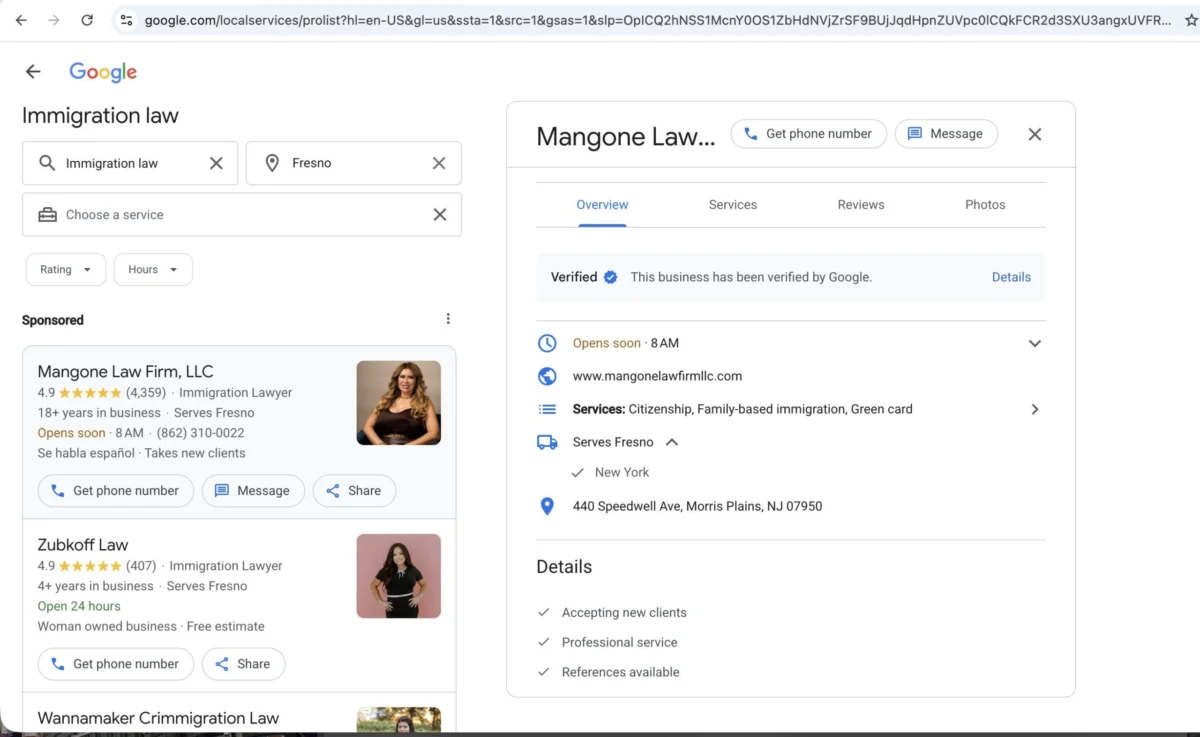
SEO primarily focuses on attracting "organic traffic" – visitors who arrive at a website through unpaid search results. However, search engine results pages (SERPs) often feature both organic listings and "paid results," typically displayed at the top or bottom of the page, often labeled as "Ads" or "Sponsored." This distinction is vital for marketers:

- SEO (Search Engine Optimization): Aims to improve a website’s ranking in organic, unpaid search results. This is a long-term strategy focused on earning visibility through relevance and authority.
- SEM (Search Engine Marketing): A broader term encompassing both organic SEO and paid search advertising (e.g., Google Ads).
- PPC (Pay-Per-Click): A model of internet marketing in which advertisers pay a fee each time one of their ads is clicked. This allows for immediate visibility for specific search terms but incurs ongoing costs.
While PPC can offer instant top-of-page visibility, it requires continuous expenditure per click. SEO, conversely, builds sustainable, cost-effective traffic over time. Many businesses find that a synergistic approach, combining both SEO and PPC, yields the most comprehensive and effective digital marketing strategy.
The Evolving Landscape: SEO Beyond Traditional Search
The digital realm is in constant flux, with the emergence of AI-powered search transforming how users discover information. Terms like Generative Engine Optimization (GEO) have surfaced, suggesting a focus on optimizing for AI-generated responses. However, industry experts, including those at Yoast, maintain that the fundamental principles of SEO remain robust and encompassing. The core objective—improving visibility and relevance—applies equally to traditional SERPs, AI assistants, chatbots, and social media platforms. The acronym SEO, therefore, continues to suffice, acknowledging that its scope has merely expanded to new channels of information dissemination.
Why SEO is Indispensable for Modern Businesses
The investment in SEO by companies globally underscores its profound impact on digital success. Several key factors highlight its importance for site owners:

- Immense Search Volume: The sheer scale of online searches is staggering. In 2024, Google, the dominant search engine, processes approximately 8.3 billion searches daily, a figure that has consistently risen since its inception in 1998. For any business with an online presence, ensuring visibility on Google and other search platforms is not merely advantageous but imperative.
- Intent-Driven Engagement: Unlike many other marketing channels, such as social media, where brand interaction can be serendipitous or interruptive, online search is inherently intent-driven. Users actively seek specific information, products, or solutions. This aligns directly with existing demand, positioning SEO as a powerful inbound marketing strategy. By appearing in search results, businesses connect with highly qualified leads who are already predisposed to engage, significantly increasing the likelihood of conversion.
- Competitive Advantage in a Crowded Market: The digital landscape is increasingly saturated, with new websites launching constantly. Simply existing online is no longer sufficient to capture attention or cultivate customer loyalty. Effective SEO provides a significant competitive edge through:
- Higher online visibility.
- A stronger, more recognizable brand.
- Enhanced authority and credibility within a niche.
- Increased touchpoints with the target audience.
- Higher quality, more relevant traffic to both online and, where applicable, offline locations.
These benefits collectively contribute to greater brand loyalty and augmented revenue streams.
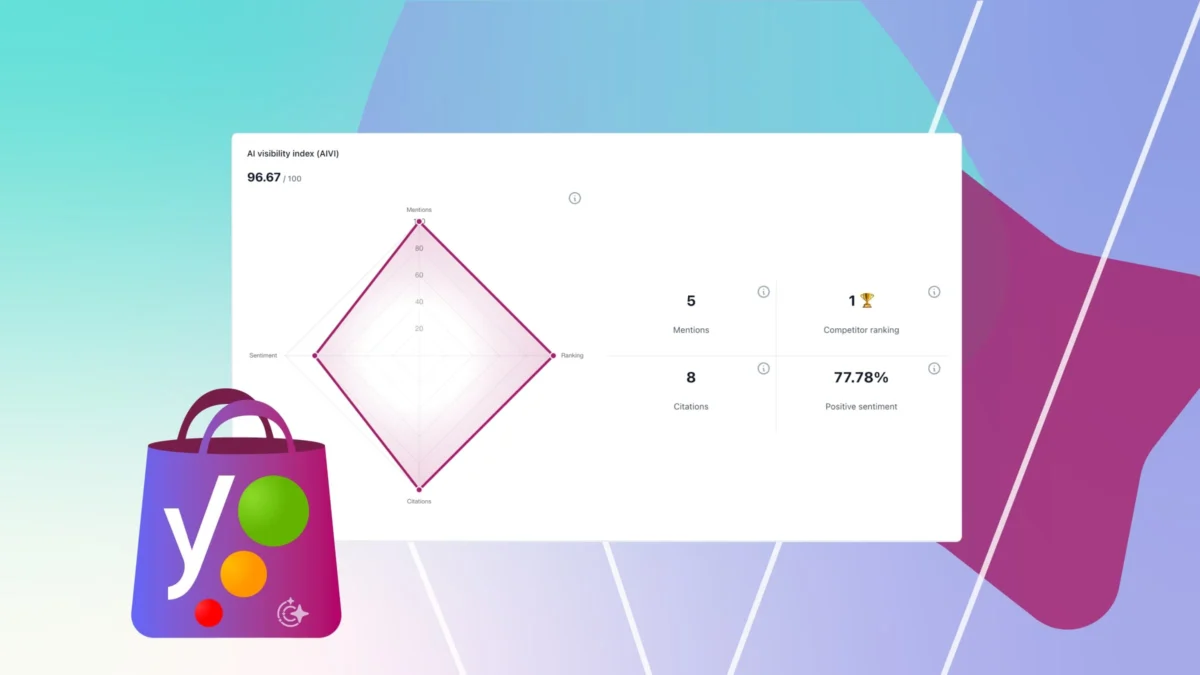
- Beyond Clicks: Building Brand Awareness and Trust: Modern SEO extends beyond merely generating website clicks. Content optimized for search may be cited in AI-generated answers, referenced in AI overviews, or discovered through various alternative platforms like video hosting sites. Even if a direct website visit doesn’t immediately occur, being recognized as a trusted and authoritative source significantly boosts brand awareness, reinforces credibility, and can drive future demand for products or services. This passive visibility is increasingly valuable in the attention economy.
The Three Pillars of SEO: A Comprehensive Approach
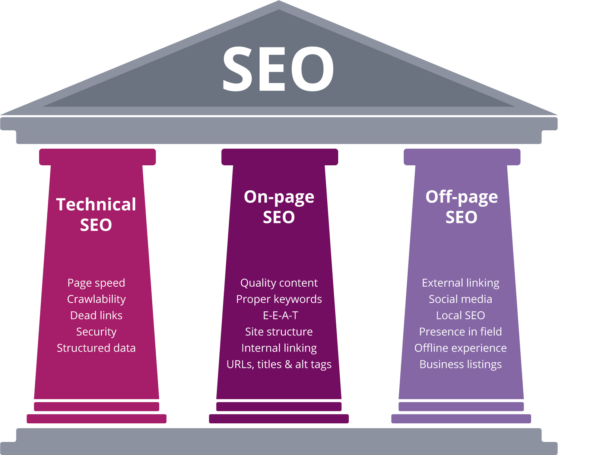
Optimizing a website for increased online visibility is a multi-faceted endeavor, broadly categorized into three fundamental pillars:
-
Technical SEO: This pillar focuses on optimizing the technical aspects of a website to enhance user experience and facilitate search engine understanding. Key elements include:
- Site Speed: Ensuring pages load quickly, as slow speeds deter users and negatively impact rankings.
- Mobile-Friendliness: Guaranteeing a seamless experience across all devices, particularly smartphones, given the prevalence of mobile browsing.
- Crawlability and Indexability: Structuring the site so search engine bots can easily access and catalog all relevant pages.
- Site Architecture: Designing a logical, intuitive navigation structure that benefits both users and search engines.
- HTTPS (Security): Implementing secure connections (SSL certificates) to protect user data, a crucial ranking factor.
- Structured Data (Schema Markup): Using specific code to help search engines better understand the content on a page, potentially leading to rich snippets in search results.
- XML Sitemaps: Providing search engines with a map of all important pages on a site.
- Canonicalization: Indicating the preferred version of a page when duplicate content exists.
Search engines prioritize websites that offer superior user experiences. Pages that are slow, insecure, or difficult to navigate are penalized, while technically sound sites are rewarded with higher rankings due to their enhanced usability and clarity for search algorithms.
-
On-Page SEO: While technical SEO deals with the "under-the-hood" mechanics, on-page SEO focuses on optimizing the content and visible elements of individual web pages. This includes:
- Keyword Research: Identifying the terms and phrases users employ when searching for relevant information, products, or services.
- Content Quality and Relevance: Creating high-quality, comprehensive, and engaging content that directly addresses user intent.
- Title Tags: Crafting compelling and keyword-rich titles that appear in browser tabs and search results.
- Meta Descriptions: Writing concise summaries that entice users to click from the SERPs.
- Header Tags (H1, H2, H3, etc.): Structuring content with clear headings to improve readability and indicate hierarchy to search engines.
- Image Optimization: Compressing images for faster loading and using descriptive alt text for accessibility and SEO.
- URL Structure: Creating clean, descriptive, and keyword-friendly URLs.
- Internal Linking: Connecting related pages within a website to improve navigation and distribute "link equity."
- Readability: Ensuring content is easy to read and understand for the target audience.
On-page SEO is primarily centered around content SEO, strategically using various on-page elements to enhance discoverability for targeted search terms.
-
Off-Page SEO: This pillar encompasses all SEO activities conducted outside of a website’s direct control. Its primary goal is to build domain authority, credibility, and brand recognition. Key off-page SEO efforts include:
- Link Building: Acquiring high-quality backlinks from other reputable and relevant websites. These backlinks act as "votes of confidence," signaling to search engines that the linked-to content is valuable and trustworthy. Ethical link building is crucial, focusing on natural acquisition rather than manipulative tactics.
- Social Media Marketing: While social media activity doesn’t directly influence search rankings, it significantly contributes to brand visibility, audience engagement, and content distribution, indirectly supporting SEO efforts.
- Local SEO (for local businesses): Optimizing a business’s online presence for local search results, often involving managing Google Business Profile listings, local citations, and online reviews.
- Brand Mentions: Increasing instances where a brand is mentioned online, even without a direct link, contributing to overall brand authority.
- Public Relations: Engaging in PR activities like speaking at events, conducting interviews, or guest blogging on other industry websites to showcase expertise and broaden reach.
For local businesses, the customer experience, both online and offline, plays a pivotal role. Positive reviews and accurate business listings on platforms like Google Business Profile are paramount.
SEO Ranking Factors: Navigating Search Engine Algorithms
Search engines utilize a complex array of ranking factors to determine the relevance and order of search results. While the exact algorithms are proprietary and constantly evolving, a consensus exists regarding the most influential signals:
- Content Quality and Relevance: High-quality, original, comprehensive, and relevant content that satisfies user intent is paramount.
- Backlinks (Link Authority): The quantity and quality of links from other authoritative websites to your site.
- User Experience (UX): Factors like site speed, mobile-friendliness, intuitive navigation, and low bounce rates indicate a positive user experience.
- Technical SEO Health: A technically sound website, free from crawling errors, with proper indexing and structured data.
- Domain Authority and Trust: The overall reputation, age, and trustworthiness of a website.
- Search Intent Alignment: How well a page addresses the specific query and underlying intent of the searcher.
- Mobile-First Indexing: Google primarily uses the mobile version of a website for indexing and ranking.
- Core Web Vitals: A set of specific factors that Google considers important for overall user experience on a web page, including loading performance, interactivity, and visual stability.
While numerous other factors exist, focusing on these core elements provides a robust foundation for any SEO strategy. Tools like Yoast’s SEO Checker can assist in identifying and addressing potential issues, offering actionable recommendations.
A Brief History of Search Engine Optimization: From Keywords to AI
The journey of SEO mirrors the rapid evolution of the internet itself.
- The 1990s: Simplicity and Keyword Stuffing: SEO emerged in the mid-1990s as websites began to proliferate. Early search engine algorithms were relatively unsophisticated, often relying heavily on simple metrics like keyword density. The prevalent "trick" was to repeatedly embed target keywords within page content and meta tags, often to the detriment of readability and user experience.
- The Early 2000s: Algorithm Refinement and Quality Focus: Search engine providers, particularly Google, quickly recognized the limitations and exploitative potential of keyword-centric ranking. This led to a continuous effort to develop more intelligent algorithms capable of discerning genuine relevance and quality. A series of significant algorithm updates began to shift the focus away from superficial keyword usage towards factors like content quality, link profiles, and user experience. Major updates like Florida (2003), Panda (2011), and Penguin (2012) targeted spammy tactics and rewarded valuable content, marking a pivotal shift towards user-centric SEO.
- The 2010s: Mobile, Local, and Semantic Search: The rise of smartphones necessitated mobile optimization, while advancements in natural language processing led to a deeper understanding of semantic search—the ability of search engines to grasp the context and meaning behind queries, not just individual keywords. Local SEO gained prominence for businesses targeting specific geographic areas.
- SEO in the Mid-2020s: The AI Era: The current trajectory of SEO is heavily influenced by artificial intelligence. Search engines continue to refine their algorithms annually, adapting to evolving search behaviors and technological advancements. High-quality content, technical performance (site speed, security, mobile parity), and user experience remain foundational. However, the channels of information dissemination are expanding beyond traditional SERPs to include AI assistants, AI-generated search results, social platforms, and video platforms.
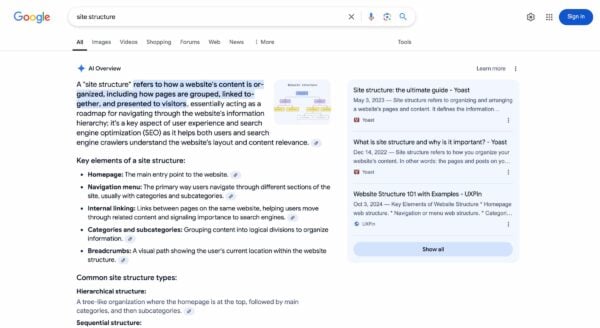
Google AI Overviews, for example, represent a significant development where AI compiles and synthesizes information from various sources to directly answer search queries, often presented as a "zero-click search." While this might reduce direct website clicks for some queries, being the source cited in an AI overview still confers immense brand authority and visibility.
Strategic Goal Setting in Modern SEO
The advent of AI and the diversification of search experiences necessitate a recalibration of SEO goals. While traditional metrics like ranking positions, website traffic, and bounce rates remain relevant, the emphasis has shifted. The focus is no longer solely a numbers game but extends to the overall perception of a brand and its pervasive presence across various digital touchpoints.
Businesses must now set SEO goals related to:
- Engagement: How users interact with content, whether on a website or through AI summaries.
- Brand Awareness and Influence: The extent to which a brand is recognized and trusted as an authority.
- User Experience (UX) and Satisfaction: Ensuring every interaction, regardless of platform, is positive and fulfilling.
- Conversion and Business Impact: Relating SEO efforts to tangible outcomes such as sales, lead generation, or other desired user actions.
As Carolyn Shelby, another Principal SEO at Yoast, states, "Rankings still matter, but they are no longer the end goal. They are a proxy for visibility, not a guarantee of impact. As search shifts from ranking pages to selecting sources, rankings should be interpreted alongside presence, citation, and narrative accuracy." This holistic approach, moving from mere traffic metrics to measuring influence, is crucial for sustained success.

Empowering Businesses: Learning and Implementing SEO
Despite its complexity, many aspects of SEO are manageable for businesses and individuals to implement themselves. A structured approach is key:
- Prioritize Technical SEO: Before delving into content, ensure the website’s technical foundation is solid. This includes optimizing page speed, addressing redirects, ensuring crawlability, implementing security (HTTPS), and leveraging structured data. For those without technical expertise, collaborating with a web developer or a technical SEO specialist is advisable.
- Develop a Content Strategy through Keyword Research: Once the technical groundwork is laid, focus on creating valuable content. Comprehensive keyword research is the cornerstone, revealing what target audiences are searching for and providing a wealth of topic ideas. In an era of AI-generated content, the imperative to create original, insightful, and expert-driven content is stronger than ever. This unique perspective builds authority and trust.
- Establish a Realistic and Continuous Plan: SEO is not a one-time task but an ongoing process. Develop an SEO strategy and an actionable plan that can be consistently executed throughout the year. Dedication to this continuous effort not only attracts more traffic but also cultivates long-term brand loyalty and reinforces credibility.
Resources like Yoast’s free and premium SEO plugins for WordPress and Shopify offer invaluable assistance, providing real-time feedback on content, handling technical aspects, and offering advanced features. Furthermore, the Yoast SEO Academy offers a range of courses, from beginner to advanced, covering various facets of SEO, while their extensive blog provides up-to-date insights and practical guidance.
In conclusion, SEO remains an indispensable tool for digital success, continually adapting to the evolving technological landscape. By understanding its foundational principles, embracing its technical and content-driven pillars, and recalibrating goals to encompass broader brand influence, businesses can effectively navigate the complexities of modern search and establish a powerful, enduring online presence.