Lightspeed eCom, while a robust solution for brick-and-mortar businesses looking to establish an online presence directly integrated with their physical retail operations, presents certain limitations that often prompt businesses to seek alternatives. Primarily, its pricing model can escalate rapidly with the addition of multiple locations and registers. Furthermore, the online storefront capabilities, while functional, may not always keep pace with the specialized design and feature sets offered by dedicated e-commerce platforms. Consequently, businesses with an online-first orientation or those seeking more advanced digital merchandising tools often find Lightspeed eCom less ideal than platforms built with the digital marketplace at their core.
This analysis delves into five leading e-commerce platforms that offer compelling alternatives to Lightspeed eCom, evaluating them across crucial metrics such as pricing structure, sales feature sets, point-of-sale (POS) integration capabilities, design flexibility, and overall ease of use. The objective is to equip retailers with the necessary insights to identify a platform that aligns with their specific business needs, growth objectives, and budget constraints.
Shopify: The All-Round Champion for Unified Commerce
Shopify emerges as the top recommendation for businesses seeking a seamless transition from Lightspeed eCom. It excels in replicating the unified online-and-in-store operational model that Lightspeed provides, but with significant advantages in its expansive app ecosystem, superior template designs, and more predictable pricing tiers. Shopify was conceived with an online-first philosophy, resulting in a more potent suite of tools for storefront design, checkout optimization, and digital marketing compared to Lightspeed’s offerings.
While Shopify’s section-based editor might present a learning curve for users accustomed to free-form drag-and-drop interfaces, its robust app store compensates for any perceived design limitations by offering vast customization possibilities and specialized functionalities. For businesses aiming to significantly expand their online sales channel, Shopify provides ample room for growth.
Key Features and Pricing:
Shopify offers a tiered pricing structure designed to accommodate businesses of varying sizes and sales volumes. The "Starter" plan, priced at $5 per month billed annually, is suitable for very small businesses or those testing the waters with online sales, though it carries a higher per-transaction fee. The "Basic" plan, at $29 per month billed annually, is a popular choice for many small to medium-sized businesses, offering a balance of features and cost. For growing businesses, the "Grow" plan ($79/month annually) and "Advanced" plan ($299/month annually) provide enhanced capabilities and lower transaction fees. Enterprise-level solutions are available through Shopify Plus, with custom pricing.
| Plan | Monthly (billed annually) | Monthly (billed monthly) | Online Card Rate (Shopify Payments) | Fee if using a third-party gateway | Staff Accounts |
|---|---|---|---|---|---|
| Starter | $5 | $5 | 5% per transaction | N/A | 1 |
| Basic | $29 | $39 | 2.9% + $0.30 | 2% | 1 |
| Grow | $79 | $105 | 2.7% + $0.30 | 1% | 5 |
| Advanced | $299 | $399 | 2.5% + $0.30 | 0.6% | 15 |
| Plus | From $2,300 (3-year term) | Custom | Negotiated | 0.2% | Unlimited |
*Pricing based on US rates at the time of writing and subject to change.
Cost Comparison:
Compared to Lightspeed Retail’s Basic plan at $89 per month, Shopify’s Basic plan at $29 per month presents a significant cost saving for online operations. However, when advanced in-store features requiring Shopify POS Pro are factored in for a single location, the total monthly cost can approach or exceed Lightspeed’s entry-level pricing. Shopify generally offers a more cost-effective solution for businesses prioritizing their online presence.

Shopify is suitable for:
- Retailers seeking a unified platform for both online and in-store sales.
- Businesses looking for extensive app and theme customization options.
- Brands aiming to scale their e-commerce operations.
- Those who value a robust and actively developed platform.
Shopify isn’t suitable for:
- Users who require absolute pixel-perfect control over design without relying on apps.
- Businesses with extremely basic e-commerce needs that could be met by simpler solutions.
Square Online: The Budget-Conscious Retailer’s Choice
For businesses where cost is the primary driver for seeking an alternative to Lightspeed, Square Online stands out. It offers a genuinely free e-commerce plan that integrates seamlessly with Square’s free POS system. This allows small retailers to manage both online and in-person sales with minimal overhead, paying only for payment processing fees.
The trade-off for this affordability is a more basic feature set compared to Lightspeed or Shopify. Design options are more constrained, the app ecosystem is smaller, and the free plan includes Square branding and does not support custom domains. Nevertheless, it is an excellent entry point for small shops, cafes, and service-based businesses. However, retailers with extensive product catalogs might find its inventory management capabilities limiting over time.
Key Features and Pricing:
Square Online’s tiered pricing is structured to be accessible, with a perpetual free plan as its most attractive feature.
| Plan | Monthly (billed annually) | Monthly (billed monthly) | Online Card Rate | Key Inclusions |
|---|---|---|---|---|
| Free | $0 | $0 | 2.9% + $0.30 | Unlimited products, pickup/delivery, Square-branded domain |
| Plus | $29 | $35 | 2.9% + $0.30 | Custom domain, no Square ads, abandoned cart recovery, advanced item options |
| Premium | $79 | $95 | 2.6% + $0.30 | Lower processing rate, real-time shipping rates, priority support |
*Pricing based on US rates at the time of writing and subject to change.
Cost Comparison:
The ability to operate an e-commerce store and a POS system for $0 per month (excluding processing fees) makes Square Online a stark contrast to Lightspeed Retail’s $89 per month entry price. Even the Premium plan at $79 per month is more affordable. This cost-effectiveness comes at the expense of the depth in inventory and reporting features that Lightspeed offers.
Square Online is suitable for:

- Small businesses and startups prioritizing cost-effectiveness.
- Retailers and service providers who need a simple, integrated online and in-store sales solution.
- Businesses with manageable product catalogs.
Square Online isn’t suitable for:
- Retailers with very large and complex product inventories.
- Businesses requiring advanced inventory management features like purchase orders or multi-location stock transfers.
- Brands seeking extensive design customization.
BigCommerce: Tailored for Large Catalogs and Growing Stores
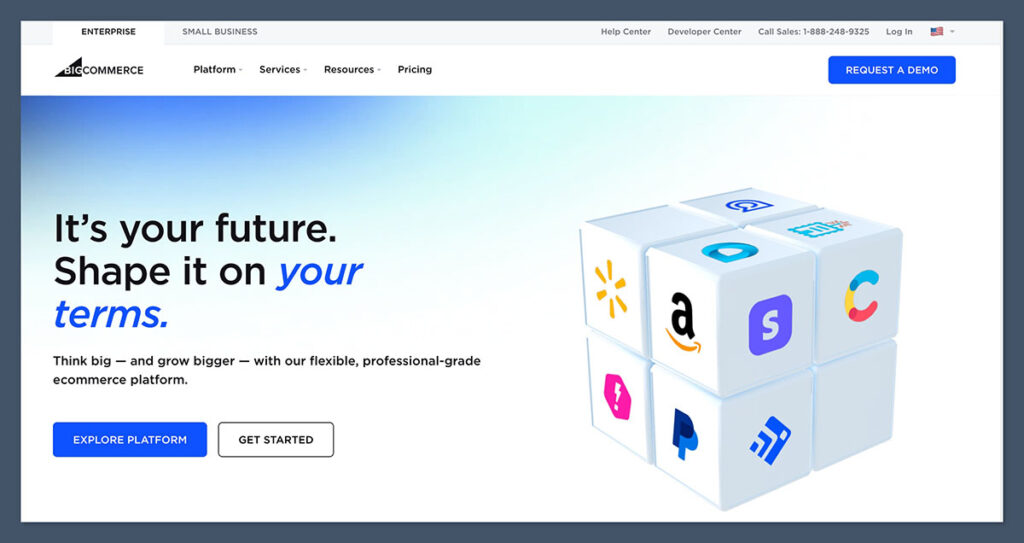
BigCommerce is the recommended alternative for Lightspeed users who are primarily online sellers and manage extensive product inventories. It distinguishes itself by including a wealth of built-in e-commerce features, such as product variants, faceted search, multi-currency support, and B2B functionalities, which often require paid apps on other platforms. A significant advantage is its policy of charging zero transaction fees, irrespective of the payment gateway chosen by the merchant.
However, BigCommerce lacks a native POS system. While third-party POS integrations are available, they may not offer the same level of seamlessness as integrated solutions. Another consideration is BigCommerce’s sales thresholds for its plans, which can necessitate upgrades for rapidly growing businesses.
Key Features and Pricing:
BigCommerce offers a tiered pricing structure that scales with sales volume. The "Standard" plan, priced at $29 per month billed annually, is a competitive entry point. The "Plus" plan ($79/month annually) and "Pro" plan ($299/month annually) offer higher sales limits and additional features. An "Enterprise" tier is available for businesses with custom requirements.
| Plan | Monthly (billed annually) | Monthly (billed monthly) | Annual Online Sales Limit | PayPal (Braintree) Rate | Platform Transaction Fee |
|---|---|---|---|---|---|
| Standard | $29 | $39 | $50,000 | 2.59% + $0.49 | 0% |
| Plus | $79 | $105 | $180,000 | 2.35% + $0.49 | 0% |
| Pro | $299 | $399 | $400,000 | 2.05% + $0.49 | 0% |
| Enterprise | Custom | Custom | Custom | Negotiated | 0% |
*Pricing based on US rates at the time of writing and subject to change.
Cost Comparison:
BigCommerce Standard at $29 per month is significantly less expensive than Lightspeed Retail Basic’s $89 per month. The absence of transaction fees can lead to substantial monthly savings for high-volume sellers, further enhancing its cost-effectiveness. For businesses that do not require Lightspeed’s integrated POS, BigCommerce offers a more feature-rich online store at a lower price point.
BigCommerce is suitable for:
- Businesses with large and complex product catalogs.
- Retailers focusing heavily on online sales and digital merchandising.
- Brands looking for robust built-in e-commerce features without relying on apps.
- Companies that benefit from zero transaction fees on their sales.
BigCommerce isn’t suitable for:

- Businesses that require a deeply integrated, native POS system.
- Retailers who prefer a drag-and-drop website builder for design.
- Startups with very low initial sales volumes, as plan thresholds might be less relevant.
WooCommerce: The Powerhouse for Customization and WordPress Integration
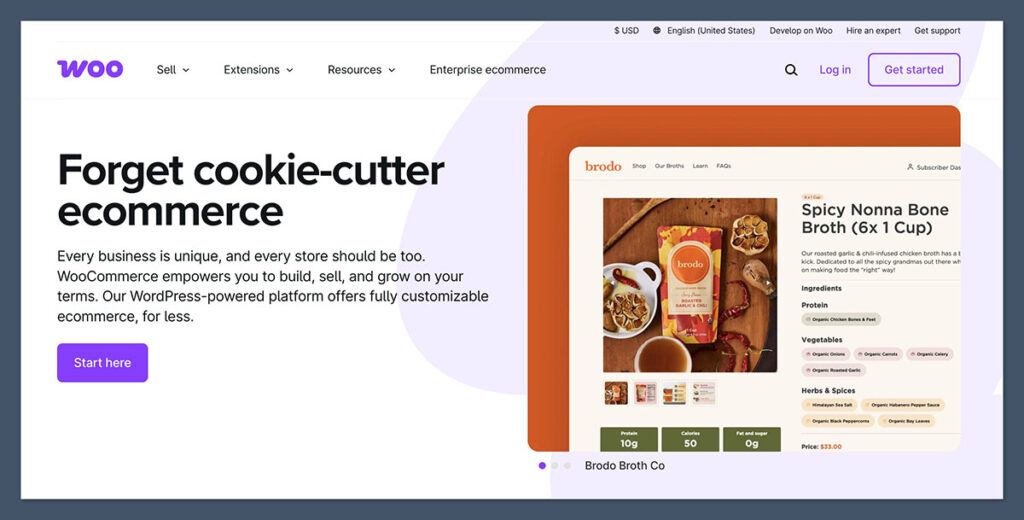
WooCommerce stands out as the most flexible platform, offering complete ownership and control over a store’s code and data. Built on the WordPress framework, it is an ideal choice for existing WordPress users or those who desire granular control over their website’s design, SEO, and functionality.
This extensive flexibility, however, comes with the responsibility of managing hosting, security, updates, and backups. Building a polished and feature-rich store typically requires a greater degree of technical involvement compared to hosted platforms. For retailers accustomed to Lightspeed’s all-in-one, managed solution, this shift in responsibility can be substantial.
Key Features and Pricing:
WooCommerce itself is a free plugin, but the overall cost is determined by the accompanying services and extensions.
| Cost Item | Typical Range | Notes |
|---|---|---|
| WooCommerce plugin | $0 | Open source, free forever |
| Web hosting | $10 to $40 per month | Shared hosting is cheaper; managed WooCommerce hosting offers more support. |
| WordPress.com Commerce plan | $45 per month (annually) | Hosted solution with WooCommerce pre-installed. |
| Domain name | $10 to $20 per year | Often included free for the first year with hosting. |
| Theme | $0 to $100 one-off | Numerous free themes available; premium themes enhance aesthetics. |
| Paid extensions | $49 to $299 per year | Subscriptions, bookings, advanced shipping, and POS extensions are typically paid. |
| WooPayments processing | 2.9% + $0.30 (US) | Additional fees for international cards; other gateways available. |
*Pricing based on typical market rates at the time of writing and subject to change.
Cost Comparison:
WooCommerce can be significantly more cost-effective than Lightspeed Retail, starting with minimal investment in hosting and a domain. However, the cost can escalate rapidly depending on the number and type of premium extensions required to achieve desired functionality, potentially surpassing Lightspeed’s monthly fees. The cost is highly variable, directly correlating with the level of customization and functionality implemented.
WooCommerce is suitable for:
- Businesses that already use or are comfortable with the WordPress ecosystem.
- Retailers prioritizing complete control over their website’s code, design, and data.
- Developers or businesses with the technical expertise to manage their own hosting and security.
- Stores with highly specific or unique operational workflows that hosted platforms cannot accommodate.
WooCommerce isn’t suitable for:
- Beginners or those who prefer a fully managed, hands-off solution.
- Businesses that want to avoid managing technical aspects like hosting, security, and updates.
- Retailers who require an immediate, out-of-the-box POS integration without additional setup.
Wix: The Beginner-Friendly Choice for Design-Centric Stores
Wix is positioned as the most accessible platform for new e-commerce ventures, largely due to its AI-powered website builder and intuitive drag-and-drop editor. It’s an excellent option for small businesses that prioritize aesthetics and seek an all-in-one solution for marketing, email, bookings, and e-commerce within a single dashboard.
However, Wix is not designed for heavy-duty e-commerce operations. Its inventory and in-store management tools are considerably more basic than those offered by Lightspeed or Shopify. Wix POS is also geographically restricted to the US market. For businesses managing large product catalogs or multi-location retail operations, Wix may prove to be a limiting factor.
Key Features and Pricing:
Wix offers a tiered pricing model that includes a free plan for non-selling websites and several paid plans for e-commerce functionality.
| Plan | Monthly (billed annually) | Can you sell online? | Storage | Key Inclusions |
|---|---|---|---|---|
| Free | $0 | No | 500MB | Wix-branded domain and ads |
| Light | $17 | No | 2GB | Custom domain, no ads, basic marketing |
| Core | $29 | Yes | 50GB | Ecommerce, basic analytics, 2 collaborators |
| Business | $36 | Yes | 100GB | Advanced ecommerce, multi-currency, 5 collaborators |
| Business Elite | $159 | Yes | Unlimited | Advanced developer tools, priority support, 15 collaborators |
*Pricing based on US rates at the time of writing and subject to change.
Cost Comparison:
Wix Core, priced at $29 per month billed annually, is approximately one-third the cost of Lightspeed Retail Basic. Even the Business plan, at $36 per month, which is more suitable for active online selling, significantly undercuts Lightspeed’s pricing. Wix offers a more economical solution, trading Lightspeed’s retail depth for enhanced design and marketing capabilities.
Wix is suitable for:
- Small, design-focused businesses looking for an easy-to-use website builder.
- Entrepreneurs launching their first online store.
- Businesses that need integrated marketing and booking tools alongside e-commerce.
Wix isn’t suitable for:
- Retailers with large or complex product inventories.
- Businesses requiring advanced inventory management or multi-location POS capabilities.
- Users outside the US who need access to Wix POS.
Key Considerations When Switching from Lightspeed eCom
Transitioning from Lightspeed eCom requires a careful evaluation of several critical factors to ensure the chosen alternative meets evolving business needs. The decision hinges on understanding what initially attracted businesses to Lightspeed and identifying the specific pain points driving the need for a change.
Eight Key Factors to Evaluate:
- POS Integration: The level of integration between the e-commerce platform and a POS system is crucial for businesses that operate both online and in physical stores. Seamless inventory synchronization, unified customer data, and streamlined sales processing are paramount.
- Pricing Structure: Understanding the total cost of ownership, including monthly fees, transaction fees, app costs, and potential upgrade paths, is vital for budget management.
- Scalability: The platform should be capable of growing with the business, supporting increasing product volumes, higher traffic, and additional sales channels without performance degradation or prohibitive cost increases.
- Design Flexibility: The ability to create a visually appealing and on-brand online storefront is essential for customer engagement and brand identity. This includes template options, customization tools, and the freedom to implement specific design elements.
- Ease of Use: A user-friendly interface and intuitive workflows are important for efficient store management, especially for businesses with limited technical resources.
- App Ecosystem & Integrations: A robust app store or marketplace allows businesses to extend the functionality of their e-commerce platform by integrating with third-party services for marketing, accounting, shipping, and more.
- Inventory Management: Sophisticated inventory tracking, including multi-location support, stock transfers, and purchase order management, is critical for retailers managing complex product lines.
- Customer Support: Reliable and responsive customer support can be invaluable when encountering technical issues or seeking guidance on platform features.
Migrating from Lightspeed eCom
Switching from Lightspeed eCom is feasible, and most alternative platforms allow for the import of product catalogs. However, the migration process is rarely a simple one-click operation. Typically, it involves exporting data from Lightspeed (often in CSV format) and then importing it into the new platform. This process may require data mapping and cleanup to ensure accuracy.
For businesses with extensive product catalogs, customer lists, and order histories, professional migration services like Cart2Cart or LitExtension can automate much of the data transfer for a fee. It is advisable to run both the old and new systems in parallel for a brief period to verify data integrity and inventory counts before fully decommissioning the Lightspeed subscription.
Platform Evaluation Criteria
The evaluation of Lightspeed eCom alternatives was based on a comprehensive set of criteria designed to address the specific needs of retailers transitioning from a POS-centric system:
- Unified Commerce Capabilities: The platform’s ability to manage both online and in-store sales from a single system.
- Online Storefront Features: The quality and depth of tools for website design, product display, and customer experience.
- POS System Integration/Capabilities: The ease and effectiveness of integrating with or utilizing an in-house POS.
- App & Integration Ecosystem: The breadth and quality of available third-party integrations and apps.
- Pricing & Value: The overall cost-effectiveness, considering all associated fees and the features provided.
- Scalability & Growth Potential: The platform’s capacity to support business expansion.
- Design & Customization: The flexibility offered in tailoring the website’s appearance and functionality.
- Ease of Use & Learning Curve: The intuitiveness of the platform’s interface and management tools.
- Inventory Management Depth: The sophistication of tools for tracking and managing stock.
- Payment Processing Options: The flexibility and cost of integrated payment solutions.
Conclusion: Choosing the Right Path Forward
For the majority of retailers seeking a robust alternative to Lightspeed eCom, Shopify stands out as the premier choice. It effectively bridges the gap between online and in-store operations, offering a superior app ecosystem, advanced AI tools, and a clear roadmap for scaling.
However, each platform serves a distinct purpose:
- Shopify: The best all-around solution for unified online and in-store selling.
- Square Online: Ideal for budget-conscious retailers needing a simple, integrated system.
- BigCommerce: The top pick for businesses with large product catalogs and a strong online focus.
- WooCommerce: The ultimate platform for those requiring deep customization and full control, particularly within the WordPress ecosystem.
- Wix: The most beginner-friendly option for design-led small businesses.
Prospective users are encouraged to leverage the free trials and plans offered by these platforms. Square Online and Wix provide perpetual free options, while BigCommerce offers a 15-day trial, and Shopify’s introductory $1-per-month offer for three months allows for thorough testing before commitment. This hands-on experience is invaluable in making an informed decision that aligns with long-term business objectives.