The burgeoning field of AI search optimization, often referred to as Answer Engine Optimization (AEO), represents a critical evolution in digital marketing, focusing on enhancing a brand’s likelihood of being cited and mentioned by emergent AI answer engines such as ChatGPT, Gemini, Perplexity, and Google’s AI Overviews. This strategic shift moves beyond traditional search engine optimization (SEO) by prioritizing direct answers and authoritative mentions within AI-generated responses rather than solely aiming for organic clicks. While traffic directly referred by these AI tools may appear small in volume compared to conventional search, its impact on conversion rates is demonstrably significant. A comprehensive study by Microsoft Clarity, spanning over 1,200 publisher and news sites, revealed that visitors directed by AI tools converted at approximately 11 times the rate of traditional search visitors, underscoring the high intent and value of this nascent channel. HubSpot has been at the forefront of defining and advocating for AEO, positioning it as a distinct yet complementary practice to established SEO methodologies.
The Genesis of Conversational AI and Its Redefinition of Digital Discovery
The landscape of digital search has undergone a profound transformation, propelled by the rapid advancements in generative artificial intelligence. For decades, traditional SEO focused on optimizing content to rank highly in search engine results pages (SERPs), primarily driving clicks to websites. However, the public release of sophisticated large language models (LLMs) like OpenAI’s ChatGPT, followed by Google’s Gemini (formerly Bard) and the integration of AI Overviews directly into Google Search, marked a pivotal moment. Users are increasingly turning to these AI answer engines to receive synthesized, direct answers to their queries, often bypassing the need to click through to external websites. This behavioral shift implies a greater emphasis on brand mentions, data citations, and expert recommendations embedded within the AI’s response itself.
Despite accounting for a relatively small fraction of overall web traffic—Semrush data from 2025 indicated AI traffic made up only 0.14% of visits, while Ahrefs data from May 2026 put its share at less than 1%—the growth trajectory is steep, with Semrush reporting a 66.02% increase in AI traffic in 2025, outpacing almost every other digital channel except paid search. This growth, coupled with the exceptionally high conversion rates, paints a clear picture: AI-referred traffic, though limited in volume, carries an unparalleled level of user intent. Users engaging with AI answer engines are often deeper in their research or decision-making process, seeking conclusive information or direct recommendations, making them highly qualified prospects.
Mechanisms of AI Content Discovery and Citation
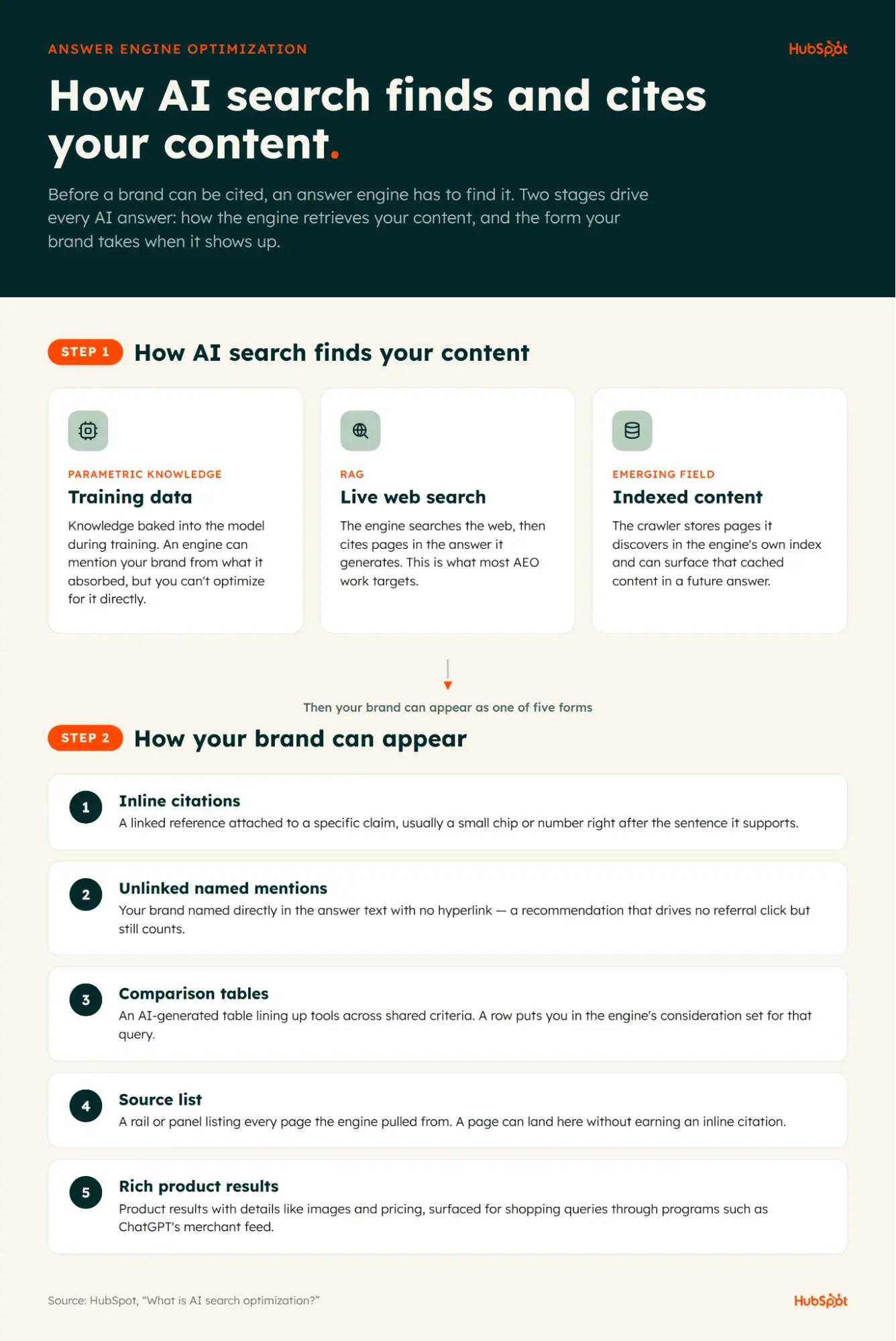
At its core, AI search is powered by Large Language Models (LLMs), sophisticated algorithms trained on vast datasets to understand, process, and generate human-like text. When an answer engine responds to a user query, it employs several mechanisms to source and synthesize information, determining which brands and content to cite:
- Parametric Knowledge: This refers to the information the LLM has assimilated during its initial training phase. It’s the inherent knowledge encoded within the model’s parameters, allowing it to generate answers based on its vast understanding of the world without necessarily performing a real-time web search.
- Retrieval Augmented Generation (RAG): A more recent and powerful technique, RAG combines the LLM’s generative capabilities with a real-time information retrieval system. When a query is made, the system first retrieves relevant documents or snippets from an indexed database (which can include web pages, internal documents, etc.) and then uses the LLM to synthesize an answer based on both its parametric knowledge and the retrieved information. This method ensures answers are more current, factual, and attributable.
- Indexed Content: Similar to traditional search engines, AI answer engines also crawl and index vast portions of the web. This indexed content forms a crucial part of the information pool from which AI models retrieve data, especially for RAG-based systems.
An answer engine can draw from a diverse range of content types to form its responses, encompassing both properties directly owned by a brand and various third-party platforms. These include, but are not limited to, official brand websites, blogs, detailed product pages, social media profiles, customer review platforms, authoritative news articles, academic publications, community forums like Reddit, and video content on platforms such as YouTube. The breadth of these sources means that a brand’s digital footprint across the web significantly influences its potential for AI citation.

Brands can appear in AI answers through several distinct formats, each with unique implications for visibility and user engagement:
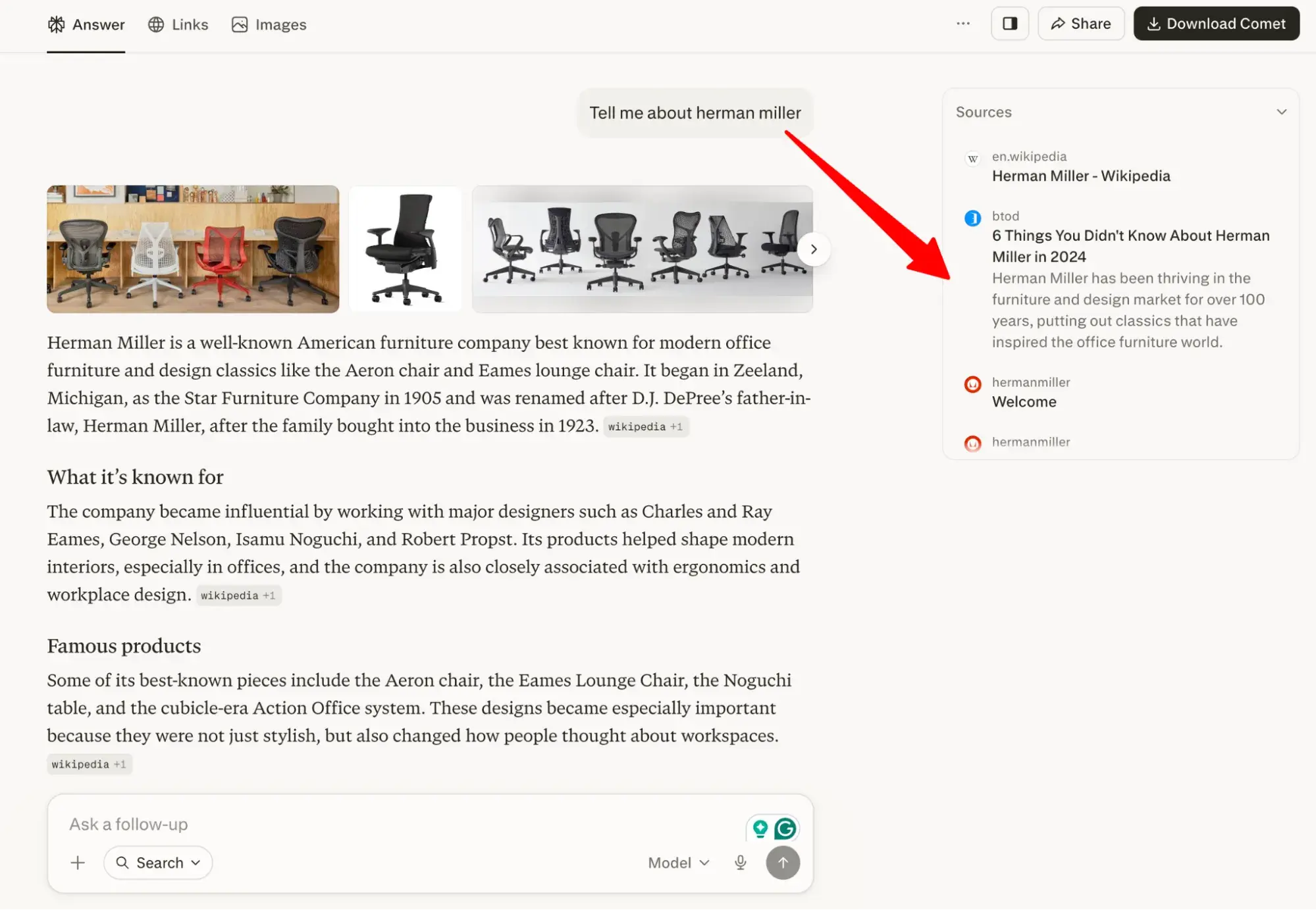
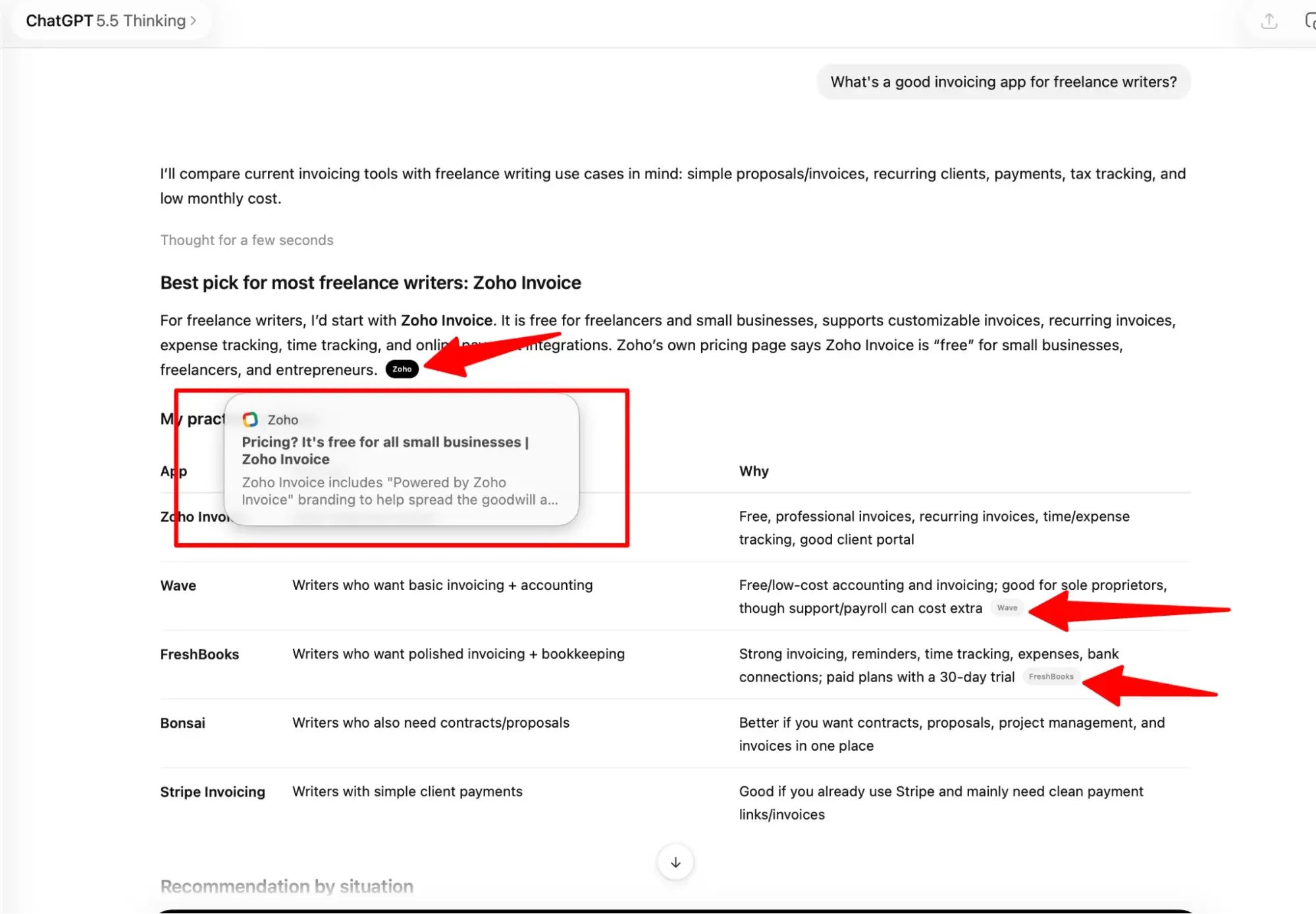
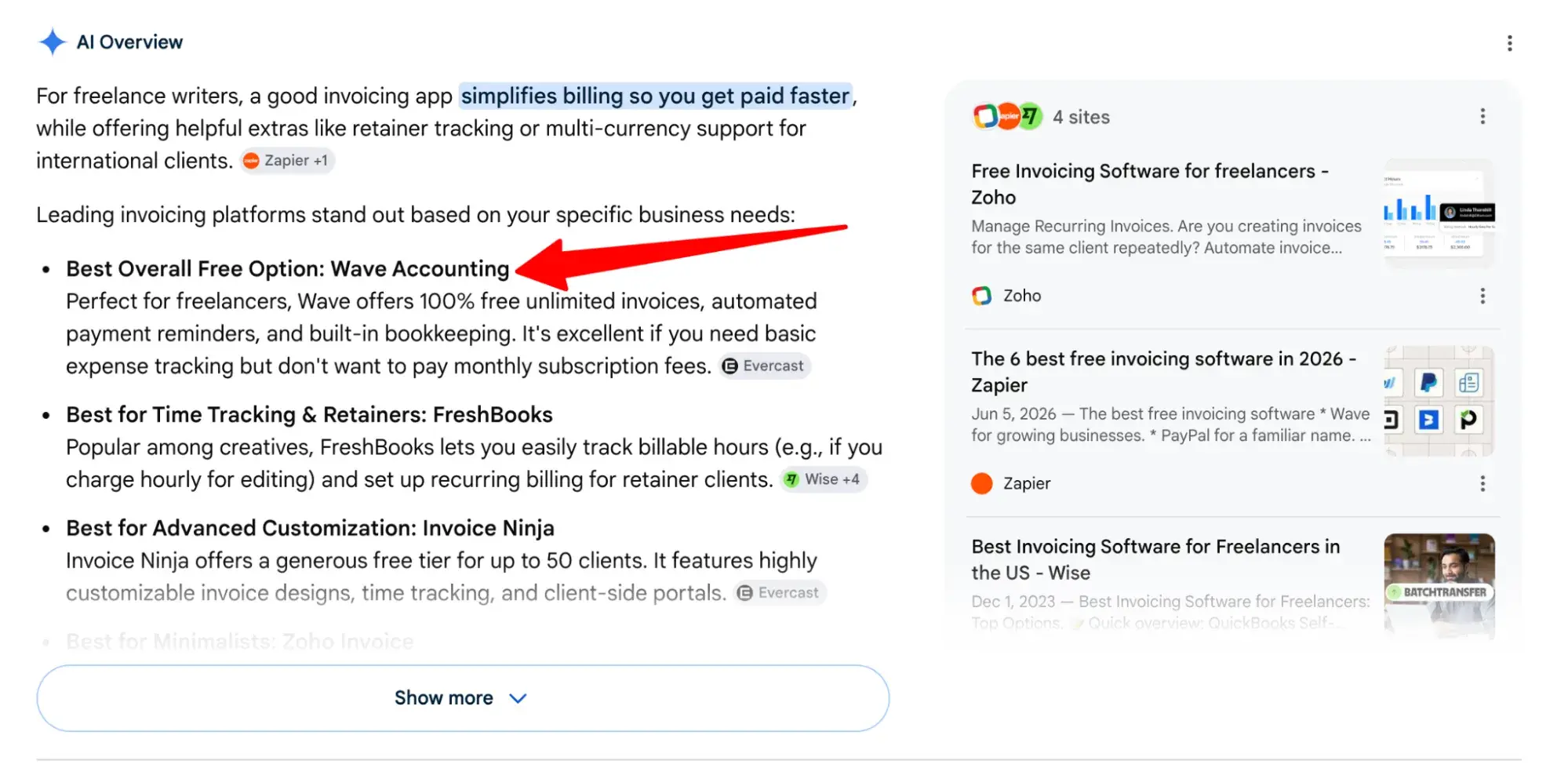
- Inline Citations: These are direct, hyperlinked references to a specific source, typically appearing as a small chip or number immediately following the statement it supports. Clicking an inline citation usually directs the user to the precise section of the source page, offering verifiable proof and direct referral traffic.
- Unlinked Named Mentions: In this scenario, a brand is explicitly named within the AI’s response, often as a recommendation or example, but without an accompanying hyperlink. While these mentions don’t generate direct referral traffic, they are invaluable for brand awareness, reputation management, and influencing user perception, necessitating diligent tracking beyond traditional analytics.
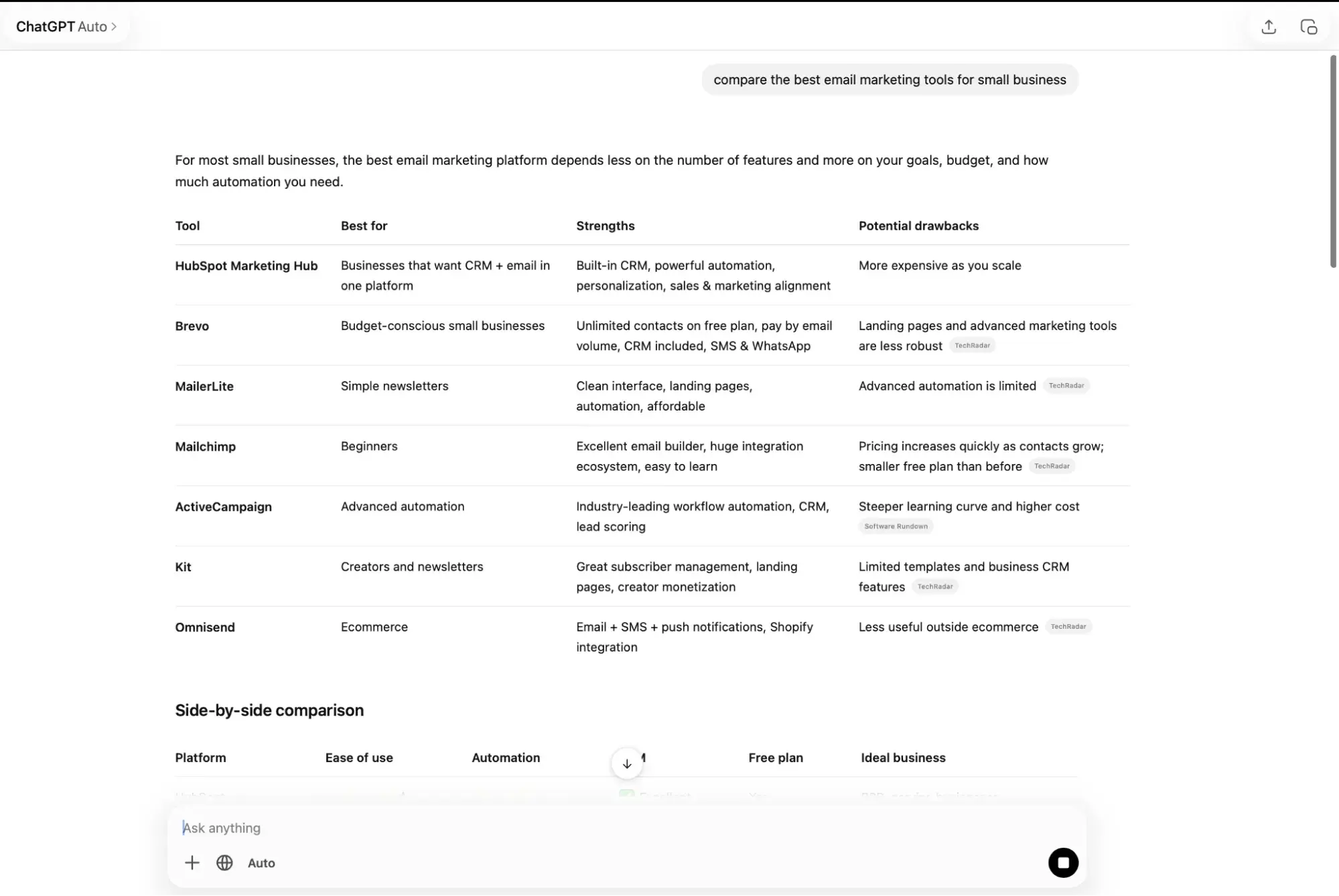
- Comparison Tables: AI models can generate structured tables that compare multiple brands or products based on predefined criteria such as features, pricing, use cases, strengths, and drawbacks. Inclusion in such a table positions a brand within the AI’s consideration set for a given query, making the accuracy of the information presented in these tables crucial for brand positioning.
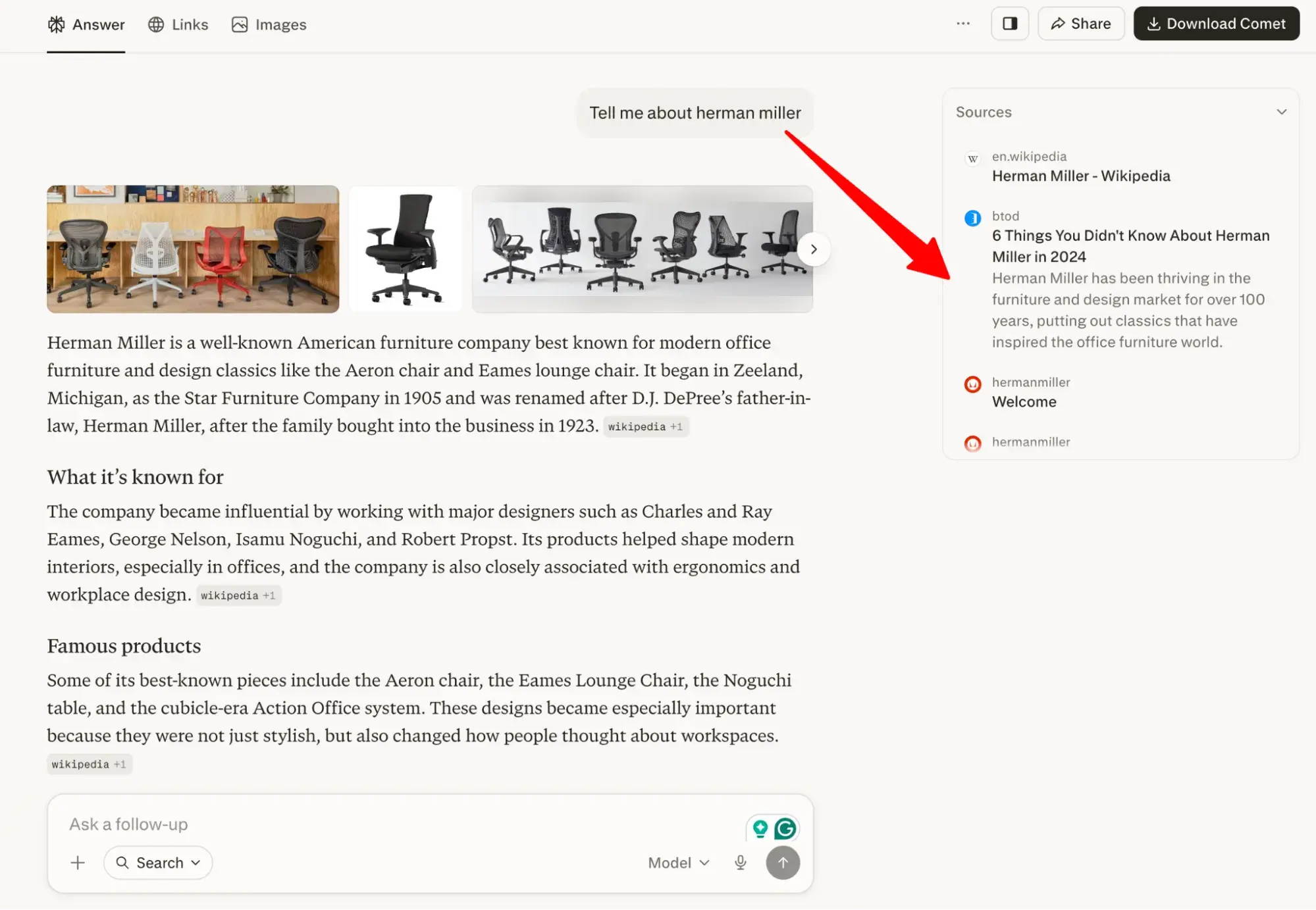
- Source Lists: Many AI answer engines provide a list or panel of all the web pages or sources from which they gathered information to construct their response. A brand’s page can appear in this list even if it wasn’t directly cited inline, offering a broader form of attribution and an opportunity for discovery.
- Rich Product Results: Specifically for shopping-related queries, AI engines can display enhanced product listings that include images, pricing, ratings, and detailed descriptions. ChatGPT, for instance, has developed a merchant program to facilitate such rich product displays, creating a direct path to purchase influence within the AI interface.
AEO Versus Traditional SEO: A Complementary Evolution
The emergence of AEO has sparked considerable debate regarding its relationship with traditional SEO. While distinct, AEO does not replace SEO; rather, it builds upon and complements its foundational principles. The core differences lie in their objectives, audience, and measurement metrics:
- Objective: SEO primarily aims to drive clicks to a website through high organic rankings. AEO, conversely, seeks to ensure a brand is cited or mentioned authoritatively within an AI’s direct answer, even if no click occurs. The goal is to influence user perception and decision-making directly within the AI interface.
- Audience: SEO optimizes for search engine algorithms that serve human users. AEO optimizes for LLMs and AI algorithms, which then generate responses for human users. The target audience is still human, but the intermediary is AI.
- Algorithm Focus: While SEO considers a vast array of ranking factors (keywords, backlinks, technical health, user experience), AEO places a premium on content clarity, conciseness, factual accuracy, demonstrable authority (E-E-A-T), and structured data that AI models can easily parse and trust.
- Measurement: SEO success is traditionally measured by organic traffic, keyword rankings, and click-through rates. AEO metrics expand to include the frequency and sentiment of brand mentions in AI answers, competitive share of voice within AI responses, and the correlation of these mentions with downstream conversions or brand awareness.
- Content Strategy: SEO often involves creating comprehensive, keyword-rich content designed to answer a broad range of related queries. AEO emphasizes creating content with direct, unambiguous answers to specific questions, often formatted for easy extraction by AI.
Crucially, AEO relies on a robust SEO foundation. A technically sound, crawlable, and authoritative website remains essential because AI models, particularly those employing RAG, still rely on indexed web content. Therefore, a holistic digital strategy integrates both SEO and AEO, ensuring content is discoverable by traditional crawlers while also being optimized for AI interpretation and citation.
Strategic Optimization for AI Search Citations
Optimizing content for AI search citations revolves around two fundamental principles: structuring answers for easy AI extraction and embedding signals of credibility and authority that AI engines trust.
Content Formatting for AI Extraction:
- Answer-First Approach: The most critical formatting adjustment for AEO is to adopt an "answer-first" structure. This means beginning a section or paragraph by directly answering the implied question, ideally in a clear subject-predicate-object format (a "semantic triple"). Details, elaborations, and supporting evidence should follow the direct answer. This contrasts with traditional writing, which often builds up to a conclusion. For example, instead of "According to Omnisend, a series of three shopping cart abandonment emails results in 69% more orders. So you can see why reminding buyers of what they left behind in their carts is powerful, right?", an AEO-optimized version would be: "Buyers who receive cart abandonment emails are more likely to complete their purchase. A series of three shopping cart abandonment emails leads to 69% more orders, according to Omnisend." This directness allows AI to easily extract the core factual claim.
- Prompt Research: Analogous to keyword research in SEO, prompt research is vital for AEO. It involves identifying the specific queries and follow-up questions users might ask an AI answer engine. This research guides content creation, ensuring it directly addresses user intent as expressed in conversational AI. Approaches include simulating user interactions with AI tools and analyzing existing AI-generated answers for common themes and knowledge gaps.
- Structured Data (Schema Markup): Schema markup, a specialized code that labels content types for crawlers, can significantly aid AI engines in understanding the context and relationships within a page. While Google’s generative AI optimization guide states no special schema is strictly required for its AI features, it advises continuing its use as part of an overall SEO strategy, as it helps with eligibility for rich results. HubSpot’s "State of AEO 2026" report indicated that FAQ sections paired with schema markup correlated with higher citations in Gemini, Google AI Mode, and Perplexity. Properly implemented schema provides AI with a machine-readable framework, improving its ability to accurately interpret and cite information. Validators like Schema.org’s tool and Google’s Rich Results Test are essential before deployment.
- Focus on Off-Site Signals: Answer engines often verify credibility through external, third-party sources. Research by AEO agency Fan Out revealed that Google AI Overviews sourced 51% of its citations from off-site platforms like review sites. Notably, Reddit and YouTube collectively contribute more AI citations than all other off-site platforms combined, making them exceptionally valuable for brands seeking to bolster their off-site credibility signals.
Establishing Credibility and Authority:
- On-Page Author Bios and E-E-A-T: Demonstrating Experience, Expertise, Authoritativeness, and Trustworthiness (E-E-A-T) is paramount for AI citations. An on-page author bio, detailing an author’s years of experience, areas of expertise, and relevant credentials or publications, carries more citation weight than a mere byline, particularly in AI Overviews, Gemini, and Perplexity. Maintaining a consistent author identity across a brand’s website, LinkedIn, Crunchbase, G2, and other trusted profiles helps AI form a clearer, more authoritative understanding of the source.
- Original Data and External Research: Pages that substantiate their claims are favored by AI engines. Including original statistics, first-party research, survey results, or proprietary benchmarks positions a brand as a unique source of information, making it a prime candidate for citation. When citing external claims, attributing them to credible sources with working outbound links significantly enhances the verifiability and trustworthiness of the information in the eyes of AI. HubSpot’s "State of AEO 2026" found that outbound links correlated with increased citations, especially in AI Overviews and Gemini.
Technical Structure for AI Searchability
Beyond content, the technical foundation of a website plays a critical role in whether AI answer engines can effectively read, understand, and trust a page.
- Schema Markup and Semantic HTML: These elements provide crucial structural cues for AI. Semantic HTML, using tags like
<header>,<nav>,<article>,<section>, and<footer>, helps screen readers and AI crawlers parse and navigate a page’s structure logically. This structural clarity, combined with accurate schema markup, enables AI to better interpret entity relationships and extract information. While Google advises against over-focusing on schema specifically for AI features, its benefits for overall SEO and machine readability are undeniable. - Server-Side Rendering (SSR) and Static Site Generation (SSG): Many AI crawlers, unlike Google’s advanced rendering capabilities, cannot execute JavaScript. This means that content loaded client-side after the initial page response remains invisible to them. To ensure content is fully accessible to a broader range of AI engines, implementing server-side rendering or static site generation is essential. These methods deliver a fully populated HTML page in the initial response, making all content immediately visible and crawlable to AI models before any client-side scripts run.
Leveraging Off-Page Signals for AI Visibility
Off-page signals, references to a brand on external sites, significantly strengthen AI visibility and trust.
- PR and Bylines for Authority: Earned media, encompassing press mentions, expert quotes, and bylines in high-authority publications, is a powerful driver of AI citations. Fan Out’s analysis of over 33,000 AI citations found that ChatGPT heavily relies on publisher-controlled sources, with 78% of its citations coming from such origins. News and media sites alone constitute 9.5% of all ChatGPT citations, according to Semrush. Digital PR strategies focused on getting brand experts quoted or published on reputable outlets effectively ties an author’s name to an authoritative domain, reinforcing entity recognition and E-E-A-T signals.
- Local and E-commerce Optimization: While AI Overviews show up for a relatively low percentage of shopping (3.2%) and local (7.9%) searches (Ahrefs), conversational AI engines present a significant opportunity. HubSpot’s "State of AEO 2026" indicated that product listings and landing pages were cited in 86% of ChatGPT queries and 84% of Perplexity queries tested. For e-commerce, optimizing product feeds, crafting clear and detailed product descriptions, and employing Product and Offer schema markup are crucial. Similarweb’s 3rd Annual Global Ecommerce Report revealed that ChatGPT-referred e-commerce visits convert at 11.4% compared to 5.3% for organic search, highlighting the high value of this channel. Brands using AI to generate product data must adhere to Google Merchant Center policy. For local businesses, AI visibility remains challenging, with multi-location brands surfacing in ChatGPT recommendations only 1.2% of the time versus 35.9% in Google’s local 3-pack (SOCi’s 2026 Local Visibility Index). To improve this, maintaining complete and consistent Google Business Profiles, ensuring uniform Name, Address, and Phone (NAP) across all directories, and implementing LocalBusiness schema on location pages are vital.
Avoiding Common Pitfalls in AI Search Optimization
As with any emerging field, AI search optimization is prone to misconceptions and ineffective tactics. Understanding what not to do is as important as knowing what to implement.
- No Special Files for AI: There is no need to create dedicated
llms.txtfiles, separate Markdown versions of pages, or other machine-readable formats solely for AI. Google explicitly states that its AI features, including AI Overviews, do not use these files, and maintaining them will neither help nor harm visibility. Attempting to serve bot-only versions of content can be misconstrued as cloaking, a practice that violates Google’s spam policies. - Avoid Over-Chunking Content as a Gimmick: While logical structure and clear headings aid AI in passage retrieval, artificially fragmenting content into overly short, one-sentence paragraphs or excessive FAQ-style snippets is counterproductive. Google’s Danny Sullivan has advised against this, emphasizing that a well-structured page with natural retrieval boundaries is sufficient. Prioritizing perceived ranking signals over human readability ultimately detracts from user experience.
- Steer Clear of Commodity or Mass-Produced Content: AI answer engines prioritize unique, authoritative, and insightful information. Recycling existing content or using AI to generate high volumes of unoriginal pages to game rankings is classified as "scaled content abuse" and directly violates Google’s spam policies. Content that truly earns citations is people-first, offering a first-hand perspective, original data, or expert insights unavailable elsewhere. A key principle to remember is: if a tactic requires creating content solely for a bot, it is likely a red flag; lasting AI search strategies are those that genuinely serve human readers.
Measuring AI Visibility and Operationalizing the Strategy
The advent of AI answer engines necessitates a reevaluation of how digital success is measured. Clicks, while still relevant, no longer capture the full spectrum of AI’s influence, as users can form opinions and make decisions based on AI-generated answers without ever visiting a brand’s website. Measuring AI search success involves tracking brand mentions, assessing sentiment, and correlating AI visibility with pipeline generation.
- Assessing AI Visibility with Graders: Tools like HubSpot’s AEO Grader offer a diagnostic snapshot of how AI engines (ChatGPT, Perplexity, Gemini) currently perceive a brand. This free, one-time assessment provides a composite score across sentiment, presence quality, brand recognition, share of voice, and market competition. It also allows for competitive analysis, revealing where competitors are cited and a brand is not. While valuable for a baseline, ongoing monitoring is required to track trends over time.
- Connecting Visibility to Pipeline: The ultimate measure of AEO effectiveness lies in its impact on business outcomes. Data suggests AI-referred visitors convert at significantly higher rates. The Microsoft Clarity dataset indicated that AI-referred visitors converted at approximately three times the rate of visitors from other traffic sources. HubSpot’s own experience, after focusing on AEO, demonstrated an impressive 1,850% growth in qualified leads from AI, with those leads converting at three times the rate of leads from other sources. To fully understand this impact, AI visibility data must be integrated with demand generation metrics and CRM systems, allowing brands to correlate increased AI citations with a rise in form fills, demo requests, or sales.
Preparing for the Era of AI Agents
Looking ahead, the evolution of AI is moving beyond simply answering questions to actively completing tasks. AI agents, such as OpenAI’s ChatGPT agent and Perplexity’s Comet, are capable of navigating websites, filling out forms, and executing actions on a user’s behalf within logged-in sessions. Commerce agents, through initiatives like OpenAI’s Agentic Commerce Protocol, can even surface products and facilitate purchases by interfacing directly with merchant systems.
Readiness for AI agents largely extends the principles of AEO. Agents rely on reading rendered pages and interpreting structured, machine-readable signals. Therefore, pages that are already clean, well-structured, and optimized for AEO are inherently better prepared for agent interaction. Key steps for brands include:
- Optimizing Semantic HTML: Ensuring web pages utilize correct and meaningful HTML tags helps agents understand the page structure and content hierarchy.
- Robust Structured Data Implementation: Detailed and accurate schema markup is crucial for agents to parse specific information (e.g., product details, service offerings, business hours) and execute actions reliably.
- Enhanced Accessibility: Ensuring website elements and controls are accessible to assistive technologies also makes them interpretable by AI agents, allowing them to interact with forms, buttons, and navigation effectively.
- Comprehensive Product Feeds: For e-commerce, maintaining up-to-date and richly detailed product feeds is essential for agents to accurately represent and facilitate product discovery and purchase.
Most organizations will not require a complete tech stack overhaul or a new CMS. In many cases, improving server-side rendering, refining structured data, enhancing accessibility, and optimizing product feeds will suffice. Agents operate on the same foundation of crawlable, machine-interpretable pages that AEO already advocates.
Conclusion: Navigating the New Era of Digital Discovery
AI search optimization represents a fundamental shift in how brands achieve digital visibility and influence. Distinct yet deeply intertwined with traditional SEO, AEO demands a proactive and holistic strategy centered on clarity, authority, and machine readability. While the direct traffic volume from AI answer engines may still be developing, the unparalleled intent and conversion rates of AI-referred visitors underscore its strategic importance. By embracing an answer-first content approach, leveraging robust technical structures, building credible off-page signals, and diligently measuring AI visibility alongside traditional metrics, brands can effectively navigate this evolving landscape. As AI agents move from providing answers to executing tasks, the principles of AEO will only become more critical, ensuring brands remain relevant and discoverable in the conversational and agentic future of the web. The enduring plays for AI search are those that prioritize serving users with verifiable, authoritative, and easily digestible information, making them valuable to both human audiences and intelligent machines.