rifanmuazin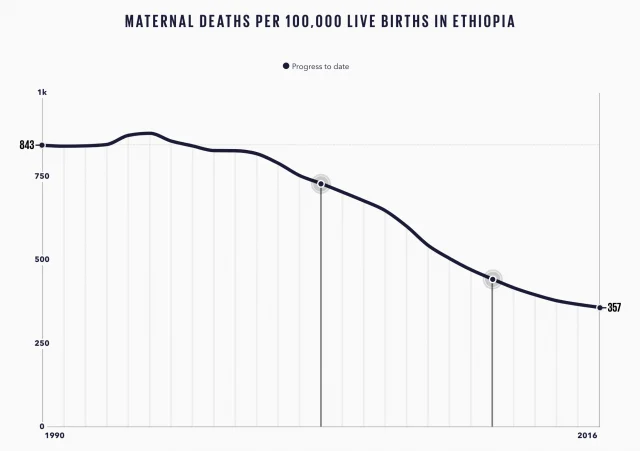
The launch of the inaugural Goalkeepers report by the Bill and Melinda Gates Foundation in 2017 marked a significant turning point in the monitoring of global development. Titled "Goalkeepers: The Stories Behind the Data," the report was designed to track the progress of the United Nations Sustainable Development Goals (SDGs), focusing on the most persistent challenges facing humanity, including extreme poverty, infectious diseases, and maternal health. By synthesizing vast datasets into actionable insights, the foundation sought to diagnose urgent problems and identify scalable solutions. One of the most critical metrics highlighted in the 2017 report was the maternal mortality ratio (MMR), a key indicator of a nation’s overall health system strength and social equity.
The Goalkeepers initiative serves as an annual scorecard, intended to hold the international community accountable for the promises made in 2015 when the SDGs were adopted. The report emphasizes that while significant strides have been made since the 1990s, the pace of progress must accelerate to meet the 2030 deadline. Central to this mission is the use of high-quality data to tell the human stories behind the numbers, particularly in regions like Sub-Saharan Africa and South Asia, where the burden of maternal mortality remains disproportionately high.
A Chronology of Global Maternal Health Initiatives
The fight against maternal mortality has evolved through several distinct phases over the last three decades. Understanding the current status of global health requires a look at the timeline of international commitments and the shift from the Millennium Development Goals (MDGs) to the current Sustainable Development Goals (SDGs).
In 1990, the global maternal mortality ratio was estimated at 385 deaths per 100,000 live births. At this time, maternal health was often overlooked in broader economic development discussions. This changed in 2000 with the adoption of the Millennium Declaration. MDG 5 specifically targeted a 75% reduction in the maternal mortality ratio by 2015. While the world did not meet this ambitious target, the MDG era saw a 44% decline in maternal deaths, proving that targeted interventions and international funding could yield results.
By 2015, the United Nations transitioned to the Sustainable Development Goals. SDG Target 3.1 set a new, even more ambitious global goal: reducing the maternal mortality ratio to less than 70 per 100,000 live births by 2030. The Goalkeepers 2017 report was the first major independent assessment of where the world stood two years into this new framework. It identified that while the global trend was positive, the "last mile" of healthcare delivery remained the most difficult to navigate.
Ethiopia: A Case Study in Rapid Progress
The Goalkeepers 2017 report singled out Ethiopia as a primary example of how focused government policy and community-based intervention can drastically alter a nation’s health trajectory. Ethiopia’s success is particularly noteworthy given its starting point in the early 1990s. In 1990, the country’s maternal mortality ratio stood at a staggering 843 deaths per 100,000 live births. By 2015, this figure had plummeted to 357, representing a more than 50% reduction.
This progress was not accidental. In 2003, the Ethiopian government launched the Health Extension Program (HEP), an innovative initiative designed to bring primary healthcare to rural populations. The government trained and deployed over 38,000 female health extension workers. These workers were recruited from their own communities, ensuring trust and cultural alignment. They focused on "preventative" care, including family planning, immunization, and educating families on the importance of facility-based deliveries rather than home births without skilled attendants.
The Gates Foundation report highlights that Ethiopia’s model succeeded because it addressed the "three delays" that contribute to maternal death: delay in deciding to seek care, delay in reaching a healthcare facility, and delay in receiving adequate care at the facility. By placing health workers directly in villages, Ethiopia significantly reduced the first two delays.
Analyzing the Global Dataset: UNICEF and WHO Statistics
To provide a broader context to the Goalkeepers report, data from UNICEF and the World Health Organization (WHO) offers a sobering look at the scale of the challenge. In 2015, the year marking the end of the MDG era, approximately 302,530 women died worldwide due to complications related to pregnancy and childbirth. This equates to a global MMR of roughly 168.7 deaths per 100,000 live births.
The data reveals a stark divide between developed and developing nations. In high-income countries, the MMR is often in the single digits. In contrast, Sub-Saharan Africa accounts for roughly two-thirds of all maternal deaths globally. The leading causes of these deaths—postpartum hemorrhage, sepsis, hypertensive disorders (such as eclampsia), and complications from unsafe abortions—are almost entirely preventable or treatable with modern medical intervention.
A deep dive into the UNICEF maternal mortality dataset shows that while countries like Ethiopia, Rwanda, and Cambodia have made historic gains, others have stagnated. Factors such as political instability, lack of clean water, and the absence of paved roads to transport laboring women to hospitals remain significant barriers. Furthermore, the data suggests that a mother’s death has a "multiplier effect" on a community. Statistics show that when a mother dies, her surviving children are significantly less likely to survive to age five, receive adequate nutrition, or complete their education.
Official Responses and Expert Perspectives
The Bill and Melinda Gates Foundation has been vocal about the moral and economic necessity of prioritizing maternal health. In the 2017 report, Bill and Melinda Gates stated, “If you were trying to invent the most efficient way to devastate communities and put children in danger, you would invent maternal mortality.” This sentiment is echoed by global health leaders who argue that maternal survival is a litmus test for the functionality of a country’s health infrastructure.
Dr. Tedros Adhanom Ghebreyesus, the Director-General of the WHO and former Minister of Health for Ethiopia, has frequently cited the Ethiopian model as a blueprint for other developing nations. Experts emphasize that the "Goalkeepers" approach of using data to spark competition and collaboration among nations is essential. By making the data public and easily digestible through visualizations, the foundation forces a level of transparency that was previously missing from global development.
Public health analysts also point out that the 2017 report underscored the importance of "data democratization." By using tools such as interactive charts and accessible spreadsheets, the report allowed non-specialists to engage with complex epidemiological data. This transparency is intended to empower local advocates and policymakers to demand better resources and more efficient healthcare spending.
Technical Implications and the Role of Data Visualization
The Goalkeepers report is widely praised not just for its content, but for its information design. In the era of information overload, the foundation utilized a multi-medium approach—incorporating text, video, and interactive animations—to ensure the data resonated with a global audience. This approach addresses a common problem in global health: the "data-to-action gap." Often, high-quality data exists in silos but fails to influence policy because it is not presented in a way that decision-makers can understand.
The use of horizontal bar charts to compare country-by-country progress and the integration of time-series animations allowed users to see the velocity of change. For instance, comparing Ethiopia’s progress against the global average provides a visual narrative of success that a static number cannot convey. This method of storytelling through data has become a standard for international NGOs, as it bridges the gap between cold statistics and the human lives they represent.
Broader Impact and the Path to 2030
The implications of the Goalkeepers 2017 report extend far beyond maternal mortality. It set a precedent for how global progress should be measured in the 21st century. The report argues that poverty and health are inextricably linked; you cannot fix one without addressing the other. Maternal mortality is a particularly sensitive indicator because it requires a functioning "continuum of care"—from prenatal visits and skilled birth attendance to emergency obstetric care and postnatal follow-up.
Looking ahead to the 2030 SDG targets, the challenges remain formidable. To reach the goal of fewer than 70 deaths per 100,000 live births, the world needs to accelerate its current rate of progress by nearly three times. This will require not only continued financial investment from organizations like the Gates Foundation and donor nations but also a commitment to strengthening primary healthcare systems in the world’s most vulnerable regions.
The Goalkeepers report serves as both a celebration of what has been achieved and a warning of what could happen if global attention wanes. As the foundation notes, progress is possible but not inevitable. The success of Ethiopia proves that with political will and data-driven strategies, the "devastating" impact of maternal mortality can be mitigated. However, as long as hundreds of thousands of women continue to die from preventable causes, the work of the "Goalkeepers" remains unfinished. The ongoing collection and analysis of data will be the primary tool in ensuring that the world stays on track to meet its promises to mothers and children everywhere.