rifanmuazin
The digital landscape in March 2026 continues its rapid evolution, fundamentally reshaped by the pervasive integration of Artificial Intelligence. Yoast’s monthly webinar series, a critical resource for SEO professionals navigating this dynamic environment, convened to dissect the latest developments in search and AI. Hosted by industry veterans Carolyn Shelby and Alex Moss, this session underscored how AI is not merely influencing but actively redefining search paradigms, compelling brands to recalibrate their digital strategies and prioritize new avenues of discoverability and influence. The webinar provided a comprehensive overview of Google’s strategic maneuvers and broader industry shifts, emphasizing the urgent need for brands to adapt to an AI-first reality where traditional metrics and methodologies are increasingly challenged.
The Shifting Sands of Search: AI at the Forefront
The early 2020s witnessed an "AI Spring," characterized by groundbreaking advancements in large language models and generative AI. By March 2026, this initial wave of innovation has matured, leading to a profound integration of AI into nearly every facet of digital interaction. Search, once dominated by the "10 blue links," is now a complex interplay between traditional indexing and AI-driven synthesis, personalization, and even content generation. Yoast, a long-standing authority in search engine optimization, positions its monthly updates as essential navigational guides for professionals grappling with these monumental shifts. Their March 2026 update served as a crucial checkpoint, offering insights into how these macro trends translate into actionable strategies for businesses and content creators. The core message was clear: adaptability, foresight, and a nuanced understanding of AI’s capabilities are paramount for maintaining visibility and relevance.
Key Developments from March 2026
The webinar highlighted several pivotal developments, each carrying significant implications for SEO and broader digital marketing strategies.
AI Tools Go Personal and Mobile: The Ubiquitous AI Companion
A significant trend observed in March 2026 is the further integration of AI tools beyond standalone applications, making them increasingly personal and mobile. This shift sees AI assistants embedding themselves directly into existing messaging platforms, such as Claude’s enhanced support for Telegram and Discord, and desktop environments like Meta’s "My Computer" initiative. This evolution signifies a move towards ambient intelligence, where AI capabilities are seamlessly woven into the fabric of daily digital interactions rather than requiring dedicated app launches.
Background and Analysis: This trend is a natural progression from the widespread adoption of mobile devices and the increasing reliance on messaging applications for communication. Users, accustomed to instant access and personalized experiences, now expect AI to meet them where they already are. Data from market research firms consistently show that messaging apps command significant daily user engagement, making them prime targets for AI integration. For instance, by early 2026, global statistics indicated that the average smartphone user spent upwards of 3-4 hours daily on messaging and social media platforms. The analytical implication for brands is profound: content discoverability can no longer be solely focused on traditional search engine results pages (SERPs). Instead, a multi-surface content strategy is imperative. Brands must ensure their information is not only findable but also appropriately formatted and contextually relevant for AI agents operating within these diverse interfaces. This requires an emphasis on clear, concise, and semantically rich content that can be easily parsed and synthesized by AI models, regardless of the platform.
Actionable Takeaway: Brands must audit their content for direct answerability and conciseness, preparing it for conversational AI interfaces. Develop a comprehensive multi-platform content strategy that considers how information will be presented and discovered within messaging apps, desktop assistants, and other integrated AI environments. Prioritize brand consistency across all potential AI touchpoints to ensure accurate representation.
Google’s AI-Generated Landing Pages Patent: A Glimpse into the Post-SERP Future
Perhaps one of the most significant revelations discussed was Google’s patent filing describing a system for generating AI-powered landing pages to replace traditional SERPs. This patent, circulating among SEO professionals in March 2026, suggests a radical departure from the long-standing "10 blue links" model, where Google acted primarily as a directory. Instead, the patent outlines a future where Google’s AI could synthesize information from various sources to create entirely new, customized landing pages directly addressing user queries.
Background and Analysis: This development is not entirely unforeseen. Google has been experimenting with generative AI in search for years, notably through its Search Generative Experience (SGE), which provided AI-summarized answers directly within the search interface. The patent, however, indicates a potential formalization and expansion of this capability, hinting at a future where the search journey might bypass traditional websites altogether for many queries. Data preceding 2026 already showed a consistent increase in "zero-click searches," where users found their answers directly on the SERP without clicking through to a website. This patent could accelerate that trend exponentially. The analytical implication is severe for publishers and brands reliant on organic traffic. Traditional ranking metrics, such as keyword positions and click-through rates, may diminish in relevance. Instead, brands will need to focus on establishing an unassailable authority and ensuring their information is a trusted source that Google’s AI will draw upon. Controlling the brand narrative across multiple authoritative sources becomes critical to ensure accuracy and favorable representation within these AI-generated pages.
Actionable Takeaway: Brands must prioritize entity SEO, building a robust and verifiable knowledge graph presence. Diversify traffic acquisition strategies beyond sole reliance on Google organic search. Invest heavily in brand storytelling and reputation management across all authoritative platforms, ensuring factual accuracy and positive sentiment that AI models can readily corroborate. Actively monitor how AI synthesizes and represents your brand information.
Markdown: The AI’s Preferred Language for Efficiency
Another notable trend highlighted was the increasing preference for Markdown as a lightweight, AI-friendly content format. This was evidenced by WordPress.org’s new offering of Markdown versions of pages specifically for AI agents and developers, alongside tools like Cloudflare’s crawl endpoint, which facilitate efficient parsing of Markdown content by AI systems.
Background and Analysis: Markdown’s simplicity, characterized by its minimal syntax for formatting text, makes it exceptionally efficient for machine processing compared to complex HTML. This efficiency translates into lower computational costs and faster data ingestion for large language models (LLMs), which are constantly seeking clean, structured data. While Google officially downplays Markdown’s direct importance as a ranking factor, the broader AI ecosystem clearly benefits from its adoption. The analytical implication is that while not a direct SEO signal, a clear and semantically structured content architecture—which Markdown naturally encourages—can significantly improve how AI models understand, summarize, and utilize content. This indirectly enhances content discoverability and representation in AI-driven search results. It emphasizes the need for technical SEO to consider how AI ingests and interprets content, favoring clarity and structured organization.
Actionable Takeaway: Implement robust semantic HTML and structured data (Schema.org) across all web content. Explore the use of Markdown for internal content creation and for providing AI-specific content feeds where appropriate. Prioritize clear, concise content architecture and logical headings to improve parseability by automated systems.
Google Search Console’s New Branded vs. Non-Branded Filter: A Deeper Dive into Intent
In a practical update for SEO professionals, Google Search Console introduced a new filter to differentiate between branded and non-branded queries. This granular insight allows brands to more effectively analyze user intent and optimize their content and marketing strategies accordingly.
Background and Analysis: This feature addresses a long-standing need within the SEO community for more nuanced data on how users search for and discover brands. Previously, differentiating between users actively seeking a specific brand and those searching for generic terms that eventually led to a brand’s site was more challenging. This filter reflects Google’s continuous effort to provide actionable data that empowers marketers. The analytical implication is significant: if a substantial portion of traffic comes from non-branded queries, it signals a potential opportunity to refine messaging, target new audience segments, or address specific user needs that are not currently tied to the brand name. Conversely, a strong branded search performance indicates robust brand recognition and loyalty. This tool allows for more precise competitive analysis and a better understanding of market perception.
Actionable Takeaway: Regularly leverage the branded vs. non-branded filter in Google Search Console to gain deeper insights into user intent. Analyze non-branded queries driving traffic to identify new content opportunities, refine messaging, and potentially uncover new target audiences. Use this data to inform broader content marketing, advertising, and brand positioning strategies.
Google Maps Integrates AI for Search: The Conversational Local Search

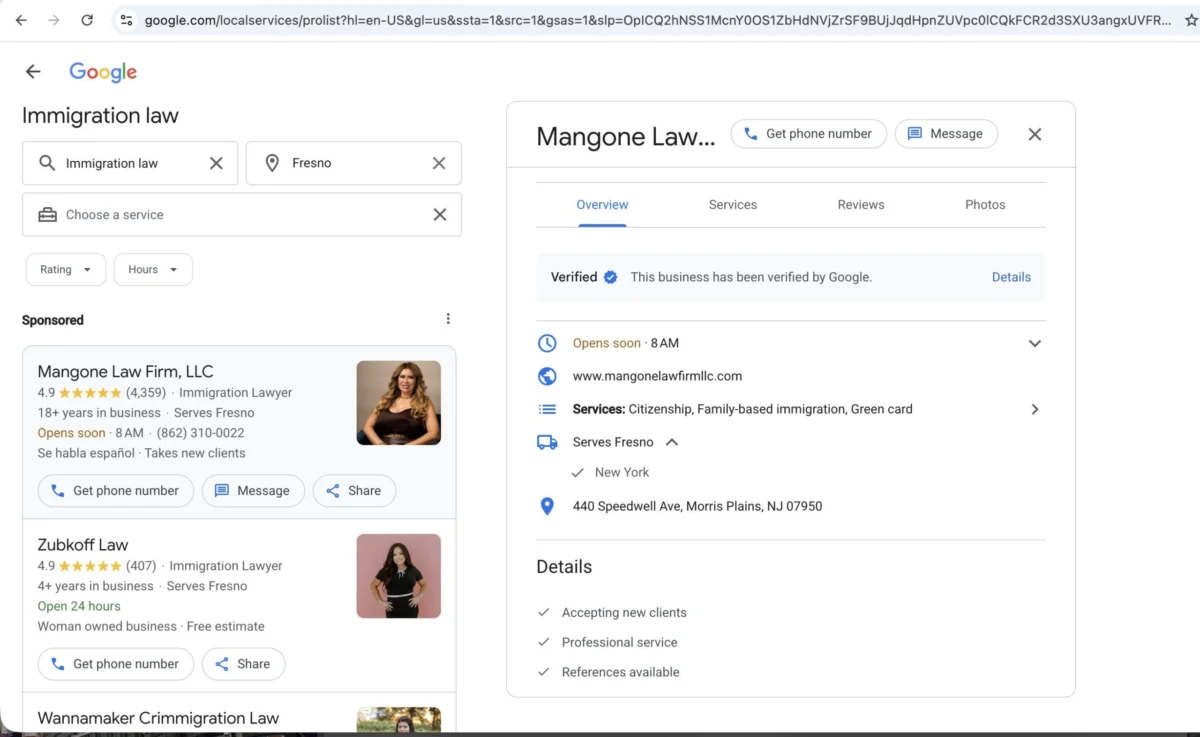
Google Maps is actively testing an AI-powered chat feature, allowing users to pose natural language questions such as "Find a Starbucks on my route." While early feedback in March 2026 suggested that its accuracy might not yet match traditional keyword-based search, this development signals a clear direction for local search.
Background and Analysis: This integration marks a significant convergence of local search, conversational AI, and navigation. Google’s ambition is to transform Maps into an even more comprehensive utility, anticipating user needs through intelligent conversation. The initial accuracy challenges are typical for nascent AI features, but the rapid pace of AI development suggests swift improvements. The analytical implication for local businesses is profound: local SEO is evolving beyond optimizing Google Business Profiles for specific keywords. It now requires optimizing for conversational queries and contextual understanding. Businesses must ensure their online information is not only accurate and up-to-date but also rich and detailed enough for AI to draw nuanced conclusions (e.g., "Starbucks with outdoor seating that’s pet-friendly on my route"). Voice search and natural language processing are becoming paramount for local discoverability.
Actionable Takeaway: Optimize Google Business Profile (GBP) extensively with rich, up-to-date, and detailed information. Incorporate natural language descriptions that anticipate conversational queries. Actively encourage and respond to customer reviews that provide specific details about services, amenities, and unique selling propositions, as these feed AI models.
Universal Commerce Protocol (UCP) Expands: Google’s Vision for AI-Driven E-commerce
Google’s Universal Commerce Protocol (UCP), an open standard designed to facilitate AI-driven e-commerce, saw significant expansion in March 2026. New features include enhanced cart management, sophisticated catalog search, and identity linking for loyalty programs. This aims to create a streamlined, AI-powered shopping experience across various platforms.
Background and Analysis: UCP represents Google’s long-term strategy to deepen its involvement in the e-commerce transaction funnel, building upon previous initiatives like Google Shopping. By offering an "open standard," Google seeks broad adoption, positioning itself as a central facilitator for AI-powered commerce. This could fundamentally reshape how consumers discover, evaluate, and purchase products, allowing AI agents to handle entire transaction flows seamlessly. Data consistently points to the importance of frictionless shopping experiences and the potential of AI to personalize recommendations and reduce cart abandonment. The analytical implication for e-commerce brands is critical: early adoption of UCP is not merely a technical compliance issue but a strategic imperative to secure a presence within this emerging commerce ecosystem. It offers opportunities for highly personalized customer journeys but also presents challenges in maintaining brand distinctiveness within a standardized protocol.
Actionable Takeaway: E-commerce brands must closely monitor UCP developments and explore integration with their existing platforms. Ensure product data is highly structured, comprehensive, and accurate, providing AI agents with all necessary information. Leverage identity linking capabilities for loyalty programs and personalized customer experiences within UCP-compatible environments. Understand how AI agents will represent and recommend your products within this new framework.
Zero-Click Search Doesn’t Mean Zero Influence: Rand Fishkin’s Enduring Insight
Rand Fishkin’s keynote at the Industrial Marketing Summit delivered a powerful message: while zero-click searches are undeniably on the rise, they do not equate to zero influence for brands. He emphasized that AI models rely heavily on corroborating signals, meaning a brand’s consistent, authoritative presence across multiple platforms remains crucial for validation.
Background and Analysis: Fishkin has long been a leading voice in highlighting the phenomenon of zero-click searches, where users find their answers directly on the SERP without visiting a website. In the era of generative AI, this trend is exacerbated as AI summarizes and synthesizes information. However, his insight underscores that AI doesn’t invent information; it sources it. AI models prioritize information from entities that demonstrate strong Experience, Expertise, Authoritativeness, and Trustworthiness (E-E-A-T) across a diverse range of credible sources. The analytical implication is that SEO must evolve beyond simply driving clicks to building comprehensive brand authority and entity recognition. A single website is insufficient; a multi-channel strategy encompassing content marketing, public relations, social media, and industry mentions is vital to establish the corroborating signals that AI trusts. Influence, in this context, is about being the recognized, trusted source that AI will draw upon, even if it doesn’t result in a direct click.
Actionable Takeaway: Invest in building a robust, multi-channel content ecosystem. Actively cultivate brand mentions, citations, and links across high-authority websites and industry publications. Prioritize building and demonstrating E-E-A-T through expert content, author bios, and transparent business practices. Understand that influence in the AI era is about being a recognized entity that AI models rely on for authoritative information.
Strategic Priorities for Brands in 2026
The March 2026 SEO Update by Yoast crystallized several critical strategic priorities for brands and SEO professionals aiming to thrive in the AI-dominated digital landscape:
-
Embrace Multi-Platform Discoverability: Move beyond a singular focus on traditional Google SERPs. Content must be designed for discoverability and consumption across a myriad of AI-integrated platforms, including messaging apps, voice assistants, desktop environments, and specialized AI tools. This means optimizing for direct answers and contextually relevant snippets.
-
Master Semantic Content and Structured Data: The clarity and structure of content are paramount for AI ingestion. Brands must rigorously implement semantic HTML, structured data (Schema.org), and explore lightweight, machine-readable formats like Markdown. This ensures content is easily parsed, understood, and accurately represented by AI models.
-
Prioritize Brand Authority and Narrative Control: With AI potentially generating content directly, controlling the brand narrative across multiple, authoritative sources is crucial. Brands must actively build a strong entity presence, ensure factual accuracy across all digital touchpoints, and monitor how AI synthesizes and represents their information to prevent misinterpretations.
-
Optimize for Conversational and Local AI: The rise of AI in platforms like Google Maps necessitates a shift towards optimizing for natural language, conversational queries. Local businesses, in particular, must ensure their Google Business Profiles are meticulously detailed and rich enough to answer nuanced, context-dependent questions from AI assistants.
-
Integrate with Emerging Commerce Protocols: For e-commerce brands, understanding and preparing for protocols like Google’s Universal Commerce Protocol (UCP) is essential. Early adoption and comprehensive product data integration will be key to participating in seamless, AI-driven shopping experiences and securing visibility within this evolving commerce ecosystem.
-
Shift from Clicks to Influence: Acknowledge the rise of zero-click searches and pivot strategies to measure influence beyond direct website traffic. Focus on building brand salience, entity recognition, and ensuring the brand is a trusted, authoritative source that AI models will draw upon, even if it doesn’t always lead to a direct click.
-
Invest in E-E-A-T (Experience, Expertise, Authoritativeness, Trustworthiness): The foundational principles of E-E-A-T are more critical than ever. AI models are trained on vast datasets and prioritize information from sources demonstrating high E-E-A-T. Brands must continually invest in demonstrating their expertise, building authoritativeness through credible content and mentions, and fostering trust through transparency and quality.
-
Continuous Learning and Adaptation: The pace of change in SEO and AI is relentless. Professionals and brands must commit to ongoing education, experimentation, and agile adaptation of their strategies to remain competitive and relevant.
The Future is Now: Navigating the AI Frontier
The insights from the March 2026 SEO Update by Yoast paint a clear picture of a digital ecosystem where AI is no longer a distant prospect but a foundational component. The lines between search, personal assistance, and commerce are increasingly blurred, presenting both immense challenges and unprecedented opportunities. Traditional publishers face the imperative to redefine their value proposition as Google potentially moves towards AI-generated landing pages, while innovative brands can leverage AI to create highly personalized and