Search Engine Optimization (SEO) stands as a cornerstone of digital marketing, indispensable for businesses aiming to expand their online footprint and attract a targeted audience. In an increasingly competitive digital realm, simply having a website is no longer sufficient; active optimization is paramount to ensuring discoverability and engagement. SEO encompasses both the artistic and scientific methodologies applied to enhance a website’s visibility within search platforms, driving organic traffic and fostering brand authority. This multifaceted discipline extends beyond traditional search engines to include new frontiers such as AI-powered search experiences and conversational interfaces, underscoring its enduring relevance in the rapidly evolving digital ecosystem.
According to Alex Moss, Principal SEO at Yoast, “SEO is both the art and science of improving a website, and pages within, to be as visible as possible for when people search for a relevant topic within any search platform. SEO covers many areas from technical aspects including optimizing a site’s performance and structure, to enhancing brand authority by providing great content and matching it with that person’s search intent.” This definition highlights the holistic nature of modern SEO, blending technical prowess with content excellence and strategic brand-building to meet user intent across diverse discovery platforms.
The Mechanics of Search: Crawling, Indexing, and Ranking
At its core, SEO operates within the framework of how search engines like Google, Bing, and DuckDuckGo process the vast expanse of the internet. This process is fundamentally divided into three stages: crawling, indexing, and ranking.

- Crawling: Specialized online bots, known as crawlers or spiders, systematically scour the web, following links from page to page. Their mission is to discover new web pages and identify updates to existing ones, collecting data on their content and structure.
- Indexing: The information gathered by crawlers is then processed and stored in a colossal database known as the search engine’s index. This index serves as a library of all known web content, meticulously organized to facilitate rapid retrieval.
- Ranking: When a user initiates a search query, the search engine consults its index. Sophisticated algorithms then analyze numerous factors to determine which pages are most relevant to the query and in what order they should be presented. This order dictates the “ranking” of results on the Search Engine Results Page (SERP). For instance, a search for “sustainable phone case” will prompt Google to display results it deems most pertinent based on the search term and the inferred user intent.
It is crucial to differentiate between organic search results, which SEO primarily targets, and paid search results. Paid results, often displayed prominently at the top or bottom of the SERP, are advertisements for which businesses pay a fee per click (PPC). While PPC offers immediate visibility, SEO focuses on achieving sustained, unpaid traffic through algorithmic prominence. Both strategies offer distinct advantages and often complement each other within a comprehensive digital marketing approach.
A Historical Perspective: The Evolution of SEO
The concept of optimizing websites for search engines emerged in the mid-1990s, shortly after the commercialization of the internet led to a proliferation of websites. In its nascent stages, SEO was a relatively straightforward endeavor. Search engine algorithms were rudimentary, heavily relying on easily manipulated factors such as “keyword density”—the frequency with which a specific keyword appeared on a page and within meta tags. This often led to practices like “keyword stuffing,” where pages were overloaded with keywords, degrading user experience but temporarily boosting rankings.
However, as search engines matured, particularly with Google’s rise to dominance, the limitations of such simplistic ranking methodologies became apparent. Displaying results based solely on keyword frequency often failed to deliver genuinely valuable or relevant content to users. This realization spurred a continuous cycle of algorithmic innovation aimed at enhancing the intelligence and user-centricity of search.
Google, for example, has rolled out numerous significant algorithm updates over the decades, each designed to refine how content is evaluated and ranked. Key updates such as Panda (targeting low-quality content), Penguin (combating manipulative link schemes), Hummingbird (improving semantic search and understanding natural language queries), and RankBrain (integrating AI to interpret complex queries) progressively shifted the focus. More recent updates like Core Web Vitals (emphasizing page experience metrics) and advancements like BERT and MUM (enhancing language understanding and cross-modal information processing) further solidified the shift towards user experience, content quality, and contextual relevance. This ongoing evolution has transformed SEO from a game of technical tricks into a strategic discipline centered on providing genuine value and a superior user experience.

The Indispensable Role of SEO for Businesses
The sheer scale of online search underscores SEO’s critical importance for any business operating in the digital age. Google, the undisputed leader in the search engine market, processes an astonishing average of 8.3 billion searches per day in 2024. This astronomical volume signifies an unparalleled opportunity for businesses to connect with potential customers. Failing to appear in these search results is tantamount to being invisible to a vast, actively searching audience.
One of SEO’s most compelling advantages is its intent-driven nature. Unlike many other marketing channels, such as social media advertising, where brands often interrupt a user’s experience to capture attention, search engine users are actively seeking information, products, or solutions. This inherent intent means that traffic generated through SEO is often of higher quality and more likely to convert into leads or sales. When a customer searches for a specific product or service, they are already indicating a demand, making SEO a powerful inbound marketing strategy where customers proactively come to the business.
Furthermore, in an era where new websites and businesses emerge daily, SEO provides a crucial competitive edge. It helps businesses achieve higher online visibility, cultivate a stronger brand presence, establish authority within their niche, and generate more frequent touchpoints with their target audience. This comprehensive impact leads to increased brand loyalty and, ultimately, higher revenue.
Modern SEO also extends its value beyond direct website clicks. In today’s dynamic search environment, content can be cited in AI-generated answers, referenced in AI overviews, or discovered through various platforms like social media or video. Even if a user doesn’t immediately click through to the website, appearing as a trusted source significantly enhances brand awareness, builds credibility, and can generate future demand for the business. This “beyond clicks” value underscores the strategic importance of a robust SEO presence.

The Pillars of Effective SEO Strategy
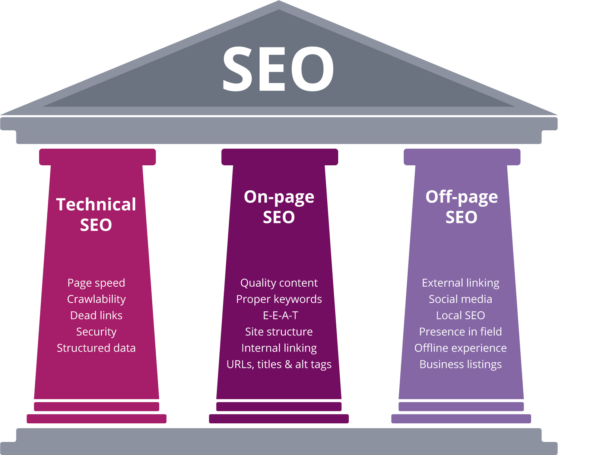
SEO is a comprehensive discipline built upon three fundamental pillars: Technical SEO, On-Page SEO, and Off-Page SEO. Optimizing these areas concurrently is essential for maximizing online visibility and achieving sustainable search performance.
-
Technical SEO: This pillar focuses on the foundational health and structure of a website, ensuring it is easily discoverable, crawlable, and understandable by search engines, while also providing an excellent user experience. Key aspects include:
- Site Speed: Optimizing loading times for a seamless user experience.
- Mobile-Friendliness: Ensuring the website is responsive and functions flawlessly on all devices.
- Crawlability and Indexability: Structuring the site to allow search engine bots to efficiently discover and add pages to their index.
- Site Architecture: Creating a logical and intuitive navigation structure.
- Security (HTTPS): Implementing SSL certificates to protect user data.
- Structured Data (Schema Markup): Adding semantic markup to help search engines better understand content and display rich snippets.
- Canonicalization: Preventing duplicate content issues.
- XML Sitemaps and Robots.txt: Guiding crawlers on what to access and what to ignore.
These technical elements are critical because search engines prioritize websites that offer a superior user experience. A slow, insecure, or poorly structured site will inevitably rank lower, regardless of its content quality.
-
On-Page SEO: This pillar involves optimizing the content and HTML source code of individual web pages to rank higher and earn more relevant traffic. It is directly within the website owner’s control. Key elements include:
- Keyword Research: Identifying the terms and phrases target audiences use.
- High-Quality Content: Creating valuable, informative, and engaging content that directly addresses user intent.
- Title Tags and Meta Descriptions: Crafting compelling, keyword-rich snippets that appear in search results.
- Header Tags (H1-H6): Structuring content with clear headings for readability and semantic relevance.
- Image Optimization: Using descriptive alt text and optimizing file sizes.
- Internal Linking: Connecting related pages within the website to improve navigation and distribute link equity.
- URL Structure: Creating clean, descriptive, and keyword-rich URLs.
- User Engagement Signals: Optimizing for factors like time on page, bounce rate, and click-through rate.
On-page SEO is primarily concerned with content relevance and how effectively a page communicates its topic to both users and search engines.
-
Off-Page SEO: This pillar encompasses activities performed outside of a website to enhance its authority, credibility, and reputation. It’s about building trust and signals of popularity across the internet. Key strategies include:
- Link Building: Acquiring high-quality backlinks from other reputable websites, which search engines interpret as “votes of confidence.”
- Social Media Marketing: Engaging with audiences and promoting content on social platforms to increase visibility and brand mentions.
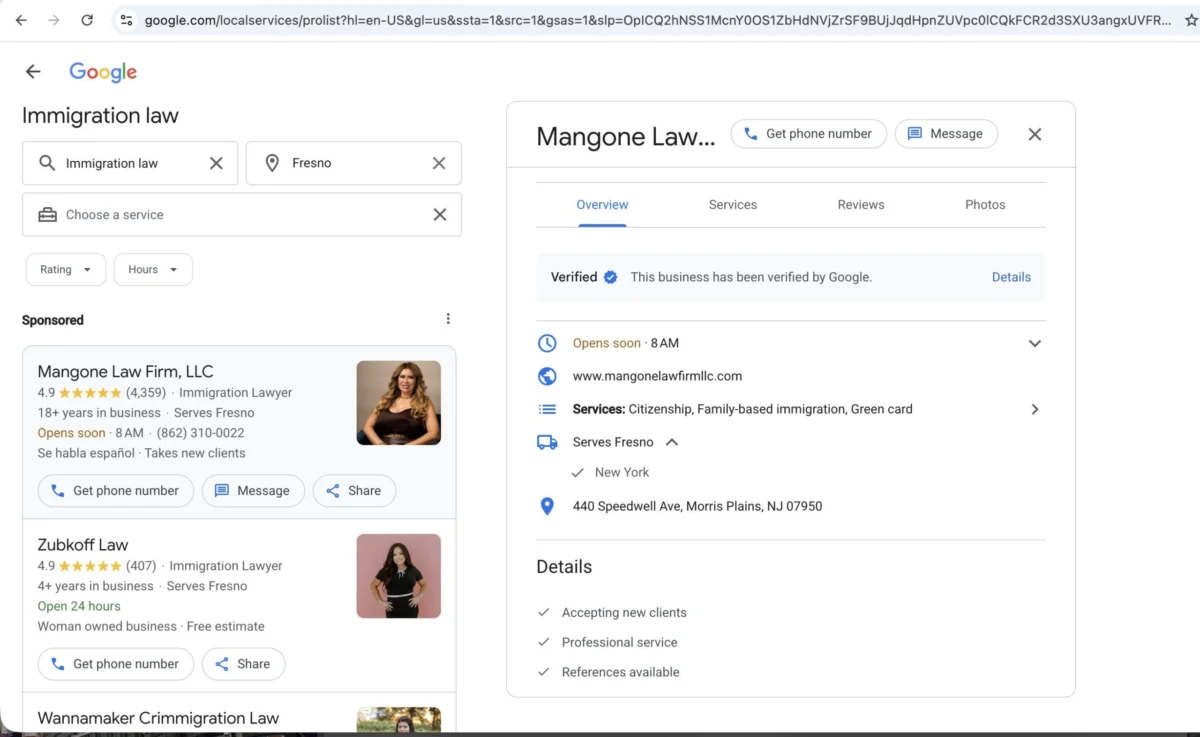
- Local SEO: Optimizing for local search queries, particularly crucial for businesses with physical locations (e.g., managing Google Business Profile, local citations, customer reviews).
- Brand Mentions: Increasing brand visibility through mentions across various online platforms, even without direct links.
- Public Relations: Securing media coverage and mentions to enhance brand reputation.
Off-page SEO reinforces a website’s authority and reach, extending its influence beyond its immediate domain. It’s about cultivating a strong, positive presence across the broader digital landscape.
Key Ranking Factors in Today’s SEO Landscape
While the precise algorithms remain proprietary secrets, extensive research and industry observation provide a strong understanding of the most influential SEO ranking factors. These signals guide search engines in determining a page’s relevance and authority for a given query:
- Content Quality and Relevance (E-E-A-T): Search engines prioritize content that demonstrates Experience, Expertise, Authoritativeness, and Trustworthiness. High-quality content directly answers user queries, is well-researched, original, and regularly updated.
- User Experience (UX): Factors like page speed, mobile-friendliness, and Core Web Vitals (Largest Contentful Paint, First Input Delay, Cumulative Layout Shift) are critical. A positive UX encourages longer engagement and reduces bounce rates.
- Backlinks and Domain Authority: The quantity and quality of backlinks from authoritative external websites significantly boost a site’s credibility and ranking potential.
- Search Intent Alignment: The ability of content to precisely match the user’s underlying intent behind a search query is paramount.
- Technical SEO Health: A technically sound website that is easily crawlable, secure (HTTPS), and well-structured contributes significantly to its ranking potential.
- Freshness of Content: For certain topics, recently updated or published content is preferred.
- Internal Linking Structure: A robust internal linking strategy helps search engines understand the relationship between pages and distributes link equity throughout the site.
- Local SEO Signals: For local businesses, factors like Google Business Profile optimization, consistent Name, Address, Phone (NAP) citations, and customer reviews are crucial.
Focusing on these key areas provides a solid foundation for any effective SEO strategy. Tools like Yoast’s SEO Checker can assist in identifying and rectifying common issues.
The Dawn of Generative AI: SEO in 2026 and Beyond
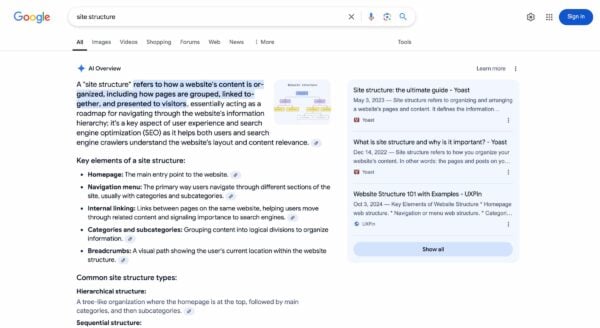
The emergence of Generative AI has heralded a new era for search, prompting discussions about its implications for SEO. Platforms like Google’s AI Overviews, along with AI assistants and chatbots, are increasingly shaping how users find and consume information. While some new terms like GEO (Generative Engine Optimization) have surfaced, industry experts, including Yoast, maintain that the fundamental principles of SEO remain largely unchanged. The acronym SEO continues to suffice, as the core objective of improving visibility and delivering relevant content persists, even as the channels for discovery expand.
AI-powered search experiences, such as Google AI Overviews, aim to provide direct, concise answers to user queries by synthesizing information from multiple sources. This often results in “zero-click searches,” where users find their answer directly on the SERP without needing to visit a website. While this might lead to fewer direct clicks, it doesn’t diminish the importance of SEO. Being cited as a trusted source within an AI overview significantly boosts brand awareness, credibility, and long-term influence. As Carolyn Shelby, Principal SEO at Yoast, emphasizes, “Rankings still matter, but they are no longer the end goal. They are a proxy for visibility, not a guarantee of impact. As search shifts from ranking pages to selecting sources, rankings should be interpreted alongside presence, citation, and narrative accuracy.”
This paradigm shift necessitates a re-evaluation of SEO goals. While traditional metrics like rankings and clicks remain relevant, a broader focus on engagement, brand awareness, user experience, user satisfaction, and their correlation with business objectives (e.g., sales, lead generation) is becoming paramount. SEO in the AI era is about cultivating a strong, authoritative brand presence across all relevant digital touchpoints, ensuring that content is discoverable and trustworthy, regardless of how or where users consume it.

Implementing an SEO Strategy: Getting Started
Embarking on an SEO journey, while seemingly complex due to its many facets, is an achievable endeavor for businesses of all sizes. The initial step should always be to establish a robust technical foundation. Prioritizing technical SEO aspects such as site speed, mobile-friendliness, crawlability, security, and structured data ensures that the website is accessible and understandable to search engines. For those without in-house technical expertise, leveraging website builders with integrated SEO features or consulting with technical SEO specialists can be highly beneficial.
Once the technical groundwork is laid, the focus shifts to content strategy. Comprehensive keyword research is crucial for identifying topics that align with business offerings and resonate with the target audience. The rise of AI-generated content further underscores the importance of creating original, insightful content that showcases genuine expertise and unique perspectives. This strategic approach to content forms the bedrock of an ongoing SEO plan, as SEO is not a one-time task but a continuous process of optimization and adaptation. Consistent effort not only drives traffic but also builds enduring brand loyalty and authority.
For those seeking to implement SEO themselves, various resources are available. Platforms like Yoast offer free and premium SEO plugins for WordPress and Shopify, providing tools for content analysis, technical optimization, and keyword management. Additionally, comprehensive educational resources such as the Yoast SEO Academy offer courses ranging from beginner guides to advanced topics in technical SEO and structured data, empowering users to master the discipline. Blogs dedicated to SEO provide up-to-date information on algorithm changes, best practices, and emerging trends, ensuring that practitioners remain informed and agile.
In conclusion, Search Engine Optimization is a dynamic, indispensable strategy for any entity seeking to thrive in the digital age. From its humble beginnings centered on keyword density to its current sophisticated integration with AI and diverse search platforms, SEO has continually evolved. Its core tenets—providing value to users, building brand authority, and ensuring technical excellence—remain constant. By embracing a holistic, adaptive approach to SEO, businesses can secure enhanced online visibility, attract high-quality intent-driven traffic, and build lasting influence in an increasingly competitive and AI-powered digital landscape.