
 rifanmuazin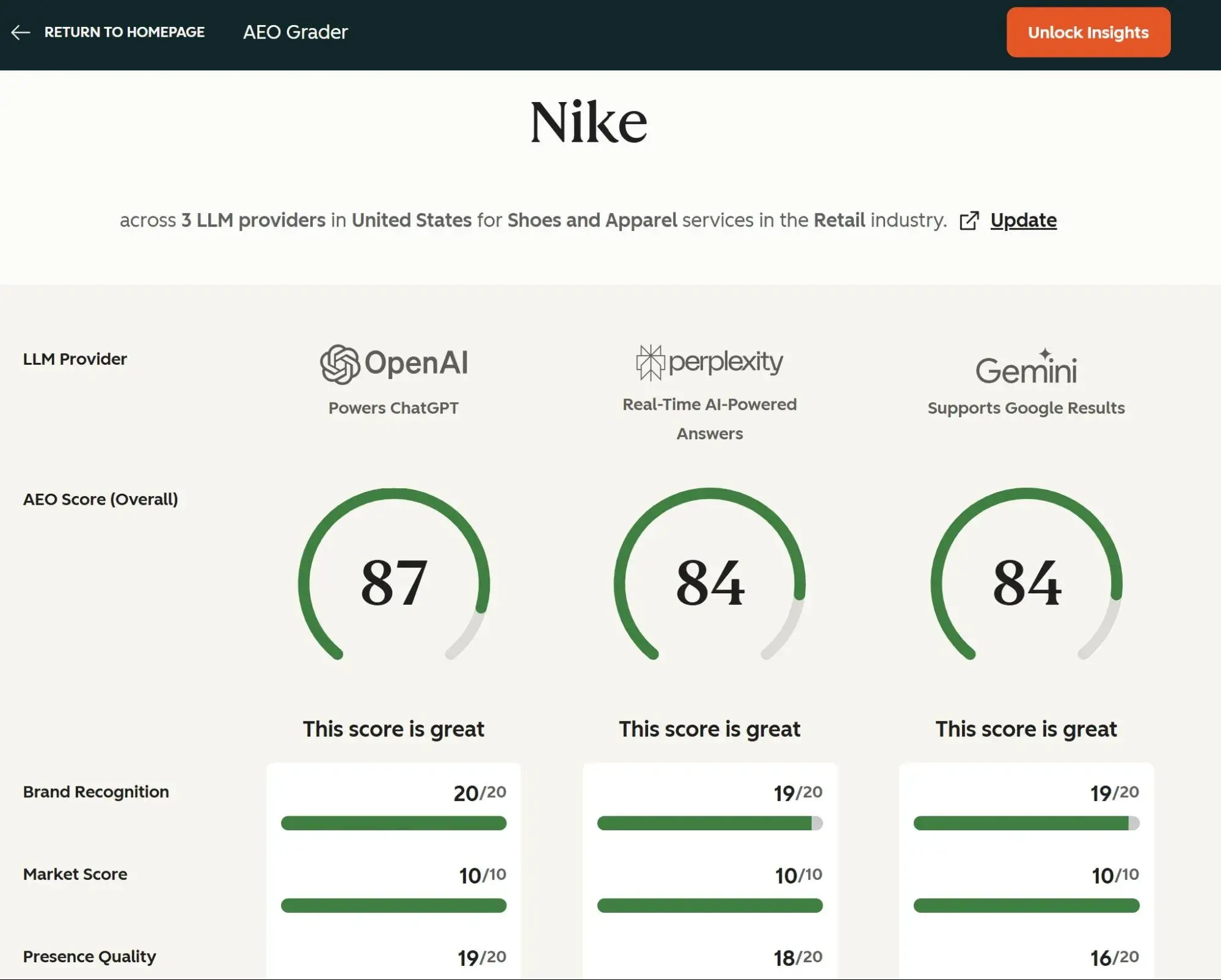
The emergence of sophisticated AI-powered answer engines, from Google’s AI Overviews to conversational chatbots like ChatGPT and Perplexity, has fundamentally reshaped the digital marketing landscape, presenting a novel competitive frontier for businesses. No longer is visibility solely defined by organic search rankings; instead, it is increasingly determined by a brand’s ability to be cited as a trusted source within AI-generated responses. This paradigm shift necessitates a specialized approach: Answer Engine Optimization (AEO) competitor analysis. Marketers are now confronted with the critical challenge of identifying which competitors are gaining traction in these AI answers, for which queries, and, most importantly, understanding the underlying reasons for their success.
The Paradigm Shift in Digital Visibility
For decades, Search Engine Optimization (SEO) focused on securing top organic rankings, driving traffic through clicks on blue links. The advent of large language models (LLMs) and their integration into search experiences has introduced a new dynamic. Answer engines like ChatGPT, Perplexity, and Google’s evolving AI Overviews do not simply rank web pages; they synthesize information from various sources to generate direct answers. This distinction is profound: a brand could hold a coveted top-three organic ranking on a traditional search results page (SERP) yet be entirely absent from the AI-generated answer a prospective customer encounters first.

This shift has created what industry analysts refer to as the "zero-click search" phenomenon. Data from sources like Search Engine Land indicate that a significant percentage of searches—reportedly over 58% of U.S. Google searches and 59% of EU searches in recent analyses—now conclude without a user clicking through to an external website. Instead, users find their answers directly within the SERP or AI interface. Concurrent with this trend, platforms like ChatGPT have witnessed exponential growth, surpassing 900 million weekly active users, underscoring the massive audience engaging with AI-generated content. For businesses, this means that the battle for customer attention has moved upstream, to the very point of information synthesis by AI.
Defining AEO Competitor Analysis: A New Lens on Visibility
AEO competitor analysis is the systematic process of identifying which brands, specific web pages, and authoritative sources are being cited by answer engines in their AI-generated responses. Crucially, it involves benchmarking a brand’s own visibility against its rivals across these same, high-priority queries. The core objective is to understand not just if competitors are appearing, but how and why their content is favored by AI.
Unlike traditional SEO competitive research, which meticulously tracks keyword rankings, backlink profiles, and domain authority, AEO competitor analysis employs a distinct set of metrics. Key performance indicators in AEO include citation frequency (how often a brand or its content is referenced), answer share (the percentage of queries where a brand is cited within a topic cluster), entity coverage (how well a brand, its products, and key concepts are understood and accurately represented by AI), and QA content depth (the comprehensiveness and clarity of answers provided by a brand’s content). The fundamental difference lies in the objective: marketers are no longer vying for a numerical rank but striving to be recognized as a trustworthy source by the LLMs themselves. This necessitates a shift in content strategy, focusing on clarity, conciseness, and authoritative answer provision.

The Urgency of Adaptation: Why AEO Matters Now
The rapid evolution of AI in search underscores the immediate importance of AEO competitor analysis. Early adoption and strategic implementation offer significant competitive advantages.
-
Emerging Channels Favor Front-Running Adopters: Answer engine search is not a speculative future trend; it is a present reality with accelerating user adoption. Brands that proactively build AEO measurement frameworks and content infrastructure are establishing citation authority at a nascent stage, before the majority of competitors have even begun to track this critical metric. Experience suggests that citation patterns within LLMs can be "sticky"; once a model associates a brand with expertise on a particular topic, that association tends to persist across subsequent queries and model updates, creating a durable competitive moat.
-
AI Answers Compress Traditional SERPs: Google’s AI Overviews, for instance, often push traditional organic "blue links" significantly further down the page, frequently below the fold. For commercially oriented or high-intent queries—such as "best CRM for startups" or "how to calculate customer lifetime value"—the AI-generated answer effectively becomes the primary search result for a substantial portion of users. If a competitor consistently secures citations in these prominent AI answers while a brand does not, that brand becomes functionally invisible for those critical queries, irrespective of its legacy SEO rankings.
-
Visibility Shifts to Citations, Entities, and QA Patterns: Traditional search engines prioritize pages; answer engines prioritize entities and answers. LLMs evaluate content based on its factual accuracy, comprehensiveness, clarity, and how well it directly addresses specific questions. This means competitive analysis must extend beyond merely what rivals publish to how their content is structured, which entities they cover, and why LLMs prefer their information architecture.
-
Tangible Business Impact on Pipeline Influence, Support Deflection, and Brand Authority: AEO visibility translates into direct downstream business benefits beyond mere traffic metrics. Brands consistently appearing in AI answers for buying-stage queries—e.g., "best [category] software," "how to choose a [tool]," "[brand A] vs [brand B]"—exert significant influence over purchase decisions even before a prospect visits their website. Furthermore, AEO insights can be leveraged to identify opportunities for support deflection, allowing brands to preemptively answer common customer issues via AI, thereby reducing inbound query volume. Over time, consistent citation builds a powerful perception of expertise and authority, strengthening overall brand equity. Industry experts predict that in the coming years, a significant portion of a brand’s "digital reputation" will be tied to its prominence and accuracy within AI-generated responses.
A Step-by-Step Guide to AEO Competitor Analysis
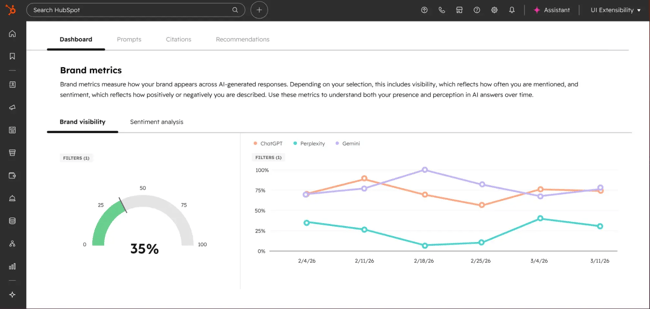
Implementing an effective AEO competitor analysis involves a structured, multi-phase approach:
-
Collect Priority Questions for Answer Engines: The foundation of AEO analysis is a robust query set—a representative list of questions your target audience asks that answer engines are likely to resolve with a generated answer. These queries should span the entire customer journey, from awareness-stage questions ("What is AEO?") to consideration-stage queries ("Best AEO tools for small business") and decision-stage questions ("HubSpot AEO vs. [Competitor X]"). Marketers can leverage existing keyword research, customer support tickets, sales call transcripts, "People Also Ask" boxes in Google, and internal FAQ data. Aim for 30 to 100 queries across core topic clusters to obtain a statistically meaningful view of answer share.
-
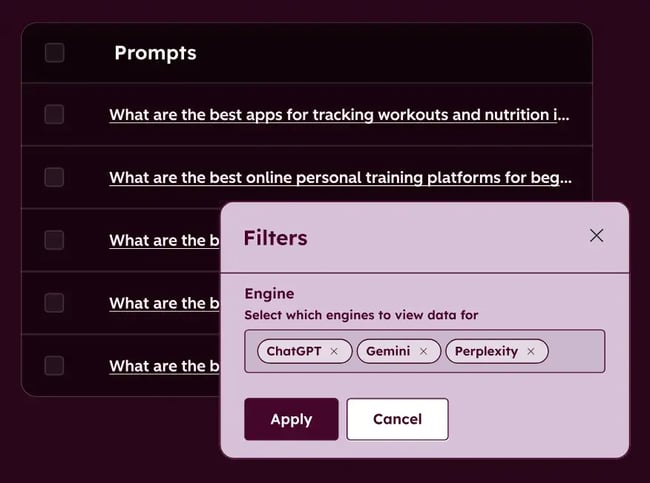
Test Queries Across Chatbots and AI Overviews: Execute each query, either manually or using an AEO tool, across multiple prominent answer engines. This includes platforms like ChatGPT, Perplexity, Google AI Overviews, and Gemini. For each query, meticulously record:
- The complete AI-generated answer.
- All cited sources (URLs, brand names).
- Any named entities mentioned.
- Whether your brand was cited, and if so, how.
- Whether a competitor was cited, and how.
Manual testing for a small set (10-15) of top-priority queries can build intuition, but for scale, dedicated AEO tools become indispensable.
-
Extract Cited Sources and Entities: From the collected data, meticulously document every cited source and named entity for each query. The goal is to build a comprehensive map of:
- Competitor domains/URLs consistently cited.
- Specific content types (blog posts, product pages, knowledge base articles, research papers) that are favored.
- Named entities (brands, products, concepts, people) associated with particular topics.
Analyze these patterns: If a competitor’s blog consistently appears, it suggests LLMs prefer their informational content. If a direct rival is cited for core business queries, it represents an immediate competitive threat.
-
Map Competitors by Topic Cluster and Answer Share: Organize the citation data by topic cluster, rather than just a flat list of competitors. Calculate a rough answer share for each brand within specific topic clusters: the percentage of queries in that cluster where the brand is cited. This mapping reveals two critical insights:
- Where competitors dominate: Identifying specific topic areas where rivals consistently earn AI citations.
- Untapped opportunities: Pinpointing topic clusters where neither your brand nor your competitors have strong AI visibility, indicating a potential first-mover advantage.
-
Diagnose Why Competitors Win: This is the most crucial, yet often overlooked, step. Move beyond identifying that a competitor wins citations to understanding why. For each competitor page consistently earning citations, conduct a deep analysis of:
- Content structure: Is it organized with clear headings, FAQs, or direct answers?
- Clarity and conciseness: Does it provide immediate, unambiguous answers?
- Depth and comprehensiveness: Does it cover the topic thoroughly without unnecessary fluff?
- Trust signals: Does it cite authoritative sources, include expert quotes, or present research?
- Entity optimization: Is the content explicitly about the entities relevant to the query?
A key diagnostic question to ask is: "If I were a language model tasked with answering this question, would this page provide a clear, trustworthy, and complete answer?" This framing helps cut through complexity and pinpoint actionable insights.
Tools of the Trade: Navigating the AEO Landscape
A range of tools, both purpose-built and adapted, can facilitate AEO competitor analysis:
-
Dedicated AEO Platforms (e.g., HubSpot AEO): These tools provide a holistic view of a brand’s performance across major answer engines like ChatGPT, Perplexity, and Gemini. They track "share of voice" at the prompt level, identify competitor citations, and often offer prioritized, plain-language recommendations for content optimization. Solutions integrated with CRM data can further enhance insights by correlating AEO performance with business outcomes.
-
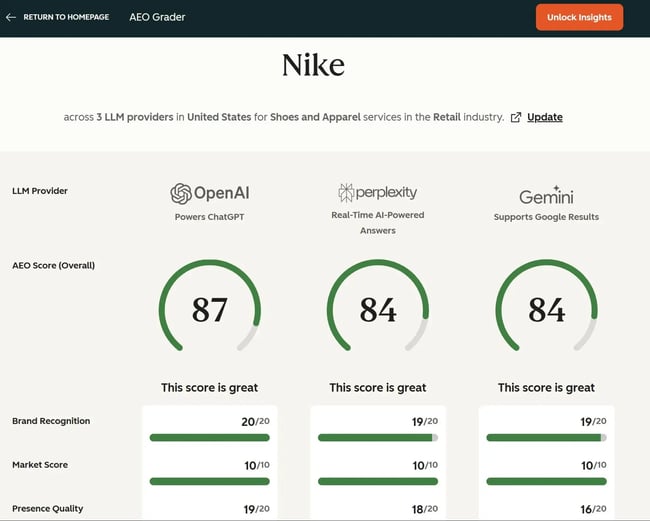
Entry-Level/Benchmarking Tools (e.g., HubSpot AEO Grader): Ideal for initial assessments, these free or low-cost tools offer a quick snapshot of a brand’s current AI visibility, benchmarking how often it appears in AI answers relative to competitors. They serve as an excellent starting point for marketers new to AEO.
-
Direct AI Interfaces (e.g., Perplexity, ChatGPT with Browse): For qualitative spot-checks and building intuition, directly querying these platforms is invaluable. Perplexity, with its inline citations, quickly reveals source URLs. ChatGPT’s browsing mode, when enabled, also surfaces citations, particularly useful for testing consideration-stage queries where brand mentions can significantly influence purchase intent.
-
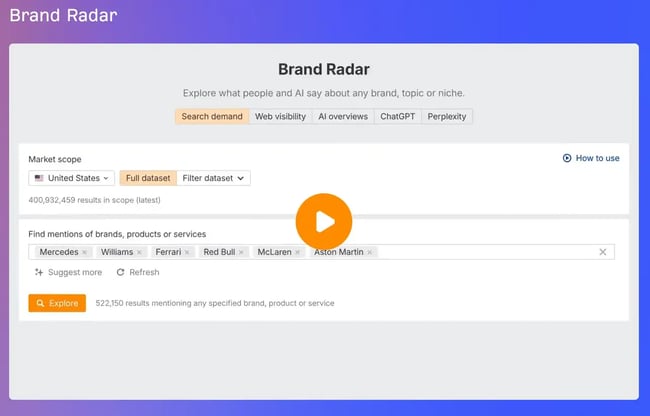
Complementary SEO Tools (e.g., Ahrefs, SEMrush, BrightEdge, Conductor): While traditional SEO tools don’t directly track AI citations, they remain crucial for diagnosing why certain pages earn them. Factors like backlink authority, on-page optimization, topical authority, and content freshness—all trackable via SEO tools—contribute to how LLMs perceive and cite content. Enterprise SEO platforms like BrightEdge and Conductor are also increasingly integrating AI Overview and answer engine tracking features, catering to large organizations managing extensive content portfolios.
Measuring Success: Key AEO Metrics and Strategic Dashboards
Effective AEO requires a robust measurement framework beyond simple traffic counts.
-
Answer Share and Citation Frequency:
- Answer Share: The foundational AEO metric, representing the percentage of queries in a defined set where a brand is cited. Track this at three levels: overall (across all queries), by topic cluster, and against specific competitors. It’s the AEO equivalent of organic market share.
- Citation Frequency: The raw count of times a domain or URL is cited. A high frequency from a few pages might indicate over-reliance, while broad frequency across many pages signals strong topical authority and brand recognition by AI.
-
Entity Coverage and QA Depth:
- Entity Coverage: Measures whether a brand, its products, and key associated topics are explicitly recognized and correctly associated by answer engines. Test this by prompting LLMs directly (e.g., "What is [your brand]?"). Vague or incorrect answers signal an entity clarity problem.
- QA Depth: Assesses how completely and accurately a brand’s content answers specific questions. Score competitor and your own content on a rubric: Does it directly answer? Is it comprehensive? Is it trustworthy?
-
Connecting AI Answer Visibility to Conversions:
Attributing pipeline impact from AI answers is challenging due to the "zero-click" nature. A multi-touch attribution approach is recommended:
- UTM Tagging: Implement UTM parameters on URLs within content that is likely to be cited, tracking direct referral traffic from AI platforms if they link out.
- Self-Reported Attribution: Add "AI Answer/Chatbot" as an option in lead forms and sales conversations.
- Branded Search & Direct Traffic Monitoring: Monitor spikes in branded search queries and direct traffic as a proxy for AI-influenced awareness.
- CRM Integration: For platforms like HubSpot, leverage custom contact properties and deal source fields to build a longitudinal dataset, correlating AEO content investments with actual contact and deal creation over time.
Translating Insights into Action: Strategic Initiatives for AEO Dominance
Once the analysis is complete, the insights must be translated into a prioritized action plan to close identified gaps and capitalize on opportunities. Common high-impact actions include:
- Content Gap Analysis: Identify topics where competitors are cited, but your brand is not, and create new, optimized content to fill these voids.
- Restructuring Existing Content: Reformat high-value pages to feature direct-answer structures (e.g., H2/H3 as questions, followed by immediate, concise answers).
- Developing Comprehensive FAQ Sections: Build out robust FAQ sections on websites and knowledge bases, directly addressing common questions with clear, succinct answers.
- Optimizing for Entities: Ensure brand, product, and key concept entities are consistently and clearly defined across all content, using schema markup where appropriate.
- Building Topic Clusters: Create interconnected content hubs around core topics to signal deep topical authority to LLMs.
- Fostering Thought Leadership: Produce original research, expert opinions, and data-driven insights to establish your brand as a leading authority in its field.
- Improving Internal Linking: Strengthen internal link structures to enhance content discoverability and reinforce topical relationships for AI crawlers.
- Continuous Monitoring: Regularly track changes in AI citation patterns and competitor strategies to adapt content and AEO efforts proactively.
Future Outlook: Sustaining AEO Advantage
AEO competitor analysis provides marketers with an unprecedented direct view into how brands are recommended at the pivotal moment of decision-making. By moving beyond traditional ranking metrics to measure citation frequency, answer share, and entity presence, businesses can truly understand why competitors are being surfaced in AI-generated answers.
The true competitive advantage, however, stems from the subsequent actions. Identifying gaps is merely the first step; the critical differentiator lies in the ability to act on these insights swiftly and consistently. Tools like HubSpot’s AEO Grader offer an accessible entry point, enabling initial benchmarking and competitive understanding. More comprehensive platforms, such as HubSpot AEO and its features within Marketing Hub, facilitate ongoing tracking, in-depth competitor analysis, and prioritized recommendations, seamlessly linking these insights to content execution, CRM data, and pipeline reporting.
For brands committed to thriving in the AI-powered search era, the path is clear: establish a reliable query set, diligently track answer share over time, and continuously refine content based on what AI engines actually cite. The companies that operationalize this process early will not merely keep pace with the evolving digital landscape; they will actively shape how their entire category is represented and perceived within the dominant answer engines of tomorrow. The future of digital visibility is here, and it is conversational, cited, and optimized for AI.









