


Navigating the landscape of local commerce often brings one into contact with myriad forms of advertising, from meticulously designed billboards to hastily scrawled street signs. While many strive for immediate attention with bold claims and vibrant graphics, some of the most effective messages are those that operate with remarkable subtlety, tapping into fundamental human psychology. Consider a common sight in suburban neighborhoods: a simple A-frame sign, perhaps adorned with inconsistent fonts and informal phrasing. One such sign, observed recently in Houston, bore the understated declaration: “Window cleaning in progress.” This seemingly innocuous phrase, far from being a direct sales pitch, embodies a sophisticated understanding of consumer behavior, illustrating the profound power of social proof when presented without overt persuasion.
The marketing approach taken by K&C Window Cleaning, through its unpolished but potent signage, bypasses the typical aggressive tactics. It does not proclaim superiority or offer limited-time deals. Instead, it leverages a core psychological principle: people are inherently influenced by the actions of others. The sign subtly plants a seed of thought: “Someone in this neighborhood is having their windows cleaned. Perhaps it’s a good time for me to consider it too.” This method fosters an organic decision-making process, making the idea feel like an internal realization rather than an external imposition.
The Foundation of Influence: Understanding Social Proof

The concept of social proof, formally introduced and popularized by psychologist Robert Cialdini in his seminal 1984 book, “Influence: The Psychology of Persuasion,” describes a phenomenon where people assume the actions of others in an attempt to reflect correct behavior for a given situation. In essence, when we are uncertain about a course of action, we look to those around us for cues on how to behave. This inclination is deeply rooted in our evolutionary history, where conforming to group behavior often increased chances of survival. In a modern context, it translates into a powerful marketing tool.
Cialdini identified six key principles of persuasion, and social proof stands as one of the most potent. Its efficacy stems from several factors: the desire for belonging, the perceived wisdom of crowds, and the reduction of uncertainty. In an increasingly complex world saturated with choices, observing what others are doing provides a cognitive shortcut, signaling that a product, service, or idea is trustworthy, desirable, or simply the norm.
Empirical Validation: Cialdini’s Hotel Towel Experiment
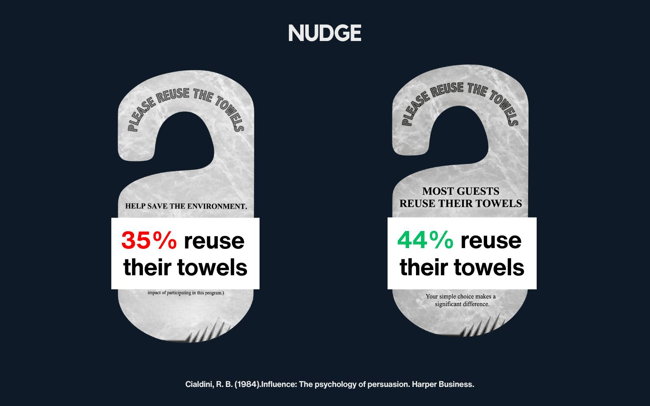
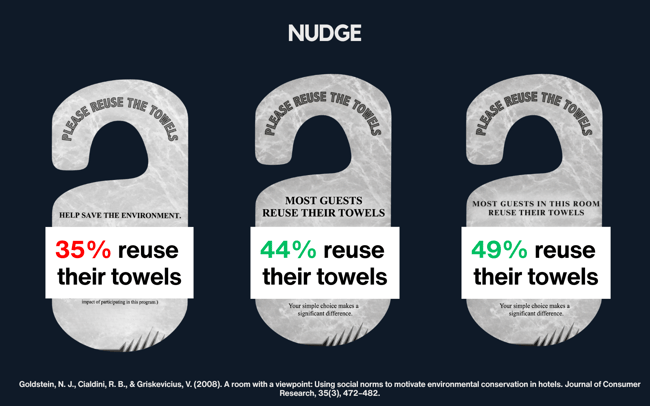
To illustrate the tangible impact of social proof, Cialdini and his team conducted a landmark study in 2008 within a mid-priced hotel in the American Southwest. Spanning 80 days and involving 190 rooms with over 1,058 guests, the research aimed to encourage hotel visitors to reuse their towels—a common environmental initiative in the hospitality industry. The experiment involved placing different messages within the hotel rooms and observing their effect on towel reuse rates.

The initial control message was a standard environmental appeal: “Help save the environment.” While guests stated this message would be most persuasive, the actual reuse rate it generated was approximately 35%. The researchers then introduced a message that incorporated social proof: “Most guests reuse their towels.” This simple alteration significantly boosted the reuse rate to 44%, demonstrating that merely indicating popular behavior was more effective than a direct appeal to environmental consciousness.
The study took an even more compelling turn with a third message: “Most guests in this room reuse their towels.” By narrowing the scope of the social group to those who had previously occupied the very same room, the message achieved an even greater impact. The reuse rate soared to nearly 50%, a substantial increase from the control group’s 35%. This particular finding underscored a critical nuance of social proof: its power intensifies when the reference group is perceived as being similar or relevant to the individual. The implication for marketers is clear: people are more likely to follow the lead of others who are perceived as being “like them” or in their immediate sphere of influence.
The Autonomy Imperative: Why Consumers Resist Being Forced
While social proof is undeniably powerful, its application is not without nuance. A critical factor in its effectiveness is the consumer’s perception of autonomy. People fundamentally dislike feeling coerced or manipulated. Messages that are too overt in their attempts to persuade can trigger psychological reactance, a phenomenon where individuals react negatively to perceived threats to their freedom, often leading them to do the opposite of what is being suggested.

This principle was vividly demonstrated by Nicolas Guéguen in a 2000 study exploring what he termed the “but you are free to refuse” (BYAF) technique. Guéguen’s research, conducted with French commuters, aimed to persuade individuals to spare coins for a bus ticket. Two distinct messaging approaches were tested:
- Direct Request: A straightforward plea for assistance (e.g., “Excuse me, do you have any spare change for a bus ticket?”).
- Request with Autonomy Reassurance: The same direct request, immediately followed by “but you are free to refuse.”
The results were striking. The simple addition of the phrase “but you are free to refuse” significantly increased compliance rates. Individuals were far more likely to contribute when their autonomy was explicitly acknowledged and preserved, even if only nominally. A comprehensive meta-analysis in 2013 further solidified the robustness of the BYAF technique, confirming its efficacy across 42 different domains, both online and offline.
This research directly informs the subtle power of the K&C Window Cleaning sign. By merely stating “Window cleaning in progress,” the sign implicitly conveys social proof without issuing a command or making a direct sales proposition. It observes, rather than instructs, allowing the individual to arrive at the conclusion that window cleaning might be a good idea, feeling as though the thought originated independently. This preservation of autonomy is crucial for fostering genuine engagement and long-term customer relationships.
Broader Applications: Social Proof in the Modern Marketplace
The principles of subtle social proof extend far beyond A-frame signs and hotel rooms, permeating various facets of the contemporary marketplace. Marketers across industries are increasingly recognizing that proving popularity is often more effective than simply proclaiming it.
- E-commerce and Digital Platforms: Online retail thrives on social proof. Customer reviews and star ratings are paramount, with products boasting higher ratings and more reviews often outperforming competitors. Features like “X people bought this in the last hour,” “trending now,” or “customers who bought this also bought…” subtly guide purchasing decisions by highlighting popular choices. User counts for SaaS products (“Trusted by over 10,000 businesses”) serve as powerful endorsements.
- Hospitality and Travel: Booking websites frequently employ social proof to drive conversions. Messages such as “X people are looking at this hotel right now,” “only 2 rooms left at this price,” or displaying recent bookings create a sense of urgency and desirability based on others’ actions.
- Content and Media: The virality of online content is a direct manifestation of social proof. High numbers of shares, likes, comments, and views on articles, videos, or social media posts signal to new audiences that the content is engaging and worth their time. Subscriber counts for newsletters and YouTube channels serve a similar purpose.
- Physical Retail and Services: The classic example of a restaurant with a visible queue outside demonstrates powerful social proof. People assume that if others are willing to wait, the establishment must offer something exceptional. Similarly, a cafe displaying numerous customer loyalty cards on its wall, as observed by author Sam Tatam in his book “Evolutionary Ideas,” implicitly communicates a thriving, popular business without a single boastful word. Bestseller lists in bookstores or “staff picks” in retail outlets similarly leverage the perceived wisdom of others.
In each of these instances, the goal is not to force a decision but to make the desired action appear as the natural, popular, or logical choice, influenced by the observable behavior of peers or a larger collective.
The Evolution of Marketing: From Overt Sales to Authentic Influence
The shift towards subtle social proof marks an evolution in marketing strategy. In an age where consumers are bombarded with advertisements and are increasingly skeptical of direct sales pitches, authenticity and trust have become invaluable currencies. Traditional, aggressive marketing tactics that shout “we’re the best” or “buy now!” often fall flat, perceived as intrusive or disingenuous.
Modern marketing recognizes that consumers are more empowered than ever, with access to vast amounts of information and the ability to easily verify claims. In this environment, strategies that respect consumer autonomy and provide implicit evidence of value are gaining prominence. By showcasing what others are doing, companies allow potential customers to draw their own conclusions, fostering a sense of discovery and informed choice rather than pressure. This approach builds stronger, more sustainable relationships by positioning the brand as a facilitator of good decisions rather than a coercive salesperson.
Crafting Effective Social Proof: Best Practices and Ethical Considerations
To harness the power of social proof effectively and ethically, marketers should adhere to several best practices:
- Authenticity is Paramount: Any form of social proof must be genuine. Fabricated reviews, inflated user numbers, or misleading testimonials can severely damage a brand’s credibility once discovered. Transparency builds trust; deception erodes it.
- Relevance and Specificity: Social proof is most impactful when the reference group is relatable to the target audience. As Cialdini’s towel study showed, “most guests in this room” was more effective than “most guests.” Highlighting customers with similar demographics, needs, or locations makes the social proof more compelling.
- Visibility and Clarity: The social proof should be easily discernible and understandable. Whether it’s a visible queue, clearly displayed reviews, or an elegantly presented statistic, the evidence of popularity should be undeniable.
- Subtlety Over Command: The most effective social proof integrates seamlessly into the user experience, guiding rather than dictating. It presents information that allows the consumer to infer popularity or correctness, preserving their sense of agency.
- Ethical Responsibility: Marketers have a responsibility to use these powerful psychological tools ethically. The goal should be to genuinely inform and guide consumers towards beneficial choices, not to manipulate them into decisions they would otherwise regret. Misleading applications of social proof, even if technically effective in the short term, undermine consumer trust and can lead to long-term reputational damage.
In conclusion, the unassuming “Window cleaning in progress” sign in Houston serves as a potent reminder of an enduring truth in marketing psychology: true influence often lies in subtlety. By observing the actions of others and respecting individual autonomy, marketers can tap into fundamental human inclinations, making desired behaviors feel like natural, self-derived conclusions. In a world clamoring for attention, the quiet power of showing, rather than telling, proves to be an increasingly persuasive and effective strategy, allowing consumers to feel like the idea was theirs all along, backed by the implicit endorsement of their peers.








