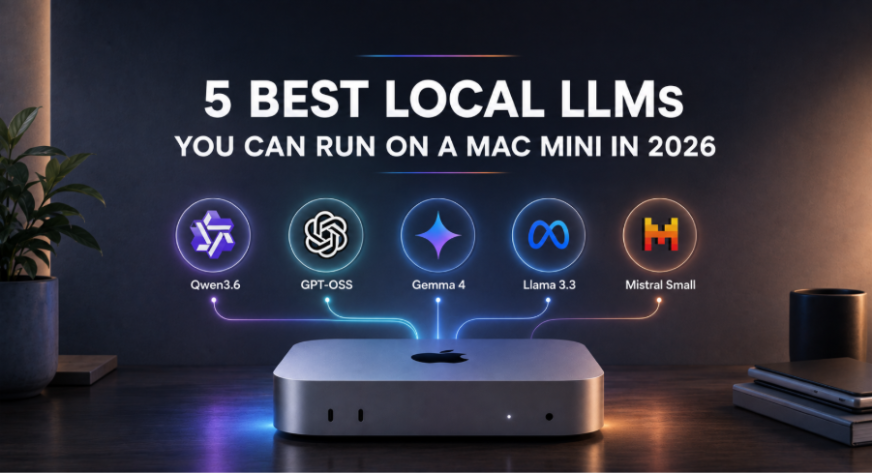
The landscape of artificial intelligence has undergone a seismic shift as the industry moves away from a total reliance on cloud-based proprietary models toward highly configurable, locally hosted solutions. While massive frontier models like GPT-5 and Claude 4 continue to push the boundaries of raw computational power, a growing segment of developers, researchers, and privacy-conscious users are turning to local execution. In this evolving ecosystem, the Mac mini has emerged as a cornerstone of the "AI at home" movement. Leveraging the high-bandwidth unified memory of Apple Silicon, the 2026 iteration of the Mac mini—particularly those equipped with M5 and M6 series chips—has proven to be a surprisingly formidable workstation for running Large Language Models (LLMs) entirely on-device.
The transition to local AI is driven by three primary factors: data sovereignty, latency reduction, and cost-efficiency. By running models locally, users eliminate the need for per-token subscription fees and ensure that sensitive data never leaves their local network. Furthermore, the integration of Apple’s MLX framework has optimized inference speeds, allowing models with tens of billions of parameters to run with fluid responsiveness. As we move through 2026, five specific models have distinguished themselves as the premier choices for local deployment on the Mac mini platform.
The Evolution of Local Inference: Context and Background
To understand the significance of the current local LLM era, one must look at the trajectory of hardware and software integration over the last three years. In 2023, running a 70-billion parameter model required a dedicated server with multiple high-end GPUs. However, the introduction of advanced quantization techniques—such as 4-bit and 6-bit GGUF and EXL2 formats—combined with Apple’s decision to offer up to 128GB of unified memory in its small-form-factor desktops, changed the calculus.
By 2025, the release of the M5 chip architecture introduced enhanced Neural Engine (NPU) cores specifically designed for transformer-based workloads. This was followed by the 2026 M6 series, which further expanded memory bandwidth, making it possible for a consumer-grade Mac mini to handle the massive KV-cache requirements of long-context models. Simultaneously, software like Ollama and LM Studio matured from experimental tools into robust platforms capable of managing complex model weights and local API endpoints with a single click.
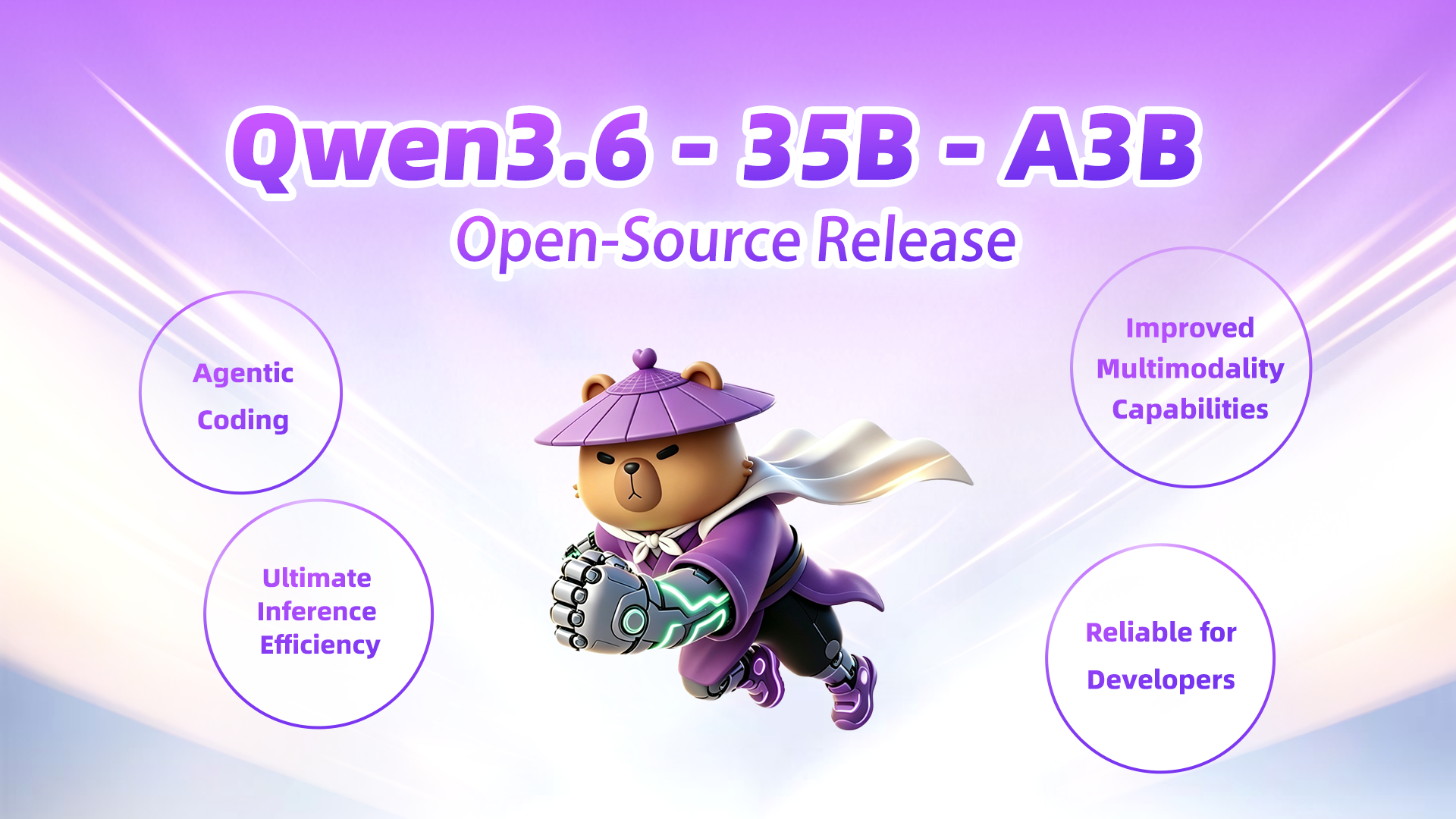
1. Qwen3.6 35B: The Powerhouse of Agentic Reasoning
Alibaba’s Qwen series has consistently outperformed its peers in the open-weight category, and the Qwen3.6 35B model represents the current pinnacle of balanced performance. This model is particularly significant because it offers a high parameter count without necessitating the workstation-class memory found in the Mac Studio or Mac Pro.
Available via Ollama at a footprint of approximately 23GB, the 35B version is designed for users who require more than just a chatbot. It is explicitly optimized for agentic coding and repository-level reasoning. Unlike earlier iterations that struggled with large-scale project structures, Qwen3.6 can ingest entire codebases through its 256K context window, allowing it to act as a local "AI Engineer."
For Mac mini users, the 35B model is best suited for machines with 32GB or more of unified memory. While a 24GB machine can technically run the model using heavy quantization, the 32GB overhead provides the necessary headroom for the KV-cache during long-context tasks.
Technical Specifications:
- Total Parameters: 35 Billion
- Context Window: 256,000 tokens
- Primary Use Case: Coding, complex reasoning, and local agents.
- Recommended Hardware: Mac mini with 32GB+ RAM.
2. Gemma 4 26B A4B: The Efficiency of Mixture-of-Experts
Google’s Gemma 4 26B A4B has redefined what is possible in the mid-sized model category by utilizing a Mixture-of-Experts (MoE) architecture. In an MoE setup, the model contains 25.2 billion total parameters, but only a fraction—roughly 3.8 billion—are "active" during any single inference step.
This architecture is a game-changer for the Mac mini. Because only a portion of the parameters are activated for each token, the compute requirement is significantly lower than that of a dense 26B model, leading to faster tokens-per-second (TPS) and lower thermal output. Despite this efficiency, the model retains the "knowledge" of a much larger system.
Gemma 4 is a multimodal powerhouse, supporting both image and text inputs. This makes it an ideal candidate for local assistants that need to process screenshots, diagrams, or photographs. For users with 24GB Mac mini configurations, Gemma 4 26B A4B offers the best ratio of intelligence to performance currently available on the market.
Technical Specifications:
- Total Parameters: 26 Billion (MoE)
- Active Parameters: 3.8 Billion
- Primary Use Case: Multimodal tasks, vision-language processing, and responsive local assistants.
- Recommended Hardware: Mac mini with 24GB+ RAM.
3. gpt-oss-20b: OpenAI’s Pivot to Open Weights
In a surprising industry turn in late 2025, OpenAI released the gpt-oss series, a set of open-weight models designed specifically for on-premise and local infrastructure. The gpt-oss-20b model has quickly become a favorite for Mac mini users due to its modest 14GB to 16GB memory requirement.
The model is distributed under an Apache 2.0 license, subject to OpenAI’s usage policies, and is built specifically for reasoning and tool-use workloads. What sets gpt-oss-20b apart is its "configurable reasoning effort," a feature that allows users to toggle how much computational time the model spends "thinking" before generating a response.
For the millions of users owning a base-model Mac mini with 16GB of unified memory, this is arguably the most capable model they can run. It fits comfortably within the memory constraints while providing a 128K context window, making it a viable tool for document analysis and automated reasoning.
Technical Specifications:
- Total Parameters: 20 Billion
- Context Window: 128,000 tokens
- Primary Use Case: Logical reasoning, tool integration, and agentic workflows.
- Recommended Hardware: Mac mini with 16GB+ RAM.
4. Qwen3-Coder 30B: The Specialized Development Engine
For software engineers, the Qwen3-Coder 30B is often cited as the gold standard for local development. Similar to the Gemma 4, this model utilizes an efficient architecture with 30 billion total parameters but only 3.3 billion activated parameters during inference.
The model was trained on a massive corpus of diverse programming languages and is specifically fine-tuned for "long-horizon" coding tasks—tasks that require the model to maintain state and logic over thousands of lines of code. With a native 256K context window, it can "read" an entire repository and suggest refactors, find bugs, or generate documentation without the latency or privacy concerns of cloud-based Copilots.
The 19GB local footprint makes it accessible to 24GB Mac mini users, providing a seamless experience for developers who want a dedicated AI pair programmer running silently in the background of their IDE.
Technical Specifications:
- Total Parameters: 30 Billion (Sparse)
- Context Window: 256,000 tokens
- Primary Use Case: Software engineering, bug detection, and repository analysis.
- Recommended Hardware: Mac mini with 24GB+ RAM.
5. Llama 3.3 70B: The Benchmark for High-Memory Configurations
While newer models have emerged, Meta’s Llama 3.3 70B remains the industry benchmark for general-purpose open models. However, running a 70B model is a significant undertaking that requires the upper echelon of Mac mini hardware.
Using 4-bit quantization, the model requires approximately 43GB of memory. This places it exclusively in the domain of Mac minis configured with 48GB or 64GB of unified memory. For users who invested in these high-spec machines, the reward is a local model that rivals the performance of GPT-4 class systems.
Llama 3.3 70B excels in multilingual tasks, creative writing, and nuanced reasoning. It is the preferred choice for researchers who need to run large-scale benchmarks or for users who require a "generalist" model that can handle any task thrown at it with high accuracy.
Technical Specifications:
- Total Parameters: 70 Billion
- Context Window: 128,000 tokens
- Primary Use Case: General-purpose AI, multilingual support, and high-accuracy text generation.
- Recommended Hardware: Mac mini with 48GB to 64GB RAM.
Hardware Strategy: Matching Models to Memory Tiers
The success of local LLM deployment on the Mac mini is almost entirely dependent on unified memory. Because the GPU and CPU share the same pool of RAM, the "Unified Memory Architecture" (UMA) allows for massive models to be loaded directly into video memory, a feat that traditional PCs struggle to replicate without expensive enterprise GPUs.
| Mac Mini Memory Tier | Recommended Models | Use Case |
|---|---|---|
| 16GB | gpt-oss-20b, Gemma 4 9B | General reasoning and light assistants. |
| 24GB | Gemma 4 26B, Qwen3.6 27B | Multimodal tasks and moderate coding. |
| 32GB | Qwen3.6 35B, Qwen3-Coder 30B | Professional development and agentic tasks. |
| 48GB | Llama 3.3 70B (Quantized) | High-end general intelligence. |
| 64GB+ | Llama 3.3 70B, DeepSeek-V3 (Small) | Research-grade workloads and heavy multitasking. |
It is important to note that these recommendations account for "headroom." While a model might technically fit into 16GB, the operating system and the KV-cache (which stores the context of the current conversation) also require memory. Running a model at the absolute limit of your RAM will often result in "swapping" to the SSD, which drastically reduces inference speed.
Software Ecosystem: Ollama and LM Studio
The hardware is only half of the story; the software ecosystem has made local AI accessible to non-technical users.
Ollama has become the industry standard for command-line and API-based interaction. It handles the complexities of model quantization and hardware acceleration automatically. By running a simple command like ollama run qwen3.6:35b, the software pulls the correct weights and optimizes them for the Mac’s Neural Engine.
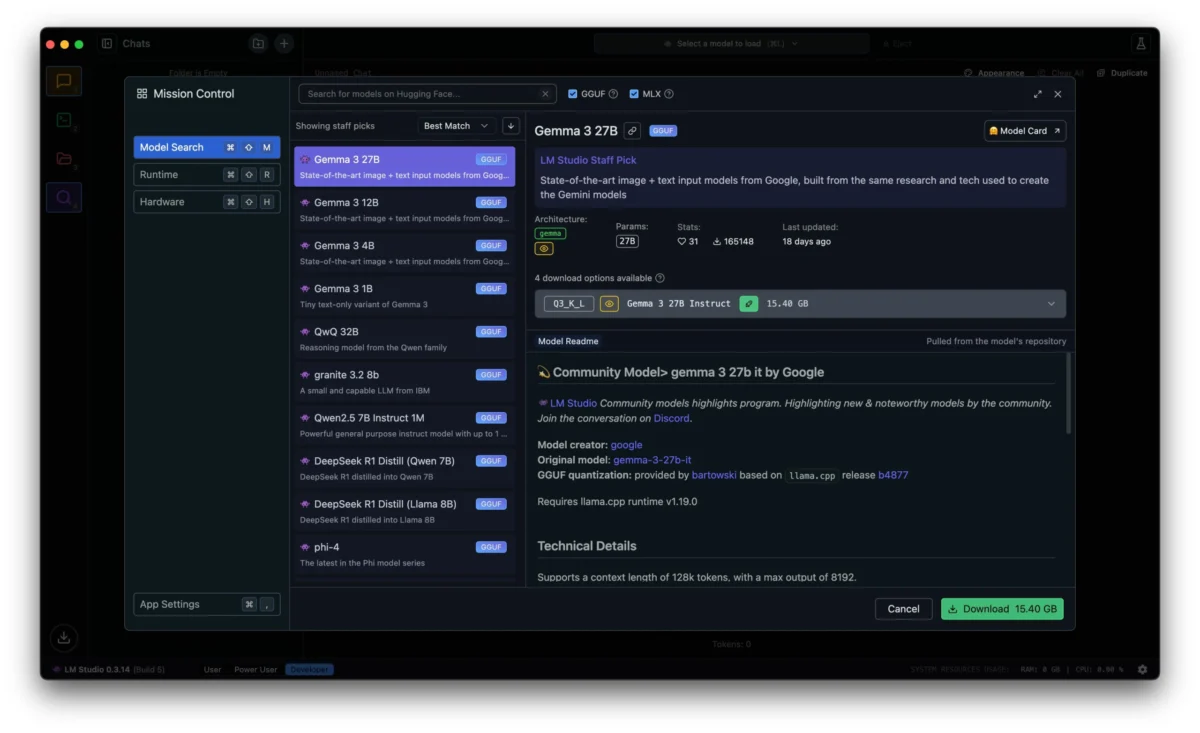
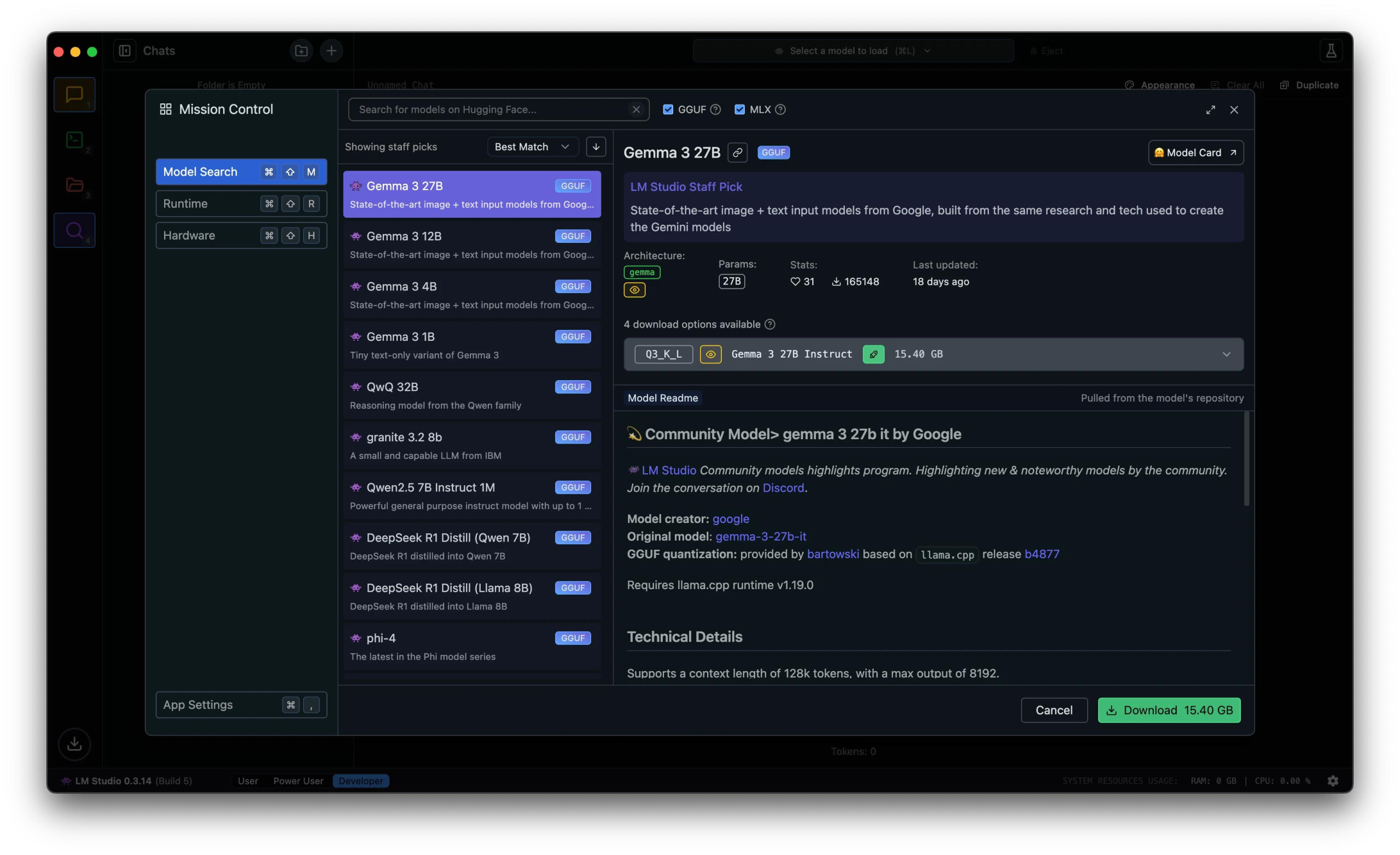
LM Studio, conversely, offers a sophisticated graphical user interface (GUI). It is particularly valuable for users who want to experiment with different quantization levels or those who need to host a local server that mimics the OpenAI API. This allows users to "drop-in" their local Mac mini as the backend for existing applications that were originally designed for ChatGPT.
Broader Impact and Industry Implications
The ability to run 35B and 70B parameter models on a $600 to $1,500 desktop computer has profound implications for the future of technology. For the first time, high-level intelligence is becoming a local utility rather than a metered service.
Industry analysts suggest that this shift will lead to a new generation of "Privacy-First" software. Enterprises that previously banned the use of AI due to data leakage concerns are now deploying Mac mini clusters to provide their employees with local, secure AI tools. Furthermore, the reduction in latency—achieved by avoiding the round-trip to a data center—is enabling real-time AI applications in fields like medical transcription, live legal analysis, and interactive education.
As we look toward the remainder of 2026, the question for consumers has shifted. It is no longer a matter of whether a compact computer like the Mac mini can handle the demands of modern AI, but rather a strategic choice of which model best fits their specific workflow. With the M6 series pushing the boundaries of what is possible in a small form factor, the Mac mini has officially solidified its status as the premier "AI PC" for the local era.
Frequently Asked Questions
Q1: Can I run these models on an older Intel-based Mac mini?
No. These models rely heavily on the Unified Memory Architecture and the Apple Silicon Neural Engine. Intel-based Macs lack the necessary memory bandwidth and specialized AI hardware to run these models at usable speeds.
Q2: Does running local LLMs damage the Mac mini’s hardware?
Running LLMs is a compute-intensive task that generates heat, similar to video editing or gaming. While it will not "damage" the hardware, it will engage the cooling fans. The M-series chips are designed to throttle performance if they reach high temperatures to protect the silicon.
Q3: What is "Quantization" and why does it matter?
Quantization is the process of reducing the precision of a model’s weights (e.g., from 16-bit to 4-bit). This significantly reduces the memory footprint and increases speed with only a marginal hit to accuracy. Most local models are run at 4-bit or 6-bit quantization to fit on consumer hardware.