rifanmuazin
Meta’s text-based social media platform, Threads, is currently experimenting with a novel feature designed to elevate in-stream engagement by allowing users to affix publicly visible emoji reactions to specific words or phrases within a post. This innovative approach aims to move beyond conventional "like" buttons, offering a more nuanced and granular form of interaction, thereby potentially reshaping how users consume and respond to short-form content. The development, uncovered by app researcher Alessandro Paluzzi, signals Threads’ ongoing commitment to differentiating itself in the competitive social media landscape, particularly against established rivals like X (formerly Twitter).
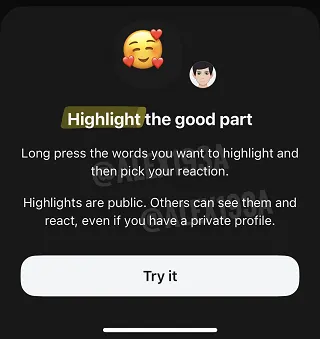
The proposed feature operates through a straightforward mechanism: users would be able to "long-press" on desired words or terms within a post, subsequently triggering a pop-up emoji picker. From this selection, an emoji can be chosen and attached to the highlighted text. A critical aspect of this functionality is its public nature; these highlights and their associated reactions will be visible to all users, irrespective of whether the reacting user maintains a private profile. Furthermore, the system is envisioned to allow other users to see who has reacted to specific terms by hovering over the highlighted sections, fostering a dynamic and transparent layer of interaction directly within the content itself. This capability represents a significant evolution from the traditional, post-level engagement metrics, offering a richer tapestry of user sentiment and attention.
The Mechanics of Granular Interaction: How Highlighted Reactions Work
The core of this experimental feature lies in its ability to pinpoint user sentiment with unprecedented specificity. Instead of reacting to an entire post with a single "like" or general emoji, users can now express approval, amusement, curiosity, or even disagreement with particular segments of text. As detailed by Paluzzi’s explainer screen examples, which illustrate the feature in an inactive, developmental state, the process is designed for intuitive use. A user identifies a word or phrase that resonates with them, presses and holds that text, and then selects an emoji from a dynamic palette. This chosen emoji then visually attaches to the highlighted text, becoming a public marker of that user’s specific reaction.
The public visibility of these highlights is a cornerstone of the feature’s design. This ensures that conversations around specific points in a post are transparent and accessible, potentially encouraging more focused discussions. Even users with private profiles, typically shielded from broad public interaction, would have their highlighted reactions made public, suggesting a deliberate design choice by Threads to maximize visibility and foster collective engagement around content details. This design choice, while promoting transparency, also raises questions about potential implications for user privacy and control, which Meta will undoubtedly need to address if the feature proceeds to a wider rollout. The ability to see who else has reacted to a particular highlight further amplifies the social aspect, potentially sparking secondary interactions and community building around shared sentiments or disagreements on specific textual elements.
Threads’ Strategic Imperative: Context and Competition
The exploration of highlighted reactions is not an isolated development but rather a reflection of Threads’ broader strategic imperative within Meta’s ecosystem and the wider social media landscape. Launched in July 2023, Threads emerged as Meta’s direct challenger to X (formerly Twitter), aiming to capture a segment of users seeking a more community-driven and less controversial text-based platform. Its rapid ascent, leveraging Instagram’s vast user base, saw it quickly accumulate over 100 million sign-ups within days of its launch, becoming the fastest-growing app in history. As of recent reports, Threads has solidified its position, boasting over 400 million monthly active users, a testament to its significant traction and Meta’s strategic prowess.

Meta’s motivation behind Threads is multifaceted. Firstly, it provides a crucial alternative for users disillusioned with the changes and content moderation policies on X. Secondly, it diversifies Meta’s advertising revenue streams, offering another platform for targeted ads. Lastly, and perhaps most importantly, it reinforces Meta’s dominance in the social media sphere by establishing a strong presence in the text-based microblogging domain, a segment where it previously lacked a dedicated offering. The platform’s initial focus was on simplicity and a clean user experience, but as it matures, the need for innovative features to retain users and differentiate itself becomes paramount. Features like highlighted reactions are part of this ongoing effort to build a unique identity and value proposition distinct from its competitors, particularly X, which primarily relies on likes, replies, and reposts for engagement.
A Chronology of Threads’ Growth and Feature Evolution
Threads’ journey since its launch has been marked by a rapid succession of feature introductions and user growth milestones, underscoring Meta’s agile development approach.
- July 2023: Threads launches globally, leveraging Instagram’s existing user base for rapid onboarding. It quickly gains over 100 million sign-ups, signaling strong initial demand. Initial features are basic, focusing on text posts, replies, and reposts, with an algorithmic feed.
- August 2023: Following user feedback, Threads begins rolling out a "Following" feed, allowing users to see posts only from accounts they follow, alongside the algorithmic "For You" feed. This addresses a key user request for more control over content discovery.
- September 2023: A web version of Threads is launched, making the platform accessible outside of mobile apps, a crucial step for broader user adoption and professional use. Search functionality is also enhanced, allowing users to find specific posts and profiles more effectively.
- October-December 2023: Threads continues to refine its search capabilities, introduce post editing, and integrate with the fediverse via ActivityPub protocol (initially with Mastodon), signifying a commitment to decentralization and open social networking standards. This period also sees the introduction of features like the ability to save posts and improved content filtering.
- Early 2024: Threads announces it has surpassed 400 million monthly active users, solidifying its position as a major player. The platform continues to test new features, including "Live Chats" (akin to broadcast channels), aiming for more focused group discussions.
- Current Development (Undisclosed Date of Discovery): App researcher Alessandro Paluzzi uncovers the "highlighted reactions" feature in development, indicating Meta’s continuous investment in diversifying engagement tools beyond standard interactions. This positions the feature as one of the latest in a series of strategic innovations designed to expand Threads’ functionality and appeal.
This timeline illustrates a platform in active development, constantly iterating and adding features based on user feedback and strategic objectives. The highlighted reactions feature fits into this pattern of seeking novel ways to enhance user experience and engagement.
Deeper Dive into Engagement Dynamics: Why This Feature Matters
In the realm of social media, engagement is the lifeblood of a platform. It dictates user retention, content virality, and ultimately, advertising revenue. Traditional engagement metrics – likes, comments, shares, and reposts – provide a broad overview of how content performs. However, they often lack the granularity to understand which specific parts of a post resonate with an audience. This is where highlighted reactions could offer a paradigm shift.
Consider a news article snippet shared on Threads. A general "like" on the post indicates overall approval. But with highlighted reactions, users could react specifically to a surprising statistic, a controversial statement, or a particularly insightful phrase. This provides creators with invaluable feedback, allowing them to understand which elements of their content are most impactful. For users, it offers a more precise tool for expression, moving beyond binary reactions to a richer spectrum of emotional and intellectual responses. This level of detail can foster more meaningful interactions, turning passive consumption into active participation. It could also encourage users to craft more thoughtful posts, knowing that specific points within their text can be individually acknowledged and reacted to, thus promoting higher quality discourse.

Potential Benefits: Fostering Granular Interaction
The introduction of highlighted reactions carries several potential benefits for Threads, its users, and content creators:
- Enhanced Nuance and Expression: Emojis offer a wider range of emotional responses than a simple ‘like’. Users can express amusement, agreement, disbelief, curiosity, or even empathy towards specific words, allowing for a more accurate portrayal of their sentiment. This moves beyond the sometimes ambiguous nature of a general ‘like’.
- Deeper Content Understanding for Creators: For content creators, this feature could be a goldmine of data. They can observe which specific phrases, arguments, or data points in their posts elicit the strongest reactions. This granular feedback can inform future content strategies, helping them create more engaging and resonant material.
- Increased Engagement and Time Spent on Platform: By encouraging users to dissect posts and react to individual elements, Threads could see an increase in time spent on the platform. The act of reading closely, selecting text, and choosing an emoji requires more active engagement than a quick tap of a ‘like’ button.
- Differentiation from Competitors: While many platforms offer diverse reactions to entire posts (e.g., Facebook’s expanded reactions), attaching them to specific words is a relatively novel concept for a mainstream text-based platform. This could provide Threads with a unique selling proposition against X and other rivals.
- Facilitating Focused Discussion: Highlighted terms could act as natural conversation starters. When a particular phrase is heavily reacted to, it signals its importance or controversy, potentially drawing other users to comment or engage directly with that specific point, leading to more focused and productive discussions.
- Improved Content Discovery: Posts with numerous highlights on specific terms might catch the eye of users scrolling through their feeds, drawing attention to key points even before reading the entire text. This could improve the discoverability of impactful content.
Navigating the Risks: Toxicity, Moderation, and User Experience
While the potential benefits are significant, the implementation of highlighted reactions is not without its challenges and risks, particularly concerning user behavior and platform moderation:
- Potential for Misuse and Toxicity: The most significant concern highlighted in the original snippet is the potential for users to employ "dislike" or "disgust" emojis on specific words, leading to targeted negativity or even harassment. While Threads would likely impose restrictions on the types of emojis available, the very act of publicly "disagreeing" with a specific word could be perceived as an attack, potentially chilling free expression and deterring users from posting sensitive or controversial content.
- Moderation Complexity: Moderating emoji reactions to specific words presents a new layer of complexity. How will Threads handle instances where emojis are used to target individuals, spread hate speech through subtle cues, or amplify misinformation on specific terms? The platform would need robust AI and human moderation systems capable of understanding context and intent at a granular level.
- Information Overload and Clutter: For shorter Threads posts, a proliferation of highlighted words and emojis could lead to a cluttered and visually overwhelming experience, making the original text harder to read and comprehend. A balance would need to be struck between expressive freedom and aesthetic clarity.
- User Adoption and Learning Curve: While seemingly intuitive, any new interaction model requires users to adapt. Will the average user find it genuinely useful, or will it be perceived as an unnecessary complication? The feature’s success will hinge on its seamless integration into existing user habits.
- Privacy Concerns Revisited: The explicit statement that "Highlights are public. Others can see them and react, even if you have a private profile" is a critical point. While promoting transparency, it might clash with users’ expectations of privacy, particularly for those who maintain private profiles precisely to control their public footprint. Meta would need to clearly communicate these implications and potentially offer granular privacy controls if user feedback dictates.
- Technical Performance: Dynamically highlighting text and displaying multiple reactions could potentially impact application performance, especially on older devices or in areas with limited connectivity. Ensuring a smooth and responsive user experience will be crucial.
Insights from Industry Observers and Anticipated Reactions
While Meta has not officially commented on the unreleased "highlighted reactions" feature, industry analysts and social media experts would likely interpret this development as a strategic move to deepen engagement and distinguish Threads from its competitors. Hypothetically, a Meta spokesperson, when discussing the platform’s broader strategy, might reiterate the company’s commitment to "continuously innovating interaction tools that foster positive and meaningful connections." Such statements often accompany the exploration of new features, even before public testing.
App researcher Alessandro Paluzzi, through his discovery, has once again played a crucial role in giving the public an early glimpse into Meta’s experimental endeavors. His findings often precede official announcements, offering valuable insights into the tech giant’s roadmap. From a user perspective, initial reactions would likely be mixed. Early adopters and those seeking more expressive ways to interact might welcome the feature, seeing it as a fresh way to engage. However, concerns about potential misuse, privacy, and visual clutter are almost inevitable, particularly from users who prioritize simplicity and a less-toxic online environment. The success of the feature will ultimately depend on how Meta addresses these concerns during its development and potential public testing phases.
Broader Implications for Social Media Engagement
The potential introduction of highlighted reactions on Threads could have broader implications for the entire social media industry. If successful, it could signal a shift towards more granular and context-specific engagement tools across platforms. The trend in social media has been moving from simple "like" buttons to a wider array of reactions (e.g., Facebook’s "Love," "Haha," "Wow," "Sad," "Angry" reactions). Threads’ proposed feature takes this a step further by anchoring reactions to specific textual elements rather than the entire post.
This could inspire other platforms, including X, LinkedIn, or even content platforms like Medium, to explore similar functionalities. Imagine reacting specifically to a paragraph in a LinkedIn article or a particular line in a news story shared on X. Such innovations could lead to a richer, more interactive web experience, where user feedback is more precise and actionable for creators. It also reinforces the idea that platforms are constantly searching for novel ways to increase "time spent" and "depth of engagement," key metrics for their long-term viability and profitability. The evolution of social media is increasingly about finding sophisticated ways to map user sentiment directly onto content, and highlighted reactions represent a bold step in that direction.
The Road Ahead for Threads
As Threads continues its journey to solidify its position as a leading text-based social platform, experimentation remains crucial. The highlighted reactions feature, currently in an exploratory phase, exemplifies this commitment to innovation. Whether it ultimately makes it to public testing and then to a full rollout will depend on internal evaluations of its utility, potential risks, and alignment with Threads’ overarching vision.
The platform has already demonstrated a willingness to iterate rapidly and adapt based on user feedback, as evidenced by the quick implementation of a "Following" feed and a web version. This agile approach suggests that Meta is not afraid to test novel concepts, even if some do not ultimately see the light of day. The goal is clear: to build a vibrant, engaging, and differentiated platform that can not only rival but potentially surpass its competitors in fostering meaningful online conversations. The highlighted reactions feature, therefore, is more than just a new button; it is a potential harbinger of a more interactive and context-aware future for social media engagement, with Threads at the forefront of this evolution.