

The landscape of email marketing is undergoing a profound transformation, compelling brands to rethink their strategies for subscriber engagement and data acquisition. A significant shift towards empowering subscribers with greater control over their communication preferences is emerging as a critical differentiator for successful email programs. This imperative is driven by evolving consumer expectations, stringent data privacy regulations, and significant policy changes enacted by major mailbox providers (MBPs) like Gmail and Apple, alongside the burgeoning influence of artificial intelligence in inbox management.
The Evolving Email Landscape: A Timeline of Change
The journey towards the current emphasis on subscriber control has been incremental yet impactful. The early 2020s saw a global acceleration in data privacy concerns, spearheaded by regulations such as Europe’s General Data Protection Regulation (GDPR) in 2018 and California’s Consumer Privacy Act (CCPA) in 2020. These legislative frameworks set a new standard for how companies collect, process, and manage personal data, fundamentally altering the relationship between brands and consumers. Individuals gained greater rights over their data, including the right to know, access, and delete, fostering an environment where transparency and consent became paramount.
A pivotal moment arrived in late 2021 with Apple’s introduction of Mail Privacy Protection (MPP). This feature, implemented across iOS 15, iPadOS 15, macOS Monterey, and watchOS 8, significantly impacted email marketing metrics by routing all email traffic through a proxy server, pre-loading content, and masking IP addresses. The immediate consequence was a distortion of traditional open rates, rendering them an unreliable indicator of actual engagement. Marketers were forced to pivot, shifting their focus from open rates to more meaningful engagement metrics like clicks, conversions, and direct feedback, thereby accelerating the demand for zero-party data – data willingly and proactively shared by consumers.
The trajectory continued into 2024 and 2025 with Gmail’s sweeping changes, further solidifying the need for subscriber-centric approaches. These updates, aimed at enhancing user experience and combating spam, notably included easier one-click unsubscribe options directly from the inbox interface and stricter sender requirements for authentication and low spam rates. Research from Mailerlite starkly illustrates the impact, reporting that year-on-year unsubscribe rates more than doubled from 2024 to 2025. This dramatic increase, corroborated by data from various analytics firms, underscores a critical juncture for marketers. The primary drivers behind these opt-outs and spam complaints are consistently cited as "too many emails" and "messages not relevant," yet a significant portion of these departing subscribers would prefer to adjust their email frequency or content rather than sever ties completely, if only they were given a clear, accessible mechanism to do so.
Concurrently, the integration of AI-fueled developments across MBPs is making inbox engagement more important than ever. AI algorithms are increasingly sophisticated at discerning user preferences, filtering promotional content, and prioritizing relevant messages. Brands that consistently send irrelevant or excessive emails risk not only unsubscribes but also diminished inbox placement, as AI systems learn to deprioritize their content. In this evolving ecosystem, a robust preference center becomes more than just a customer service tool; it is a strategic asset for maintaining sender reputation and ensuring message deliverability.
The Cost of Neglect: Rising Unsubscribes and Declining Engagement
The traditional approach of burying preference center links in minuscule footer text, often an afterthought, has proven unsustainable. This lack of organic discovery leads to a fundamental disconnect: subscribers desire control, but brands fail to provide an easily navigable path to exercise it. Industry practitioners largely agree that low usage of preference centers is not indicative of a lack of subscriber interest, but rather a pervasive lack of awareness. Without a prominent and intuitive way to manage preferences, frustrated subscribers resort to the most immediate solution: the unsubscribe button or, worse, marking emails as spam, both of which severely damage sender reputation and deliverability.
The financial implications of high unsubscribe rates are substantial. Each unsubscribe represents a lost opportunity for future revenue, a diminished audience for marketing campaigns, and an increased cost of acquisition to replace lost subscribers. Furthermore, a declining engagement rate signals to MBPs that a sender’s content is not valuable, leading to poorer inbox placement and a vicious cycle of decreased visibility. According to a recent study by Validity, brands with consistently low engagement rates experience an average 15% drop in inbox placement over six months, directly impacting campaign performance and ROI.
The Strategic Advantage: Preference Centers as Data Hubs
In this new paradigm, email preference centers are evolving beyond simple opt-out mechanisms to become sophisticated personalization engines and critical conduits for zero-party data. Zero-party data, defined as data that a customer intentionally and proactively shares with a brand, offers unparalleled insights into individual preferences, intentions, and motivations. Unlike third-party data, which is becoming increasingly scarce due to privacy restrictions, or first-party data, which is collected through interactions but may not fully capture intent, zero-party data is explicit and highly reliable.
By actively soliciting preferences, brands can gather rich qualitative data that fuels hyper-personalization across all marketing channels. This data can inform product development, content strategy, promotional offers, and even customer service interactions. Dr. Evelyn Reed, a digital marketing strategist at Stratagem Insights, commented, "The era of spray-and-pray email marketing is definitively over. Consumers demand control, and brands that fail to offer it risk obsolescence. Preference centers are no longer just a compliance checkbox; they are a strategic gateway to understanding your customer at a granular level."
Proven ROI: The Business Case for Personalization
The payoff for robust preference center usage is not merely theoretical; it is demonstrably proven through compelling case studies and research. Single Grain published research on an e-commerce client whose tiered preference center delivered a remarkable 189% increase in email engagement and a 76% decrease in unsubscribes. This staggering improvement highlights the direct correlation between personalized communication and heightened subscriber interaction. When messages feel relevant and tailored to individual interests, subscribers are far more likely to open, click, and convert.
Furthermore, the introduction of nuanced options within preference centers can significantly reduce subscriber churn. Oracle found that senders who added a "snooze" option to their email preference centers – allowing subscribers to temporarily pause communications rather than fully unsubscribe – saw unsubscribes drop by an average of 82%. This demonstrates that many subscribers are not necessarily rejecting a brand entirely, but rather seeking a temporary reprieve or a reduction in message volume. Offering this flexibility transforms a potential permanent loss into a temporary adjustment, retaining valuable contacts within the marketing funnel.
These statistics underscore a fundamental truth: investing in a sophisticated and prominently promoted preference center is not merely a cost but a strategic investment that yields substantial returns in engagement, retention, and ultimately, revenue.
Strategies for Maximizing Preference Center Engagement
To harness the full potential of preference centers, email senders need to adopt a far more intentional and proactive approach to their promotion and design.
1. Proactive Promotion: Beyond the Footer
The initial step is to move preference center promotion out of the digital shadows. Even a simple, dedicated message raising awareness of its existence and how to access it can significantly outperform doing nothing. Brands like Chanel have exemplified this by sending concise emails explaining how subscribers can utilize the tool to tailor their marketing communications to match their specific interests, thereby empowering them and enhancing their experience.
2. Onboarding and Progressive Profiling
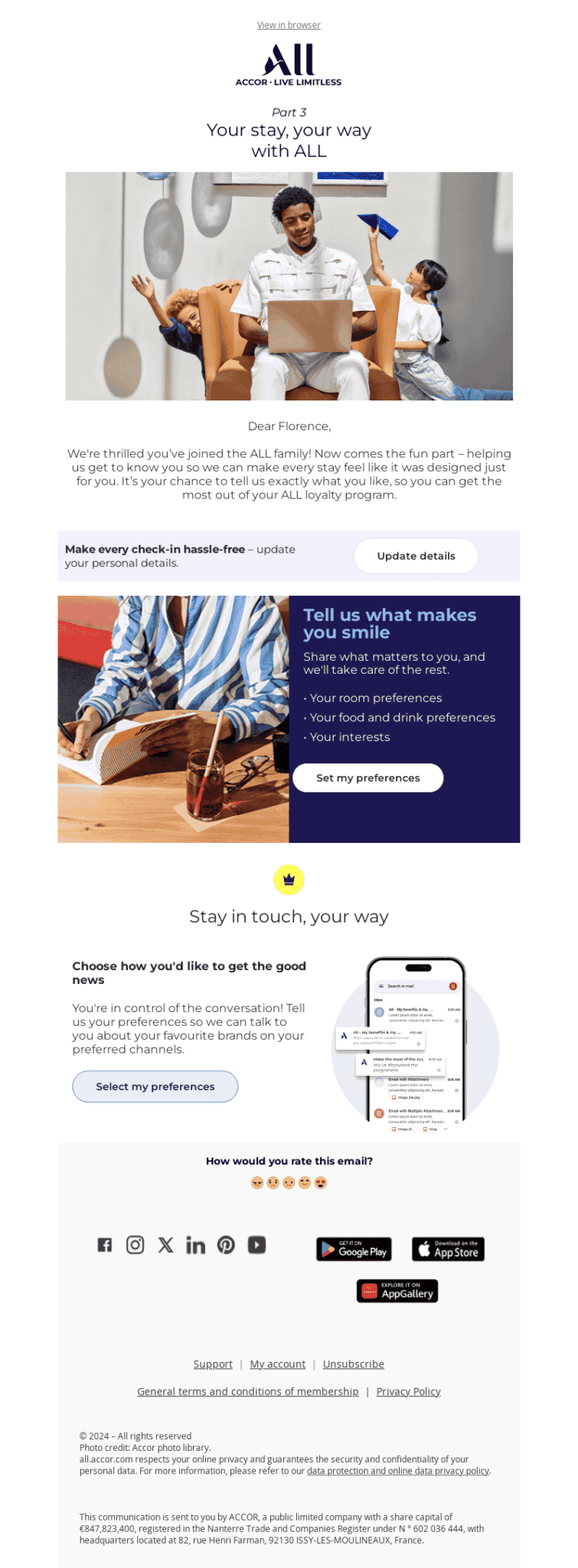
Welcome emails represent prime real estate for introducing the preference center. New subscribers are at their peak engagement and most open to shaping the nature of their relationship with a brand. Mizuno, for instance, uses clever, sports-themed subject lines to encourage new sign-ups to "be part of the first team," guiding them to set their preferences early. For brands with more extensive onboarding series, there’s even greater scope. Accor Hotels effectively uses a multi-email approach for new loyalty members, with a dedicated message focusing on "better check-ins, perfect rooms, and preferred communication channels," explicitly linking personalization to an enhanced customer experience.
Progressive profiling is another powerful technique, avoiding information overload by gradually building customer profiles over time. Instead of demanding a comprehensive data dump upfront, brands start with basic, essential information and then periodically request richer data through targeted check-ins. Skyscanner, understanding that a customer’s preferred airport is a key indicator of relevance, prioritizes this data point. Similarly, requesting a date of birth not only allows for personalized birthday surprises but also provides valuable demographic signals about age, life stage, and potential buying power, strengthening the customer relationship naturally.
3. Interactive Engagement and Value Proposition
Making preference capture an interactive experience can significantly boost participation. Gamification, which leverages game-like elements in non-game contexts, is highly effective. Oceania Cruises, for example, engages subscribers by asking them to "Choose which destination interests you most," often with a running counter showing the popularity of each option. This not only makes the process enjoyable but also builds a rich repository of customer insights with every poll response.
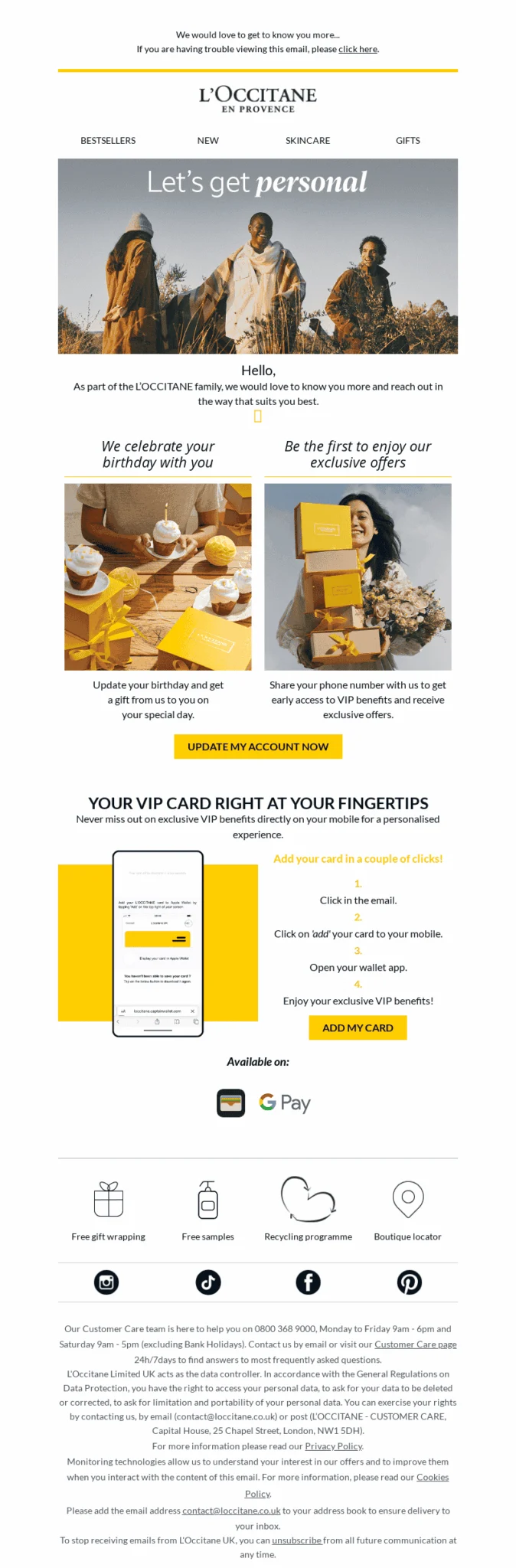
Crucially, brands must clearly articulate the "what’s in it for me" for subscribers. L’Occitane excels at this by spelling out tangible benefits such as early access to exclusive offers and a special birthday gift for those who update their preferences. They clearly outline options for new products, personalized offers, and special events, even offering choices to switch communication channels to text, post, or WhatsApp, demonstrating a holistic approach to customer communication. While "soft" benefits like early access are valuable, some subscribers require more direct incentives. Offering a discount for updating preferences is a highly effective strategy, as it not only encourages data sharing but also directly incentivizes a purchase, creating a win-win scenario for the brand.
4. Empowering Subscribers: Opt-Outs and Snooze Options
The rise of "opt-out of sensitive dates" emails (e.g., Valentine’s Day, Mother’s Day) reflects a growing awareness of customer emotional intelligence. However, the proliferation of these standalone emails can ironically amplify the very sensitivities they aim to mitigate. A more integrated and sustainable approach is to build these as one-time, permanent options within the preference center. Brands like Interflora offer anniversary options, Bloom & Wild allows muting Grandparent’s Day, and Hotel Chocolat enables customers to suppress alcohol-related promotions, demonstrating a thoughtful and respectful approach to customer preferences.
The holiday season, particularly critical sales periods like Black Friday and Cyber Monday, presents another opportunity for flexible preference management. Many subscribers would prefer to temporarily opt out of high-volume promotional emails rather than unsubscribe permanently. As Oracle’s research on snooze options confirms, a short-term pause is invariably better than a permanent departure. Bvlgari effectively implements this, allowing subscribers to manage their holiday communications. Similarly, Spoonflower uses the run-up to sales as a relevance check, with a smart call-to-action: "Curate My Content," empowering subscribers to manage their inbox clutter proactively.
5. Enhanced Visibility Across All Communications
Beyond dedicated campaigns, every email should work harder to promote the preference center. Two tactics significantly increase visibility:
- Pre-headers: Including a link to "Manage Preferences" or "Update Your Preferences" in the pre-header text, alongside the sender and subject line, increases transparency and builds trust. This approach, long recommended for unsubscribe links, effectively reduces spam complaints by giving subscribers a clear, easy alternative to opt-out.
- Dedicated Content Blocks: Integrating a consistent content block within regular newsletters or promotional emails, rather than relying solely on standalone campaigns, constantly reinforces the message and provides an evergreen pathway to the preference center. Bloom & Wild’s practice of allowing subscribers to opt out of multiple events at once within such a block is an excellent example of efficiency and user-friendliness.
6. Re-engagement and Retention
Preference centers play a crucial role in re-engagement campaigns. When subscribers become inactive or show signs of disinterest, offering them the option to adjust their preferences can be a last-ditch effort to retain them before they unsubscribe entirely. CVS Pharmacy effectively uses this strategy in win-back campaigns, restating the benefits of staying subscribed, soliciting feedback, and closing with a strong, committed call-to-action: "Yes, I still want emails." This approach provides a valuable alternative to outright cancellation, giving subscribers a reason to stay connected on their own terms.
Future Outlook: The Zero-Party Data Imperative
The ultimate test of a preference center’s effectiveness lies in its ability to forge a clear link between its usage and stronger email marketing engagement. If the subscribers who actively use the preference center exhibit higher click-through rates, increased interaction, and ultimately, greater spend, then a compelling case exists for further investment in this critical component of the email program. This data-driven validation reinforces the preference center’s role as a powerful personalization engine and a cornerstone for unlocking invaluable zero-party data.
As the digital landscape continues to evolve, marked by heightened privacy concerns, AI-driven inbox management, and the deprecation of third-party cookies, zero-party data will become increasingly vital for building durable, respectful, and profitable customer relationships. Brands that proactively embrace and optimize their preference centers will not only comply with regulatory demands but also gain a significant competitive advantage, transforming their email programs from mere communication channels into sophisticated platforms for intelligent customer engagement and sustainable growth. The future of email marketing is intrinsically linked to the ability of brands to empower their subscribers, fostering a symbiotic relationship built on trust, relevance, and mutual value.








