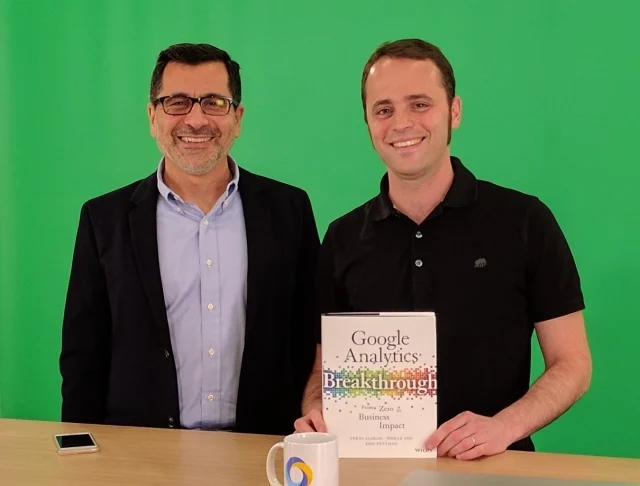
In an era defined by the exponential growth of digital touchpoints, the methodology through which organizations interpret and act upon data has become a primary differentiator for market success. This reality was central to a high-level technical exchange between Daniel Waisberg, a prominent figure in the digital analytics community, and Feras Alhlou, the Co-Founder and Principal Consultant at E-Nor and esteemed co-author of the definitive industry text, Google Analytics Breakthrough. The discussion, held at the Google Analytics studios, aimed to deconstruct the complexities of modern data environments and provide a structured path for enterprises to transition from basic data collection to sophisticated, actionable business intelligence.
The core thesis of the dialogue centered on the perspective that analytics should no longer be viewed as a technical byproduct of web development but rather as a fundamental business process. According to Alhlou, whose firm E-Nor has long been at the forefront of digital transformation and measurement strategy, the transition to a data-driven culture requires a rigorous adherence to a multi-stage optimization framework. This framework begins not with the implementation of code, but with a comprehensive audit that bridges the gap between technical capabilities and executive-level business objectives.
The Multi-Stage Optimization Framework: From Audit to Impact
The architectural foundation of E-Nor’s approach, as detailed by Alhlou, is structured into four distinct phases: the audit, the reporting layer, the analysis phase, and the final stage of testing and personalization. This hierarchy is designed to ensure that data integrity is established before any strategic decisions are made.
The audit phase is described as a dual-layered process involving both technical and business assessments. On the technical side, analysts must ensure that tracking codes are firing correctly, data is being captured without corruption, and privacy compliance standards are met. However, Alhlou emphasizes that the business side of the audit is equally critical. This involves engaging stakeholders across various departments—marketing, sales, product development, and finance—to identify Key Performance Indicators (KPIs) that truly align with the organization’s bottom line. Without this alignment, organizations risk "measuring for the sake of measurement," a common pitfall that leads to "data puke"—the presentation of vast amounts of data without contextual relevance.
Once the data foundation is validated, the process moves to the reporting layer. In this stage, the focus shifts to visualization and accessibility. The goal is to transform raw data into digestible formats that allow stakeholders to monitor performance at a glance. However, Alhlou warns that reporting is merely a prerequisite for the more valuable analysis phase. While reporting tells an organization what happened, analysis explains why it happened and identifies actionable insights.
The final and most mature stage of the framework involves testing and personalization. It is at this juncture that analytics translates directly into business impact. By leveraging insights gained from the previous stages, companies can run A/B tests, multivariate experiments, and personalized content delivery to optimize the user experience and maximize conversion rates.
Navigating the Complexity of the Modern Data Ecosystem
The discussion highlighted a significant shift in the digital landscape over the last decade. Historically, the task of a digital marketer was relatively straightforward, characterized by a single-device (desktop) environment and a limited number of marketing channels. Today, the ecosystem is characterized by extreme fragmentation. Consumers interact with brands across multiple devices—including smartphones, tablets, wearables, and desktops—and through a myriad of channels such as social media, organic search, paid advertising, and offline touchpoints.
Alhlou noted that the modern marketer is inundated with data from every direction, including web analytics, mobile app metrics, social media engagement, and backend CRM data. To manage this complexity, he suggests that organizations must focus on understanding the context surrounding the data. This involves not only looking at the numbers but understanding the intent behind user actions and the nuances of the platforms they are using.
Industry data supports the necessity of this focused approach. According to recent market research reports, the global big data analytics market is projected to grow from $271.83 billion in 2022 to over $655 billion by 2029. Despite this massive investment in data infrastructure, a study by NewVantage Partners found that only 23.9% of organizations characterize themselves as being data-driven. This discrepancy underscores the importance of the strategic frameworks discussed by Waisberg and Alhlou; having the data is not synonymous with having a data-driven strategy.
Strategic Roadmapping and the Integration of Qualitative Insights
A pivotal recommendation arising from the interview is the necessity of a data roadmap. Alhlou advises organizations to avoid attempting to solve all data challenges simultaneously. Instead, the recommended trajectory begins with mastering "owned" data—specifically web and mobile analytics. This serves as the primary source of truth for user behavior on a company’s digital properties.
As the organization matures, the roadmap should evolve to include augmented reports that incorporate basic social media data. This provides a broader view of brand sentiment and reach. However, Alhlou points out that quantitative data (the "what") is often incomplete without qualitative data (the "why"). To bridge this gap, he advocates for the use of tools like Google Surveys.
The introduction of streamlined survey products has revolutionized market research, which was once considered a cost-prohibitive endeavor reserved for major corporations. Today, businesses can deploy surveys directly on their digital properties to capture the "voice of the customer" in real-time. This qualitative layer allows analysts to understand customer satisfaction, friction points, and motivations, providing a level of depth that clickstream data cannot offer. Furthermore, these tools can be used for broader market research, allowing companies to target specific demographics and gain insights into market trends before launching new products or campaigns.
Broader Implications for Industry Leaders and Decision Makers
The implications of the insights shared by Waisberg and Alhlou extend beyond the realm of technical analysts to the highest levels of corporate leadership. As digital transformation continues to accelerate, the ability to effectively manage and interpret data is becoming a core competency required for institutional survival.
From a journalistic perspective, the collaboration between these two experts reflects a broader trend in the tech industry: the move toward integrated, full-stack measurement. The transition from legacy systems to more modern, event-based tracking models (such as the shift from Universal Analytics to GA4) mirrors the very processes Alhlou described. It is a shift away from session-based metrics toward a more holistic, user-centric understanding of the customer journey.
The economic impact of adopting such frameworks is substantial. Companies that successfully implement advanced analytics and testing programs frequently report conversion rate improvements of 20% to 30%. Moreover, the efficiency gains realized by automating reporting and focusing on high-impact analysis can significantly reduce operational overhead.
Conclusion and Chronology of Professional Collaboration
The meeting between Daniel Waisberg and Feras Alhlou is part of a long-standing professional relationship spanning nearly a decade. Both figures have played instrumental roles in educating the market. Waisberg, through his platform Online Behavior and his work at Google, has focused on the intersection of data and user psychology. Alhlou, through E-Nor and his literary contributions, has provided the practical, consultancy-driven frameworks needed to execute these theories at scale.
Their discussion serves as a reminder that while technology continues to evolve at a rapid pace, the principles of sound business strategy remain constant. Success in the digital age is predicated on a clear understanding of goals, a commitment to data integrity, and the agility to act on insights. As organizations look toward the future—incorporating artificial intelligence and machine learning into their analytics stacks—the foundational "business process" approach advocated by Alhlou will remain the essential starting point for any successful data strategy.
By following a structured roadmap and prioritizing the voice of the customer, businesses can navigate the current "data deluge" and turn a complex web of information into a sustainable competitive advantage. The work of practitioners like Waisberg and Alhlou continues to provide the necessary guidance for this journey, ensuring that the human element of interpretation and strategy remains at the heart of the technological revolution.