The persistence of class imbalance remains one of the most significant hurdles in modern predictive modeling, as real-world datasets for fraud detection, rare disease diagnosis, and industrial equipment failure typically feature minority classes that represent less than 1% of the total volume. While the Synthetic Minority Over-sampling Technique, or SMOTE, has served as the industry’s primary corrective tool since its introduction in 2002, a growing body of evidence from production environments suggests that reflexive oversampling often introduces more noise than signal. Today, lead data scientists and machine learning engineers are shifting toward a more nuanced hierarchy of interventions that includes cost-sensitive learning, focal loss, and strategic threshold tuning to ensure models remain robust in high-dimensional spaces.

The Economic and Operational Reality of Imbalanced Data
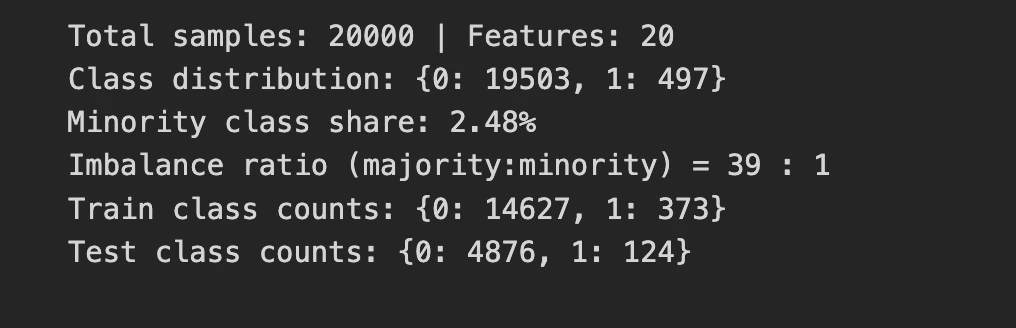
In the context of applied machine learning, class imbalance is defined by a skewed distribution between target classes, where the minority group—often the one with the highest business or clinical value—is dwarfed by a majority "background" class. In a typical financial fraud detection scenario, the imbalance ratio may reach 1,000:1, meaning for every thousand legitimate transactions, only one is fraudulent.
The failure to address this skew correctly carries heavy implications. For a healthcare provider, a model that prioritizes overall accuracy might achieve a 99.9% score while failing to identify a single malignant tumor. In the financial sector, missing a high-value fraud case is significantly more expensive than the operational cost of a false alarm. Consequently, the industry is moving away from generic metrics toward an asymmetric cost-benefit analysis where the cost of a False Negative (FN) is weighted much more heavily than a False Positive (FP).
The Chronology of Imbalance Management: From Resampling to Algorithmic Weighting
The evolution of handling rare events in data science has moved through several distinct eras. In the early days of statistical modeling, simple undersampling (removing majority cases) or oversampling (duplicating minority cases) were the standard. These methods were often crude; undersampling threw away valuable data, while oversampling led to severe overfitting.
The year 2002 marked a turning point with the publication of the SMOTE paper by Nitesh Chawla and colleagues. By creating synthetic examples through interpolation rather than simple duplication, SMOTE allowed models to "fill in" the minority space. However, as datasets moved into the "Big Data" era of the 2010s—characterized by high dimensionality and mixed categorical-numerical features—the limitations of SMOTE became apparent. In high-dimensional space, the concept of a "nearest neighbor" becomes statistically unreliable, leading SMOTE to generate "bridge" samples that blur the lines between classes, effectively teaching the model to be less certain rather than more accurate.
Why Accuracy Fails as a Metric for Rare Events
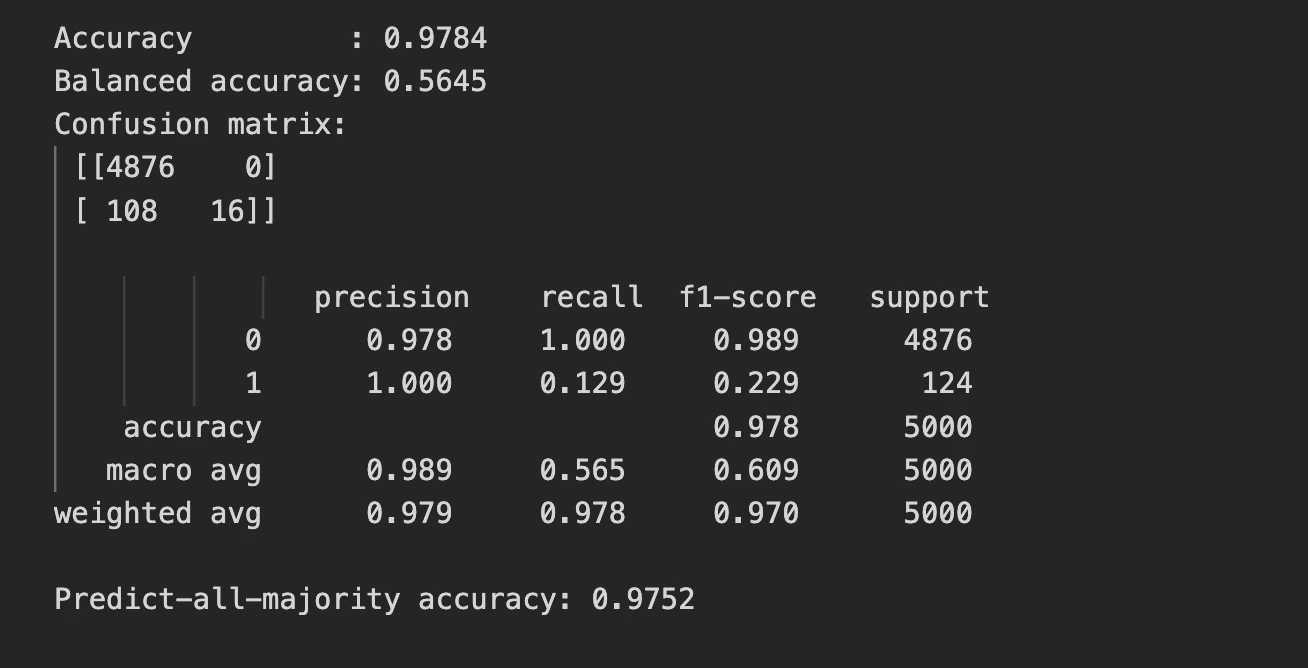
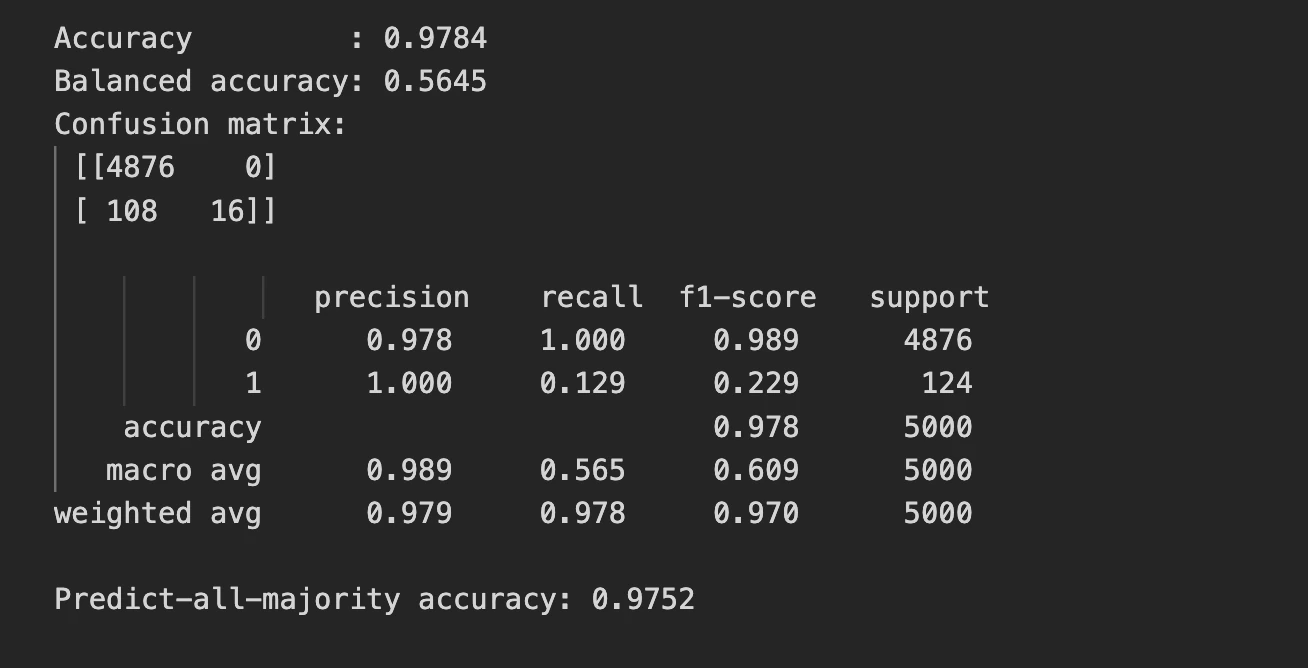
A recurring theme in modern machine learning audits is the "Accuracy Paradox." In a dataset with a 98% majority class, a "naive" model that predicts the majority class every single time will achieve 98% accuracy. To a stakeholder, this looks like a high-performing system, but in reality, the model has zero predictive power for the event of interest.
To combat this, industry leaders now mandate the use of the Precision-Recall Area Under the Curve (PR-AUC) and the Matthews Correlation Coefficient (MCC). Unlike the more common Receiver Operating Characteristic (ROC-AUC), which can be overly optimistic when classes are heavily imbalanced, PR-AUC focuses specifically on the model’s performance regarding the minority class. Recent benchmarks show that a model with an ROC-AUC of 0.90 might have a PR-AUC of only 0.40, revealing a significant gap in the model’s ability to rank rare events correctly.
A Four-Level Framework for Technical Intervention
Data scientists today categorize interventions into four levels of increasing complexity and integration:
1. Data-Level Methods
These involve altering the training distribution. While SMOTE remains a popular choice, modern variants like Borderline-SMOTE and ADASYN (Adaptive Synthetic Sampling) attempt to focus on "hard-to-learn" samples near the decision boundary. However, experts warn that these should only be used within a strictly controlled pipeline to avoid data leakage.

2. Algorithm-Level Methods
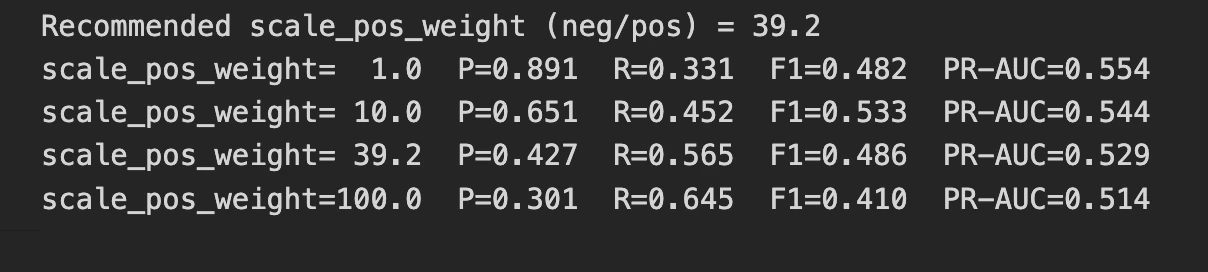
This approach leaves the data intact but modifies the learning process. "Cost-sensitive learning" involves adjusting the loss function so that the model is penalized more heavily for missing a minority case. In libraries like Scikit-Learn or XGBoost, this is often implemented via the class_weight or scale_pos_weight parameters. By setting weights to "balanced," the algorithm automatically adjusts the importance of each sample based on its frequency.
3. Ensemble-Level Methods
Advanced architectures like Balanced Random Forests and RUSBoost (Random Under-Sampling Boosting) have shown superior performance in production. These models create multiple subsets of the data where the classes are balanced, train individual learners on each, and then aggregate the results. This provides the stability of ensemble learning while ensuring the minority class is never "drowned out" during any single training iteration.

4. Decision-Level Methods: The Power of Threshold Tuning
Perhaps the most overlooked tool in the data scientist’s arsenal is the adjustment of the classification threshold. By default, most models use a 0.5 probability cutoff to decide between classes. In an imbalanced scenario, this is almost never optimal. By sweeping through potential thresholds on a validation set, engineers can find the specific point that maximizes the F1-score or minimizes the total business cost. This method is computationally "free" and often yields better results than complex resampling techniques.
Modern Innovations: Focal Loss and Anomaly Detection
In the last five years, techniques from computer vision have trickled down into tabular data science. Focal Loss, originally designed for object detection where the background dominates the image, is now being used in gradient-boosting frameworks like XGBoost and LightGBM. Focal Loss works by "down-weighting" easy-to-classify majority examples, forcing the model to spend its "learning budget" on the rare, difficult cases.

Additionally, for extreme imbalances (ratios higher than 1,000:1), the industry is pivoting toward anomaly detection. In these cases, the minority class is so rare that it is more effective to treat the problem as "one-class classification." Models like Isolation Forest or One-Class SVM learn the boundaries of "normal" behavior and flag anything that deviates as a potential rare event. This avoids the need to synthetically create data for a class that is too rare to represent accurately.
Industry Case Study: The Failure of Reflexive SMOTE
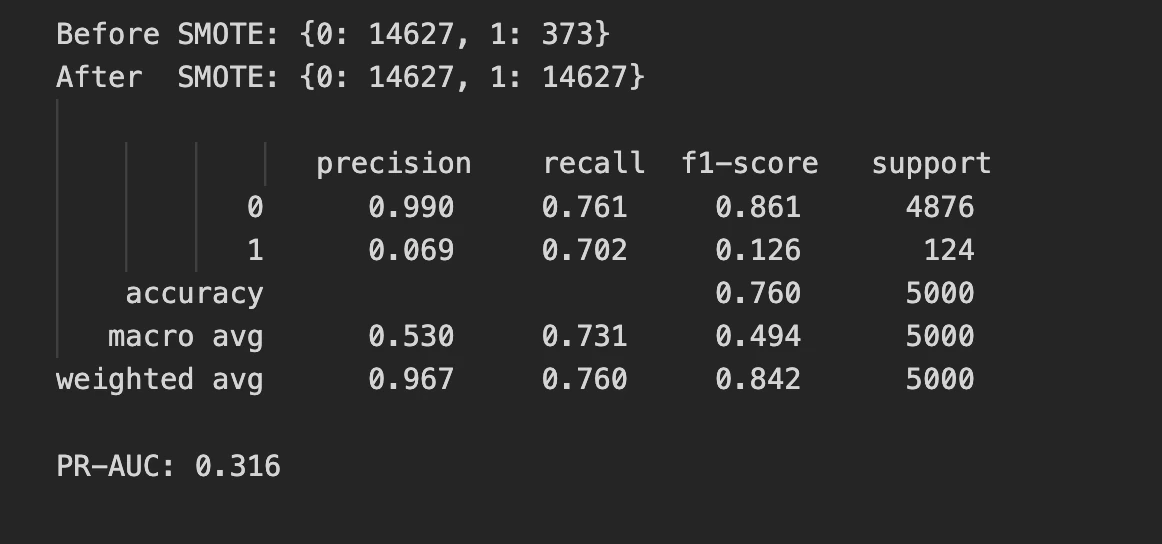
In a recent internal study of a fraud detection pipeline, a baseline XGBoost model was compared against a SMOTE-enhanced version and a cost-sensitive version. The results were telling:

- Baseline: High Precision (0.82), Low Recall (0.31). The model was conservative but missed many frauds.
- SMOTE: Low Precision (0.23), Moderate Recall (0.56). The model found more fraud but flooded the operations team with false alarms.
- Cost-Sensitive + Tuned Threshold: Moderate Precision (0.58), Moderate Recall (0.43). This provided the highest F1-score and the best balance for the business.
The conclusion from this and similar studies is that SMOTE often degrades the "ranking" ability of a model. While it makes the model more likely to predict the minority class, it often does so at the cost of the model’s overall discriminatory power.
Implications for the Future of Artificial Intelligence
As machine learning becomes more integrated into high-stakes decision-making—such as autonomous driving, credit scoring, and criminal justice—the ethics of class imbalance take on a new dimension. Bias in AI often stems from imbalanced training data where certain demographic groups are underrepresented.
The technical strategies discussed here are not just about improving "fraud scores"; they are about ensuring that rare but significant events—and underrepresented populations—are treated with the same mathematical rigor as the majority. The shift from "Accuracy" to "Fairness and Precision" represents the maturation of the field.
Summary Checklist for Practitioners
For organizations looking to modernize their approach to imbalanced data, industry experts recommend the following workflow:

- Establish a Baseline: Train a model on raw data and evaluate using PR-AUC and a Confusion Matrix.
- Tune the Threshold: Before changing the data, see if a different probability cutoff improves the F1-score.
- Implement Class Weights: Use algorithmic weighting to increase the importance of the minority class.
- Ensemble Testing: If performance is still lacking, move to a Balanced Random Forest or a Boosting algorithm with Focal Loss.
- Audit for Leakage: Ensure that any resampling (like SMOTE) is done strictly within cross-validation folds to prevent over-optimistic results that will fail in production.
By treating class imbalance as a multifaceted system problem rather than a simple data-filling task, companies can build more reliable, cost-effective, and ethical AI systems.