
In the meticulously crafted world of modern digital marketing, where subject lines are A/B tested to perfection, calls-to-action are agonized over, and preview texts are optimized for maximum engagement, a crucial element often remains an afterthought: the email footer. While marketers dedicate countless hours to the glamorous, high-visibility components of their campaigns, the humble footer is frequently treated as mere boilerplate, a section where the previous campaign’s content is simply copied and pasted. This pervasive oversight, however, represents not just a significant missed opportunity for brand reinforcement and customer engagement, but increasingly, a potent compliance risk in an era of stringent data privacy regulations. The email footer, often relegated to the bottom of the message, is in fact one of the most consistent pieces of real estate in every email communication, and critically, one of the few parts legally mandated. Getting it right is not merely a matter of good practice; it is essential for safeguarding a business, cultivating subscriber trust, and subtly but consistently reinforcing brand identity with every single send.
The evolution of digital communication has transformed email from a simple messaging tool into a sophisticated marketing channel, yet the foundational principles of sender identity, transparency, and user control remain paramount. The seemingly minor details within an email’s footer have disproportionately significant implications for a brand’s reputation and legal standing. Neglecting this vital section can lead to severe consequences, ranging from diminished sender reputation and increased spam complaints to substantial fines levied by regulatory bodies worldwide. Understanding the multi-faceted importance of the email footer requires delving into the historical context of email marketing regulations, the specific legal requirements they impose, and the strategic advantages a well-optimized footer offers beyond mere compliance.
The Genesis of Email Regulation: A Chronology of Compliance

The legal landscape governing commercial email marketing has steadily evolved in response to the proliferation of unsolicited emails, commonly known as spam, and growing concerns over consumer privacy. The lack of a universal internet governance body meant that various nations and blocs developed their own regulatory frameworks, each with unique nuances but a shared objective: protecting consumers and ensuring responsible marketing practices.
The United States pioneered federal anti-spam legislation with the CAN-SPAM Act of 2003 (Controlling the Assault of Non-Solicited Pornography And Marketing Act). Prior to CAN-SPAM, the internet was a wild west for email marketers, leading to widespread abuse and consumer frustration. The act established national standards for the sending of commercial email, requiring senders to provide a clear and conspicuous way for recipients to opt out of future emails, include their physical postal address, and avoid deceptive subject lines and "from" names. While often criticized for its "opt-out" rather than "opt-in" approach, CAN-SPAM represented a crucial first step in bringing some order to the chaotic email ecosystem. Penalties for violations can reach up to $50,120 per individual email, underscoring the serious financial implications of non-compliance.
Following the US, Canada introduced the Anti-Spam Legislation (CASL) in 2014, taking a significantly stricter "opt-in" approach. CASL requires explicit consent from recipients before sending commercial electronic messages, unless an existing business relationship provides for implied consent under specific conditions. It also mandates clear identification of the sender, contact information, and an easily accessible unsubscribe mechanism. CASL is widely regarded as one of the toughest anti-spam laws globally, with potential penalties reaching C$10 million for organizations and C$1 million for individuals. Its emphasis on consent raised the bar for email marketers engaging with Canadian audiences.
The most comprehensive and impactful regulation to date arrived with the European Union’s General Data Protection Regulation (GDPR) in 2018. While not exclusively an email marketing law, GDPR profoundly reshaped how businesses collect, store, and process personal data, including email addresses. It introduced stringent requirements for explicit, informed consent, data portability, and the "right to be forgotten." For email footers, GDPR reinforced the necessity of clear sender identification, easy unsubscribe options, and often, links to privacy policies that detail how subscriber data is handled. Furthermore, the GDPR’s extraterritorial reach means that any business processing the data of EU citizens, regardless of where the business is located, must comply. Fines for GDPR violations can be substantial, up to €20 million or 4% of annual global turnover, whichever is higher.
These landmark legislations, alongside others like the California Consumer Privacy Act (CCPA) in the US and the UK’s Privacy and Electronic Communications Regulations (PECR), have established a global precedent: email marketing is not just about sending messages; it’s about respecting user privacy, offering control, and maintaining transparency. The email footer, therefore, serves as the frontline for demonstrating adherence to these complex and evolving legal frameworks.
The Anatomy of an Effective Email Footer: Beyond the Bare Minimum
A truly effective email footer is a carefully constructed blend of mandatory elements and strategic enhancements that collectively serve to protect the sender, empower the recipient, and fortify the brand.
Mandatory Elements (for compliance):

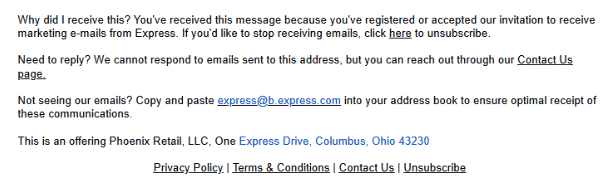
- Physical Mailing Address: A cornerstone of anti-spam laws like CAN-SPAM and GDPR, providing a valid physical postal address helps recipients verify the sender’s legitimacy and offers a non-digital means of contact. This must be a physical street address, not a P.O. Box unless registered specifically for this purpose with the postal service.
- Clear and Conspicuous Unsubscribe Link: This is perhaps the most critical element. Regulations universally demand an easy, single-click mechanism for recipients to opt out of future communications. Burying this link, making it tiny, or requiring multiple steps to unsubscribe is not only non-compliant but actively damages sender reputation. When a subscriber struggles to unsubscribe, they are far more likely to mark the email as spam, which has a much more detrimental impact on deliverability than a simple opt-out.
- Sender Identification: The footer should clearly state who sent the email (e.g., "This email was sent by [Company Name]"). This reinforces transparency and helps subscribers immediately identify the source of the communication, further reducing the likelihood of spam complaints.
- Reason for Receiving the Email: While not always strictly mandated by law, stating "You are receiving this email because you subscribed at [website.com] or opted in to receive marketing messages from us" is a highly effective best practice. This simple reminder helps recipients recall their interaction with the brand, mitigating the common issue of subscribers marking emails as spam because they simply don’t remember signing up.
Recommended Elements (for enhanced engagement and trust):
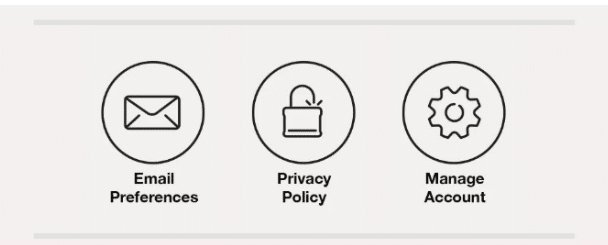
- Preference Center Link: Offering a preference center allows subscribers to tailor the types of emails they receive (e.g., promotional offers, newsletters, product updates) or adjust frequency, rather than forcing a full unsubscribe. This granular control is a powerful tool for retention and improving customer satisfaction, turning a potential opt-out into an opportunity for continued, more relevant engagement.
- Links to Social Media Profiles: Integrating social media icons allows subscribers to connect with the brand on other platforms, extending engagement beyond the inbox. This can help build a more robust, multi-channel relationship with the audience.
- Privacy Policy Link: A link to the company’s privacy policy demonstrates transparency regarding data handling practices, which is crucial for building trust, especially under GDPR and similar privacy laws.
- Website Link: A direct link to the company’s main website provides an easy path for interested subscribers to explore products, services, or content further.
- Company Logo/Branding: Including a small, consistent logo reinforces brand identity and visual recognition, even in the footer.
- Copyright Information: A simple copyright notice (e.g., "© [Year] [Company Name]. All rights reserved.") provides legal protection and professionalism.
- "Forward to a Friend" Option: This can turn engaged subscribers into brand advocates, leveraging their networks to expand reach organically.
- Additional Contact Information: Beyond the physical address, offering an email address or phone number for customer service inquiries further enhances accessibility and trust.
The Business Impact: Beyond Legalities
The strategic design and consistent implementation of an email footer have far-reaching business implications that extend well beyond avoiding fines.
- Sender Reputation and Deliverability: Email Service Providers (ESPs) and internet service providers (ISPs) closely monitor sender reputation, which is heavily influenced by spam complaint rates. A footer that is difficult to navigate or lacks clear unsubscribe options will inevitably lead to frustrated recipients marking emails as spam. This negative feedback loop damages sender reputation, leading to lower deliverability rates, where legitimate emails end up in spam folders or are blocked entirely. Conversely, a clear, compliant footer that facilitates easy opt-outs or preference management helps maintain a healthy sender reputation, ensuring emails consistently reach the inbox. Data suggests that a strong sender reputation can improve email open rates by up to 20-30%.
- Brand Trust and Professionalism: In an increasingly skeptical digital landscape, transparency and professionalism are key differentiators. A well-structured footer signals to subscribers that they are dealing with a legitimate, responsible business. It demonstrates respect for their privacy and choices, fostering a sense of trust that can translate into long-term loyalty and customer lifetime value. Conversely, a messy, incomplete, or non-compliant footer can make even the most polished marketing campaign appear amateurish or, worse, like a phishing attempt.
- Enhanced Customer Experience: Providing options within the footer, such as a preference center, empowers subscribers. It gives them control over their inbox experience, transforming what could be a negative interaction (unsubscribing) into a neutral or even positive one (tailoring preferences). This focus on customer experience aligns with modern marketing philosophies that prioritize user-centric design and personalized interactions.
- Marketing Efficacy and Engagement: While seemingly passive, the "nice-to-have" elements in a footer can actively contribute to marketing goals. Social media links drive cross-channel engagement, website links encourage further exploration, and privacy policies build confidence for potential transactions. These elements turn the footer from a mere legal requirement into a subtle, yet effective, engagement hub.
Best Practices for a Footer That Works Harder
To maximize the impact of the email footer, marketers should adhere to several key best practices:
- Prioritize Clarity and Conciseness: A cluttered footer is an ignored footer. Focus on presenting essential information clearly and concisely. Use white space effectively and group related links to improve readability. On average, users spend only a few seconds scanning the bottom of an email, so the most important elements must be instantly discoverable.
- Don’t Bury the Unsubscribe Link: This cannot be overstated. Hiding or obscuring the unsubscribe link is a self-defeating strategy. While the immediate thought might be to retain subscribers, the reality is that frustrated users will resort to marking the email as spam, which is far more damaging to sender reputation and deliverability than a clean opt-out. Industry data consistently shows that high spam complaint rates (anything above 0.1%) are a red flag for ISPs.
- Design for Mobile-First Accessibility: Given that over 50% of emails are opened on mobile devices, the footer must be fully responsive. Text should be legible without zooming, and clickable links (especially the unsubscribe button and preference center) should have ample tap targets to prevent accidental clicks. This aligns with broader accessibility guidelines, ensuring all users can interact with the footer effectively.
- Maintain Consistency Across Campaigns: The footer should be a consistent brand element, using the same layout, fonts, and brand colors across all email campaigns. This consistency contributes to brand recognition and builds trust over time, making the sender instantly identifiable.
- Regularly Test All Links: Broken links are a common and easily avoidable mistake. Before any campaign goes live, every link in the footer—unsubscribe, preference center, social media, privacy policy, website—must be thoroughly tested to ensure it functions correctly. Automated email testing platforms can help streamline this crucial step.
- Conduct Periodic Audits: Both regulations and business operations evolve. An address that was accurate two years ago might be outdated, or a social media channel might no longer be actively used. A comprehensive review of the email footer should be conducted at least once a year, or whenever there are significant changes to business structure, legal requirements, or marketing strategy. This proactive approach prevents dormant liabilities from becoming active problems.
The Takeaway
The email footer, despite its often-overlooked status, carries an outsized responsibility in the realm of digital marketing. It is the cornerstone of legal compliance, a fundamental builder of subscriber trust, and a subtle yet powerful extension of a brand’s identity. In a landscape increasingly defined by stringent privacy regulations and heightened consumer expectations for transparency, treating the footer as a strategic asset rather than an afterthought is no longer optional.
By dedicating the same intentionality and strategic thought to the email footer as to the rest of a campaign, marketers can ensure legal adherence, cultivate a robust sender reputation, enhance the overall customer experience, and ultimately, drive more effective and sustainable email marketing outcomes. In an age where digital trust is paramount, the small space at the bottom of an email stands as a testament to a brand’s commitment to professionalism and respect for its audience. Companies like Validity, with their AI-powered email intelligence platforms, offer solutions designed to help marketers automate compliance checks and optimize every send, ensuring that even the smallest section of an email contributes positively to deliverability and brand integrity. The message is clear: the footer is not just an endpoint; it’s a critical touchpoint that demands and deserves meticulous attention.