

Email personalization, leveraging unique customer data to tailor communications, has emerged as a critical driver of engagement and revenue across the entire email marketing customer journey. Far from being a mere individual send enhancement, it represents a strategic shift towards deeply relevant interactions, significantly outperforming generic, one-size-fits-all campaigns. This guide delves into the essence of email personalization, the scope of its application, and the strategic framework for its implementation, substantiated by real-world examples and compelling performance metrics from actual e-commerce operations.
The Foundational Role of Data in Personalization
At its core, email personalization involves dynamically altering content based on pre-existing subscriber data. This information is typically sourced from three main categories:
- Profile Details: Static information like first name, last name, location, and demographic data provided during sign-up or collected over time. This data is persistent and can be utilized in any email sent to a subscriber.
- Collected Properties: Behavioral data accumulated from a subscriber’s interactions with a brand, such as product interests, preferred categories, past purchases, and loyalty program status. Like profile details, this data can inform a wide range of email communications.
- Event Data: Dynamic information generated by a specific customer action, such as viewing a product, adding an item to a cart, or making a purchase. This type of data is intrinsically linked to automated emails triggered by these very actions, making it highly time-sensitive and context-specific. A crucial distinction is that event data is primarily leveraged within automated workflows, not in pre-scheduled, mass campaigns, ensuring the message’s relevance to an immediate customer action.
The mechanism for integrating this data into emails is typically through placeholders, which are swapped with real data upon send. For instance, a greeting like Hello [[contact.first_name|default: “there”]]! ensures that a subscriber named Joe receives "Hello Joe," while a subscriber without a recorded first name sees "Hello there," maintaining a personalized feel even in the absence of complete data. This robust system allows nearly every visible component of an email to be customized, subject to specific platform limitations.
Beyond Basic Greetings: Customizable Email Elements
The versatility of personalization extends across numerous email elements, transforming a standard message into a highly targeted communication. This comprehensive approach ensures that every touchpoint resonates with the individual recipient.
- Subject Line: A potent tool for immediate engagement, subject lines can be personalized with a customer’s first name, expressed product interest, geographical location, or recent browsing intent. For example, "Joe, your jacket is waiting" directly addresses the recipient and their recent activity.
- Preheader Text: The snippet of text that follows the subject line in the inbox offers another opportunity for personalization, reinforcing the message’s relevance, such as "Free shipping ends tonight."
- Greeting: The most common form of personalization, addressing the customer by name, with a fallback option for missing data, like "Hi Joe" or "Hello there."
- Body Copy: This is where deeper personalization can truly shine, mentioning specific customer details, preferences (e.g., loyalty tier, preferred size), or even significant dates like a birth month.
- Product Recommendations: Tailored suggestions based on previous purchases, recently viewed items, or complementary products significantly enhance cross-selling and up-selling opportunities.
- Conditional Blocks: Entire sections of an email can be dynamically displayed or hidden based on specific customer segments. This allows for showing new arrivals to frequent browsers while offering exclusive rewards to VIPs within the same email template.
- Offers and Discounts: Personalization here can extend beyond just the discount value to eligibility criteria or unique, customer-specific codes, such as offering new customers 10% off and VIPs early access to sales.
- Buttons and Links: The destination URL of a call-to-action button can be customized based on customer behavior, directing cart abandoners straight back to their saved cart.
- Header and Footer: These often-overlooked elements can be personalized to include location-specific content, such as delivery information relevant to the customer’s country.
- Send Time: Advanced personalization can even optimize the delivery time for each recipient, sending the email when they are most likely to open and engage, based on their individual historical behavior.
Tools like Omnisend’s Subject Line Generator exemplify how platforms aid in crafting personalized subject lines aligned with campaign goals and audience segments, leveraging sophisticated filters to ensure messages reach the right audience.
The Compelling ROI of Personalized Automation
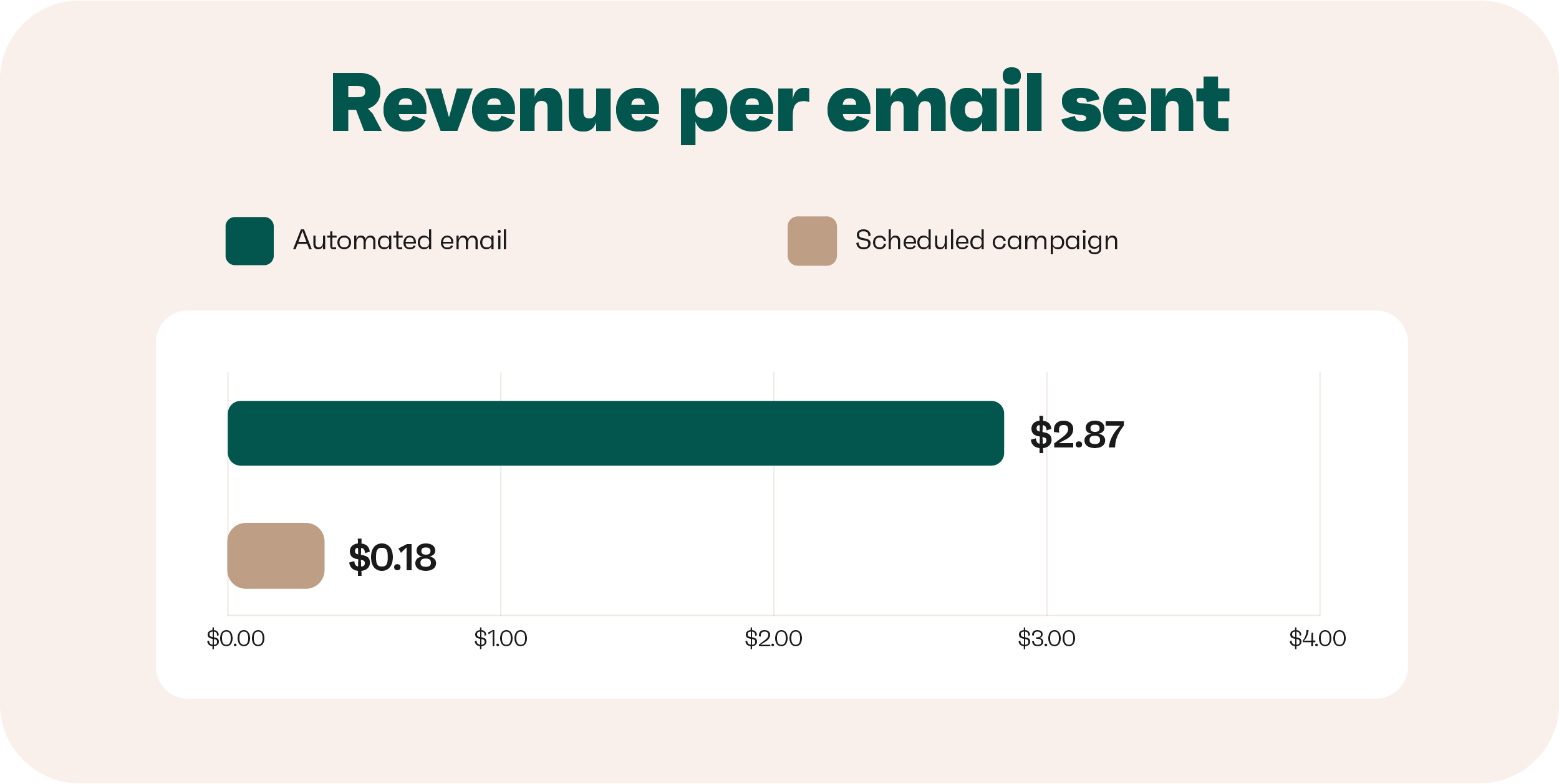
The impact of personalization is starkly evident in e-commerce performance metrics. Extensive research from Omnisend, analyzing trends across 150,000 brands and 27 billion emails, reveals that automated emails, which are inherently personalized, generate an average of $2.87 per send, a staggering contrast to the mere $0.18 earned by scheduled campaigns.
This significant disparity is not superficial; it permeates every stage of the customer journey:
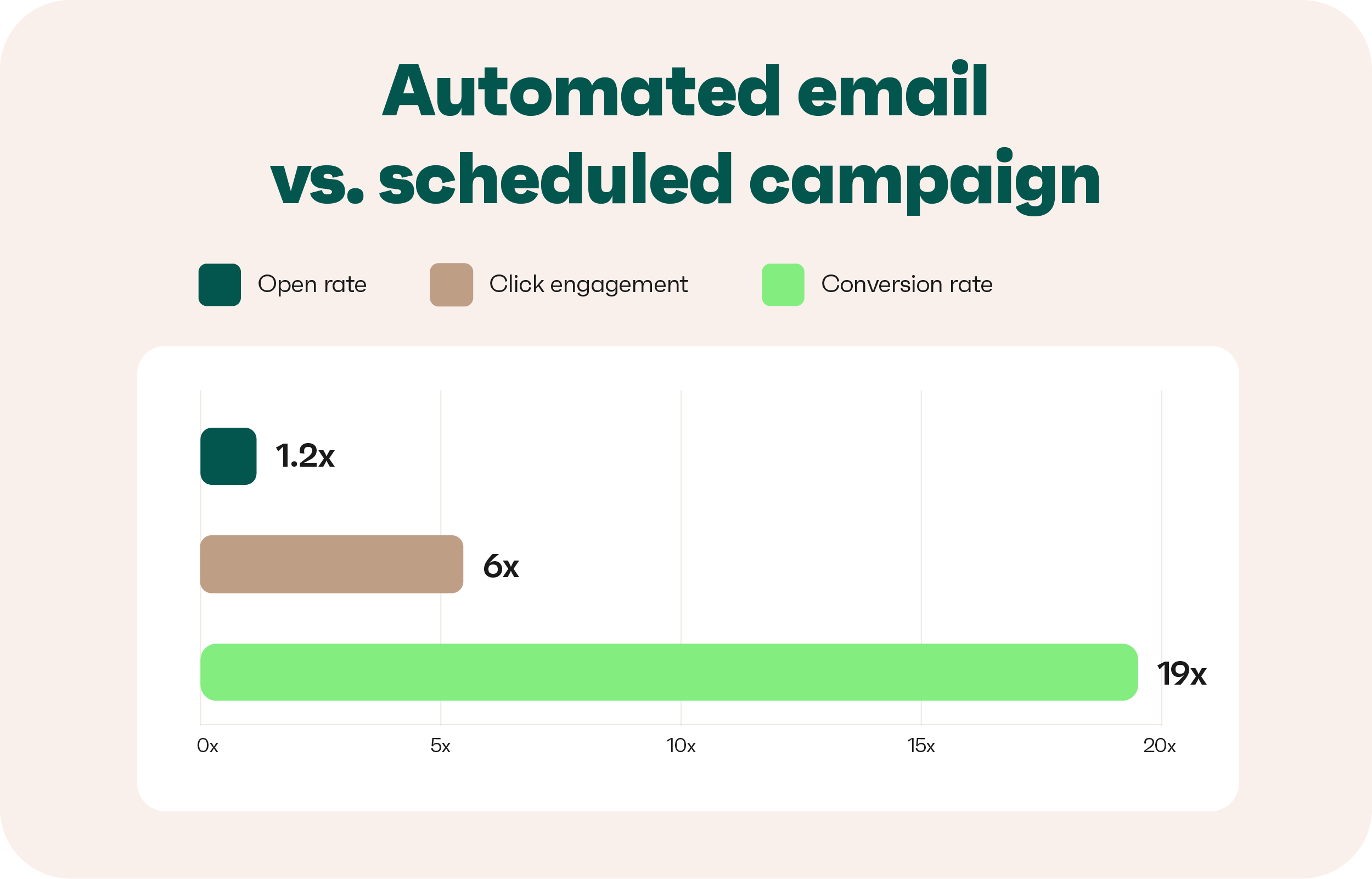
- Engagement Metrics: Automated emails boast open rates that are 24% higher than scheduled campaigns. The gap widens dramatically in click engagement, which is six times higher for automated messages. This clearly indicates that communications triggered by user behavior or characteristics resonate far more deeply.
- Conversion Power: The ultimate testament to personalization’s effectiveness lies in conversion rates. Automated emails achieve a conversion rate 19 times higher than scheduled campaigns. Nearly one in three clicks on an automated email culminates in a purchase, highlighting their direct path to revenue.
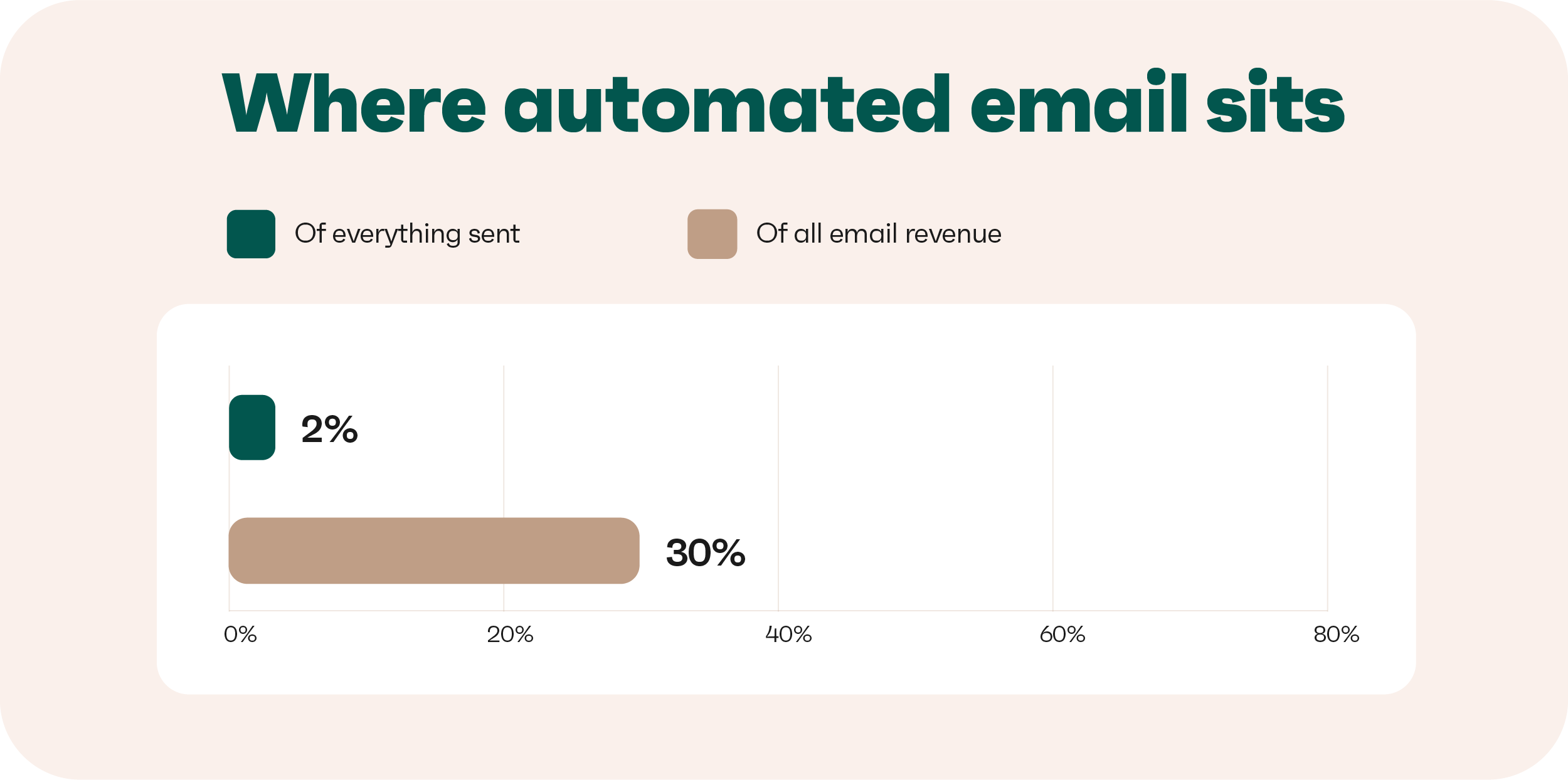
- Revenue Contribution: Despite constituting only 2% of all emails sent by stores, automated emails are responsible for a disproportionate 30% of total email revenue. This underscores their strategic importance as high-leverage marketing assets.
- Key Automation Flows: Within automated emails, welcome and abandoned cart sequences are particularly powerful, collectively driving 76% of all orders from automated messages. These flows intercept customers at critical junctures—when interest is piqued (welcome) or purchase intent is high but interrupted (abandoned cart)—making their personalized nature exceptionally effective.
The metric of "revenue per email sent" provides the clearest comparison, unequivocally demonstrating the superior value of automated, personalized messages ($2.87) over generic campaigns ($0.18). This metric should be a cornerstone of internal reporting, offering a consistent basis for evaluating email marketing efficacy.
Real-World Personalization in Action: Case Studies
Examining practical applications provides deeper insight into how businesses harness personalization to drive results. The following examples, drawn from real stores, illustrate diverse personalization strategies across the customer lifecycle:
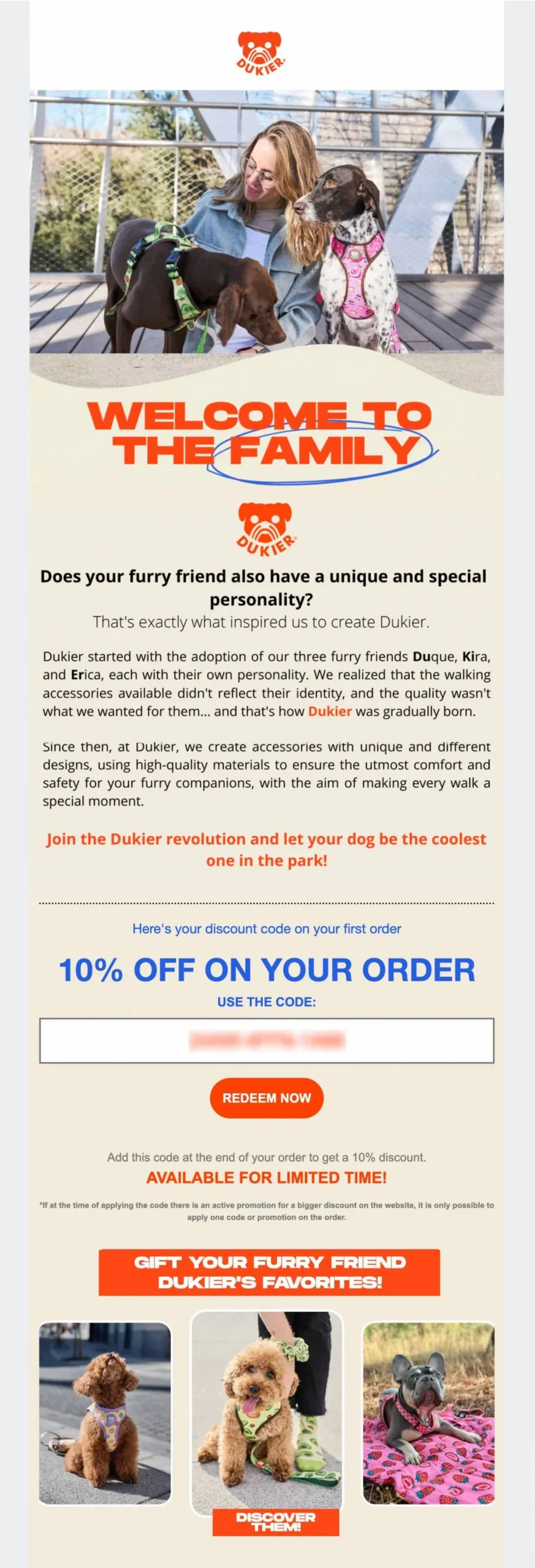
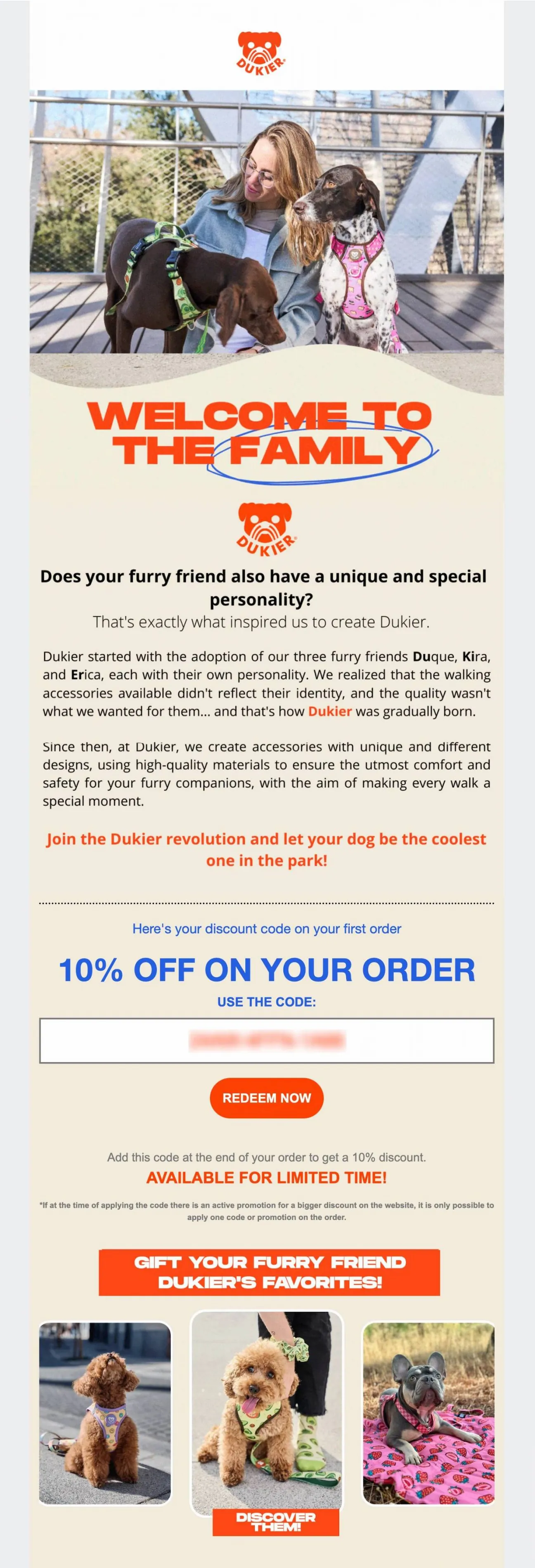
- Welcome Email (Dukier): Dukier’s welcome email (Subject: "Your 10% EXTRA OFF is here! ❤️🔥") prioritizes brand storytelling before presenting an offer. By introducing its founding narrative and featuring its three namesake dogs, Dukier establishes an emotional connection, making the 10% discount feel like an invitation to a community rather than a mere transaction. This strategy, needing only a sign-up event, contributed to 55% of Dukier’s total revenue from automated emails. The key takeaway is to build brand affinity first, then offer incentives, making the discount more meaningful.
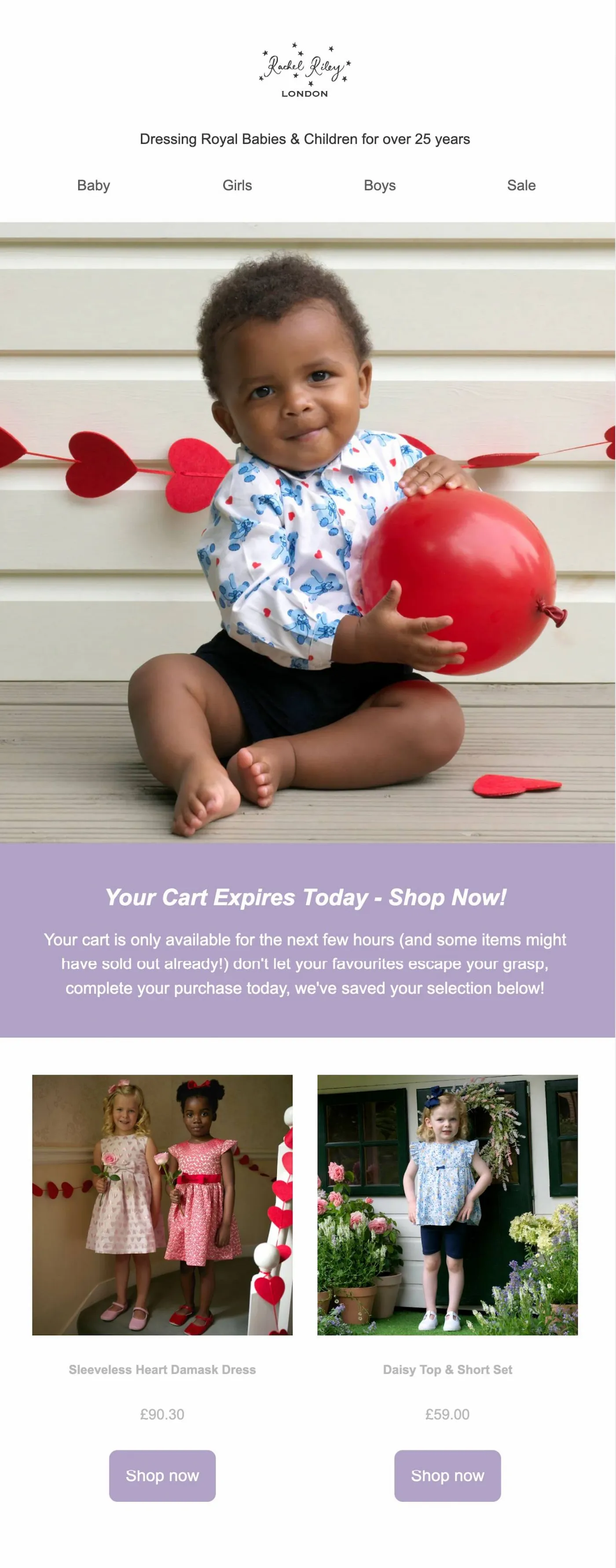
- Cart Recovery Email (Rachel Riley): Instead of relying solely on discounts, Rachel Riley’s abandoned cart email (Subject: "Your Cart Expires Today! ⏰") leverages urgency. It informs customers that their cart will expire and items may sell out, using the saved cart contents as the primary personalization element. This approach, combined with other automated flows like order confirmations, generated 46% of the brand’s revenue. The lesson here is that urgency, when genuine, can be as effective as a discount in recovering sales.
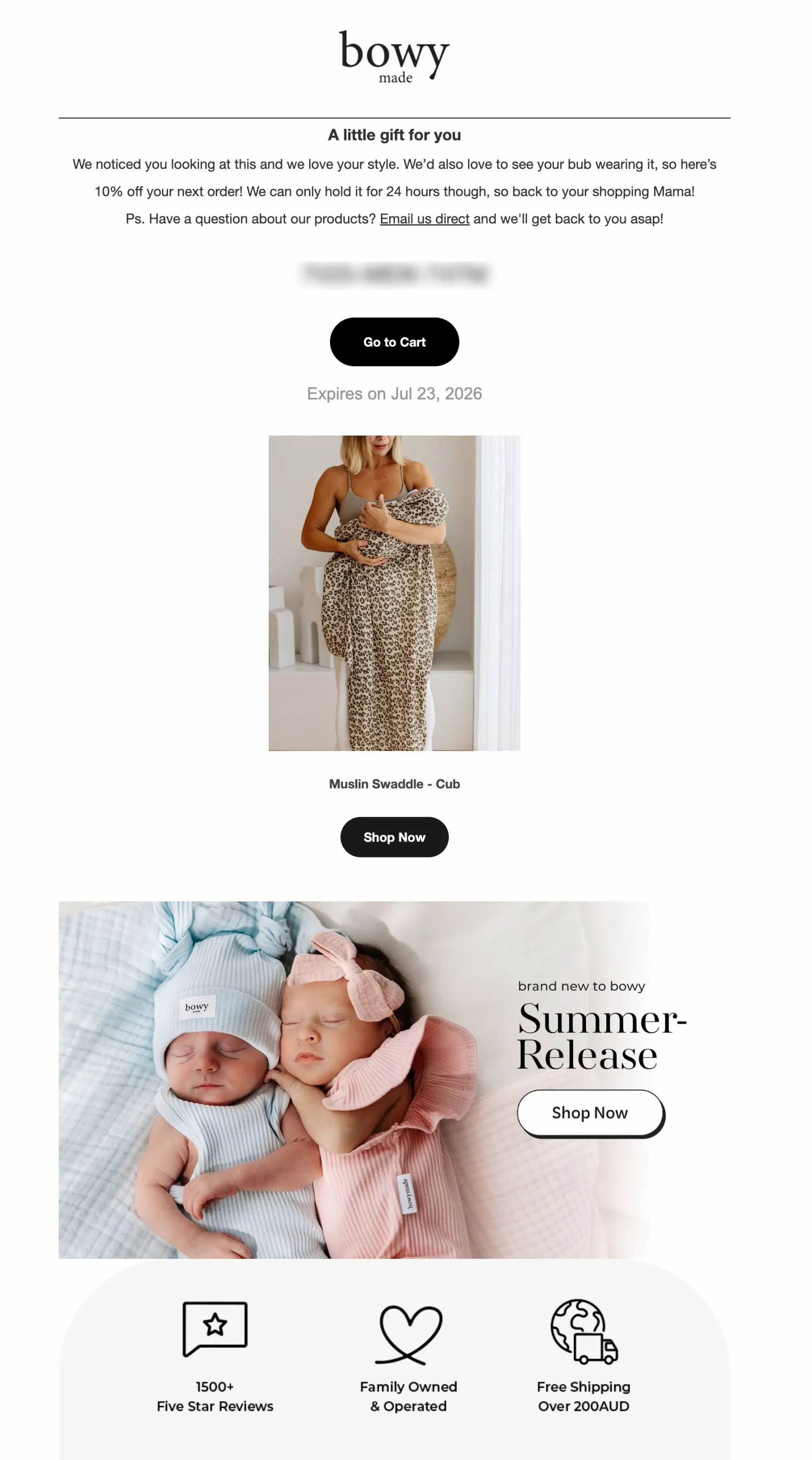
- Browse Abandonment Email (Bowy Made): Bowy Made’s browse abandonment email (Subject: "Take a second look 👀") directly addresses the viewed product and offers a 10% discount valid for 24 hours. The message is tailored to the customer’s presumed role (e.g., as a parent for baby swaddles). Notably, testing a subject line like "Jessica, you left something behind" showed a 5-10% conversion rate improvement over a generic one, underscoring the power of name personalization combined with behavioral triggers.
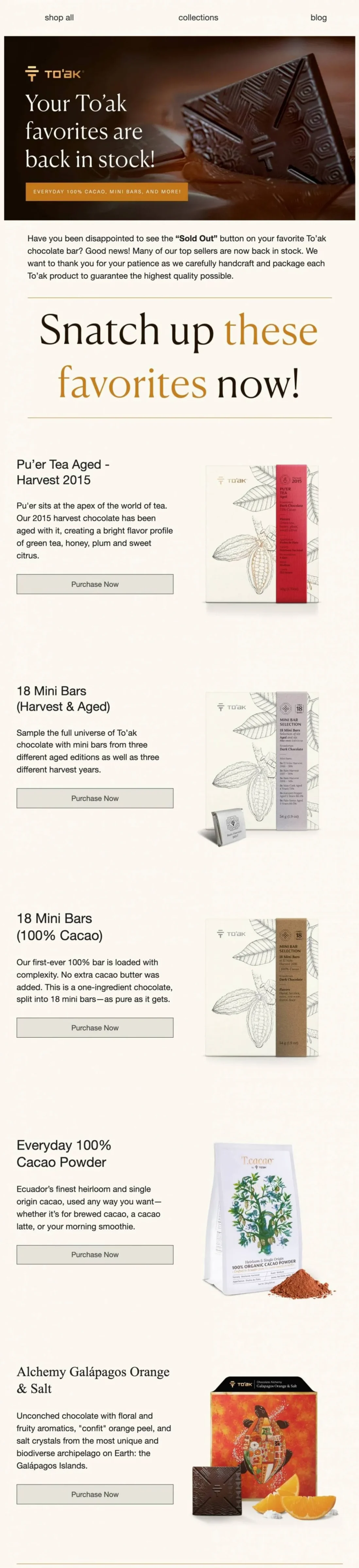
- Back-in-Stock Email (To’ak): To’ak effectively capitalizes on renewed interest with its back-in-stock email (Subject: "Your To’ak favorites are back in stock!"). It acknowledges the customer’s prior disappointment of finding an item sold out, then lists the returning products with tasting notes and direct buy buttons. These highly timely emails boast the highest conversion rate among all automations (6.46%) across Omnisend’s research. For To’ak, automations, representing only 2.1% of sends, generated 39.4% of email revenue, highlighting the potent effect of addressing explicit past intent.
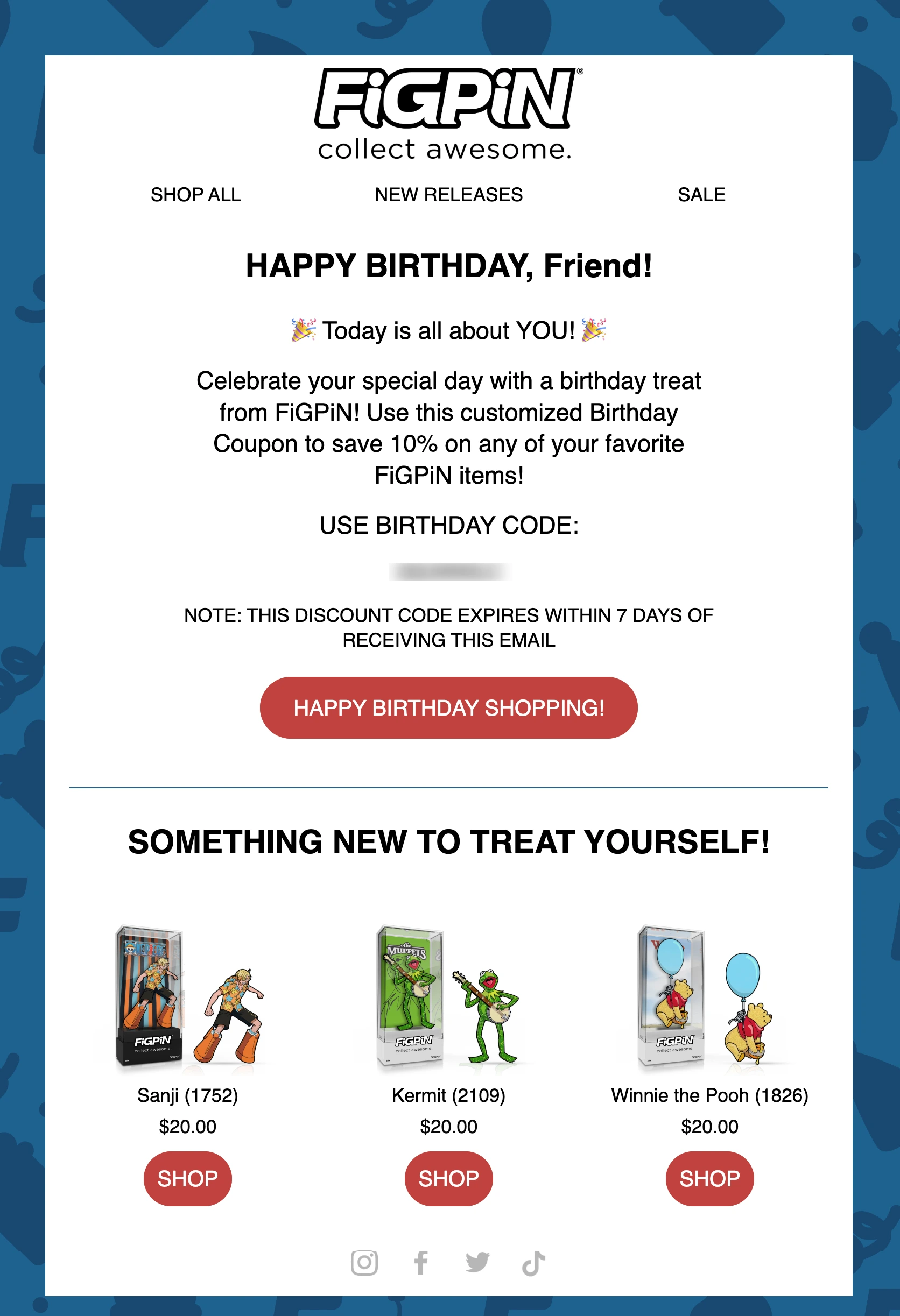
- Birthday Email (FiGPiN): FiGPiN’s birthday email (Subject: "Happy Birthday from FiGPiN!") combines a seven-day discount code with product recommendations from licenses the customer has previously engaged with. This strategy provides both a reason to open (the discount) and a reason to click (relevant products). Birthday emails, on average, yield an order value four times higher than average. FiGPiN saw 24% of its email revenue come from automated messages, despite them being only 9% of total sends. The key is to link celebratory offers with known preferences.
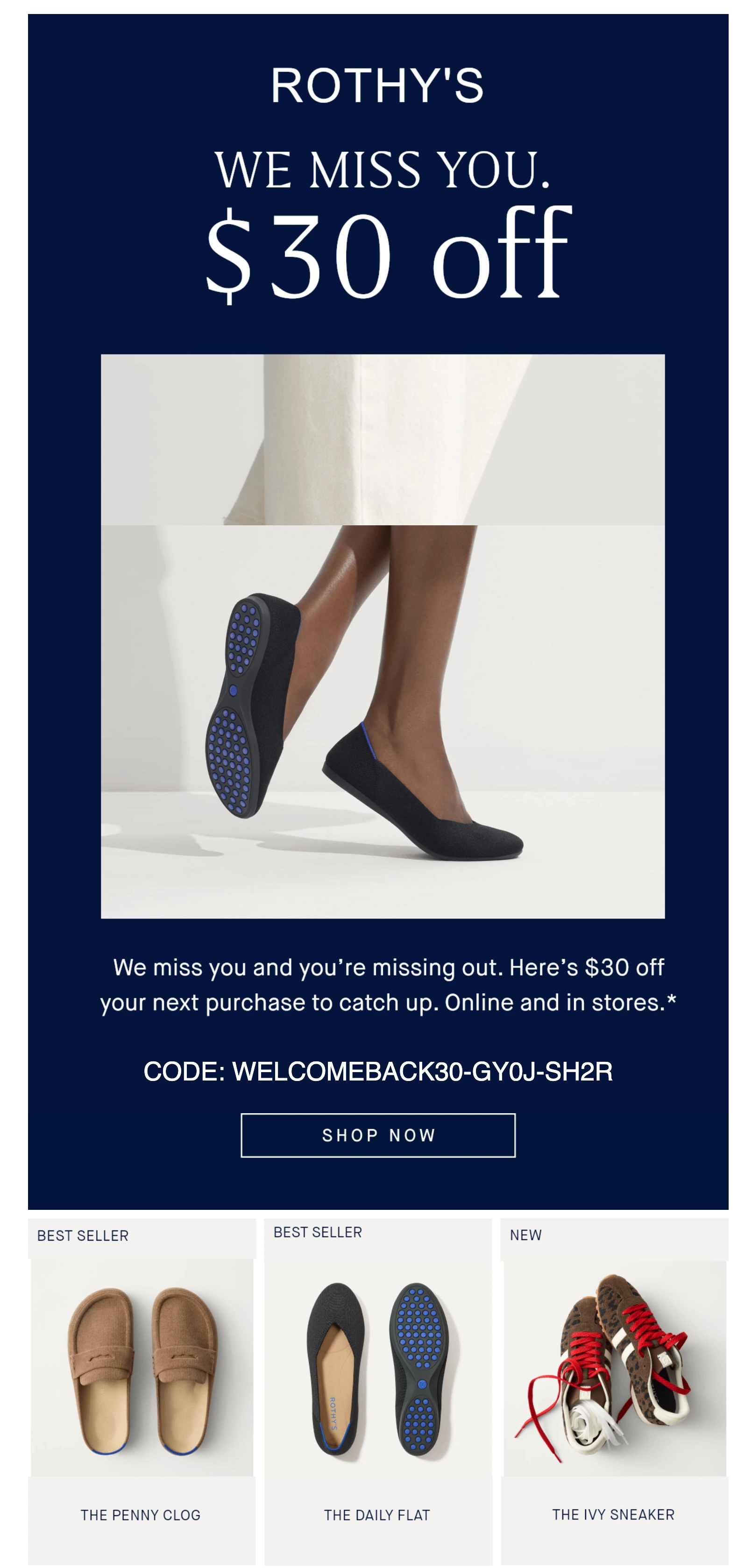
- Win-Back Email (Rothy’s): Rothy’s win-back email (Subject: "We miss you! $30 off inside.") targets lapsed customers with a unique $30 discount code. It skips brand reintroduction, assuming prior familiarity, and features bestsellers. The effectiveness hinges on precise timing, based on the customer’s last purchase, to re-engage them before they churn completely. The focus is on re-establishing a relationship with a valuable incentive.
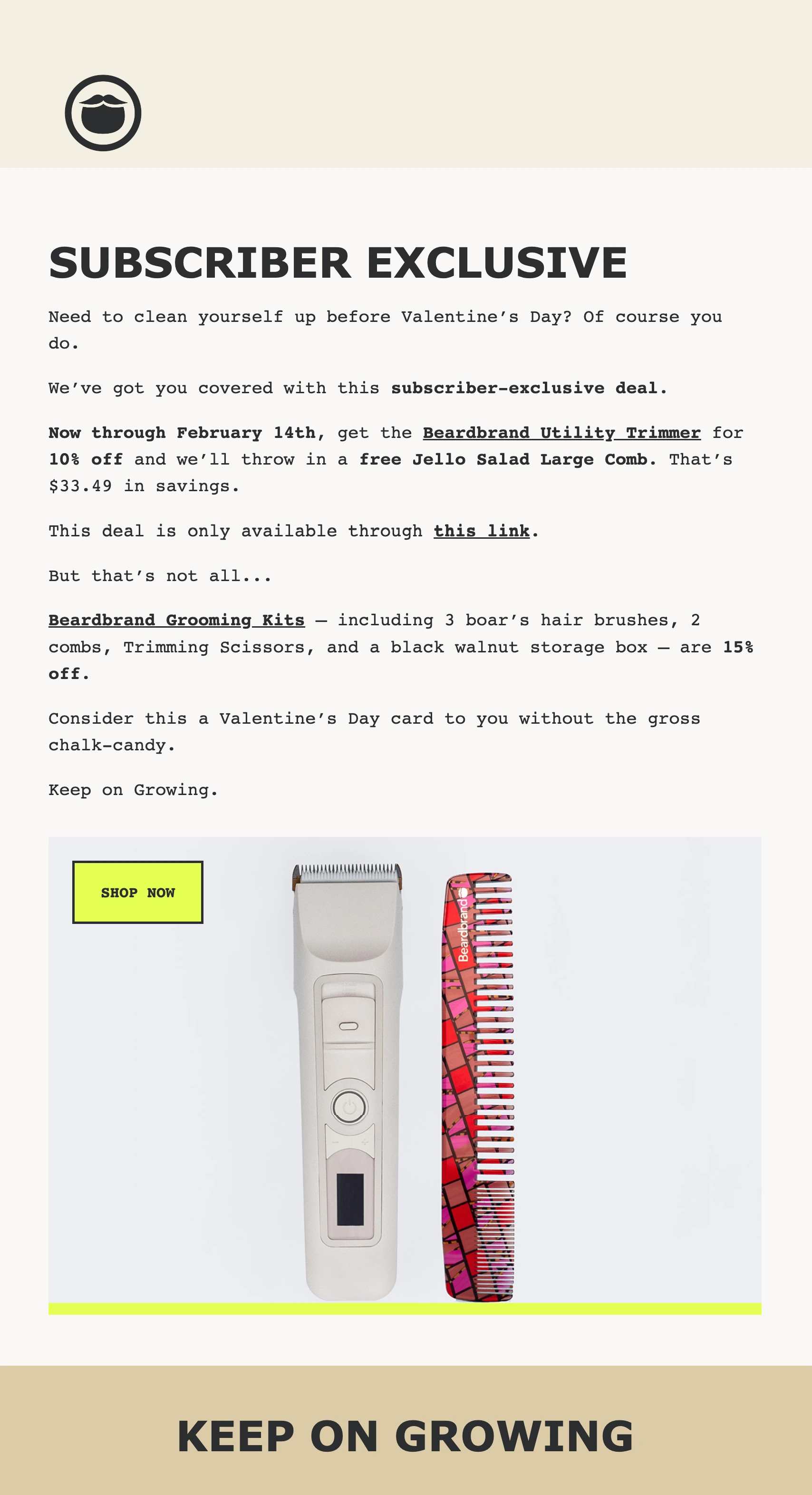
- Segment Offer (Beardbrand): Beardbrand’s "Exclusive Subscriber Deal Inside" email personalizes offers based on subscriber status rather than individual behavioral data. It positions the discount as an exclusive benefit, fostering a sense of belonging. This approach is highly effective for brands with established subscriber lists but limited granular customer data, leveraging the inherent value of being part of a community.
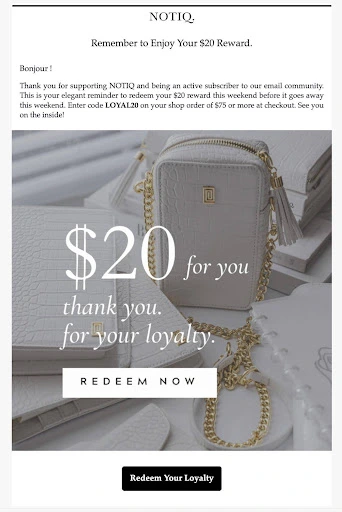
- Loyalty Reward (NOTIQ): NOTIQ’s "$20 Loyalty Weekend" email reminds customers of unredeemed loyalty credit, framing it as a reward for continued patronage. The message includes a weekend deadline and a minimum order value ($75) to protect margins. This strategy targets customers with existing loyalty, prompting them to return and utilize their accrued benefits.
- Re-permission Email (Dusk): Dusk’s "Still want to hear from us?" email is crucial for maintaining list hygiene and ensuring future personalization efforts are built on a foundation of consent. It asks inactive subscribers to reconfirm their interest, outlining the benefits of staying subscribed (early access, offers, tips, birthday treats). While not personalizing content, it protects the data integrity and consent necessary for future personalization, ensuring an engaged and compliant audience.
Crafting a Robust Email Personalization Strategy
An effective email personalization strategy is built systematically, with each decision rooted in customer data. This phased approach moves from broad segmentation to highly granular, predictive engagement.
- Personalize by Customer Lifecycle Stage: This is a fundamental segmentation approach, categorizing customers based on their purchasing behavior over time. Omnisend defines stages like New, Active, Engaged, At-Risk, and Can’t-Lose, calculated using recent orders, annual order volume, and average order value. Tailoring messages to these stages (e.g., nurturing new customers, re-engaging at-risk ones) significantly boosts relevance. For example, Island Olive Oil achieved a 27% conversion rate with re-engagement emails for at-risk customers, and $11.24 per email sent for can’t-lose customers.
- Segment on Behavior Rather Than Demographics: While demographics offer a general profile, behavior reveals intent and future actions. Utilizing up to 500 data points, behavioral segmentation allows for highly specific targeting. This includes targeting users who viewed a product but didn’t add to cart, added to cart but didn’t purchase, made a first-time purchase, or are frequent repeat buyers.
- Personalize from Purchase History: Past purchases are invaluable indicators of future preferences. This data forms the bedrock for post-purchase emails, enabling product recommendations, replenishment reminders for consumables, and targeted upsell or cross-sell offers based on complementary items.
- Personalize by Location: Geographical data influences everything from product availability and pricing to shipping details, language, and compliance regulations. Personalizing content based on a customer’s location ensures that offers, promotions, and logistical information are relevant and accurate.
- Set Trigger Delay and Send Hour Separately: Email timing involves two critical components: the delay after a triggering action (e.g., 30 minutes after cart abandonment) and the optimal delivery hour for the individual recipient. Separating these allows for immediate relevance and optimized deliverability, ensuring the email arrives when the customer is most likely to engage.
- Swap Blocks Inside One Template with Dynamic Content: Advanced platforms allow for dynamic content blocks within a single email template. This means different customer segments can see entirely different content (e.g., product categories, offers, images) within the same email, eliminating the need to create multiple versions and streamlining campaign management.
- Let Prediction Handle Send Time and Next Purchase: Leveraging AI and machine learning, predictive models analyze past behavior to estimate optimal send times for individual subscribers and predict their next likely purchase. This represents a sophisticated application of AI in marketing, maximizing engagement and conversion efficiency without manual intervention.
Navigating the Pitfalls: Common Personalization Mistakes to Avoid
Despite its immense benefits, personalization can fail if not executed carefully. Common mistakes often stem from technical oversights or a lack of strategic forethought.
- Missing Default Values: Failing to set fallback options for placeholders (e.g., "Hello there" if a first name is missing) can result in awkward or unprofessional greetings like "Hello !"
- Outdated Data: Relying on stale customer data (e.g., recommending a product already purchased) erodes trust and relevance. Regular data hygiene and real-time updates are crucial.
- Over-Personalization: While intent-driven personalization is good, excessive use of personal data that feels intrusive (e.g., mentioning highly specific browsing history in a way that feels like surveillance) can creep out customers.
- Incorrect Segmentation: Misclassifying customers into the wrong segments can lead to irrelevant offers or messages, negating the purpose of personalization.
- Inconsistent Branding: Even personalized emails must maintain a consistent brand voice, tone, and visual identity to reinforce brand recognition and trust.
- Lack of Testing: Failing to A/B test personalized elements (subject lines, content blocks, offers) means missing opportunities to optimize for better performance.
- Ignoring Mobile Optimization: A significant portion of emails are opened on mobile devices. Personalized content must render perfectly across all screen sizes.
- Data Silos: When customer data is fragmented across different systems, a holistic view for effective personalization becomes impossible. Integrated platforms are key.
- Poor Timing: Sending personalized emails too early or too late after a trigger event can diminish their impact. Precision in timing is crucial.
- Privacy Concerns: Neglecting data privacy regulations (e.g., GDPR, CCPA) or failing to be transparent about data usage can lead to legal issues and reputational damage.
Tools of the Trade: Enabling Effective Personalization
The efficacy of an email personalization strategy is often amplified by the right technology. Leading e-commerce personalization software offers varying capabilities to suit different business needs and scales.
- Omnisend: Positioned as an omnichannel marketing platform, Omnisend unifies email, SMS, and push notifications, ensuring seamless data flow and consistent personalized messaging across channels. Its key features include pre-built automation workflows (welcome, abandoned cart, browse abandonment), dynamic content blocks, advanced segmentation, A/B testing, and robust analytics, making it ideal for e-commerce businesses looking for integrated marketing.
- Nosto: Nosto excels in on-site personalization, optimizing search, product recommendations, and display elements directly on a brand’s website. Its strength lies in leveraging this deep on-site behavioral intelligence to power personalized recommendation blocks within emails. Nosto is typically favored by mid-market and enterprise stores that require sophisticated real-time website optimization that can then inform email campaigns.
- Dynamic Yield: Catering to data-rich enterprise brands, Dynamic Yield offers comprehensive orchestration of personalization across websites, mobile apps, and email. Its AI-powered features, including predictive segmentation, real-time decisioning, and experience optimization, allow for highly granular and complex personalization strategies across the entire customer journey, suitable for large organizations with extensive data infrastructure.
Summary: The Imperative of Personalized Engagement
Email personalization is no longer an optional add-on but a fundamental requirement for competitive e-commerce. It does not necessitate an overly complex setup; instead, it begins by strategically utilizing the customer data already collected. Welcome and abandoned cart emails serve as excellent starting points due to their direct link to customer and shopping data, offering immediate opportunities for impactful personalization.
As businesses mature, personalization can be extended to browse abandonment, back-in-stock notifications, birthday greetings, loyalty rewards, and win-back campaigns. The core principle involves focusing on actionable customer behavior and activities, continuously testing what drives higher engagement, clicks, and, ultimately, orders. By embracing a data-driven approach to email communication, brands can cultivate deeper customer relationships, enhance brand loyalty, and unlock significant revenue growth in an increasingly competitive digital landscape.








