The digital landscape is undergoing a seismic shift, driven by the pervasive influence of Artificial Intelligence (AI). While AI chatbots and AI-powered search engines promise to revolutionize how we access information, a critical question looms large for website owners: what is the true cost of this AI-driven content consumption? A recent in-depth analysis by a leading digital marketing analytics firm has shed light on the alarming scale of AI bot activity on websites, revealing a stark imbalance between the sheer volume of content scraped and the negligible traffic referred back to the original sources. This investigation, spanning six months and meticulously tracking millions of AI bot interactions, uncovers a trend that could have profound implications for content creators, publishers, and the future of online discoverability.
The core of the investigation stemmed from a fundamental query that has been circulating within digital marketing circles for months: how frequently are AI platforms accessing our websites, what specific content are they prioritizing, and critically, are these AI engagements translating into tangible website traffic? Or, as many suspect, are AI bots merely harvesting content for their internal knowledge bases and training models, with little to no reciprocal benefit for the creators? To address these pressing questions, the analytics team deployed a specialized AI analytics tool, designed to monitor and categorize all activity originating from AI bots across their digital properties.
The findings, as described by the research team, were a mixed bag, ranging from "interesting in a good way" to "not so good." While the data provided valuable insights into which pages AI platforms are most aggressively scraping, it also painted a sobering picture of the return on investment for website owners. The headline takeaway is that AI bots are indeed engaging with websites at an unprecedented scale, scraping content millions of times. However, this voracious appetite for data is not being matched by a corresponding influx of human visitors.
The Stark Reality: Millions of Scrapes, Minimal Referrals
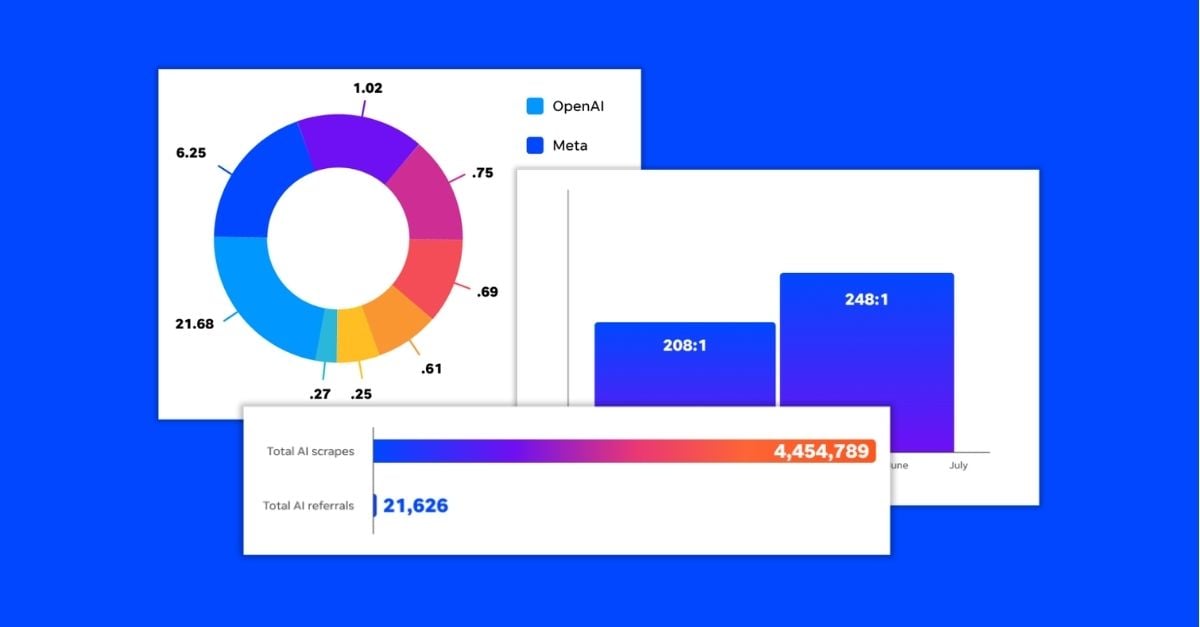
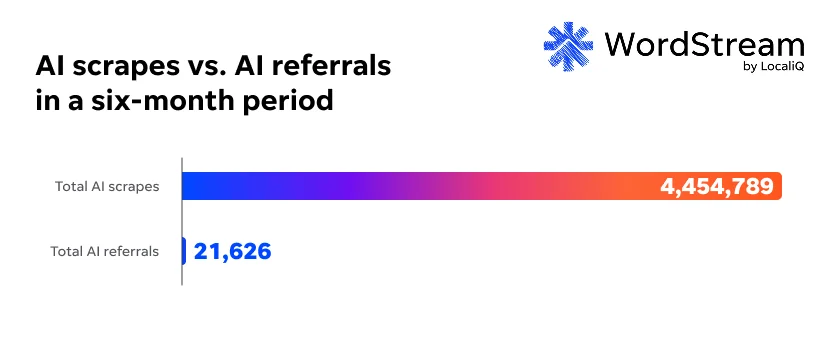
The most striking revelation from the study is the sheer volume of AI bot activity versus the minimal traffic generated. Over a six-month period, the analyzed websites were scraped an astonishing 4.45 million times by AI bots. Yet, the traffic referred back to these sites from these same AI interactions was dramatically lower, resulting in a scrape-to-referral ratio of 201:1. This means that for every 201 instances of an AI bot accessing a page, only one human visitor was referred back to the site. This ratio underscores a significant disconnect, where AI systems are consuming content at a rate more than 200 times higher than they are driving potential users back to the original source.
This imbalance is not merely an academic concern. The constant, high-volume crawling by AI bots can have tangible operational impacts. With bots now accounting for over half of all internet traffic, their frequent visits can strain server resources, leading to increased hosting bandwidth consumption and associated costs. Furthermore, the growing sophistication and diversity of AI bots are making it increasingly challenging to distinguish between legitimate search engine crawlers, malicious bots, and the new wave of AI-specific scrapers.
"It used to be easier to classify the bots visiting our sites and to know if they were malicious, or search crawlers, or RAG bots," stated Justin Al-Qudah, director of web strategy and growth for LocaliQ. "We’ve seen a massive increase in the number of bots hitting our sites, and with that increase, the majority have an unknown classification. This means more time reading up on the purpose of the bots and determining whether we block their crawls. Not only that, but some have found fun new ways to sneak into our analytics, which means troubleshooting just to get a clear view into your analytics." This growing ambiguity necessitates a more proactive and sophisticated approach to bot management, moving beyond traditional security measures to understand the intent and impact of these automated visitors.
Data-Rich Content: The AI’s Preferred Diet
Delving deeper into the types of content AI bots are prioritizing, the study revealed a clear preference for data-intensive pages. The most frequently scraped pages across the analyzed websites were predominantly those featuring in-depth data studies, industry benchmarks, and detailed statistical analyses. This includes resources like Google Ads and Facebook Ads benchmarks, articles on average cost per click, and data-driven insights into optimal social media posting times. These pages represent a significant investment of resources for content creators, often requiring extensive data analysis, expert consultations, and sophisticated data visualizations.
The finding that these resource-intensive pages are being scraped most frequently, often without driving traffic or even receiving attribution, is particularly frustrating for content producers. One unexpected outlier was a page comparing ChatGPT versions, which, despite not being a high-traffic piece, appeared among the top scraped pages. This anecdotal observation raises the intriguing possibility that AI models may exhibit a particular interest in content related to their own development and capabilities.
However, the broader pattern reinforces a growing understanding within the SEO and content marketing community: AI models are heavily favoring data, statistics, and definitions. This aligns with expert advice suggesting that first-party data is becoming increasingly crucial for content to be recognized and sourced within AI-powered search results. The study effectively validates this trend, demonstrating that AI bots are actively seeking out and consuming the foundational data that fuels their generative capabilities.
Divergent Interests: AI Bots vs. Human Users
A significant divergence emerges when comparing the content most favored by AI bots with the content that most appeals to human visitors. While there is some overlap – for instance, advertising benchmarks consistently perform well with both audiences – the variations highlight fundamentally different user intents. Human users typically seek out content for practical application, looking for ideas, tools, and data to inform their strategic decisions. Conversely, AI bots appear to be primarily driven by the acquisition of first-party data and research that can be integrated into their own knowledge bases.
The most visited pages on the website, excluding AI referrals, often include free tools, such as a keyword research tool and a Google Ads performance grader. These evergreen content pieces and idea-generation posts resonate strongly with human users. As previously discussed in AI search content strategy discussions, free tools are particularly effective in the current landscape, as AI search bots struggle to replicate their interactive functionality within search results, often resorting to simply recommending them. This suggests that while AI may scrape the descriptive content surrounding these tools, the tools themselves remain a unique draw for human engagement.
The Plagiarism Potential: Pages with High Scrape-to-Referral Ratios
Further analysis revealed that certain pages exhibit a disproportionately high scrape-to-referral ratio, suggesting they are more susceptible to being "plagiarized" by AI. These pages are predominantly data-related or in-depth learning resources. The hypothesis is that users encountering AI search results that cite this data may click through to the original source for more detailed information, validation, or expert commentary. Pages like "Facebook Advertising Benchmarks (2017)" and "How to Create Online Advertising Campaigns" demonstrate relatively low scrape-to-referral ratios, indicating a stronger correlation between AI scraping and subsequent human traffic.
Conversely, pages with extremely high scrape-to-referral ratios often provide concise, factual information that AI can easily replicate or directly present. For example, pages detailing "Social Media Image Sizes" or "Best Time to Post on TikTok" are highly prone to this phenomenon. When an AI platform like ChatGPT is asked for such information, it can often synthesize the answer directly from scraped content, presenting it without necessarily directing users back to the original source. This effectively means that the AI is extracting the core answer, leaving little incentive for a human user to click through. This trend points to a potential "great blogging collapse," as described by Daniel Stanica, where content creators see their traffic diminish as AI provides direct answers, bypassing the need for website visits.
OpenAI Dominates the Scraping Landscape
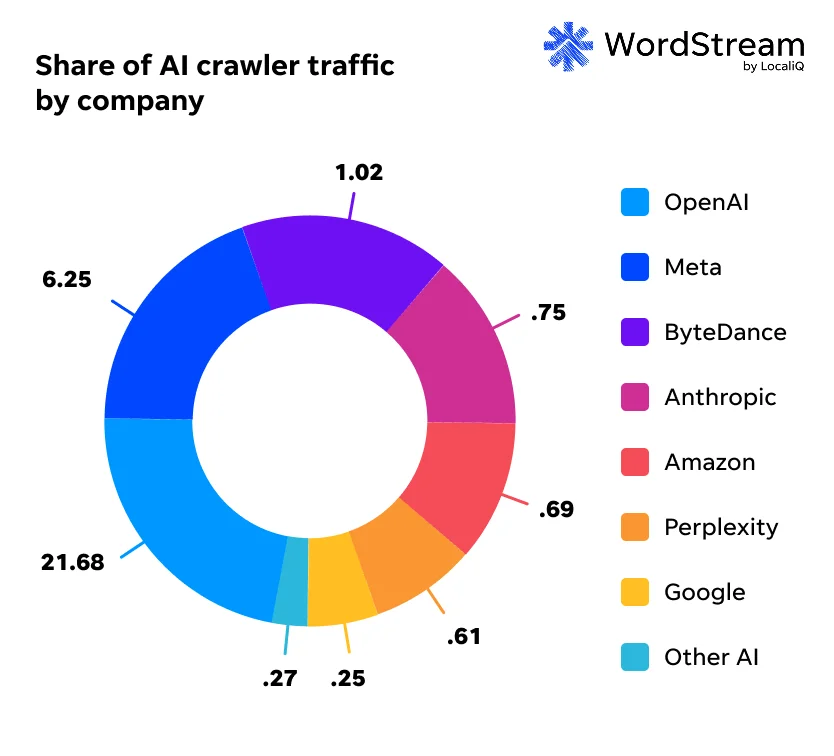
The study also identified the primary actors behind this extensive scraping. By a significant margin, OpenAI emerged as the leading AI bot scraper. Accounting for a substantial share of AI crawler traffic, OpenAI’s dominance is unsurprising given its position as the engine behind ChatGPT, one of the most widely used AI chatbots globally, holding an estimated 77% market share. The sheer volume of scrapes attributed to OpenAI underscores its aggressive data acquisition strategy for training and refining its language models.
Intriguingly, Meta and ByteDance also appeared high on the list of top AI scrapers, a finding that raised questions about the actual usage of their respective AI search functions. This is particularly noteworthy when considering that Google, despite its AI Mode offering, was lower on the list. While the study observed a good number of referrals from Google’s AI Mode, an SEO analyst noted an emerging trend of Meta AI beginning to direct some traffic back to websites. This suggests a dynamic and evolving landscape among major tech players in their pursuit of AI-driven information.
A Worsening Trend: Declining Scrape-to-Referral Ratio Over Time
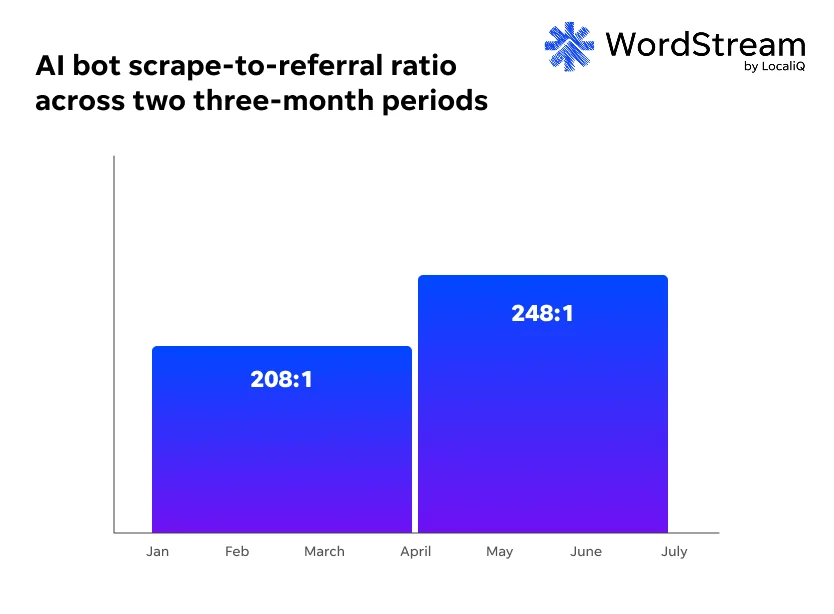
Perhaps the most concerning finding for website owners is the observed deterioration of the AI scrape-to-referral ratio over time. During the three-month period examined, the ratio worsened from 207:1 to 248:1, indicating a 19.2% decline in the efficiency of AI interactions in driving traffic. This trend suggests that as AI search becomes more integrated into user habits, the likelihood of users clicking through to original sources is diminishing.
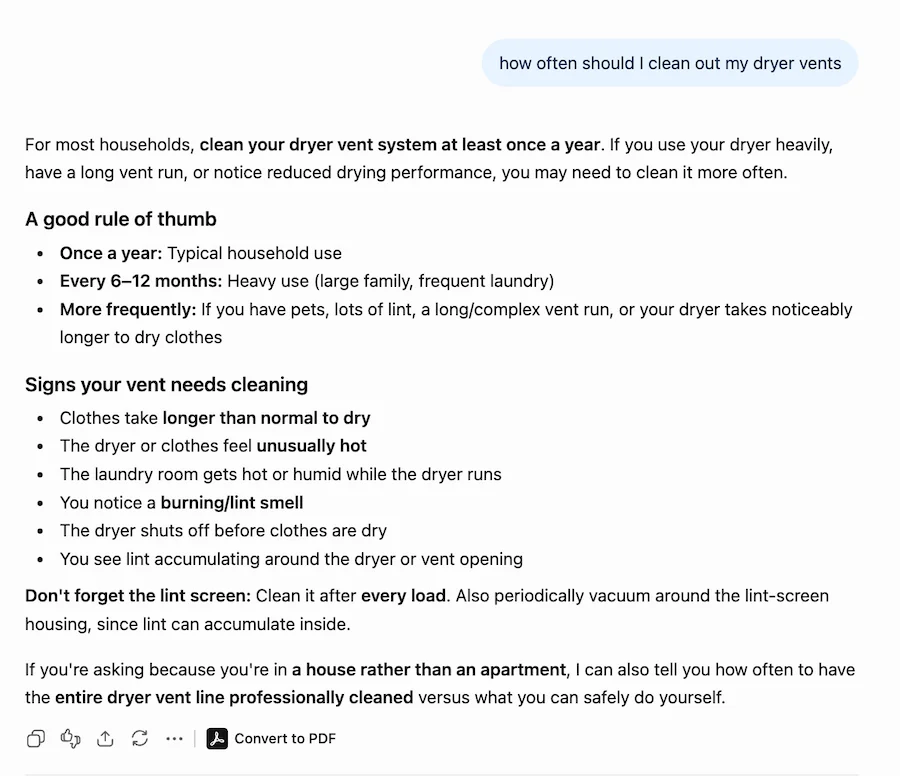
This decline is mirrored in broader search trends. Google searches are increasingly ending without a click, with studies indicating that nearly 70% of searches now resolve without users navigating to external websites, a notable increase from previous years. Users are becoming more comfortable obtaining information directly from AI chatbots, often without verifying it against the original source. This behavior is further exacerbated by AI chatbots’ evolving presentation of information, which sometimes omits or obscures original data sources. The visual evidence of AI-generated answers appearing without any citation or link back to the origin underscores this shift.
This phenomenon has led to concerns about "the great blogging collapse," where publishers are experiencing significant drops in organic traffic as AI provides direct answers. The pressure is so intense that some news publishers are reportedly considering blocking AI bots from crawling their websites altogether. As AI continues to scrape at high rates without generating meaningful traffic, this problem is likely to compound, potentially leading to a future with less original, insightful, and useful content available for both human consumption and AI training.
Implications and the Path Forward
The data presented in this study carries significant implications for website owners and content creators navigating the evolving digital ecosystem. The primary takeaway is the stark reality that while optimizing content for AI search and ensuring it is scraped is crucial for visibility, the current return on this engagement is often minimal. AI bots are effectively leveraging first-party data, research, and insights, replicating them directly within their own results, which aligns with the emerging paradigm of AI-driven search.
This raises a critical question: is the sheer volume of AI scraping truly justifiable given the meager traffic it generates? This sentiment is echoed across online forums, where website owners express similar concerns about the utility and impact of AI bot crawls.
However, the data also offers valuable strategic insights. Identifying which pages are scraped at a higher rate and subsequently drive more traffic can inform content strategy, particularly for those aiming to engage in Generative Engine Optimization (GEO). By understanding which data-rich or in-depth resources are most appealing to AI bots and also resonate with human users seeking further information, content creators can refine their approach to maximize both AI visibility and human engagement.
Ultimately, the rise of AI search is an irreversible trend. The modern search experience has undeniably integrated AI as a central component. Therefore, the focus must shift towards adapting and optimizing content strategies to prioritize channels, topics, and approaches that best serve the needs of the target audience, rather than solely catering to the insatiable appetite of AI bots. This involves a nuanced understanding of how AI interacts with content, a proactive approach to bot management, and a continued commitment to producing high-quality, valuable content that both informs AI and continues to attract and engage human users. The future of online discoverability will likely hinge on finding this delicate balance.

 Basiran
 Lina Irawan