Basiran
The digital marketing landscape is in constant flux, and paid search, a cornerstone of online advertising, is undergoing a profound transformation. After more than a decade of navigating its intricacies, the focus has definitively shifted from traditional keyword-centric strategies to a more sophisticated, AI-driven approach. This evolution, marked by the increasing prominence of technologies like Google’s AI Max, demands a strategic recalibration from advertisers and marketers alike.
Initially, paid search campaigns were built around meticulously chosen keywords. The success of a campaign hinged on identifying the precise terms potential customers would use to find products or services. This keyword-first mentality dominated for years, forming the bedrock of search advertising. However, as the digital ecosystem matured, so did the sophistication of advertising platforms. The introduction of audience targeting, remarketing capabilities, demographic segmentation, and increasingly advanced targeting parameters broadened the scope of paid search. Advertisers could now reach specific groups of users based on their behaviors, interests, and characteristics, moving beyond simple keyword matches.
The current frontier, however, is AI-driven intent. This paradigm shift is characterized by platforms that leverage artificial intelligence to understand the underlying intent behind a user’s search query, rather than just the literal words used. This is where technologies like Google’s AI Max come into play, representing a significant leap forward in automated campaign management and optimization.

Understanding AI Max: Beyond the Keyword
AI Max, as defined by Google, is an evolving suite of AI-powered capabilities integrated within Search campaigns. Its primary function is to expand targeting, refine ad creatives, and optimize landing page destinations. Unlike previous iterations of automated tools, AI Max moves beyond the confines of keywords to analyze a broader spectrum of signals. These include user intent, the quality and relevance of creative assets (ad copy and extensions), and the effectiveness of landing pages. This comprehensive approach aims to identify previously untapped opportunities for incremental growth and revenue.
However, the implementation of AI Max is not a guaranteed path to success. Advertisers are reporting a divergence in outcomes: some are experiencing significant incremental growth and revenue increases, while others find their campaigns targeting irrelevant or unprofitable traffic that deviates from their original strategic intent. The critical differentiator, according to industry experts, lies not solely in the technology itself, but in the meticulous management and strategic oversight of the accounts employing these AI-driven tools. AI Max and similar automation technologies do not eliminate the need for strategy; rather, they elevate the requirement for strategic thinking further up the marketing funnel.
AI Max as an Amplifier: The Input-Output Equation

Industry analysis suggests that AI Max functions akin to an amplifier. When integrated into a well-structured and high-performing account, it can significantly scale positive results. Conversely, when applied to a poorly managed or structurally unsound account, it can amplify existing weaknesses, leading to more significant and costly mistakes. The fundamental equation for success can be simplified:
High-Quality Inputs x AI Max Automation = Scaled Performance or Scaled Revenue
This highlights the crucial role of foundational account elements. If conversion data is inaccurate or insufficient, landing pages are weak, or the account structure is overly complex and convoluted, AI Max automation cannot rectify these underlying issues. Instead, it will amplify them. This explains why two advertisers utilizing the same AI Max features can achieve vastly different results; the variables within their respective operating environments are fundamentally different.
For instance, Account A might boast clean conversion signals, meticulously organized campaigns, robust landing pages, and well-defined negative keyword lists. In contrast, Account B might falter on all these critical criteria. To truly harness the power of AI Max, advertisers must first invest in building an account structure that enhances, rather than hinders, the AI’s effectiveness.

The AI Max Operating Framework: A Structured Approach to Implementation
To navigate the complexities of AI Max and its associated automation features, a structured, six-stage framework is recommended, moving beyond simply activating features:
-
Deliberate Onboarding: The initial mistake often made is treating every AI Max feature as a mandatory activation. Instead, advertisers should selectively enable features that align with their specific account objectives and industry nuances. Capabilities like Search Term Matching and Text Customization can be valuable for expanding reach and enhancing ad relevance. However, features like Final URL Expansion require more careful consideration, as they grant the AI greater freedom in directing traffic. A key question to ask during this phase is, "What additional freedom can this account safely handle?" The optimal setup is highly dependent on the account’s unique goals and current performance.
-
Setting Guardrails: While AI Max thrives on exploration and learning, it’s essential to maintain budget control. The AI operates within defined zones or stages, and setting appropriate financial guardrails is paramount. These typically involve:

- Performance Zones: Establishing clear performance thresholds, such as a target ROAS (Return on Ad Spend) or CPA (Cost Per Acquisition), that the AI must meet before expanding.
- Budget Zones: Defining the maximum budget allocation for AI-driven exploration and expansion.
- Audience/Query Zones: Specifying which audiences or types of search queries the AI is permitted to explore.
Useful controls include bid adjustments, budget caps, and strict negative keyword lists. These guardrails serve as the primary defense against uncontrolled and wasted expenditure.
-
Allowing Time for Learning: A critical error is premature optimization. Interfering with the AI’s learning process before sufficient data has been gathered can severely compromise its potential for success. The learning period for AI Max typically spans 2 to 4 weeks, often broken down into distinct phases:
- Week 1: Exploration: The system actively tests various queries, traffic sources, and potential opportunities.
- Weeks 2-3: Learning and Improvement: Emerging patterns become more apparent, allowing for more meaningful performance evaluation.
- Weeks 3-4: Refinement and Scaling: Advertisers can begin making more informed decisions regarding investment increases.
The exact timeline can vary based on account volume, but the principle remains: avoid hasty judgments. The objective is to differentiate between genuine performance issues and the natural fluctuations of the learning phase. Stepping back and observing overall patterns is more effective than overreacting to daily variations. Google’s AI Max experiments offer a controlled environment to compare the performance of test features against existing search configurations.
-
Training Through Feedback, Not Just Monitoring: This represents a significant shift in the role of paid search managers. Historically, their focus was on granular adjustments to bids, keywords, and match types. The modern AI Max operator, however, focuses on managing more advanced inputs that guide the AI’s decision-making process. These include:
- High-Quality Landing Pages: Ensuring landing pages are relevant, user-friendly, and optimized for conversions.
- Compelling Ad Creatives: Providing diverse and engaging ad copy, headlines, and extensions.
- Accurate Conversion Tracking: Implementing robust and precise conversion tracking mechanisms.
- Granular Audience Segmentation: Defining and refining target audiences based on detailed insights.
- Strategic Keyword Expansion (through Negative Keywords): While AI expands targeting, carefully curated negative keywords prevent irrelevant traffic.
By providing these enhanced inputs, advertisers actively help AI Max achieve optimal outcomes. This transforms the weekly routine from merely tweaking settings to actively managing the data and assets that inform the AI’s performance.
-
Scaling Winners Profitably: Identifying successful targeting strategies or auto-generated assets is only the first step. Increased spend does not automatically equate to profitable growth. A more effective approach involves selective scaling:
- Targeted Scaling: Focus on scaling specific campaigns or ad groups that demonstrate consistent profitability.
- Margin-Aware Scaling: Align scaling efforts with product or service margins. High-margin items may support a higher Target ROAS (tROAS) strategy, while lower-margin products might require a more conservative efficiency target.
- Holistic Performance Metrics: Look beyond traditional metrics like CPA, ROAS, CTR, and conversion volume. Consider business-critical outcomes such as incremental revenue, profit margins, and payback periods.
Google recommends pairing AI Max with Smart Bidding strategies and emphasizes the importance of accurate conversion measurement for effective scaling. The guiding principle is to scale actual profit, not just spend.
-
Building Feedback Loops for Ongoing Refinement: The most successful AI Max accounts share common traits:

- Structured Accounts: Well-organized campaigns and ad groups provide clear signals.
- Clean Conversion Data: Accurate tracking ensures the AI learns from reliable information.
- Relevant Landing Pages: High-quality landing pages support conversion goals.
- Defined Business Objectives: Clear goals provide the AI with a target to optimize towards.
When performance declines, it is crucial to first review these foundational inputs before attributing the issue solely to the automation. A robust feedback loop creates a virtuous cycle: better signals lead to better decisions, which attract better traffic, resulting in better outcomes and enabling more effective optimization. The reverse is also true: poor signals can initiate a cascade of negative effects. A simple weekly checklist for AI Max management might include questions like: - Are conversion signals accurate and complete?
- Are landing pages relevant and performing well?
- Are ad creatives compelling and aligned with user intent?
- Is the account structure logical and easy for AI to navigate?
- Are negative keyword lists up-to-date?
These questions help maintain focus on the quality of the system’s inputs rather than micromanaging individual auction-level decisions.
Who Should Leverage AI Max?
AI Max is not a universal solution and may be less suitable for accounts exhibiting certain characteristics:
- Limited Conversion Volume: Insufficient data can hinder the AI’s learning process.
- Unreliable Conversion Tracking: Inaccurate tracking leads to flawed learning.
- Poor Landing Page Experience: Weak landing pages undermine conversion efforts.
- Lack of Strategic Input: Accounts managed with a purely tactical, hands-off approach.
- Very Niche or Highly Specialized Industries: Where user intent is exceptionally complex or poorly understood by broad AI models.
Conversely, AI Max is best suited for accounts that possess strong measurement capabilities, reliable conversion signals, disciplined management, and sufficient volume to support effective learning and optimization. Ultimately, success with AI Max is largely contingent on account maturity and a steadfast commitment to measurement discipline.
Five Principles for Mastering AI Max

As advertisers navigate this new era, five core principles emerge as critical for successful AI Max implementation:
- Signals Beat Keywords: In an increasingly automated environment, the quality and relevance of your data inputs become paramount.
- Control Beats Freedom: While AI requires room to explore, defining clear boundaries and strategic guardrails is essential.
- Structure Beats Automation: Effective automation thrives on a well-organized and logically structured account.
- Training Beats Monitoring: Proactively improving the inputs that influence AI decisions is more effective than simply observing its actions.
- Profit Beats Volume: The ultimate measure of success lies in driving meaningful business value, not just increasing clicks or conversions.
The Evolving Role of the Paid Search Manager
The advent of AI Max and similar automation technologies signifies a profound shift in the role of the paid search manager. The focus is moving away from granular, tactical control of individual campaign elements towards a more strategic management of the inputs that shape automated decision-making. By providing AI Max with superior inputs – encompassing account structure, landing page optimization, creative development, and robust data signals – advertisers can unlock scaled performance and, consequently, scaled revenue.
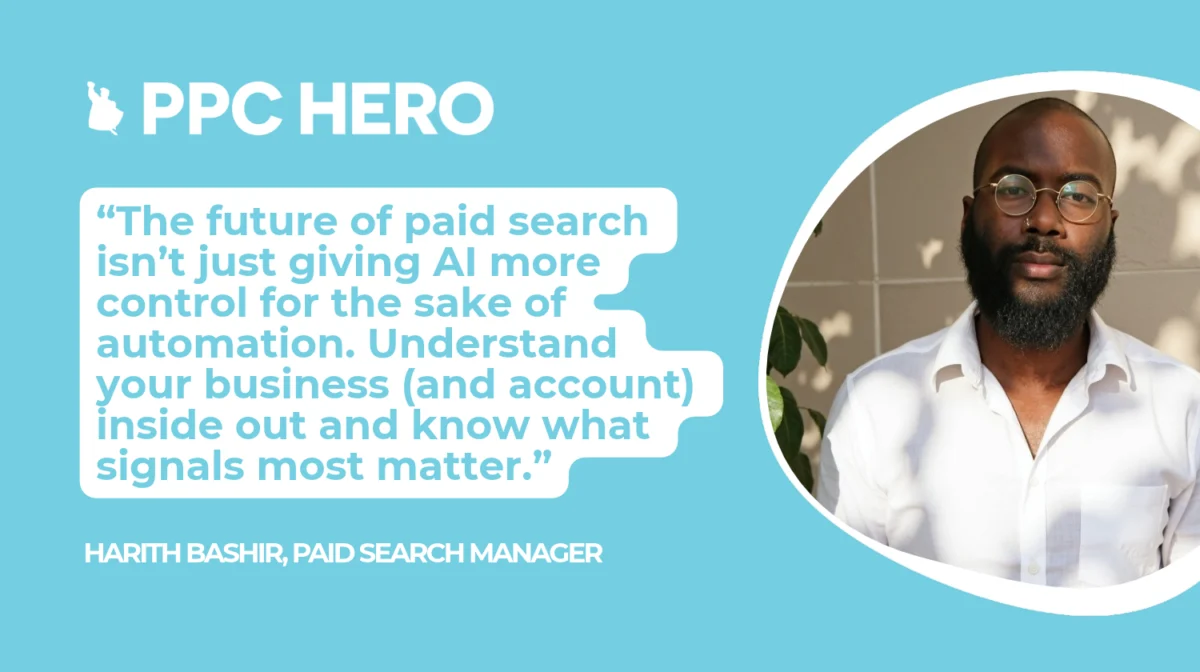
The future of paid search is not about ceding control to AI for the sake of automation alone. It is about understanding the intricate workings of one’s business and account at the deepest level, identifying the most critical signals, and creating an environment where AI can thrive while maintaining strategic oversight. This allows for the optimization of campaigns that not only achieve impressive performance metrics but also drive tangible business growth and profitability.


 Lina Irawan
 Ali Ikhwan