

Paid search advertising has solidified its position as the cornerstone of the global digital economy, generating a record $102.9 billion in U.S. revenue in 2024 and maintaining its status as the largest digital advertising format by a significant margin. This massive scale is driven by a fundamental shift in consumer behavior, where the intent-based nature of search allows brands to position themselves in front of potential customers at the precise moment of inquiry. However, as the industry moves into 2025, the landscape is being reshaped by rising costs, the integration of artificial intelligence, and a heightened focus on the post-click user experience.
The Current State of the Search Advertising Market
The 2024 revenue figures underscore a broader trend in the advertising sector: search continues to command the largest share of digital ad revenue at 39.8%. This dominance persists despite the rise of social media and short-form video content. The primary appeal of paid search—often referred to interchangeably as Pay-Per-Click (PPC) or Search Engine Marketing (SEM)—remains its efficiency in capturing high-intent traffic. Unlike "push" marketing, which interrupts a user’s experience, search is a "pull" medium where users actively seek solutions.
While the market size is vast, the barriers to entry and the cost of maintaining visibility have increased. Industry data indicates that the average cost-per-lead (CPL) has risen from $66.69 in 2024 to approximately $70.11 in early 2025. This inflationary trend is attributed to increased competition across high-value sectors such as legal services, insurance, and finance, as well as the increasing complexity of the automated auction systems that govern ad placement.
Historical Context and Platform Evolution
The trajectory of paid search began in the late 1990s with pioneers like GoTo.com (later Overture), which introduced the first bid-based search results. Google revolutionized this model in 2000 with the launch of AdWords, eventually introducing the "Quality Score" to ensure that the highest bidder did not always win if their content was irrelevant to the user.
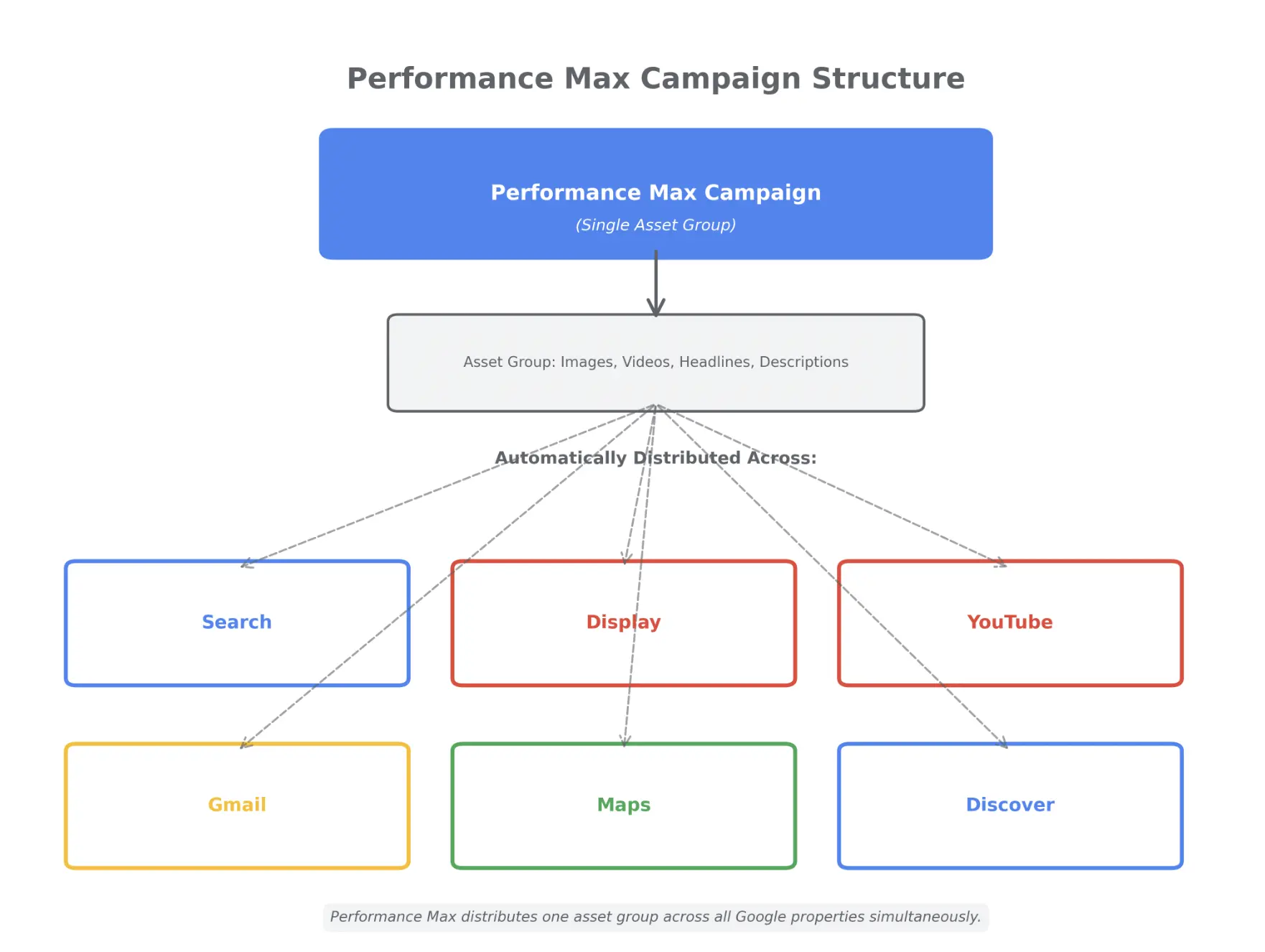
Today, the market is a duopoly of sorts, though heavily weighted toward a single player. Google Ads controls roughly 90% of the global search market. Its ecosystem extends beyond the standard search results page into YouTube, Gmail, Google Maps, and the Google Display Network.

Microsoft Advertising remains the second-largest contender. While Bing’s individual search share is modest, Microsoft has expanded its reach through a vast syndication network including Yahoo, AOL, DuckDuckGo, and Ecosia. Furthermore, Microsoft’s recent move into exclusive ad-supported tiers for streaming giants like Netflix represents a strategic diversification, capturing audiences in environments where Google’s traditional search tools do not reach.
The Mechanics of the Modern Auction
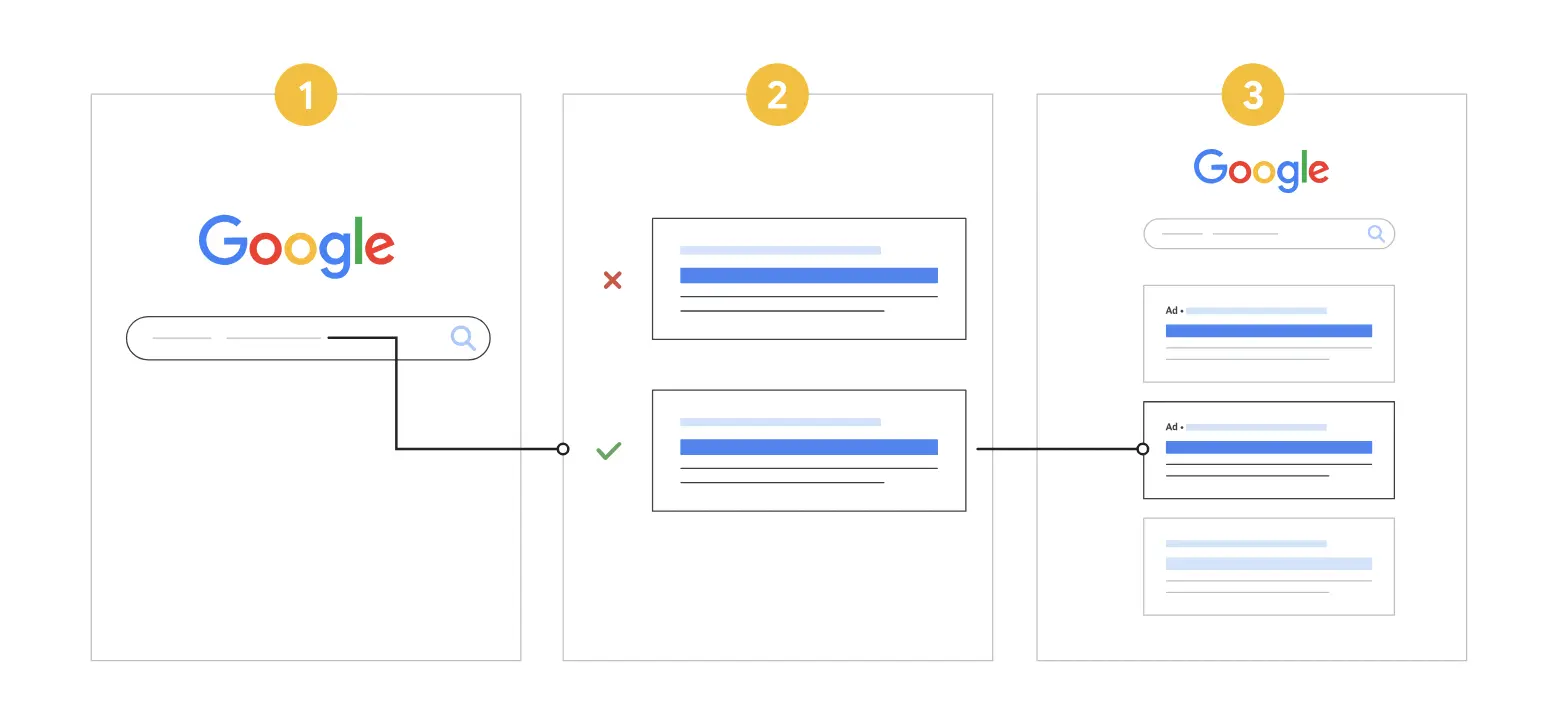
The modern paid search auction is a feat of computational engineering, occurring in milliseconds every time a user enters a query. The process is no longer a simple "highest bidder wins" scenario but a complex evaluation of five distinct stages:
- The Query: A user enters a specific keyword or phrase, signaling intent.
- The Trigger: The search engine identifies all active advertisers bidding on those terms whose targeting parameters (location, device, time of day) match the user’s profile.
- Ad Rank Calculation: Each participant is assigned an Ad Rank. This score is a composite of the maximum bid, the ad’s relevance to the query, the expected click-through rate (CTR), and the quality of the landing page.
- Position Determination: The advertiser with the highest Ad Rank secures the top "Sponsored" position. This allows well-optimized, highly relevant ads to outrank competitors who may be willing to pay more but offer a poorer user experience.
- Cost Execution: Under the Generalized Second-Price auction model, the winner does not pay their maximum bid. Instead, they pay the minimum amount required to outrank the competitor immediately below them, typically just $0.01 more than the second-place Ad Rank.
Diversification of Ad Formats and AI Integration
The industry is currently undergoing a paradigm shift from manual keyword management to AI-driven automation. Several key formats now dominate the landscape:
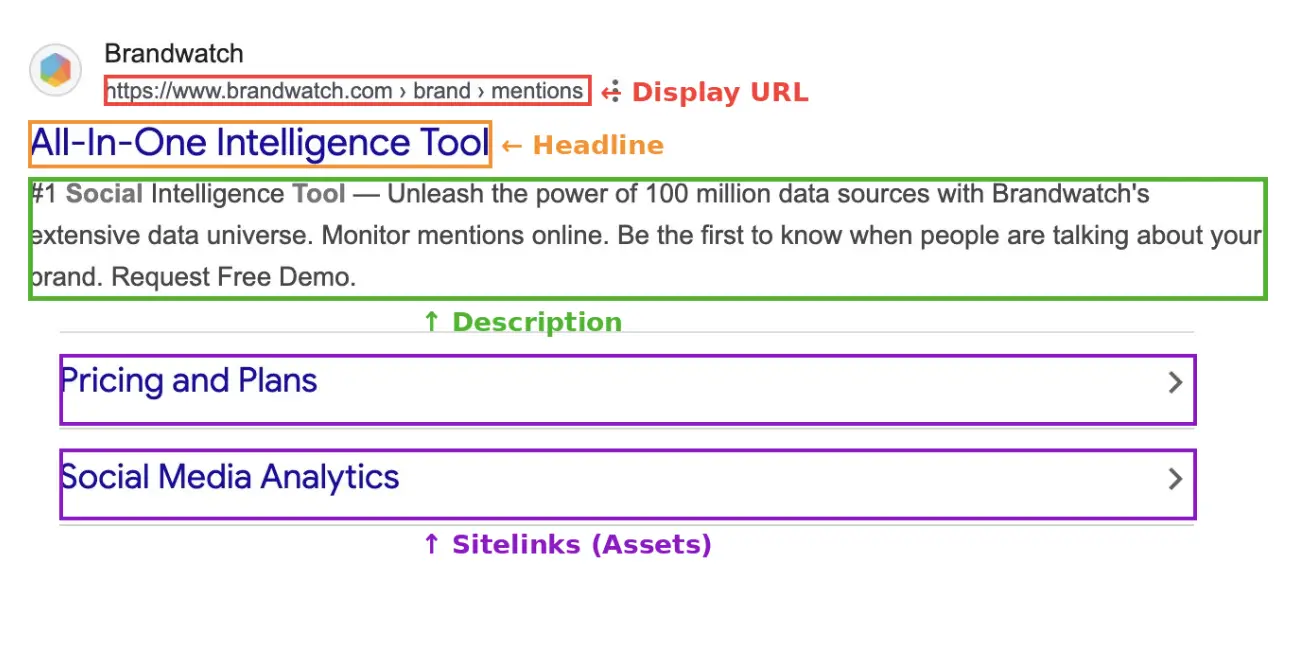
- Responsive Search Ads (RSAs): Now the default for Google, RSAs allow advertisers to input multiple headlines and descriptions. Google’s machine learning then tests various combinations to determine which version resonates best with specific user segments.
- Performance Max (PMax): Introduced as a "black box" solution, PMax uses AI to optimize ad delivery across all of Google’s channels—Search, Display, YouTube, and Maps—from a single campaign.
- Dynamic Search Ads (DSAs): These ads remove the need for keyword bidding entirely, instead using the content of an advertiser’s website to automatically generate headlines and target relevant queries.
- Shopping Ads: Critical for e-commerce, these ads rely on product feed data rather than traditional copy, displaying images and prices directly on the search results page.
The Convergence of Paid and Organic Strategies
While paid search provides immediate visibility, it is increasingly viewed as a complementary force to Search Engine Optimization (SEO). Journalistic analysis of market trends suggests that the most resilient brands utilize a "total search" approach.
Paid search acts as a high-speed laboratory, providing instant data on which keywords and messaging convert. This data is then used to inform long-term SEO strategies. Conversely, a strong organic presence can improve the perceived authority of a brand, potentially increasing the CTR of its paid advertisements. The primary distinction remains the cost model: paid search is a scalable, instant-on utility, whereas organic search is a long-term asset built through authority and content relevance.
The Critical Role of the Post-Click Experience
A significant finding in 2024 market reports is the "leaky bucket" syndrome, where advertisers spend billions on clicks that fail to convert due to poor landing page experiences. As CPCs rise, the "post-click" phase has become the highest-leverage point for improving Return on Ad Spend (ROAS).
Industry benchmarks indicate that while generic homepages often see conversion rates between 2% and 4%, dedicated, "message-matched" landing pages can achieve rates of 10% to 15%. Message matching—the practice of ensuring the landing page headline and call-to-action (CTA) exactly mirror the promise made in the ad—is now considered a technical necessity rather than a luxury.
Furthermore, mobile optimization has moved from a recommendation to a requirement. Data shows that a mere one-second delay in mobile page load times can result in a 20% drop in conversions. In a competitive auction where clicks can cost upwards of $50 in sectors like law or finance, technical latency represents a direct and measurable loss of capital.
Regulatory Challenges and Future Outlook
The search advertising industry is not without its controversies. In 2024, the U.S. Department of Justice’s antitrust proceedings against Google brought the mechanics of the search auction into the public eye, with allegations regarding the company’s dominance and its impact on pricing for advertisers.

Additionally, the deprecation of third-party cookies and the implementation of privacy frameworks like GDPR and CCPA have forced platforms to rely more heavily on "first-party data" and modeled conversions. Search advertising is uniquely positioned to weather these changes because it relies on "zero-party intent"—the words the user explicitly types—rather than invasive tracking of past behavior.
Looking toward 2025, global spend is forecasted to reach $355.10 billion. The integration of Generative AI into search results (such as Google’s Search Generative Experience) is expected to change how ads are displayed, potentially shifting the focus from traditional blue links to conversational placements.
Implications for the Broader Economy
The health of the paid search market is often viewed as a bellwether for the broader economy. The willingness of businesses to invest heavily in search indicates a robust consumer appetite. However, the rising cost of acquisition suggests that the era of "cheap clicks" is over.
To remain profitable, businesses are shifting their focus from mere traffic volume to conversion efficiency. This has birthed a secondary industry focused on Conversion Rate Optimization (CRO) and personalized landing page experiences. The successful advertiser of the future is not the one with the largest budget, but the one who can most efficiently turn a high-cost click into a long-term customer through technical precision and relevant storytelling.
In summary, paid search advertising in 2024 has evolved into a highly sophisticated, AI-driven ecosystem. While its dominance is undisputed, the increasing costs and technical requirements mean that success now requires a holistic strategy that balances aggressive bidding with a flawless, high-speed post-click experience.







