

Digital marketing methodologies have shifted away from traditional, large-scale campaign launches toward a more granular, evidence-based model known as iterative testing. This process, which draws its roots from software development and agile project management, involves a continuous cycle of testing, measuring, and refining marketing assets based on incremental data insights. Unlike traditional A/B testing, which often concludes after a single experiment, iterative testing uses the results of one test to inform the hypothesis of the next, creating a compounding effect on conversion rates and return on investment (ROI). As marketing budgets face increased scrutiny and consumer behavior becomes more volatile, this systematic approach has emerged as a critical strategy for brands seeking to reduce wasted spend and improve user experience through small, manageable changes rather than high-risk overhauls.
The Shift from Static Campaigns to Agile Iteration
The history of digital marketing optimization has seen a clear trajectory from intuition-based creative work to rigorous statistical analysis. In the early 2010s, most marketing teams relied on "Big Bang" launches, where a campaign was designed, deployed, and evaluated only after the budget was exhausted. The rise of A/B testing platforms introduced the ability to compare two versions of a landing page, but these tests were often treated as isolated events.
In the current landscape, the "one-and-done" testing model is increasingly viewed as insufficient. Industry data suggests that the majority of marketing failures are not catastrophic collapses but rather "slow leaks"—minor inefficiencies in messaging, design, or user flow that cumulatively drain budgets. Iterative testing addresses this by establishing a feedback loop that functions in real-time or near-real-time. By applying the principles of the scientific method to creative assets, marketers can identify specific elements—such as headline clarity, form length, or call-to-action (CTA) placement—that drive performance.
Data-Driven Insights and the 2024 Conversion Landscape
The necessity of an iterative approach is supported by recent findings in the 2024 Conversion Benchmark Report, which highlights the nuanced nature of modern consumer interactions. For instance, the report found that landing pages written at a 5th-to-7th-grade reading level convert at a rate of 11.1%, more than double the conversion rate of pages utilizing more complex, professional-level writing. Furthermore, high word complexity was found to have a -24.3% negative correlation with conversion rates.
These statistics provide a baseline, but iterative testing allows individual brands to determine if these general trends apply to their specific audience. While a general audience may prefer simplicity, a highly technical B2B audience might require a different linguistic approach. Through iteration, a marketing team can test a simplified version of their copy against a technical version, analyze the result, and then further refine the winning version by testing different tones or formatting styles.

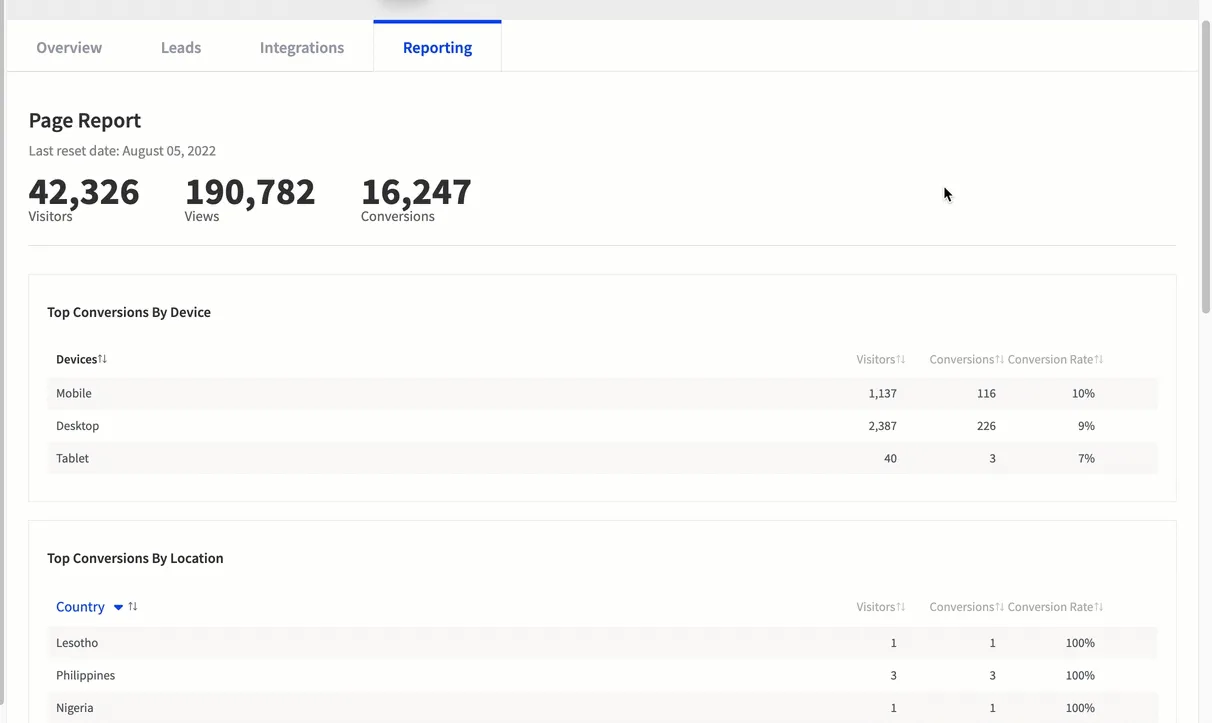
The report also identified a significant disparity in device performance: while 83% of landing page visits now occur on mobile devices, desktop platforms still convert 8% better on average. This data point underscores the importance of device-specific iteration. A marketer using an iterative process would not simply accept the lower mobile conversion rate but would instead run a series of tests focused on mobile-specific friction points, such as button size, load speed, or mobile-friendly form fields, to close the performance gap.
The Six-Step Framework for Iterative Marketing
To implement a successful iterative testing program, organizations must follow a structured process that prioritizes clarity and statistical integrity.
1. Hypothesis Formulation
The process begins with a focused hypothesis. Rather than testing multiple variables simultaneously, which muddies the data, marketers must isolate a single element. A valid hypothesis follows a logical structure: "By changing [Variable X] to [Variant Y], we expect [Outcome Z] because of [Insight]." For example, a team might hypothesize that changing a generic "Submit" button to "Get My Free Quote" will increase conversions because it clarifies the immediate value to the user.
2. Strategic Prioritization
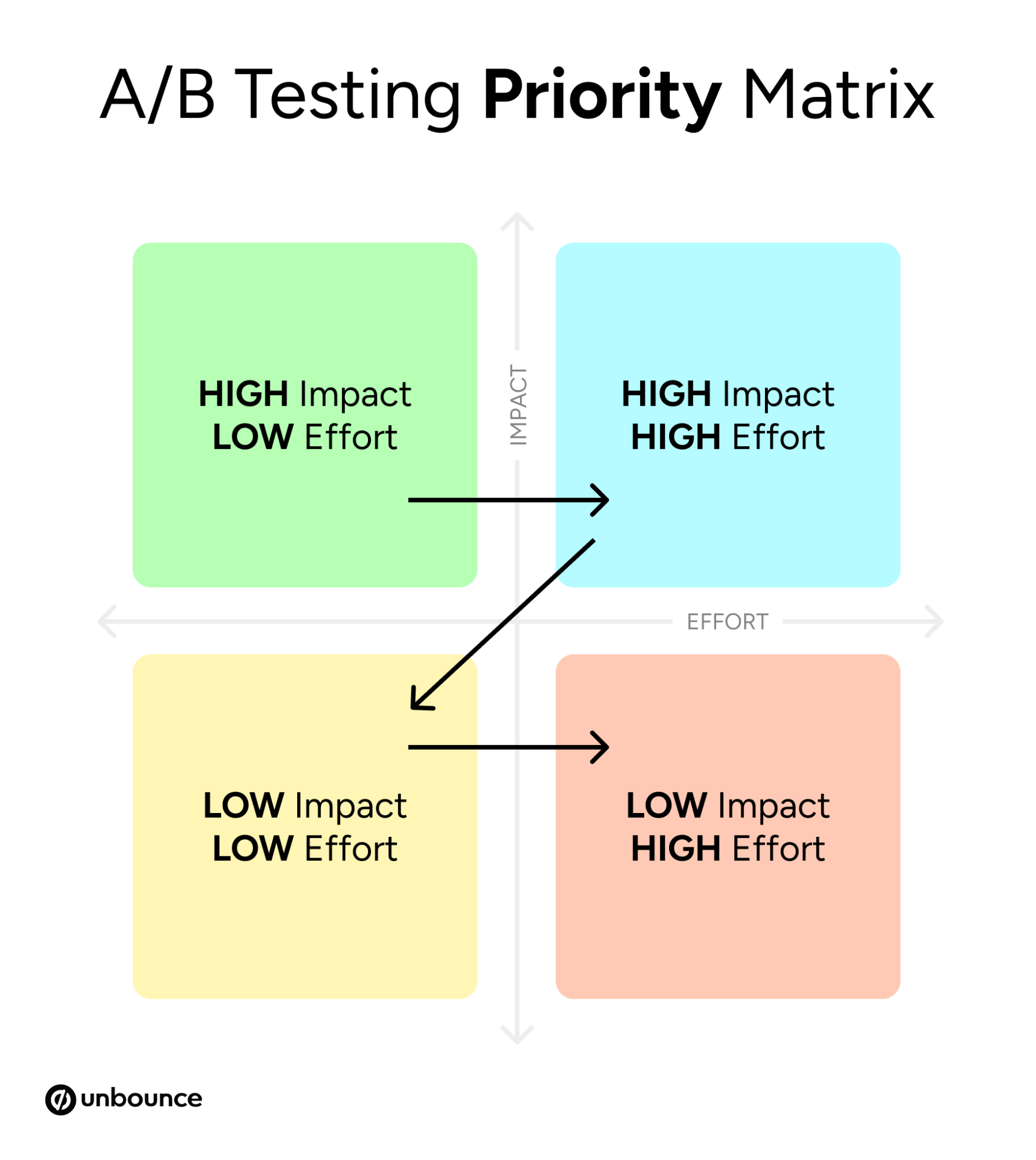
Not all tests yield the same impact. Experienced marketing teams use a priority matrix to rank experiments based on two factors: potential impact and ease of implementation. High-impact, low-effort changes—often called "quick wins"—are prioritized to build momentum and generate immediate ROI. Conversely, low-impact, high-effort changes are often discarded or moved to the bottom of the backlog.
3. Development of Minimal Testable Variants
In an iterative model, speed is prioritized over aesthetic perfection. A minimal testable variant is a version of a marketing asset that includes only the specific change required to test the hypothesis. This approach allows teams to launch experiments quickly without waiting for extensive design or development cycles.
4. Data Collection and Statistical Validation
A critical component of iterative testing is ensuring statistical significance. This metric determines whether the difference in performance between two variants is due to a specific change or merely random chance. While traditional tests might require thousands of visitors, modern tools like machine-learning-driven traffic allocators can begin optimizing after as few as 50 visits, allowing for rapid iteration even in low-traffic environments.

5. Deep-Dive Analysis
Once a test concludes, the analysis must go beyond identifying the "winner." Marketers must ask why a specific variant performed better and what that reveals about the audience’s psychological triggers. If a variant with social proof (such as customer testimonials) outperformed the control, the actionable insight is that the audience requires third-party validation before making a purchase.
6. Scaling and Evolution
The final step is to apply the winning insight across other channels. A successful landing page headline might be adapted for email subject lines or social media advertisements. The process then restarts, with the previous winner becoming the new "control" for the next round of testing.
Stakeholder Reactions and Organizational Impact
The shift toward iterative testing has drawn praise from various sectors of the corporate hierarchy. Chief Marketing Officers (CMOs) report that the methodology provides greater budget transparency and accountability. "We are no longer guessing what works; we are proving it in small, controlled environments before scaling," says one industry veteran.
Data analysts emphasize the reduction in "false positives" that occurs when teams move away from chaotic, multi-variable testing. By focusing on one change at a time, the data remains clean and the insights remain actionable. Furthermore, customer support and sales teams have noted that iterative testing on the "front end" of the marketing funnel often leads to higher-quality leads, as messaging becomes more aligned with actual customer needs and pain points.
The Role of Technology in Accelerating Iteration
The rise of artificial intelligence (AI) and machine learning has significantly lowered the barrier to entry for iterative testing. Automated traffic routing tools can now analyze visitor attributes in real-time and direct them to the variant most likely to convert based on their historical behavior or device type. This "smart" optimization allows for a more personalized user experience, which is the ultimate goal of any iterative process.
Additionally, no-code and low-code landing page builders have empowered marketing teams to execute tests without relying on overstretched IT or engineering departments. This autonomy is essential for maintaining the speed required for a true iterative cycle.
Broader Implications for the Future of Marketing
The adoption of iterative testing represents a broader trend toward the "democratization of data" within organizations. When testing becomes a regular part of the workflow, it fosters a culture of experimentation where ideas are judged based on performance rather than the seniority of the person who proposed them.
In the long term, this methodology is expected to redefine brand-consumer relationships. As marketing assets become more refined and user-centric through constant iteration, the friction between brands and their audiences decreases. Marketing stops feeling like an intrusion and begins to function as a helpful guide through the buyer’s journey.
For businesses operating in highly competitive markets, iterative testing is no longer optional. The ability to learn faster than the competition—and to apply those learnings systematically—is a primary driver of sustainable growth. By moving away from the pursuit of a single "perfect" campaign and embracing a cycle of continuous, evidence-based improvement, marketing teams can ensure their strategies remain resilient in an ever-changing digital economy.







