

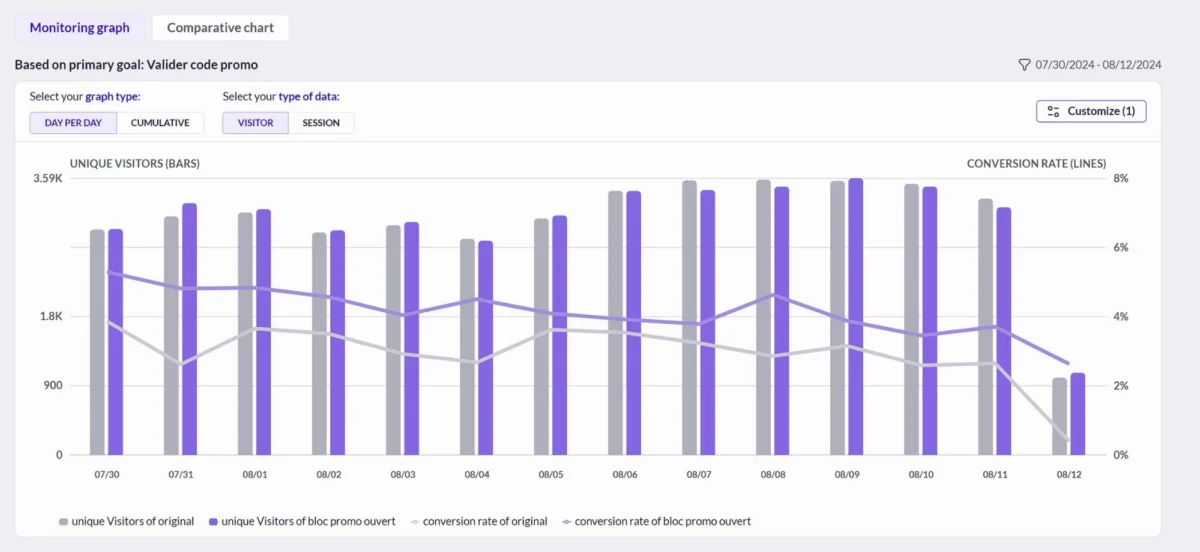
The landscape of conversion rate optimization (CRO) and user experience (UX) analytics has undergone a significant transformation in 2026, marked by high-level consolidations and the rapid integration of agentic artificial intelligence. For digital marketing teams and product managers, the choice between Crazy Egg and AB Tasty—the latter now a central component of the Wingify ecosystem following its January 2026 merger with VWO—represents a choice between two distinct philosophies of digital growth. Crazy Egg continues to position itself as a holistic, full-cycle experimentation suite designed for transparency and speed, while AB Tasty targets the high-end enterprise market with deep technical experimentation and server-side capabilities.
The 2026 Consolidation: Context and Market Evolution
The merger between AB Tasty and VWO in early 2026, operating under the Wingify corporate umbrella, signaled a major shift toward consolidation in the MarTech industry. This move was largely seen as a response to the increasing demand for "best-of-breed" enterprise solutions that can handle complex, multi-platform experimentation. For current and prospective users, this merger necessitates a closer look at contract renewals and product roadmaps, as the integration of AB Tasty’s Evi AI and VWO’s Copilot into the new "Wandz" AI layer has redefined the platform’s capabilities.
In contrast, Crazy Egg has maintained its independence and focused on vertical integration. By housing web analytics, heatmaps, session recordings, and A/B testing within a single, natively built environment, Crazy Egg addresses the "tool fatigue" often cited by growth teams. This approach emphasizes a lower total cost of ownership (TCO) and a reduced technical burden for implementation, making it a primary alternative for organizations wary of the rising costs and complexity associated with the Wingify suite.
Core Methodology: Native Integration vs. Best-of-Breed Integration
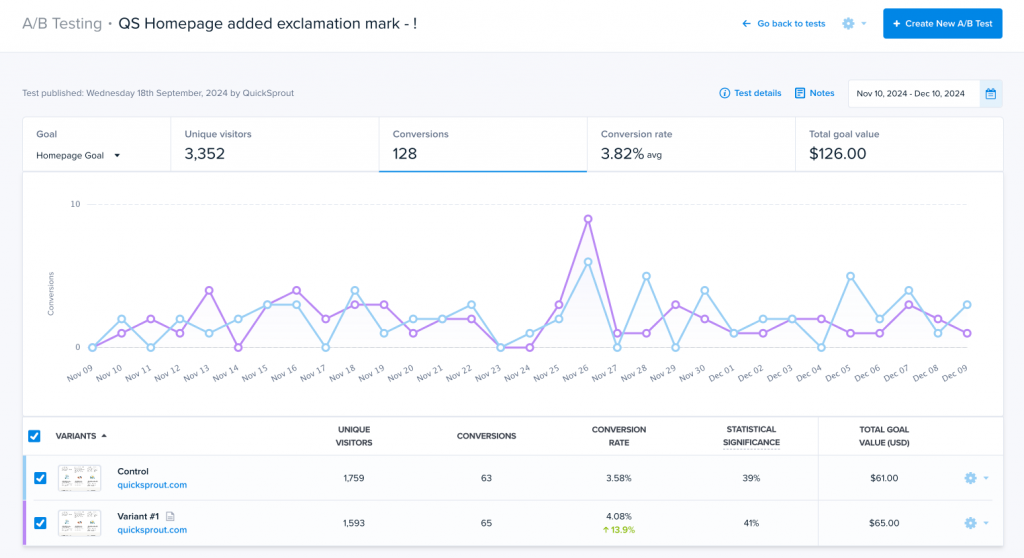
A fundamental differentiator between the two platforms lies in their architectural approach to behavioral data. Crazy Egg operates on a "native-first" principle. When a user runs an A/B test, the platform automatically generates heatmaps and session recordings for every variant. This allows teams to not only see which version won but to immediately understand the behavioral "why" behind the conversion data without navigating between different software modules or third-party integrations.
AB Tasty’s methodology is built for the enterprise stack. It assumes that the user likely already employs high-end analytics tools such as GA4, Mixpanel, or Adobe Analytics, and behavioral platforms like FullStory or Contentsquare. While AB Tasty offers unparalleled depth in the testing itself—including multivariate and mutually exclusive experiments—it lacks native standalone modules for heatmaps and session replays. Instead, it relies on deep-tier integrations to surface these insights, a strategy that suits teams with large budgets and dedicated data analysts but may create friction for leaner operations.
A/B Testing and Experimentation Capabilities
The technical depth of experimentation remains the primary battleground for these two platforms. AB Tasty’s Web Experimentation module is designed for complex environments. It supports:
- Multivariate Testing (MVT): Testing multiple variables simultaneously to find the optimal combination.
- Multi-Page Testing: Ensuring a consistent experience across a funnel (e.g., matching a landing page change with a checkout page change).
- Mutually Exclusive Experiments: A critical feature for high-traffic sites that need to run multiple tests on the same page without overlapping audiences contaminating the results.
- Server-Side Testing: Through its Feature Experimentation & Rollouts, AB Tasty allows product engineering teams to manage feature flags and conduct tests deeper in the application stack.
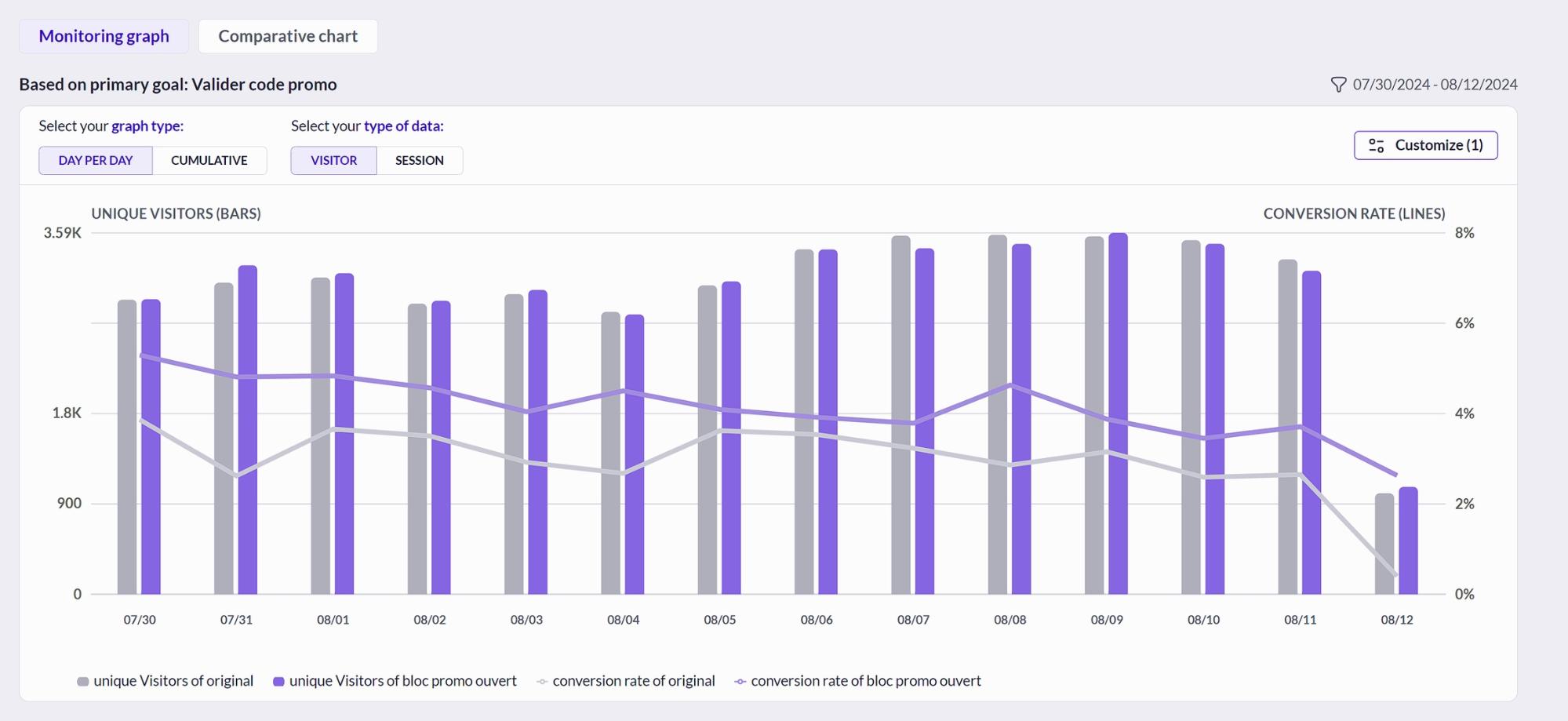
Crazy Egg focuses on the "Optimization Loop." Its A/B testing suite includes a visual editor, split URL testing, and Multi-Armed Bandit (MAB) algorithms. The MAB functionality is particularly valuable for e-commerce, as it automatically shifts traffic toward the winning variant in real-time, minimizing the "cost" of a losing variant during the test period. While Crazy Egg does not currently offer multivariate testing, its strength lies in the speed of deployment and the automatic connection to its behavioral toolset.
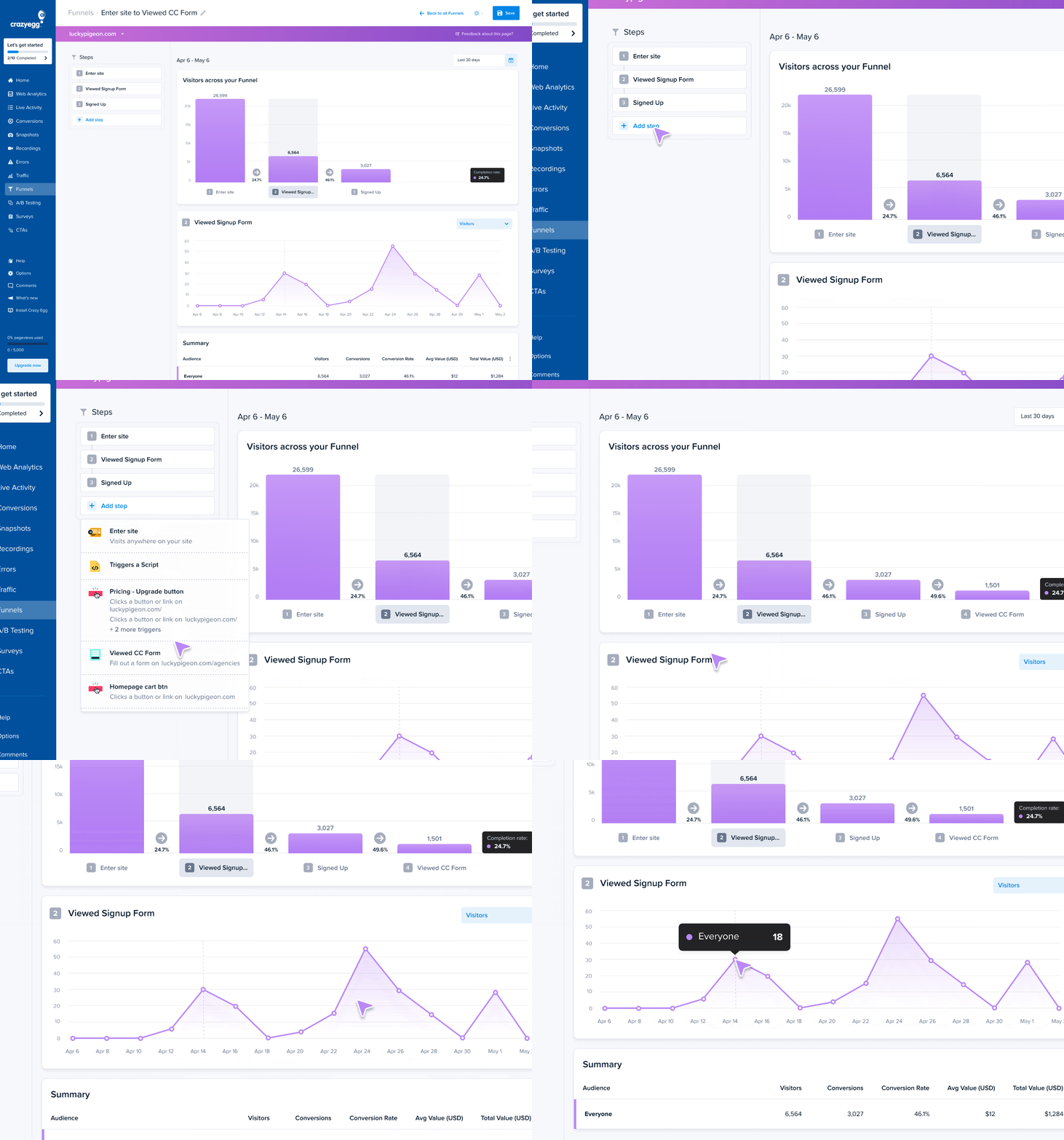
Behavioral Analytics and Error Tracking
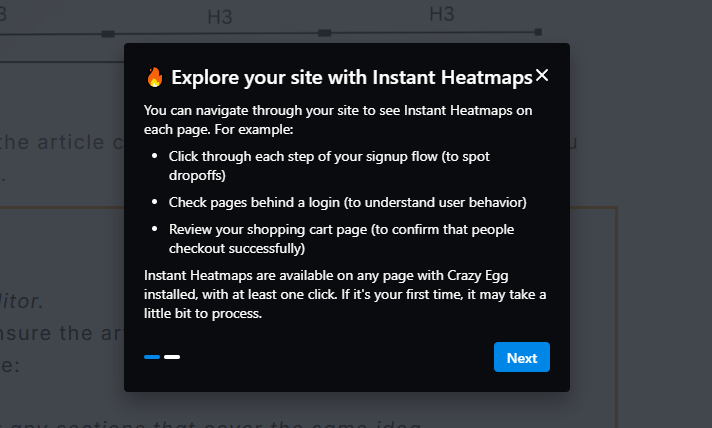
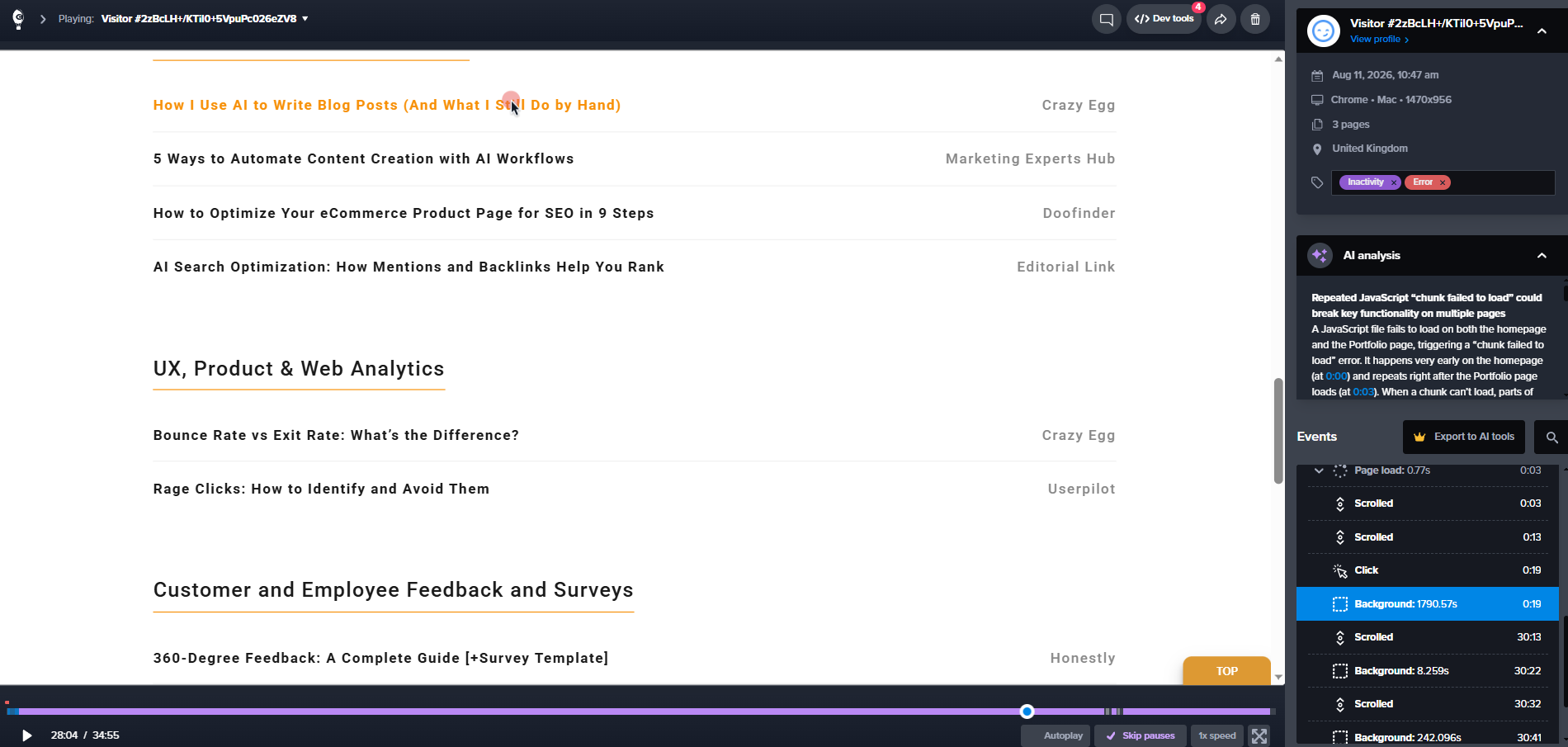
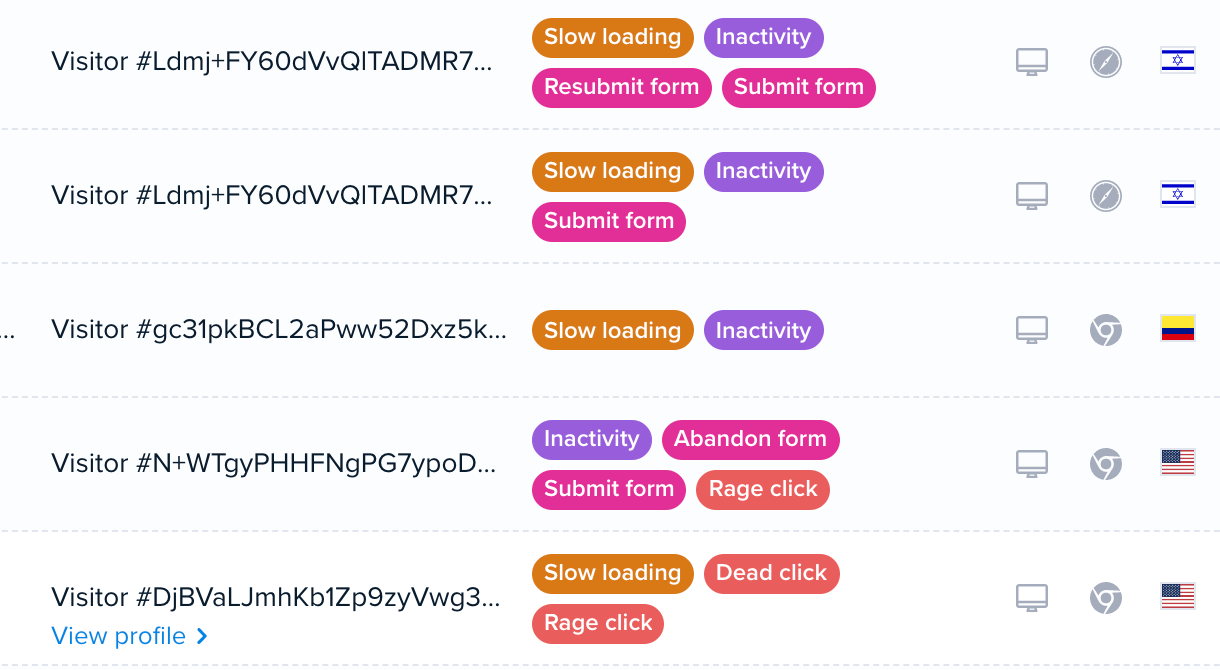
In the realm of qualitative data, the two platforms diverge sharply. Crazy Egg provides a comprehensive suite of five heatmap types: click, scroll, confetti (segment-based clicks), overlay, and list maps. Its "Instant Heatmaps" feature is a 2026 standout, allowing for site-wide behavioral tracking without manual per-page setup. Furthermore, Crazy Egg’s session recordings are auto-tagged with over 13 event types, including rage clicks and slow-loading pages, providing a direct link between user frustration and conversion drop-offs.
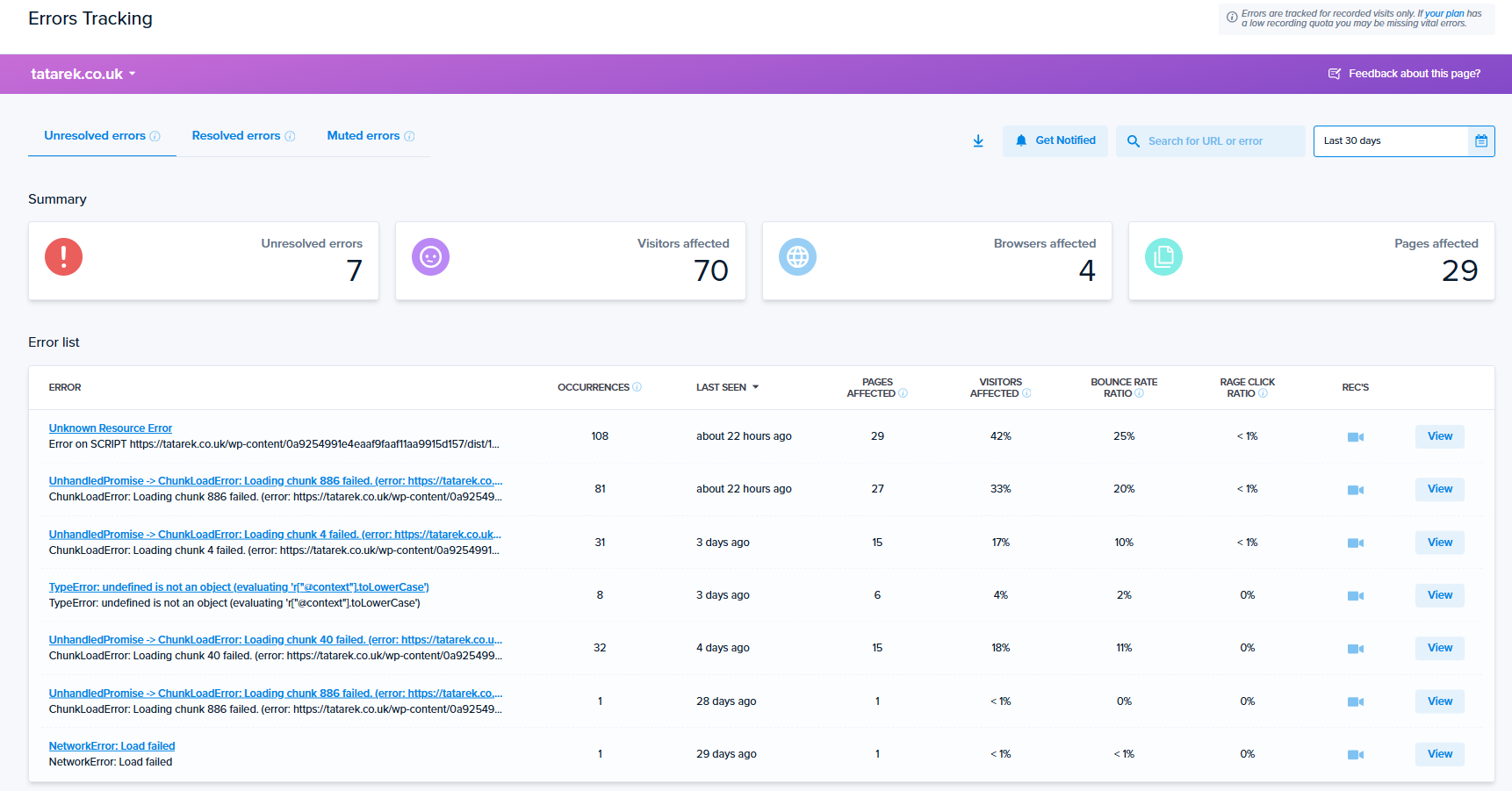
A significant addition to the Crazy Egg ecosystem is native JavaScript (JS) error tracking. The platform captures errors with full stack traces and links them directly to the session recording where the error occurred. This allows developers to watch the exact sequence of events leading to a crash, significantly reducing the Mean Time to Resolution (MTTR).
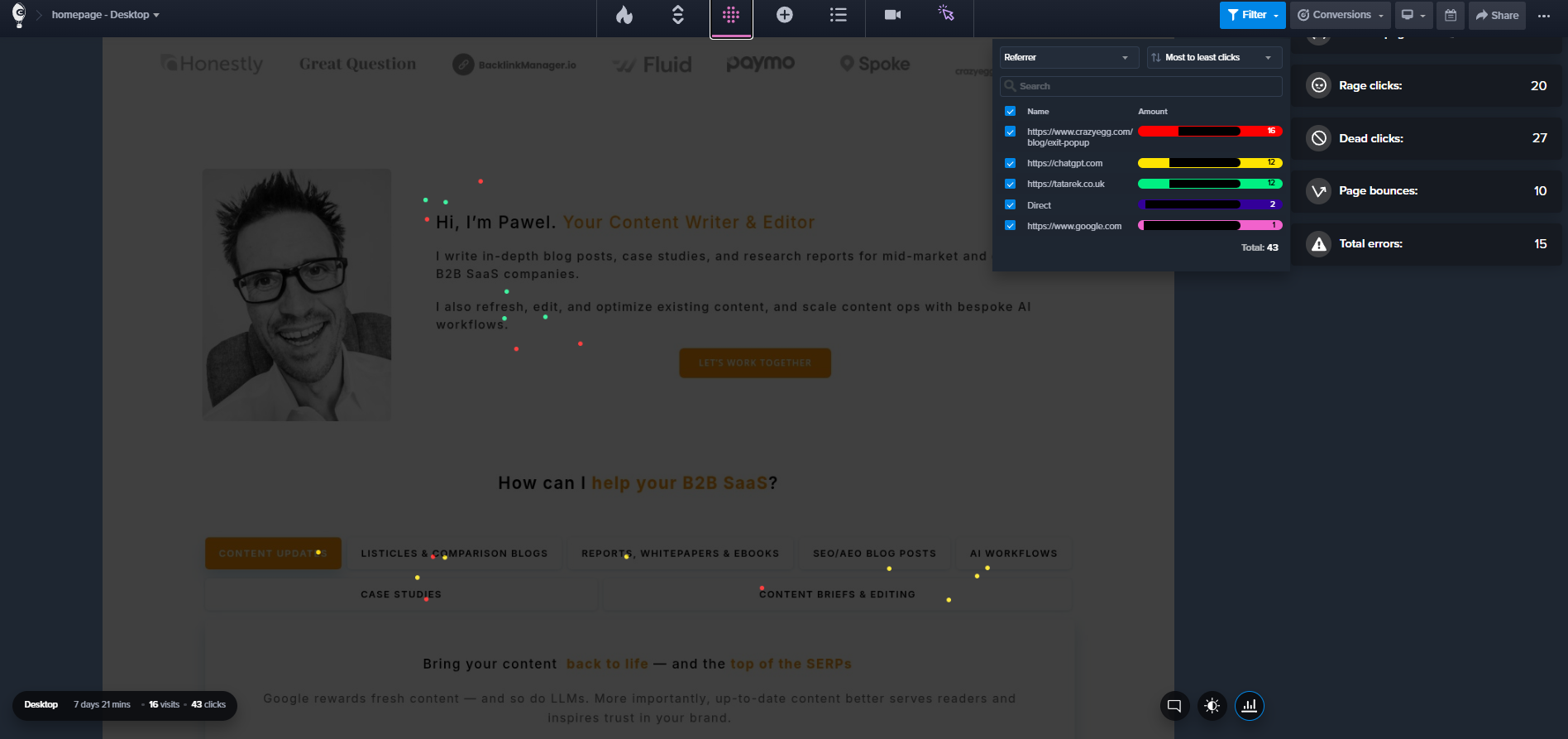
AB Tasty does not offer native heatmaps or session replays. Its approach to behavioral signals is processed through "EmotionsAI." This internal engine analyzes mouse speed and scroll patterns to classify users into one of ten emotional profiles. While this data is powerful for AI-driven personalization, it does not provide the visual "UI inspection" capabilities that heatmaps offer. For error tracking, AB Tasty users must integrate with external tools like LogRocket or Sentry.
The AI Frontier: MCP Servers and Agentic Workflows
2026 has been the year of "Agentic CRO," where AI moves from simple analysis to executing tasks. Crazy Egg has introduced the Model Context Protocol (MCP) server, a technical bridge that allows users to connect their account directly to LLMs like Claude, ChatGPT, or Gemini. This enables users to query their data using natural language or run agentic workflows directly from their preferred AI assistant. Crazy Egg’s "Tasks" feature, currently in early access, further automates the cycle by setting up reports, analyzing results, and drafting page variants for review.
AB Tasty’s "Wandz" AI layer, developed in coordination with VWO’s Copilot, offers a similarly robust AI suite. It includes:
- AI Analyze: Summarizing test results and suggesting next steps.
- Synthetic Tests: Using AI models to predict how a variant might perform before it goes live.
- Autopilot: Automated traffic and segment optimization.
However, it is important to note that many of these advanced features, including behavioral-data MCP and agentic workflows, are gated behind the "Wandz Advanced" paid tier, adding an additional layer of cost to the subscription.
Comparative Pricing and Enterprise Value
The pricing structures of the two platforms reflect their different target markets. Crazy Egg follows a transparent, tier-based model. Its Enterprise plan is priced at approximately $599 per month ($7,188 annually) for 1,000,000 tracked pageviews. This is a "sticker price" that includes all native features, from heatmaps to A/B testing and error tracking, providing a predictable cost structure for growing businesses.
AB Tasty operates on a quote-based, enterprise-only model. Market data from Vendr indicates that for a similar volume of 1,000,000 monthly sessions, organizations can expect to pay between $80,000 and $150,000 annually. While this price point reflects the depth of their server-side testing and the dedicated support of a Customer Success Manager (CSM), it represents a significant capital investment that requires a high level of maturity in a company’s experimentation program to justify the ROI.
Security, Compliance, and Support
Both platforms meet the rigorous standards required by modern enterprise IT departments. Crazy Egg offers GDPR and CCPA compliance, data encryption at rest and in transit, and role-based access control (RBAC). Its Enterprise tier adds SAML SSO and a Compliance Audit Log for administrative oversight.
AB Tasty boasts a wide array of certifications, including ISO 27001, PCI-DSS, SOC 2, and HIPAA. A key differentiator for AB Tasty is data residency; they allow customers to choose whether their data is stored in the US, EU, or India—a critical requirement for certain government and healthcare contracts.
In terms of support, AB Tasty provides a high-touch model with dedicated CSMs and 24/7 technical support for Enterprise clients. Crazy Egg offers priority support for its Plus and Pro plans, with live onboarding and training reserved for its Enterprise and Agency partners.
Strategic Implications and Final Verdict
The choice between Crazy Egg and AB Tasty in 2026 is ultimately a question of organizational structure and budget.
AB Tasty is the recommended choice for:
- Large enterprises with established data science teams.
- Organizations requiring server-side testing and feature flag management.
- Teams that already utilize and prefer a "best-of-breed" stack (FullStory, Mixpanel, etc.) and need a testing layer to sit on top.
- Companies with high-traffic sites requiring mutually exclusive experimentation.
Crazy Egg is the recommended choice for:
- Growth teams and mid-market enterprises looking for a "single pane of glass" for the entire CRO cycle.
- Organizations that prioritize speed of implementation and ease of use.
- Teams that need to combine qualitative (heatmaps/recordings) and quantitative (A/B testing/analytics) data without manual integration.
- Budget-conscious enterprises seeking high-level features (AI, MCP, Error Tracking) without the six-figure price tag.
As the industry continues to move toward AI-driven automation, the "Wingify" rebranding of AB Tasty and VWO marks a new era of enterprise experimentation. However, for many, the simplicity and integrated value of Crazy Egg remain a compelling counterpoint in an increasingly complex MarTech world. Organizations approaching a renewal with AB Tasty in 2026 are advised to audit their actual feature usage, as the transition to the Wingify ecosystem may provide a natural inflection point to evaluate more cost-effective, natively integrated alternatives.







