

In the rapidly evolving landscape of e-commerce, where customer expectations for instantaneous communication and personalized experiences are at an all-time high, the strategic deployment of post-purchase SMS has emerged as a critical driver for both revenue growth and sustained customer loyalty. This direct, immediate channel offers a powerful means for brands to cultivate trust, provide essential updates, and foster repeat business long after the initial transaction concludes.
![Post-Purchase SMS: Examples and Strategy [2026 ]](https://www.omnisend.com/blog/wp-content/uploads/2021/12/Post-Purchase-Messaging-for-First-Time-Customers.png)
The shift towards mobile-first shopping has fundamentally reshaped consumer behavior. Today’s customers expect to be informed and engaged through channels that are convenient and readily accessible, with their smartphones at the forefront. While email remains a cornerstone of digital marketing, the inherent directness and high open rates of SMS make it uniquely suited for time-sensitive updates and concise, impactful messages. This distinction is particularly salient in the post-purchase phase, where reassurance and clear information are paramount.
The Evolving E-commerce Communication Paradigm
![Post-Purchase SMS: Examples and Strategy [2026 ]](https://www.omnisend.com/blog/wp-content/uploads/2026/07/1.-Post-purchase-SMS-example.png)
For years, email dominated post-purchase communication, providing detailed order confirmations, shipping updates, and promotional follow-ups. However, with increasingly crowded inboxes and the ubiquity of mobile devices, SMS has stepped forward as an indispensable complement, offering a level of immediacy that email often cannot match. E-commerce strategists now widely recognize that a multichannel approach, where SMS and email work in synergy, is optimal. SMS can deliver urgent notifications, while email provides comprehensive details, rich media, and lengthier content. The goal is not to replace one with the other, but to leverage the strengths of each, ensuring messages arrive with appropriate delays and context.
Industry reports underscore the financial efficacy of this integrated approach. Data from 2025 indicated that automated SMS, including post-purchase messages, significantly outperformed traditional marketing campaigns in terms of revenue. Automated sends achieved an impressive $0.74 per message, a stark contrast to the $0.15 generated by campaign-based sends. This performance differential is further highlighted by conversion rates, with automated SMS boasting a 3.81% click-to-conversion rate compared to just 0.97% for campaigns. This robust data illustrates that timely, triggered messages resonate more profoundly with consumers, driving tangible commercial outcomes.
![Post-Purchase SMS: Examples and Strategy [2026 ]](https://www.omnisend.com/blog/wp-content/uploads/2026/07/2.-Order-confirmation-SMS.png)
Deconstructing Post-Purchase SMS: Transactional vs. Promotional
Post-purchase SMS encompasses a spectrum of messages, broadly categorized into transactional and promotional. Understanding the distinction is crucial for both strategic effectiveness and legal compliance.
![Post-Purchase SMS: Examples and Strategy [2026 ]](https://www.omnisend.com/blog/wp-content/uploads/2026/07/3.-Shipping-update-SMS.png)
- Transactional SMS: These messages provide non-promotional, essential updates directly related to a customer’s purchase. Examples include order confirmations, shipping notifications, and delivery alerts. Critically, transactional texts can be sent to any customer who provides their phone number during the purchase process, as they are considered part of the expected service delivery and do not require explicit marketing opt-in.
- Promotional SMS: These messages carry a marketing intent, aiming to drive future purchases, solicit feedback, or build loyalty. Examples include thank-you messages with discounts, review requests, loyalty program invitations, and win-back offers. For these messages, explicit customer opt-in is a legal prerequisite, aligning with regulations such as the Telephone Consumer Protection Act (TCPA) in the U.S. and the General Data Protection Regulation (GDPR) in Europe. A transactional message can inadvertently become promotional if it includes elements like links to sales pages, thus shifting its consent requirements.
The directness of SMS means that every message carries significant weight. Generic, untargeted sends risk alienating customers. Therefore, a healthy SMS strategy demands messages that are highly contextual, personalized, and value-driven for the recipient.
The Comprehensive Post-Purchase SMS Sequence: A Customer Journey Map
![Post-Purchase SMS: Examples and Strategy [2026 ]](https://www.omnisend.com/blog/wp-content/uploads/2026/07/4.-Delivery-notice-SMS.png)
A truly effective post-purchase SMS strategy is not a singular message but a carefully orchestrated sequence designed to guide the customer through their post-purchase journey, addressing their needs at each stage and fostering long-term engagement. This sequence can be segmented into three primary phases: Transactional, Post-Delivery Engagement, and Long-Term Retention.
1. Transactional Stage (Order Placed to Delivery)
This initial phase focuses on providing real-time updates and reassurance from the moment an order is placed until it arrives at the customer’s doorstep.
![Post-Purchase SMS: Examples and Strategy [2026 ]](https://www.omnisend.com/blog/wp-content/uploads/2026/07/5.-Thank-you-message-SMS.png)
- Order Confirmation (Immediately After Purchase): The very first message, this confirms the purchase, provides an order number, and sets expectations for subsequent communication. It’s crucial for building immediate trust.
- Example: "Thanks [Name]! Your [Brand] order #[Number] is confirmed. We’ll text you when it ships. Track your order here > [Link]"
- Key elements: Personalization (name), brand mention, order number, clear next steps, tracking link, opt-out option (if applicable for future marketing, though this specific message is transactional).
- Shipping Update (Upon Shipment): Notifies the customer that their order has left the warehouse and is en route. This proactively addresses potential anxieties about delivery timelines.
- Example: "Good news, [Name], order #[Number] is on its way via [Courier Partner]. You can track shipping at [Link]."
- Key elements: Personalization, order number, courier details, tracking link, reassurance.
- Delivery Notice (Upon Delivery): Confirms the successful delivery of the order, providing peace of mind and often an opportunity for immediate follow-up.
- Example: "Order [Number] from [Brand] has been delivered. Thank you for your purchase. Need help? Visit [Link]"
- Key elements: Order number, brand name, delivery confirmation, customer support link.
Consent Requirement: No marketing opt-in is strictly needed for these transactional messages, as they are part of the service delivery.
2. Post-Delivery Engagement Stage (Days After Arrival)
Once the product is in hand, this stage focuses on enhancing the customer experience, gathering feedback, and subtly encouraging future interactions.
![Post-Purchase SMS: Examples and Strategy [2026 ]](https://www.omnisend.com/blog/wp-content/uploads/2026/07/6.-Feedback-request-SMS.png)
- Thank-You Message (1-2 Days After Delivery): A simple gesture of appreciation, often paired with a hint of future value.
- Example: "Thank you for your recent order of [Product]. We’ll send you an exclusive discount for your next order soon. Stay tuned."
- Key elements: Gratitude, specific product mention, hint of future incentive.
- Feedback Request / Review Invitation (3-7 Days After Delivery): Soliciting reviews is vital for social proof and product improvement. Incentivizing feedback can significantly boost response rates.
- Example: "Hi [Name], how would you rate your recent [Brand] experience? Review us at [Link], and we’ll send you 20% off."
- Key elements: Personalization, clear call to action, incentive, link to review platform.
- Product Onboarding / Usage Tips (Variable, based on product complexity): For certain products, providing tips or instructions can enhance the customer’s experience and reduce returns.
- Example: "Welcome to [Product Name]! Get the most out of it with our quick start guide: [Link]. Need help? Reply to this message."
- Key elements: Value-add content, support option.
Consent Requirement: Marketing opt-in is required for all messages in this stage, as they contain promotional elements or aim to solicit engagement beyond the initial transaction.
3. Long-Term Retention Stage (Weeks to Months Later)
This final stage aims to transform one-time buyers into loyal, repeat customers by anticipating their needs and offering compelling reasons to return.
![Post-Purchase SMS: Examples and Strategy [2026 ]](https://www.omnisend.com/blog/wp-content/uploads/2026/07/7.-Loyalty-invite-SMS.png)
- Replenishment Reminder (Based on Product Lifecycle): Particularly effective for consumables or products with a predictable repurchase cycle.
- Example: "Hi [Name], your [Product] is due for a refresh on [Date]. We’ll take payment automatically. To change your subscription, visit [Link]."
- Key elements: Personalization, specific product, reminder of timing, easy management link.
- Loyalty Program Invitation (Variable, based on purchase history/value): Inviting valuable customers to a loyalty program rewards their commitment and encourages continued engagement.
- Example: "Dear [Name], you’re invited to be a [Brand] VIP. Collect 10% off now and points to spend. Register free > [Link]."
- Key elements: Personalization, exclusivity, clear benefits, registration link.
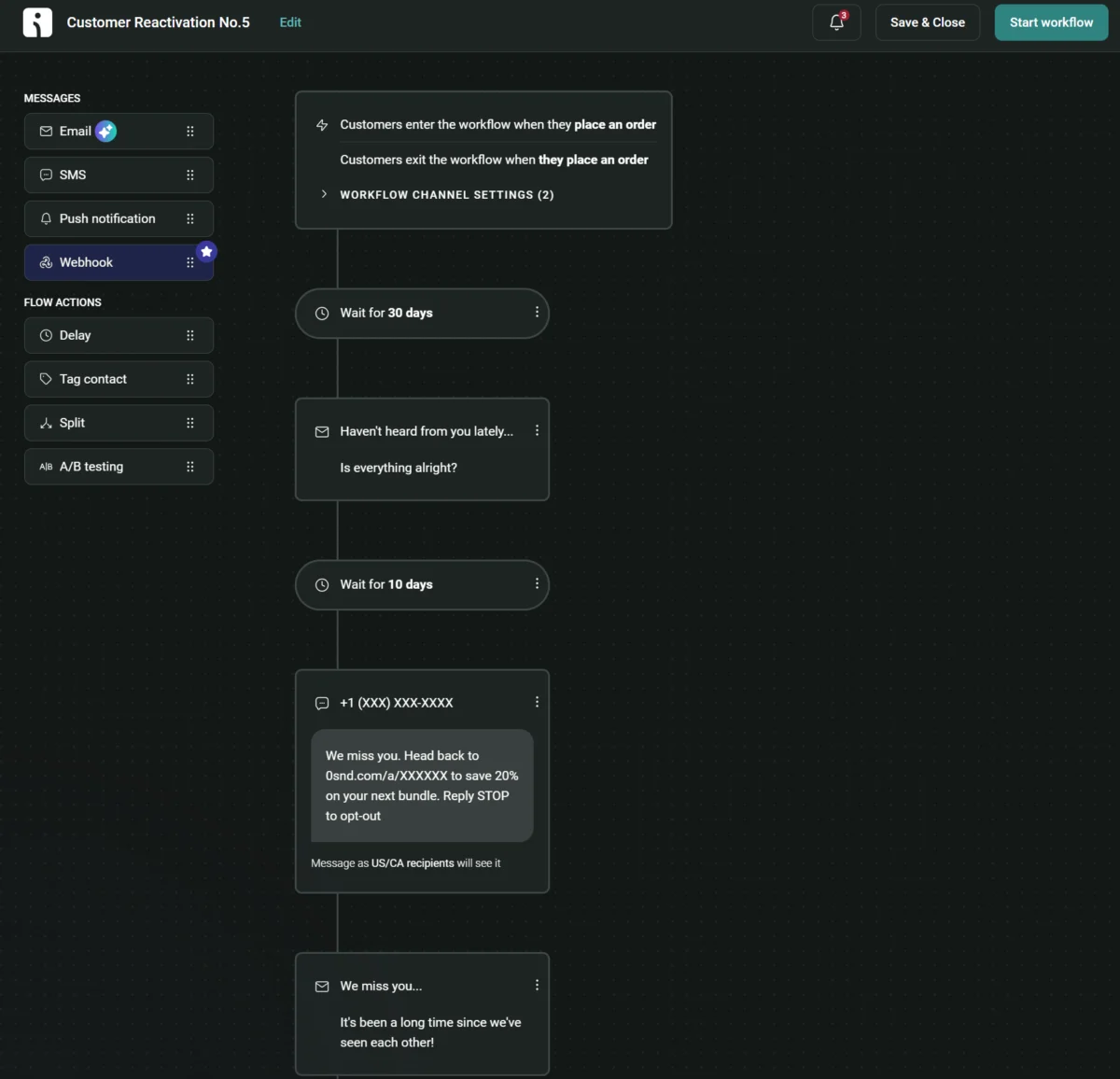
- Win-back Offer (After a Period of Inactivity): Re-engaging lapsed customers with an enticing offer to encourage a return purchase.
- Example: "[Name], it’s been a while since you last shopped with us. So, here’s 20% off your next order. Use code [Code]. Shop at [Link]."
- Key elements: Personalization, acknowledgement of inactivity, strong incentive, clear call to action with code/link.
Consent Requirement: Marketing opt-in is mandatory for all messages in this retention stage.
Optimizing Post-Purchase SMS: Best Practices for Maximum Impact
![Post-Purchase SMS: Examples and Strategy [2026 ]](https://www.omnisend.com/blog/wp-content/uploads/2026/07/8.-Replenishment-reminder-SMS.png)
To truly harness the power of post-purchase SMS, marketers must adhere to key best practices that ensure messages are effective, compliant, and well-received.
- Respect Character Limits: SMS messages are inherently brief. Standard GSM encoding allows for 160 characters per segment, while Unicode (used for emojis or non-Latin characters) limits to 70. Exceeding these limits segments the message, incurring additional costs and potentially diminishing impact. Concise, clear language is paramount, even when factoring in mandatory opt-out language like "Reply STOP to opt-out" and branded short links.
- Personalize with Precision: Beyond merely addressing customers by their first name (e.g., "Hi Sarah"), true personalization involves segmenting audiences based on purchase history, browsing behavior, or demographic data. Sending highly relevant content, such as complementary product suggestions or usage tips for their specific purchase, significantly boosts engagement and perceived value.
- One Clear Call-to-Action (CTA) and Link: The directness of SMS means less room for ambiguity. Each message should have a single, unambiguous purpose and ideally, only one link. Actionable text, such as "Tap the link >," should precede the URL to guide the recipient. This minimizes decision fatigue and maximizes click-through rates.
- Prominently Mention Your Brand: Especially vital for customers in regions like the U.S. and Canada, where SMS messages typically display only the sender’s phone number rather than a recognizable brand name. Including your brand name at the beginning or end of the message ensures instant recognition and trust.
- Strategic Timing for Engagement: While transactional messages are triggered by customer actions, promotional follow-ups require careful timing. Omnisend data suggests that sending messages between 8 am and 9 am often yields the best conversion windows. This aligns with common morning routines, catching customers as they start their day and are more likely to check their phones. However, continuous testing and optimization based on specific audience behavior are recommended.
Automating for Efficiency and Scale: The Power of Workflow Builders
![Post-Purchase SMS: Examples and Strategy [2026 ]](https://www.omnisend.com/blog/wp-content/uploads/2026/07/9.-Win-back-SMS.png)
Manual SMS dispatch is impractical for scaling e-commerce businesses. Automation is the key to delivering timely, personalized messages without operational burden. Platforms like Omnisend offer intuitive workflow builders that enable brands to create sophisticated post-purchase SMS sequences with minimal effort.
- Setting Up Automation Workflows: These platforms allow marketers to define triggers (e.g., "Order Placed," "Order Fulfilled," "X Days After Delivery") that initiate specific SMS sequences. Visual workflow builders make it easy to map out the customer journey, incorporating delays, conditional splits, and various message types (SMS, email, web push).
- Leveraging Pre-built Workflows: Many platforms offer pre-designed templates for common post-purchase scenarios like product review requests, replenishment reminders, and cross-sell opportunities. These templates provide a quick start, embodying proven strategies that can be customized to a brand’s specific needs.
- Multichannel Synergy: The most advanced platforms facilitate the integration of SMS with other marketing channels, particularly email and web push notifications, within a single workflow. This holistic approach ensures consistent brand messaging and maximizes reach. Omnisend, for instance, reported that customers leveraging email, SMS, and web push notifications generated an impressive $79 for every $1 invested in 2025, demonstrating the immense value of a unified strategy.
- Granular Message Timing Customization: Automation tools provide extensive control over message delays, allowing marketers to specify intervals in minutes, hours, days, weeks, or even months. The ability to send messages at specific times of day or on selected days of the week ensures messages land when customers are most receptive.
- Ensuring Compliance with Opt-Out Options: Legal compliance is non-negotiable. Platforms automatically include "Reply STOP to opt-out" for U.S. messages to adhere to TCPA. For international audiences (e.g., under GDPR), an easily accessible unsubscribe link within the message or on a dedicated unsubscribe page is essential. This builds trust and avoids legal repercussions.
- Dynamic Personalization: Automation platforms pull customer data from their profiles (e.g., name, purchased items, location) and dynamically insert it into message templates using personalization tags. This ensures that each sent message is unique and highly relevant to the individual recipient.
- Robust Performance Tracking and Optimization: Continuous monitoring of SMS performance is vital. Dashboards provide real-time metrics such as sent messages, click-through rates, and sales generated. Detailed reports break down performance by individual workflow, allowing marketers to identify successful strategies, pinpoint areas for improvement, and optimize timing, content, and segmentation for even better results.
Strategic Tool Selection for Post-Purchase SMS Mastery
![Post-Purchase SMS: Examples and Strategy [2026 ]](https://www.omnisend.com/blog/wp-content/uploads/2026/07/10.-Setting-up-automation-workflows.png)
Choosing the right platform is fundamental to executing a successful post-purchase SMS strategy. Key considerations include:
- Scope of Functionality: Does the tool support both transactional and promotional SMS? Are there robust behavioral triggers to enable highly contextual messaging?
- Geographic Reach: Can the platform send SMS to all target regions (U.S., Canada, Europe, Asia, etc.) with local compliance features?
- Multichannel Integration: Does it seamlessly integrate SMS with email and web push notifications within unified workflows?
- E-commerce Integration: Is it compatible with your e-commerce platform (e.g., Shopify, Magento) and other essential apps in your tech stack?
- Automation Capabilities: Does it offer a user-friendly workflow builder, pre-built templates, and granular timing controls?
- Analytics and Reporting: Are there comprehensive tools to track performance, identify trends, and facilitate optimization?
Platforms like Omnisend are designed to meet these diverse needs, offering enterprise-level automation, global SMS capabilities, multichannel mastery, and extensive integrations, positioning them as comprehensive solutions for modern e-commerce businesses.
![Post-Purchase SMS: Examples and Strategy [2026 ]](https://www.omnisend.com/blog/wp-content/uploads/2026/07/11.-Pre-built-workflows.png)
Frequently Asked Questions (FAQs) on Post-Purchase SMS
- How many post-purchase texts should I send? At minimum, one order confirmation is essential. Shipping and delivery updates are highly recommended, especially if customers frequently use SMS over email. For promotional and follow-up texts, the quantity depends on the message type and customer behavior. Replenishment reminders should align with product usage cycles (e.g., monthly), while feedback requests might be sent a few days post-delivery. The key is value over volume; avoid over-messaging.
- Is post-purchase SMS legal? Yes, post-purchase SMS is entirely legal, provided strict adherence to regulatory guidelines. For marketing messages, explicit customer opt-in is mandatory, often achieved through an unticked checkbox at checkout or via dedicated sign-up forms. Transactional messages, being service-related, do not require marketing opt-in, but still necessitate customer consent to receive information about their order.
- What is the difference between transactional and marketing post-purchase SMS? Transactional messages are non-promotional and directly related to an ongoing transaction (e.g., order confirmation, shipping update). Marketing messages have a promotional intent, aiming to drive future engagement, sales, or loyalty (e.g., discount offers, review requests). A crucial distinction: if a transactional message includes any promotional element (like a link to a sales page), it automatically becomes a marketing message and requires explicit opt-in.
- Should post-purchase messages go by SMS or email? Ideally, both, depending on the message’s nature. SMS excels for instant, time-sensitive notifications requiring immediate attention. Email is superior for delivering detailed information, rich content (images, videos), product recommendations, or elaborate brand stories. A multichannel strategy leverages each channel’s strengths for a comprehensive and effective customer experience.
- When should I start sending post-purchase SMS? The optimal time to begin is as soon as your e-commerce store is growing and you aim to provide a high-quality customer experience. Simultaneously build your SMS subscriber list alongside your email list. Early implementation allows you to capture customer consent for marketing messages and begin building robust post-purchase sequences, thereby maximizing retention and upsell opportunities from the outset.
In conclusion, post-purchase SMS is no longer merely an option but a strategic imperative for e-commerce brands seeking to thrive in a competitive digital landscape. By embracing automation, adhering to best practices, and thoughtfully segmenting message types, businesses can leverage this direct channel to build lasting customer relationships, drive significant revenue, and ultimately, secure a stronger market position.








