
WordPress Ecosystem Rocked by Critical Yoast SEO Premium Security Patch
Amsterdam, Netherlands – Yoast, a leading provider of SEO plugins for WordPress, has released a critical security update, version 27.6.1, for its premium plugin suite. The update addresses a significant vulnerability found in the Redirect Manager feature of Yoast SEO Premium, Yoast WooCommerce SEO, and Yoast SEO AI+. While the company emphasizes that “the vast majority of users are not impacted,” the nature of the flaw, which could potentially lead to Remote Code Execution (RCE), underscores the critical importance of immediate updates for affected users.
The Discovery and Severity of the Vulnerability
The vulnerability, identified internally by Yoast prior to the release of version 27.6.1, allowed an authenticated user to inject unexpected configuration into a site’s .htaccess file. This injection was possible by including special characters within a redirect rule created through the Redirect Manager. The .htaccess file is a crucial configuration file used by Apache web servers to control directory-level settings, including URL redirects, access restrictions, and custom error pages. Its direct manipulation, especially through injection, can have severe consequences.
Depending on the specific configuration injected, the impact could range from a site crash, rendering the website inaccessible, to the most serious outcome: Remote Code Execution. RCE is considered one of the most critical types of vulnerabilities, as it allows an attacker to execute arbitrary code on the server, potentially gaining full control over the website, its data, and even the underlying server infrastructure. This could lead to data breaches, complete website defacement, or the installation of malware for further attacks.
Despite the severity of the potential impact, Yoast has conducted a review of a sample of sites utilizing the affected configuration and reported finding “no evidence of exploitation.” The company has stated that there are “no known cases of abuse” linked to this specific vulnerability at the time of the patch release. This suggests either a responsible disclosure and rapid patching before widespread exploitation, or that the specific conditions required for exploitation were not commonly met by malicious actors.
Who is Affected? Understanding the Specific Conditions
Yoast has provided clear criteria for determining if a site is potentially at risk. The vulnerability specifically affects sites where all three of the following conditions are met:
- Yoast SEO Premium, Yoast WooCommerce SEO, or Yoast SEO AI+ is installed and active: The vulnerability resides within the Redirect Manager feature, which is exclusive to these premium versions of the plugin. Users of the free Yoast SEO plugin are not affected by this specific issue.
- The site is running on an Apache web server: The vulnerability specifically targets the
.htaccessfile, which is a configuration file used primarily by Apache web servers. Nginx or other web server environments typically do not use.htaccessfiles in the same way, thus sites on these platforms are not at risk from this particular flaw. According to W3Techs, Apache powers approximately 23.0% of all websites, indicating a significant portion of the web that could potentially be running on this server type. - The Redirect Manager in Yoast SEO Premium is configured to use
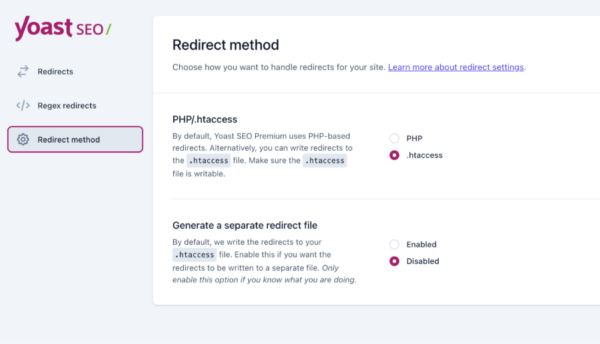
.htaccessmode: The Redirect Manager offers different methods for handling redirects. Only when it is explicitly configured to write directly to the.htaccessfile is the site exposed to this vulnerability. Users can verify their redirect settings by navigating to[www.yoursite.com]/wp-admin/admin.php?page=wpseo_redirects#/redirect-methodin their WordPress admin panel. If.htaccessmode is not enabled, the site is not at risk.
The company’s assessment that “the vast majority of users are not impacted” is based on these specific conditions. Many WordPress sites run on Nginx, or their Yoast Redirect Manager may not be configured to use .htaccess mode, significantly narrowing the window of exposure. However, for those who do meet all three criteria, the risk profile is elevated.

Yoast’s Swift Response and Comprehensive Patch
In response to the identified vulnerability, Yoast has implemented a multi-layered protection strategy within the 27.6.1 update. The patch includes three distinct safeguards designed to prevent future injection attempts and mitigate potential risks:
- Input Sanitization: Enhanced input validation and sanitization have been applied to the redirect fields within the Redirect Manager. This ensures that any special characters that could be used for injection are properly escaped or filtered before they are written to the
.htaccessfile. - Output Escaping: The plugin now incorporates robust output escaping mechanisms when generating or modifying
.htaccessrules. This further prevents malicious code from being interpreted as server directives. - Regular Expression Validation: Stricter validation of user-provided redirect patterns, particularly those involving regular expressions, has been introduced. This helps to catch and prevent the formation of dangerous or malformed rules that could be exploited.
These combined measures aim to provide comprehensive protection against this specific .htaccess injection vulnerability, reinforcing the security posture of the Redirect Manager.
Call to Action for Users: Update Immediately
Yoast strongly urges all users of Yoast SEO Premium, Yoast WooCommerce SEO, or Yoast SEO AI+ to update their plugins to version 27.6.1 as soon as possible. The update process is straightforward and can be completed from the WordPress plugins screen, typically taking less than two minutes.
For users who meet all three aforementioned conditions (premium plugin, Apache server, .htaccess redirect mode enabled), the recommendation is to update with the utmost urgency. Even for those not directly affected by this specific vulnerability, Yoast reiterates the general best practice of keeping all WordPress plugins, themes, and core software up to date. Regular updates not only patch security flaws but also introduce new features, performance improvements, and bug fixes. Version 27.6.1 is now the recommended version for all premium users.
Users uncertain about their affected status are encouraged to verify their redirect settings directly within their WordPress admin panel at [www.yoursite.com]/wp-admin/admin.php?page=wpseo_redirects#/redirect-method. The presence or absence of .htaccess mode enabled will definitively indicate whether their site was at risk from this particular flaw.
Broader Context: The Criticality of Plugin Security in WordPress
WordPress powers over 43% of all websites on the internet, making it the most popular Content Management System (CMS) globally. Its vast ecosystem is supported by tens of thousands of plugins and themes, which extend its functionality. While this extensibility is a core strength, it also introduces potential attack vectors. Plugins, especially those with extensive access to site configurations like Yoast SEO, become attractive targets for malicious actors.
Yoast SEO, with over 5 million active installations for its free version alone, is one of the most widely used WordPress plugins. Its premium versions offer advanced features, including the Redirect Manager, which requires elevated permissions to interact with critical server files like .htaccess. This level of access necessitates rigorous security auditing and prompt response to any identified vulnerabilities.
The .htaccess file itself is a powerful tool for webmasters but also a potential point of weakness if not handled securely. It allows for decentralized management of web server configuration, which is convenient, but misconfigurations or malicious injections can have site-wide implications. The ability of an authenticated user to inject malicious code into this file highlights the importance of user role management and the principle of least privilege in WordPress environments. Even authenticated users, if their accounts are compromised or if they act maliciously, can pose significant threats.
The Threat of Remote Code Execution (RCE) in Detail
Remote Code Execution (RCE) is one of the most severe types of software vulnerabilities. It allows an attacker to execute arbitrary commands on the target server, effectively taking full control of the system. In the context of a WordPress site, this could mean:
- Complete Data Breach: Access to the WordPress database, user credentials, personal information, and proprietary content.
- Website Defacement: Altering the appearance of the website, replacing legitimate content with malicious or propaganda material.
- Malware Installation: Injecting malicious scripts, backdoors, or ransomware onto the server, turning the website into a platform for further attacks (e.g., phishing, spam, botnet participation).
- Server Compromise: In some cases, escalating privileges to gain control over the entire web server, impacting other sites hosted on the same server.
While Yoast has found no evidence of exploitation in this instance, the potential for RCE means that this vulnerability, if left unpatched and discovered by malicious actors, could have led to widespread compromise of WordPress sites. This incident serves as a stark reminder of the continuous arms race between security researchers, developers, and malicious actors in the digital landscape.
Commitment to Security and Future Advisories
Yoast’s proactive approach in identifying and patching this vulnerability, coupled with their transparent communication, reinforces their commitment to the security of their user base. The company has stated that a full security advisory detailing the technical specifics of the vulnerability will be published soon. This practice aligns with industry best standards for responsible disclosure, allowing security researchers and administrators to fully understand the nature of the threat and the effectiveness of the patch.
In the interim, Yoast’s support team remains available to address any questions or concerns users may have regarding the update or their site’s security posture. This incident highlights the ongoing responsibility of plugin developers to rigorously test their code and respond swiftly to security threats, as well as the crucial role of site administrators in maintaining up-to-date software. The collective security of the WordPress ecosystem relies on these collaborative efforts.
The release of Yoast SEO Premium 27.6.1 is a critical development for a segment of the WordPress community. While the immediate threat appears contained due to Yoast’s rapid response and the specific conditions for exploitability, the potential severity of the vulnerability underscores the paramount importance of prompt action from affected users and continuous vigilance in web security practices. The incident reinforces the notion that even widely trusted and robust plugins require constant security oversight to protect the millions of websites that rely on them daily.


 Jia Lissa
 Siti Muinah