Nana Muazin

The landscape of digital marketing has reached a critical inflection point where the cost of acquiring traffic is no longer sustainable for many organizations relying solely on volume-based growth. As of mid-2025, industry data indicates that Customer Acquisition Costs (CAC) have continued their decade-long upward trajectory, driven by increased competition in auction-based environments like Google Ads and Meta, alongside stringent privacy regulations that have diminished the precision of ad targeting. In response to these financial pressures, a strategic shift is occurring within top-tier marketing departments, moving away from the "growth at all costs" mentality toward a sophisticated focus on Conversion Rate Optimization (CRO).
The fundamental premise of CRO is rooted in mathematical efficiency: by improving the percentage of visitors who take a desired action on a landing page, a business can effectively double its results without increasing its advertising budget. For instance, increasing a conversion rate from 2% to 4% yields the same volume of leads or sales as doubling the traffic, but at a fraction of the cost. This paradigm shift is being led by industry experts like Josh Gallant, founder of Backstage SEO, who argues that CRO is the most overlooked strategy in the modern marketing playbook. The current economic climate necessitates that teams squeeze maximum value from existing traffic, transforming the marketing funnel from a "leaky bucket" into a highly efficient engine for revenue generation.
The Chronology of Digital Marketing Costs and the Rise of CRO
To understand the current urgency surrounding CRO, it is necessary to examine the historical context of digital advertising. From 2010 to 2018, the digital landscape was characterized by relatively low competition and high levels of data transparency. Marketers could often achieve profitability through brute-force traffic acquisition. However, the timeline of the last five years reveals why this approach is no longer viable.
In 2021, the rollout of Apple’s App Tracking Transparency (ATT) significantly disrupted the ability of social media platforms to track user behavior across apps and websites. This resulted in a decrease in ad relevance and a subsequent rise in the cost per lead. By 2023, the integration of Artificial Intelligence into search engines further altered user behavior, leading to more fragmented traffic patterns. By 2025, the saturation of key digital markets has meant that even minor improvements in landing page performance can be the difference between a profitable campaign and a net loss.
This evolution has forced a transition in professional roles. Where the previous decade prioritized "traffic drivers," the current era prioritizes "conversion architects." The focus has moved from what happens before the click to the critical seconds that occur immediately after a user lands on a page.
The Economic Impact of Optimization on Marketing ROI
The financial implications of a robust CRO strategy extend far beyond the immediate landing page. When a conversion rate improves, the Return on Ad Spend (ROAS) increases proportionally. This creates a ripple effect across the entire marketing ecosystem. A more efficient landing page allows a company to bid more aggressively for high-value keywords, as their "break-even" point is higher than that of their competitors.
Furthermore, CRO directly impacts the overall Return on Investment (ROI) by maximizing the utility of diverse traffic sources, including organic search, email marketing, and social media. Instead of viewing these channels in silos, an optimized conversion path serves as a universal multiplier for all incoming traffic. For organizations facing stagnant or shrinking marketing budgets, CRO offers a pathway to scale that does not require a proportional increase in capital expenditure. This ability to "scale without scaling cost" is particularly vital for Software as a Service (SaaS) and e-commerce companies where margins are under constant scrutiny by stakeholders.
Five High-Impact Practices for Modern Conversion Architects
Industry analysts have identified five specific areas where marketers can achieve the highest impact with minimal developmental overhead. These practices represent the current standard for high-performing digital teams.
1. Implementation of Mobile-First Experience Design
Despite the fact that mobile devices account for over 60% of global web traffic, many organizations still design their digital experiences for desktop environments first. This "desktop-first" bias creates significant friction for mobile users, who must contend with small touch targets, slow load times, and cumbersome forms. Professional optimization requires a mobile-first approach, ensuring that tap targets are at least 44×44 pixels—the standard size of a human fingertip—and that critical content is positioned above the "thumb scroll" line. Data shows that simplifying mobile forms can lead to immediate double-digit increases in conversion rates.
2. Systematic A/B Testing and Statistical Validation
Decision-making in top-tier marketing firms has moved away from intuition and toward empirical validation. A/B testing—the process of comparing two versions of a page to see which performs better—is the cornerstone of this scientific approach. By testing single variables such as headlines, call-to-action (CTA) buttons, and hero images, teams can isolate exactly what resonates with their audience. The key to success in this area is statistical significance; running tests until the data is robust enough to guarantee that the results are not due to chance.
3. Strategic Friction Reduction Across the Conversion Path
Friction is defined as any element that causes a user to hesitate or abandon the conversion process. Common friction points include excessive form fields, mandatory account creation, and slow page speeds. A landmark study in user experience revealed that reducing the number of form fields from eleven to four can increase conversions by as much as 120%. Optimization experts recommend a "friction audit," where marketers navigate their own conversion paths as if they were first-time visitors, identifying and removing every unnecessary obstacle.
4. Clarity of Value Proposition and the Three-Second Rule
Research into digital attention spans suggests that a website has approximately three seconds to answer a visitor’s primary question: "Why should I care?" An effective value proposition must be immediately clear, addressing a specific pain point and communicating a unique benefit. This is not a matter of creative copywriting but of functional clarity. The most successful landing pages use headlines that speak directly to the user’s desired outcome, such as "Save five hours every week" rather than generic statements like "The world’s best software."
5. Deployment of Contextual Social Proof
Human psychology is deeply influenced by the actions of others. Social proof—including testimonials, trust badges, and usage statistics—serves to reduce the perceived risk of a transaction. However, the placement of social proof is as important as the content. High-performing pages place testimonials near high-friction areas, such as the final CTA button or the pricing table, to alleviate last-minute anxiety. Authentic, specific feedback from real customers has been shown to consistently outperform polished, generic marketing testimonials.

The Role of Technology in Rapid Optimization
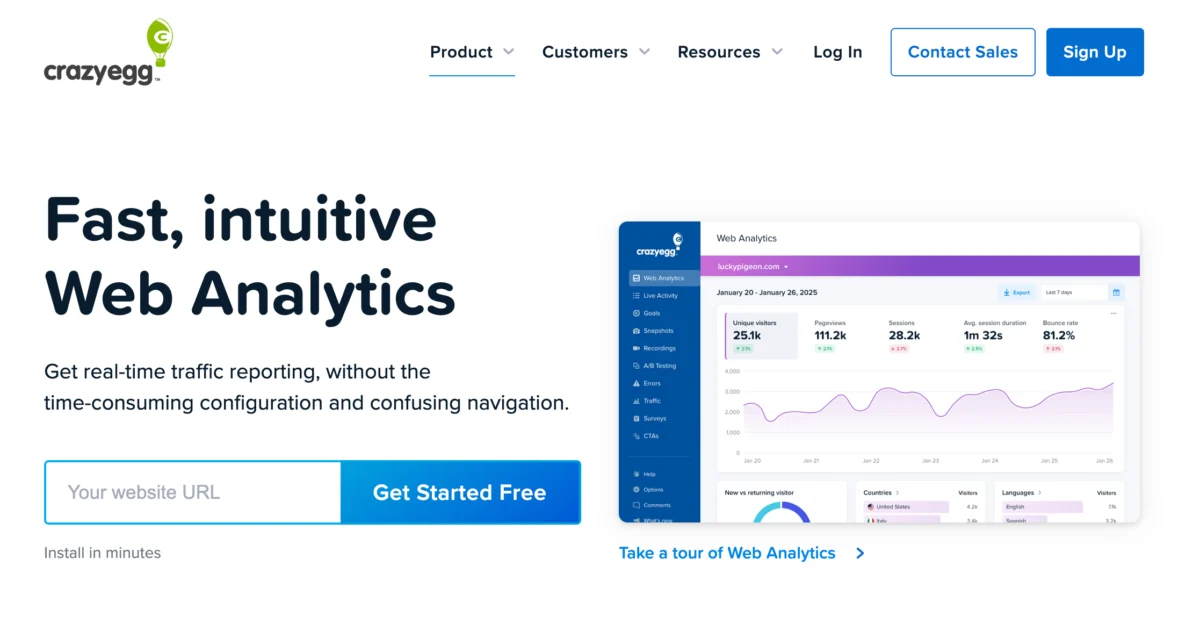
The democratization of CRO tools has allowed marketing teams to bypass traditional bottlenecks, such as the need for extensive developer support. Platforms like Unbounce provide the infrastructure for building and testing landing pages with drag-and-drop interfaces. Complementary tools such as Hotjar and Microsoft Clarity offer visual insights through heatmaps and session recordings, allowing marketers to see exactly where users are getting stuck.
Furthermore, the transition to Google Analytics 4 (GA4) has provided more granular data on user events, enabling a deeper understanding of the "micro-conversions" that lead to a final sale. By combining these tools, marketers can move from a state of guessing to a state of knowing, creating a feedback loop that informs continuous improvement.
Broader Industry Implications and Official Responses
The shift toward CRO is being recognized by major industry players as a necessary evolution of the digital economy. In statements regarding the future of digital commerce, analysts emphasize that as AI-generated content increases the volume of online noise, the quality of the user experience becomes the primary differentiator.
Josh Gallant, founder of Backstage SEO, notes that the "brutal truth" of modern marketing is that traffic is a commodity, while conversion is a proprietary advantage. This sentiment is echoed by CMOs across the SaaS sector, who are increasingly allocating portions of their "experimental" budgets specifically to CRO initiatives. The consensus among these leaders is that a culture of continuous experimentation is no longer optional; it is a requirement for survival in a high-cost advertising environment.
Conclusion: Building a Sustainable Growth Model
The future of digital marketing lies not in the pursuit of more traffic, but in the mastery of the traffic already acquired. By adopting a mobile-first mindset, validating ideas through A/B testing, and ruthlessly removing friction, organizations can build a sustainable growth model that is resilient to rising ad costs.
The broader impact of this shift is a more user-centric internet, where businesses are rewarded for providing clarity, trust, and ease of use. As the "Efficiency Era" of marketing continues to unfold, the organizations that prioritize conversion rate optimization will be the ones that achieve long-term profitability and market dominance. For the modern marketer, the message is clear: stop leaving conversions on the table and start treating every visitor as a valuable opportunity for optimization.


 Laily UPN
 Pevita Pearce