
 rifanmuazin
Email marketing continues to be a cornerstone of digital strategy for businesses of all sizes, serving as a critical channel for communication, engagement, and revenue generation. In an increasingly competitive digital landscape, where subscriber inboxes are perpetually overflowing, the distinction between a thriving, profitable email list and a collection of disengaged contacts hinges on the consistent application of strategic best practices. Insights from industry analysis, current as of April 20, 2026, underscore a fundamental truth: the habits cultivated early in an email program, and diligently maintained, are the determinants of long-term success. The following comprehensive guide outlines the essential practices that differentiate high-performing email campaigns from those that struggle to yield results.
Crafting Engaging Content and Optimizing User Experience
The initial interaction a subscriber has with an email can dictate its fate. To capture and retain attention, emails must be designed for immediate comprehension and effortless navigation across diverse platforms.
1. Prioritizing Scannability and Readability for Rapid Information Absorption
In a digital environment characterized by fleeting attention spans, the ability for subscribers to quickly grasp an email’s core message is paramount. Overwhelming blocks of text often lead to immediate deletion. Strategic use of white space, concise paragraphs, bulleted lists, and clear headings allows busy recipients to absorb information rapidly. Industry studies consistently show that emails optimized for scannability achieve higher engagement rates, as recipients are more likely to read and click through rather than discard the message. The implication is clear: a visually organized email respects the subscriber’s time, fostering a positive interaction and increasing the likelihood of desired action.
2. Ensuring Universal Accessibility for an Inclusive Audience
Beyond mere compliance with legal mandates, ensuring email accessibility is a powerful testament to a brand’s commitment to inclusivity. This practice guarantees that all recipients, irrespective of their abilities or disabilities, can fully engage with the content. Key strategies involve utilizing descriptive alt text for images, maintaining sufficient color contrast, structuring content logically for screen readers, and providing clear, descriptive anchor text for links. Research indicates that a significant portion of the population lives with some form of disability, making accessibility not just an ethical imperative but a strategic advantage for broadening audience reach and enhancing overall campaign effectiveness. Campaigns that prioritize accessibility demonstrate a forward-thinking approach, improving brand perception and fostering deeper trust.
3. Implementing a Mobile-First Design Philosophy
The pervasive use of smartphones dictates that email design must primarily cater to mobile users. With a majority of emails opened on handheld devices, an email that renders flawlessly on a desktop but fails on a mobile screen risks immediate disengagement and a permanent loss of subscriber interest. Essential mobile-first design considerations include employing responsive templates, adopting single-column layouts, optimizing images for faster loading, and ensuring call-to-action (CTA) buttons are sufficiently large and spaced for touch interaction. Furthermore, critical information and the primary CTA should be placed prominently in the upper portion of the email, as mobile users are less inclined to scroll extensively. Rigorous testing on various mobile devices before deployment is non-negotiable to prevent rendering issues that undermine campaign efficacy.
4. Cultivating Engaging Email Content Through Value-Driven Communication
The fundamental objective of email communication is to compel readership and prompt desired actions. Each email sent should deliver sufficient value to earn the right to send the next. A widely adopted and effective content strategy advocates for an approximate 80/20 ratio: 80% of emails should deliver value without an explicit sales pitch, focusing instead on providing information, insights, useful tips, or compelling stories. The remaining 20% can then be dedicated to promotional content. This approach builds trust and rapport with subscribers, positioning the business as a reliable source of information rather than merely a sales outlet. Subscribers who trust a brand are significantly more likely to convert when they are ready to purchase, thereby ensuring long-term engagement and sustainable revenue streams.
Strategic Automation and Personalization for Enhanced Relevance
Beyond general content, the true power of modern email marketing lies in its ability to deliver the right message to the right person at the right time, leveraging automation and personalization to create highly relevant and impactful interactions.
5. Proactive Automation: Setting Up Sequences Before They Are Needed
Many businesses defer email automation, viewing it as a task for later. This perspective is counterproductive. A new subscriber’s attention and interest are at their peak immediately after signing up—a critical, fleeting window of opportunity. Consequently, foundational automations, such as a welcome series, should be configured before the first subscriber arrives. Data unequivocally supports the potency of welcome emails, which can generate over 300% more revenue per email, achieve quadruple the open rates, and quintuple the click-through rates compared to standard promotional emails.
Beyond the initial welcome, several other automation sequences drive consistent results:
- Lead Nurture Sequences: These campaigns systematically build relationships with opted-in prospects, guiding them through the sales funnel by addressing common questions about cost, onboarding, and target audience.
- Re-engagement Campaigns: Designed to rekindle interest among subscribers who have shown inactivity (e.g., no opens in 90 days), these sequences aim to re-establish connection. If unsuccessful, removing these disengaged contacts improves deliverability and list quality.
- Behavioral Triggers: These advanced automations respond dynamically to subscriber actions, such as abandoned cart reminders, post-purchase follow-ups, or milestone celebrations (e.g., anniversary emails). Their relevance at the moment of delivery makes them significantly more effective than generic broadcast campaigns. The implementation of user-friendly workflow builders, common in leading email platforms, empowers businesses to design and deploy these complex sequences without requiring advanced coding knowledge, making sophisticated automation accessible.
6. Implementing Strategic Segmentation for Tailored Communication
Segmentation involves dividing an email list into smaller, more homogeneous groups based on shared characteristics or behaviors. This practice allows for the delivery of highly targeted content, a strategy proven to outperform sending identical messages to an entire list. The principle is simple: the most eloquently crafted message will fail if it reaches an irrelevant audience segment.

Effective segmentation approaches include:
- Behavioral Segments: Grouping subscribers by their actions, such as purchase history, open frequency, specific lead magnet downloads, or their stage in the sales process. This approach is highly actionable as it directly reflects intent.
- Preference-Based Segments: Allowing subscribers to self-select their interests, often through a simple question in the welcome email (e.g., “What are you most interested in?”). This routes them into relevant, interest-specific sequences automatically.
- Engagement Segments: Differentiating between active and inactive subscribers. Prioritizing delivery to engaged segments is crucial for maintaining healthy open rates and a strong sender reputation with Internet Service Providers (ISPs).
Even modest segmentation efforts, such as creating just one meaningful segment, yield superior results compared to a monolithic list. Industry research consistently demonstrates that segmented campaigns can achieve significantly higher revenue, open rates, and click-through rates.
7. Harnessing Personalization to Forge Deeper Connections
The power of personalization lies in its ability to transform generic messages into highly relevant communications. An email that references a subscriber’s location, a past purchase, or speaks directly to their specific situation will invariably elicit a stronger response than a universally drafted message. Personalization should extend beyond merely inserting a first name, encompassing subject lines, email body content, and even the offers themselves. Advanced personalization, though not requiring a vast list or complex setup, can be initiated from day one by collecting relevant data (e.g., through tags at signup) to contextualize messages. Data indicates that personalized emails can substantially increase open rates and click-through rates, fostering a sense of individual recognition and enhancing the perceived value of the communication.
8. Leveraging Artificial Intelligence (AI) to Bridge the Content Gap
For many small businesses, the primary bottleneck in email marketing is not a lack of strategy but a chronic shortage of time. Business owners often know what they intend to communicate but lack the hours required to produce consistent, high-quality content. AI writing tools offer a direct solution to this challenge.
AI’s most significant contributions include:
- Generating Drafts: Quickly producing initial email content, saving significant time.
- Brainstorming Subject Lines: Offering multiple creative and compelling options.
- Rewriting and Repurposing Content: Adapting existing material for new campaigns.
- Overcoming Writer’s Block: Providing a starting point when inspiration wanes.
It is crucial to understand that AI functions as a powerful assistant, not a complete replacement. It generates starting points, requiring human oversight to infuse brand voice, add specific details, and apply judgment regarding audience relevance. This symbiotic relationship allows marketers to accelerate content production, thereby ensuring a consistent and robust email presence.
Ensuring Deliverability and Cultivating Trust
Even the most compelling email content is ineffective if it fails to reach the intended inbox. A robust email program prioritizes deliverability and builds trust through professional conduct.
9. Maintaining List Health for Optimal Deliverability
Deliverability, the behind-the-scenes mechanism determining whether an email lands in the inbox or the spam folder, is easier to protect than commonly perceived. ISPs like Gmail, Outlook, and Yahoo meticulously monitor subscriber interactions. Positive signals (opens, clicks) indicate valuable content, while negative signals (ignores, spam reports) trigger diversions away from the inbox.
Two non-technical strategies are crucial for protecting deliverability:
- Consistent List Cleaning: Regularly removing subscribers who consistently bounce or have been inactive for an extended period (e.g., six months, followed by a re-engagement campaign). A smaller, highly engaged list invariably outperforms a large, disengaged one in terms of deliverability and overall impact.
- Authenticating Sending Domain: This technical step, often managed automatically by reputable email service providers, verifies that emails genuinely originate from the stated sender, significantly boosting credibility with ISPs.
10. Employing Confirmed Opt-in for Enhanced List Quality
While a single opt-in process is convenient, implementing a confirmed opt-in (also known as double opt-in) mechanism significantly enhances list quality and deliverability. After a subscriber signs up via a landing page or social media, a follow-up email is sent, requiring them to click a confirmation link. This verification process ensures that the email address is valid and, critically, that the subscriber genuinely wishes to receive communications. Confirmed opt-in lists exhibit higher engagement rates, fewer spam complaints, and superior delivery rates, laying a robust foundation for a healthy and responsive email program. It also provides a clear audit trail of consent, which is invaluable for regulatory compliance (e.g., GDPR).
11. The Strict Prohibition of Purchasing Email Lists
A cardinal rule in ethical and effective email marketing is never to purchase email lists. Sending emails to individuals who have not explicitly granted permission constitutes spam and, in numerous jurisdictions, is illegal. Purchased lists are invariably riddled with invalid addresses, spam traps, and individuals who have no interest in the content, leading to immediate and severe negative repercussions. These include extremely low engagement, high spam complaint rates, damage to sender reputation, and potential blacklisting by ISPs, which can cripple an entire email program. Reputable email marketing platforms strictly forbid the importation of purchased lists precisely because of the profound and irreversible harm they inflict on deliverability and brand integrity.
12. Adopting a Professional Email Address for Credibility
The sender’s email address is an integral component of a brand’s identity and credibility. An address like “[email protected]” instantly signals professionalism and legitimacy, starkly contrasting with a generic address such as “[email protected].” The latter can undermine trust, suggesting a less serious endeavor or even a potential scam. A professional email address that aligns with the business’s website domain enhances brand recognition, builds immediate trust with recipients, and positively influences deliverability. ISPs are more likely to route emails from professional domains to the primary inbox, recognizing them as legitimate business communications.
13. Avoiding “No-Reply” Email Addresses for Fostering Dialogue
Sending emails from a “no-reply” address is a significant misstep that communicates a disinterest in subscriber feedback and negatively impacts deliverability. ISPs interpret the ability for two-way communication as a strong signal of legitimacy and engagement. A “no-reply” address sends the opposite message, leading to potential routing to spam folders.
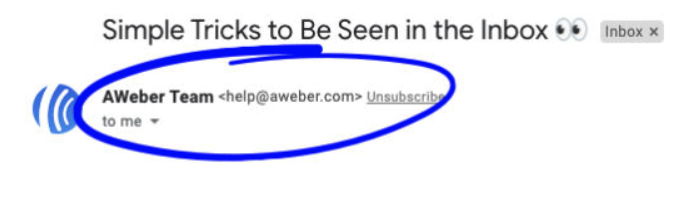
The practical consequences of using a “no-reply” address include:
- Diminished Trust: Subscribers perceive a barrier to communication.
- Reduced Engagement: Inability to reply can discourage feedback or inquiries.
- Damaged Deliverability: ISPs may penalize accounts that restrict communication.
- Missed Opportunities: Valuable feedback or sales inquiries are lost.
Instead, businesses should use a monitored email address (e.g., “[email protected]” or “[email protected]”) or, if real-time monitoring is challenging, configure an auto-responder to acknowledge receipt and manage expectations. The signal of openness to communication is invaluable for building rapport and maintaining a healthy sender reputation.
Optimizing for Action and Ensuring Flawless Execution
The culmination of strategic planning and content creation is the subscriber’s action. Maximizing this outcome requires clear direction and meticulous attention to detail.
14. Implementing a Single, Clear Call to Action (CTA)
Every email should be designed with one primary objective and, consequently, one clear call to action. Presenting multiple, competing CTAs does not double clicks; it dilutes attention and reduces overall conversion rates. Research, including AWeber’s 2020 report, consistently indicates that businesses utilizing prominent button CTAs achieve significantly higher click-through rates compared to those relying solely on text links.
Effective CTA design principles include:
- Singularity: Focus on one main action per email.
- Prominence: Use buttons with contrasting colors and sufficient size.
- Clarity: Employ concise, action-oriented language (e.g., “Learn More,” “Shop Now,” “Download Guide”).
- Strategic Placement: Position the CTA prominently within the email, often multiple times if the email is longer, but always with one central focus.
Testing different wordings, colors, and placements for CTAs can yield disproportionately large improvements in conversion rates.
15. Conducting Rigorous Pre-Send Testing for Flawless Execution
The cost of an error in a mass email campaign is substantial, potentially damaging trust and wasting marketing efforts. A comprehensive pre-send checklist is an indispensable tool for preventing mistakes that erode subscriber confidence.
Key checks prior to sending include:
- Technical Checks: Verifying all links are active and correct, images load properly, and alt text is present.
- Content Checks: Proofreading for typos, grammatical errors, and ensuring personalization tags are correctly populated.
- Experience Checks: Testing how the email renders across various email clients (Gmail, Outlook, Apple Mail) and devices (desktop, mobile, tablet), and checking for dark mode compatibility.
Many advanced email platforms offer integrated pre-send checklist features that automatically flag common issues like broken links, missing alt text, and rendering inconsistencies, allowing marketers to rectify problems before they reach the subscriber’s inbox.
Conclusion: An Iterative Approach to Email Marketing Excellence
The journey to email marketing excellence is not a sprint but an iterative process of continuous improvement. Businesses that achieve the most significant results are not those that attempt to implement every best practice simultaneously on day one, but rather those that strategically select, execute consistently, and incrementally integrate additional practices.
For those embarking on their email marketing journey, the welcome series stands as the highest-return automation to establish first. Its automated nature ensures immediate engagement and value delivery while other priorities are managed. For businesses already sending emails but struggling to achieve desired outcomes, prioritizing list health is a foundational step. A clean, engaged subscriber base is the bedrock upon which all other successful email marketing strategies are built.
Modern email marketing platforms provide the necessary tools and functionalities to implement these sophisticated practices without requiring a dedicated marketing team or extensive technical expertise, democratizing access to powerful engagement strategies for businesses of all scales. By embracing these core principles, organizations can transform their email lists from mere contact databases into dynamic, reliable channels for sustained revenue generation and enduring customer relationships.









