Conversion Rate Optimization (CRO) has transitioned from a niche digital marketing tactic to a fundamental pillar of corporate growth strategy. As the cost of customer acquisition (CAC) continues to climb across major advertising platforms, organizations are increasingly forced to look inward, optimizing existing traffic to maintain profitability. However, the methodology for implementing a CRO program remains a point of significant contention among business leaders. While many companies instinctively gravitate toward external agencies to manage their experimentation needs, industry experts suggest that a “one-size-fits-all” approach often leads to strategic misalignment and stalled growth.
The decision to outsource or internalize CRO functions is not merely a logistical choice but a strategic one that determines how a company captures, retains, and utilizes data-driven insights. At the heart of this evolution is a shift in perspective from “doing CRO”—the act of running isolated A/B tests—to “building an experimentation capability,” which involves embedding a culture of testing into the organizational DNA.
The Landscape of Modern Experimentation
The modern CRO landscape is characterized by a high degree of complexity, requiring a multidisciplinary blend of data science, user experience (UX) research, front-end development, and psychological analysis. Historically, the barrier to entry for CRO was low, often involving simple changes to landing pages. Today, sophisticated experimentation programs influence product roadmaps, pricing structures, and long-term brand strategy.
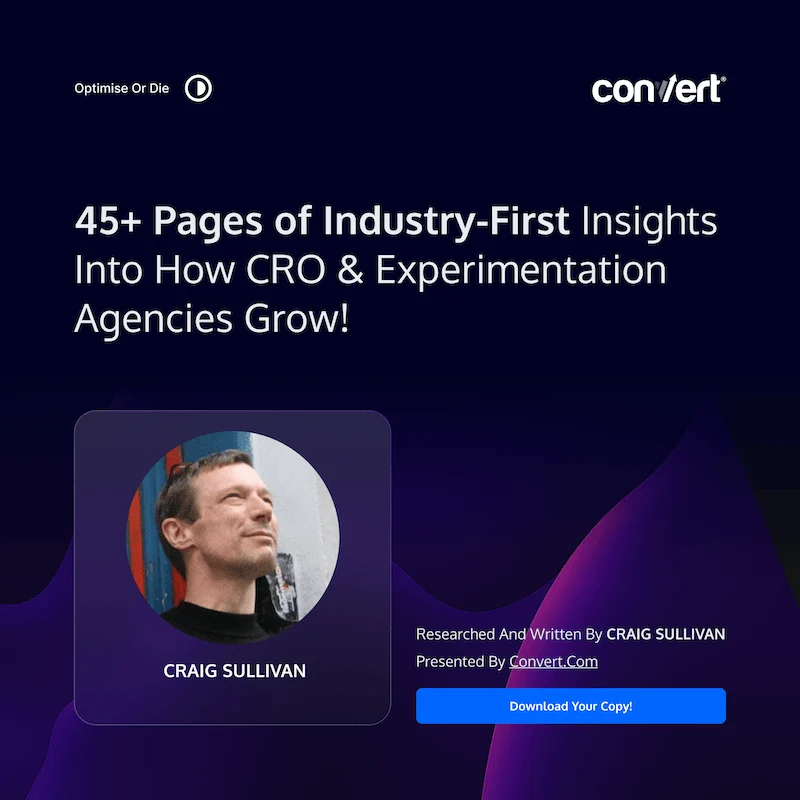
According to research from Convert, a prominent experimentation platform, the effectiveness of these programs is often tied to the “ownership of learning.” When a company treats CRO as a plug-and-play service, it risks losing the institutional knowledge gained from failed experiments—which are often more valuable than successful ones. This has led to a re-evaluation of the four primary operational models: the external agency, the freelance consultant, the in-house team, and the hybrid model.

The Agency Model: A Catalyst for Rapid Deployment
For many organizations, the agency model serves as the initial entry point into professional experimentation. Agencies provide a “ready-made” team of specialists, including researchers, designers, and developers, which allows a company to bypass the lengthy and expensive process of individual hiring. This model is particularly effective for generating “early wins” that can be used to secure executive buy-in for further investment.
However, data indicates potential pitfalls in over-reliance on agencies. A Convert agency research report revealed that 90% of agencies claim to offer “strategy,” yet the execution of this strategy varies significantly. Furthermore, the report found that 60% of agency practitioners run two or fewer tests per month. This low velocity can be attributed to several factors, including internal approval bottlenecks on the client side and the agency’s need to balance multiple accounts.
Lucia van den Brink, founder of The Initial, emphasizes that the most effective agencies are those that view their role as temporary or facilitative. “Our goal is to help internalize experimentation as a capability within the organization,” van den Brink stated, noting that a successful collaboration should focus on an “End Date” where the client has acquired the necessary skills to maintain the program.
The Freelance Consultant: Strategic Precision and Flexibility
The freelance or consultant model occupies a middle ground, offering high-level strategic guidance without the overhead costs of a full-service agency. Freelancers are typically more deeply embedded within the client’s internal teams, allowing for sharper strategic alignment and faster communication.
Independent experts like Ruben de Boer, a leader in experimentation and decision strategy, argue that freelancers are the ideal choice for organizations that already possess some internal resources but lack senior-level guidance. “A freelancer is the right choice when an organization already has a team and wants to build experimentation as a capability, not outsource it,” de Boer explained. This model allows companies to upskill their existing staff while avoiding the “single point of failure” often associated with junior in-house hires who lack mentorship.

The limitation of the freelance model is scope. A single consultant cannot realistically manage the full execution pipeline—including complex development and deep-dive data analysis—for a high-volume testing program. Consequently, this model is best suited for strategic oversight or filling specific technical gaps.
The In-House Model: Institutionalizing Knowledge
As organizations reach a certain level of maturity, the transition to an in-house model becomes almost inevitable. The primary advantage of an in-house team is the compounding value of context. Internal teams live and breathe the brand’s data every day, allowing them to spot nuances that an external partner might miss.
At Audible, the global audiobook giant, experimentation is viewed as a core competency rather than a department. Beatriz Tavares, Global Acquisition & Experimentation Manager at Audible, notes that their in-house investment is driven by “customer obsession.” By keeping experimentation internal, the company can learn faster and apply those learnings directly to the value delivered to customers, ensuring that growth is driven by data-backed decisions.
The financial implications of the in-house model are significant. While it requires the highest upfront investment in terms of salaries, benefits, and tooling, it often results in the lowest cost-per-experiment over the long term. More importantly, it ensures that the “learning repository”—the database of every test result and user insight—remains an asset of the company rather than the property of an external vendor.
A Chronology of Growth: Matching the Model to the Stage
Expert analysis suggests that the “correct” CRO setup is almost always determined by the company’s current stage of growth.

- Pre-Product-Market Fit: At this earliest stage, traditional A/B testing is often impossible due to low traffic volumes. The focus here is not on CRO but on qualitative research—user interviews, heatmaps, and session recordings.
- Early Growth: Once traction is established but traffic remains limited, a freelance strategist can help implement lightweight experiments. This provides high-level guidance without the financial burden of an agency retainer.
- Scaling Phase: As traffic becomes meaningful and the business model is proven, the agency vs. in-house debate intensifies. Many companies use an agency at this stage to “stress-test” the value of CRO before committing to permanent hires.
- Mature Stage: For established enterprises, experimentation is a core capability. The goal is a robust in-house team, perhaps supplemented by specialized agencies for one-off projects or specific technical challenges.
The Hybrid Approach: The Modern Enterprise Standard
The most sophisticated organizations often land on a hybrid model. This might involve an in-house Head of Experimentation who sets the strategy, supported by an external agency that handles the high-volume development and QA (Quality Assurance) work. Alternatively, it could involve internal developers and designers working under the strategic direction of an external consultant.
This “mix-and-match” approach allows for maximum flexibility. It enables companies to scale their testing velocity up or down based on seasonal demands or budget fluctuations while keeping the strategic “brain” of the operation inside the company walls.
Hidden Costs and Strategic Implications
Regardless of the chosen model, several “hidden” factors can determine the success or failure of a CRO program. These include the cost of experimentation software—which can range from free tools to enterprise platforms costing upwards of $100,000 annually—and the “opportunity cost” of slow decision-making.
The implications of a failed CRO setup extend beyond wasted marketing spend. A poorly managed program can lead to “false positives” (tests that appear successful but are actually statistical noise), resulting in product changes that inadvertently hurt the user experience. Furthermore, if the results of experiments are not documented in a centralized, accessible repository, the organization is doomed to repeat the same mistakes, effectively paying to learn the same lesson twice.
Conclusion: Building a System for Learning
The ultimate objective of any CRO setup is to move the organization toward a state where every decision is informed by data. Whether a company chooses an agency, a freelancer, or an in-house team, the metric for success remains the same: the speed and quality of learning.

As the digital economy continues to evolve, the ability to experiment rapidly and accurately will become a primary competitive advantage. Companies that treat CRO as a temporary project to be outsourced will likely find themselves outpaced by competitors who have successfully integrated experimentation into their operational DNA. The shift from “doing tests” to “building a learning system” represents the next frontier of digital business maturity.

 Dwi Wanna
 Reynand Wu