rifanmuazin
As the residual energy of the holiday season dissipates and the crisp chill of January settles across the digital landscape, industry experts from Validity convened to cast their gaze forward, offering a comprehensive forecast for email marketing in the year 2026. This forward-looking analysis emerged from Validity’s highly anticipated "State of Email Live" webinar, masterfully hosted by Guy Hanson, the company’s VP of Customer Engagement. The session brought together a panel of distinguished email specialists, each contributing their unique insights into the burgeoning trends and significant shifts poised to redefine how brands connect with their audiences via the inbox. While the full, in-depth discussion is available on-demand, this comprehensive report synthesizes the core predictions, contextualizing them within the broader evolution of digital communication and outlining their profound implications for marketers globally.
The Shifting Sands of 2025: A Retrospective Foundation
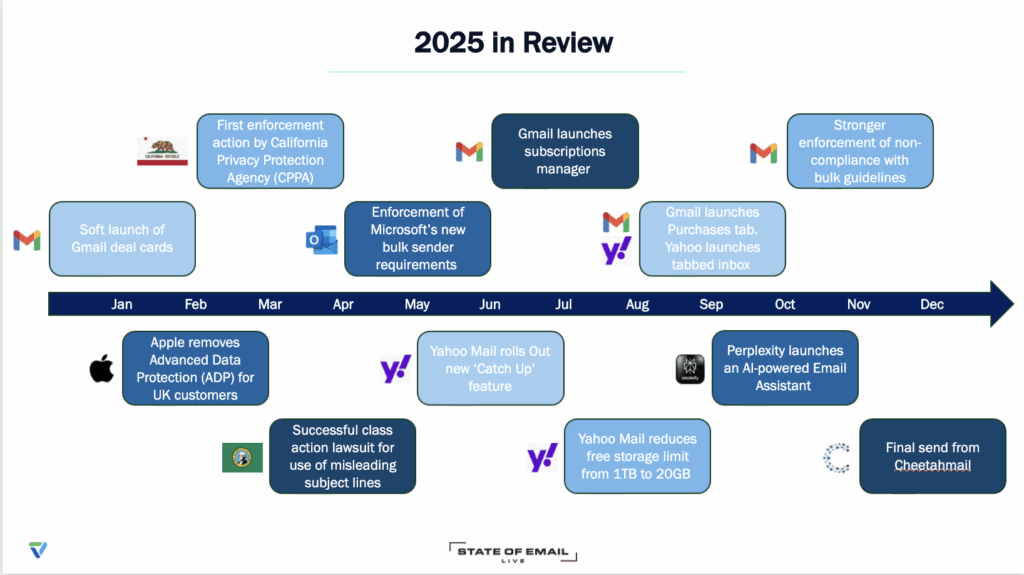
Before delving into the prognostications for 2026, it is imperative to acknowledge the foundational shifts that characterized the email marketing environment in 2025. This preceding year was marked by a confluence of transformative forces, including the continuous rollout of new privacy legislation, significant updates from major mailbox providers (MBPs), and the accelerating integration of Artificial Intelligence (AI) into marketing workflows. These developments collectively reshaped sender responsibilities, consumer expectations, and the technological infrastructure underpinning email deliverability and engagement.
In 2025, the global regulatory landscape continued its trend toward enhanced data privacy. Building on the precedents set by Europe’s General Data Protection Regulation (GDPR) and California’s Consumer Privacy Act (CCPA), numerous jurisdictions worldwide, including several additional U.S. states and countries across Asia and Latin America, introduced or strengthened their own privacy frameworks. These laws often imposed stricter requirements on data collection, consent mechanisms, and the transparency of data usage, directly impacting how marketers could gather and utilize subscriber information. The focus shifted heavily towards explicit consent and providing users with greater control over their personal data, making compliance a paramount concern for any organization engaged in email marketing.
Simultaneously, major mailbox providers like Google, Apple, and Microsoft continued to refine their platforms, driven by a dual objective: enhancing user experience and bolstering security against spam and malicious activity. Apple’s Mail Privacy Protection (MPP), introduced in 2021, had already significantly altered the reliability of open rates as a key performance indicator (KPI), pushing marketers to reconsider traditional engagement metrics. In 2025, Google and Yahoo further iterated on their feedback tools, such as Google Postmaster Tools and Yahoo Sender Hub, providing marketers with increasingly granular data on sender reputation, deliverability, and subscriber interactions. These updates signaled a broader trend among MBPs to empower senders with more actionable insights, while simultaneously raising the bar for responsible sending practices.
Perhaps the most pervasive influence of 2025 was the rapid advancement and deployment of AI technologies. From generative AI assisting with content creation to predictive analytics optimizing campaign timing, AI began to permeate nearly every facet of digital marketing. While promising unprecedented efficiencies and hyper-personalization, its nascent integration also raised questions about ethical usage, data bias, and the authentic voice of brands. The collective impact of these shifts in 2025 laid the critical groundwork for the predictions now unfolding for 2026, setting the stage for an era of unprecedented adaptation and innovation in email marketing.
The 2026 Outlook: Twelve Key Predictions

Validity’s experts offered a dozen pivotal predictions, each dissecting a critical facet of email marketing’s future. These insights span technical changes, strategic shifts, evolving consumer behaviors, and the burgeoning role of artificial intelligence and data governance.
1. Enhanced Transparency from Mailbox Providers: Deeper Insights for Marketers
Danielle Gallant, a key expert, initiated the predictions by forecasting a continued expansion of insights offered by mailbox providers. Following Yahoo’s Sender Hub and Google Postmaster Tools’ recent updates—which already provide marketers with a richer understanding of campaign performance—Gallant anticipates 2026 will bring even more sophisticated data. This could include enhanced bounce data, offering more granular reasons for delivery failures, and critically, "delete-without-reading rates." The latter metric, in particular, would provide invaluable feedback on subject line efficacy and immediate perceived relevance, moving beyond the increasingly unreliable open rate. This trend is already evidenced by Microsoft’s announced updates to SNDS, incorporating stricter authentication checks and improved data protection, alongside Google’s more streamlined ticketing system in Postmaster Tools V2. The implication for marketers is a greater responsibility to interpret and act upon these deeper insights, leveraging them not just for troubleshooting but for proactive strategy refinement to enhance email hygiene and engagement.
2. The Sunset of Send Time Optimization: Embracing the Relevancy Era
Gallant’s second prediction challenged a long-held dogma in email marketing: Send Time Optimization (STO). While theoretically appealing, STO’s effectiveness has been undermined by two primary factors. Firstly, it requires an immense volume of reliable data to accurately pinpoint the optimal send time for individual subscribers, a luxury few brands possess. Secondly, and more critically, STO’s reliance on open rates has rendered it increasingly inaccurate since Apple’s Mail Privacy Protection (MPP) began obscuring open data in 2021. MBPs, particularly Gmail, are now prioritizing "relevancy" over mere recency. Gmail’s promotions tab, for instance, allows users to sort emails by relevance, favoring brands with whom they consistently engage. Gallant declared the arrival of the "Relevancy Era," where marketers must pivot from timing to content and relationship. Strategies will need to focus on concrete engagement metrics (clicks, conversions, replies) and the provision of robust preference centers that empower subscribers to dictate the frequency and nature of communications. This shift underscores that meaningful engagement, not just a quick open, is the new gold standard.
3. SEO for the Inbox: Tailoring Content for AI Gatekeepers
Rafael Viana introduced a paradigm shift: email marketers must now optimize their content not just for human eyes, but for machine intelligence. "The gatekeeper has changed," Viana asserted, highlighting that AI is increasingly "reading your email before your customer and summarizing your content." Apple and Gmail have already integrated AI-driven tools that process and, in some cases, summarize incoming messages. This necessitates an SEO-like approach to email content creation. Marketers must ensure their content is machine-readable through clear semantic formatting, front-loading essential information, and strategically utilizing inbox schema like Gmail annotations. This adaptation is crucial for ensuring that the intended message is accurately conveyed by AI summaries and that emails are categorized appropriately by MBPs, thereby improving visibility and engagement in an increasingly automated inbox environment.
4. The Evolution from Email Builder to Email Orchestrator
Building on the pervasive influence of AI, Viana presented his second transformative prediction: the "extinction of the email builder." In 2026, the core skills of writing subject lines or coding email templates will largely be automated by AI. The new value proposition for marketers will lie in their ability to "manage that output." This shift redefines the role from a hands-on builder to an "email orchestrator." Orchestrators will focus on high-level strategy, ensuring AI-generated content aligns with brand voice and nuance, conducting rigorous quality assurance, and crucially, managing the liability associated with AI’s output. Viana’s dictum, "Delegate the labor but never delegate the liability," serves as a stark warning: while AI offers immense efficiency, human oversight remains indispensable to prevent costly errors and maintain brand integrity.
5. Consumer Pushback Against AI: The Human Touch Imperative
While many predictions focused on AI adoption, Megan Farquharson offered a critical counterpoint: anticipated consumer pushback against AI. Concerns surrounding data privacy, the potential for content inaccuracies, and inherent biases within AI algorithms have already sparked widespread debate. This sentiment is manifesting in a growing trend of users actively seeking ways to disable AI features within their inboxes. Farquharson emphasized the need for "wisdom in using AI to help with building emails, while keeping the focus on creating content for the consumer, not just for the AI summary." This prediction highlights the delicate balance marketers must strike: leveraging AI for efficiency without alienating an audience increasingly wary of overly automated, impersonal interactions. The human element, authenticity, and empathy will remain paramount in fostering genuine connections.
6. The Rise of Micro Animations: Subtle Engagement in Design
Shifting to aesthetics, Farquharson introduced an exciting design trend for 2026: micro animations. Departing from the past reliance on large, bandwidth-heavy graphics and GIFs that often led to slow load times, micro animations are small, efficient code snippets or brief GIFs. These subtle movements—a shimmering logo, a slight sparkle, or a gentle bounce—are designed to draw attention without compromising loading speed. This trend aligns with a broader movement towards simpler, cleaner email aesthetics. The functional benefit is improved user experience, especially on mobile devices, while the creative benefit lies in adding a touch of dynamism and sophistication that can enhance engagement without overwhelming the recipient.
7. Stricter Authentication Rules: Bolstering Email Security and Trust
Julie Stuck turned the spotlight on the foundational elements of email security: authentication protocols. Building on Gallant’s MBP updates prediction, Stuck foresaw even stricter requirements for DMARC (Domain-based Message Authentication, Reporting & Conformance), SPF (Sender Policy Framework), and DKIM (DomainKeys Identified Mail) in 2026. These protocols are vital for verifying sender identity, preventing spoofing, and combating phishing attempts. Stuck predicted a future where "senders will need both SPF and DKIM to pass and align for DMARC authentication." Furthermore, MBPs may mandate a minimum DMARC policy of p=quarantine, with aspirations for p=reject, which would effectively block unauthenticated emails. The implications are significant: brands must prioritize robust authentication not just for deliverability, but as a critical component of maintaining trust and protecting their brand reputation in an increasingly insecure digital environment. Failure to comply will likely result in emails being blocked or routed to spam folders, severely impacting reach and engagement.
8. The Demise of "No-Reply" Addresses: Cultivating Two-Way Communication
Stuck’s second prediction emphasized the strategic importance of nurturing stronger relationships with subscribers. She argued that "successful email programs will be measured not only by conversions but by the strength of your relationship." This ethos underpins her forecast for the end of "No-Reply" email addresses and the emergence of "reply rates" as a crucial new KPI in 2026. Microsoft’s bulk sender updates have already "strongly recommended" allowing two-way communication, signaling a clear industry direction. By enabling subscribers to reply directly, brands can foster trust, gather invaluable feedback, and seamlessly integrate email into broader customer service and engagement strategies. This shift moves email from a broadcast channel to a conversational medium, enriching the subscriber experience and potentially boosting long-term loyalty and revenue.
9. "Checking ID": Verifying Subscriber Identity in a Fragmented Data Landscape
Laura Christensen highlighted the growing investments in Customer Data Platforms (CDPs), driven by an insatiable demand for personalized messaging. However, she noted that MBP updates are simultaneously making it harder to accurately identify subscribers. The ability for users to have multiple email addresses (as announced by Gmail, mirroring Apple’s "hide my email" functionality) creates a fragmented identity landscape. In response, Christensen predicted that marketers would need to "check ID" by verifying multiple data points to accurately identify and target subscribers. This means moving beyond a single email address as the sole identifier, incorporating behavioral data, purchase history, and other touchpoints to build a holistic, verified customer profile. The challenge lies in harmonizing these diverse data streams ethically and efficiently to deliver truly relevant, personalized experiences.
10. Legal Teams Join the Email Proofing Process: Navigating Regulatory Complexities
Christensen’s second prediction underscored a critical, often overlooked, aspect of modern email marketing: the increasing involvement of legal teams. The industry is transitioning from a "best-practices" environment to one of "high-stakes legal responsibilities." This shift is fueled by a complex interplay of differing state-level privacy laws, the potential for AI-generated content to inadvertently create compliance issues, and the rise of "strict liability" for misleading email subject lines (as seen in some consumer protection laws). Christensen concluded that "legal review for a brand’s emails will become a strategic necessity to protect against aggressive state-level enforcement and the legal complexities of AI-integrated marketing." This means legal compliance will no longer be an afterthought but an integral part of the email creation and approval workflow, adding a new layer of rigor to marketing operations.
11. Measuring Trust: The Ultimate Email Metric
Guy Hanson, Validity’s VP of Customer Engagement, introduced a profound new metric for the AI-dominated era: trust. With artificial intelligence permeating inboxes and subscribers becoming increasingly skeptical of generic, AI-generated content, marketers face a fundamental challenge in building genuine relationships. Hanson articulated, "The focus is shifting from simply reaching the inbox to proving you belong there. The marketers who win won’t be the ones with the most data; they’ll be the ones who subscribers trust most to use it." He referenced a "trust equation" that links trust to credibility, reliability, and the consistent delivery of value to subscribers. Practically, this involves actively promoting transparent preference centers, diligently listening to subscriber feedback, and conducting honest self-assessments of one’s email program. In an age of information overload and AI-driven impersonality, trust emerges as the ultimate differentiator and a new, qualitative KPI for email success.
12. New-Gen Wearables: Revolutionizing First-Party Data Collection
Hanson concluded the webinar with a bold, "out there" prediction: the revolutionary impact of new-generation wearable devices on first-party data collection. As smart technologies and devices like "Bee" (an AI wristband that transcribes audio in real-time) become ubiquitous, marketers will gain unprecedented access to real-time, context-rich consumer data. This opens vast opportunities for hyper-personalization and proactive engagement, allowing brands to anticipate needs and deliver highly relevant communications based on immediate user context. However, Hanson tempered this excitement with a critical acknowledgement of the ethical considerations. The collection and use of such intimate data raise significant privacy concerns and demand absolute transparency from brands. The "Black Mirror" analogy, though light-hearted, underscores the profound ethical responsibility that will accompany this technological leap, challenging marketers to navigate a new frontier of data ethics.
Broader Impact and Strategic Implications for 2026
The collective weight of these predictions points to a 2026 email marketing landscape vastly different from previous years. The overarching theme is one of heightened complexity, demanding greater strategic foresight, technological integration, and an unwavering commitment to ethical practices and genuine subscriber relationships.
The shift towards "Relevancy" and "Trust" as paramount metrics signifies a fundamental reorientation from volume-based sending to value-driven communication. Marketers can no longer rely on broad strokes or outdated tactics. Instead, they must invest in sophisticated data analytics to understand subscriber behavior deeply, utilize preference centers to empower users, and craft content that genuinely resonates and builds trust. This implies a move away from purely transactional emails towards those that inform, entertain, and solve problems for the recipient.

The omnipresence of AI, while offering unprecedented efficiencies in content creation and optimization, also introduces new challenges related to authenticity, liability, and consumer acceptance. Marketers will need to develop new skill sets, focusing on "orchestration" rather than mere execution, and integrating legal and ethical considerations into every stage of the email workflow. The potential for AI to generate non-compliant content or to alienate users who detect its impersonal nature necessitates robust human oversight and a clear strategy for transparent AI usage.
Technically, the stricter authentication rules and enhanced MBP insights mean that deliverability will become an even more intricate science. Maintaining a pristine sender reputation, adhering to evolving protocols, and proactively leveraging feedback tools will be non-negotiable for ensuring emails reach the inbox. The demise of "No-Reply" addresses reinforces the broader industry trend towards conversational marketing and customer-centricity, urging brands to open channels for dialogue and feedback.
Finally, the advent of new data sources from wearables, while speculative, highlights the continuous evolution of consumer data. This presents both immense opportunities for unparalleled personalization and significant ethical dilemmas regarding privacy and data transparency. Brands that navigate this responsibly, prioritizing user consent and demonstrating clear value for data exchange, will be best positioned to thrive.
Conclusion: Navigating the Future of Email
The predictions for 2026, as articulated by Validity’s experts, paint a vivid picture of an email marketing ecosystem in continuous flux. From the granular shifts in mailbox provider tools and authentication protocols to the profound strategic reorientation around trust and relevancy, the year ahead promises to be both challenging and exhilarating for digital marketers. The era of the generic, one-size-fits-all email is definitively over. In its place emerges a dynamic environment where success hinges on adaptability, ethical data stewardship, intelligent AI integration, and an unwavering focus on building authentic, valuable relationships with subscribers.
As the industry moves beyond the immediate aftermath of holiday campaigns and into a new year of innovation, these insights serve as a crucial compass. Marketers are encouraged to not only absorb these predictions but to proactively integrate them into their strategic planning. For those seeking to delve deeper into each forecast and gain a more nuanced understanding of the forces shaping email marketing’s future, the full "State of Email Live" webinar replay remains an invaluable resource, offering detailed discussions and expert perspectives to guide the journey through 2026 and beyond.