rifanmuazin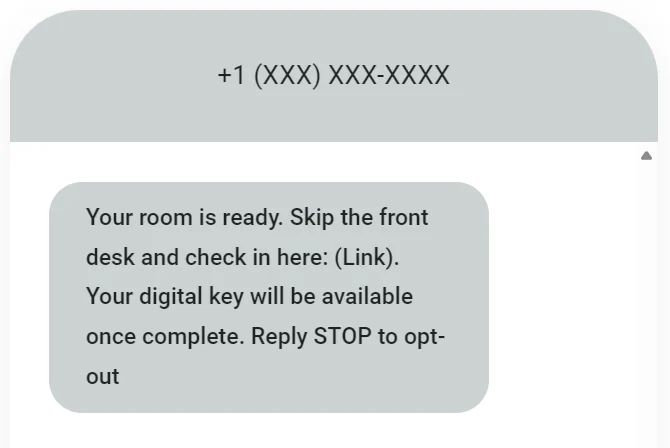
The modern hospitality landscape demands immediate, personalized, and seamless communication, making advanced SMS marketing an indispensable tool for hotels striving to enhance guest experiences, optimize operational efficiency, and drive sustainable revenue growth. In an era where mobile devices are central to daily life, text messaging stands out as a direct and highly effective channel to connect with guests at every stage of their journey, from the initial booking inquiry to post-stay engagement. This strategic shift from traditional communication methods to a mobile-first approach is not merely a trend but a fundamental reorientation towards guest-centric service delivery.
The Evolving Landscape of Hotel Communication
For decades, hotel communication relied heavily on front desk interactions, in-room telephones, and printed information. While these methods still hold relevance, the digital revolution has fundamentally altered guest expectations. Today’s travelers are "always-on," accustomed to instant access to information and services through their smartphones. They seek convenience, speed, and personalization, mirroring their experiences with other service industries. This paradigm shift has prompted hotels to explore more dynamic and direct communication channels.
While email marketing and dedicated mobile apps have played significant roles in this digital transformation, SMS marketing offers distinct advantages that position it as a powerful complement, or even a primary channel, for critical communications. Unlike emails, which can get lost in cluttered inboxes, or apps that require downloads and active engagement, text messages boast unparalleled immediacy and reach. Research consistently highlights the extraordinary efficacy of SMS: a staggering 98% open rate, with the vast majority of messages read within minutes of receipt. This level of engagement far surpasses that of email, which typically sees open rates between 20-30% in the hospitality sector. Such statistics underscore why SMS has become a non-negotiable component of a modern hotel’s digital strategy.
Unpacking the Power of SMS: Key Metrics and Strategic Advantages
The compelling metrics associated with SMS marketing are a cornerstone of its effectiveness for hotels. The near-universal open rate ensures that crucial information reaches guests promptly, minimizing misunderstandings and enhancing satisfaction. Furthermore, click-through rates for SMS campaigns in 2024 have shown significant growth, often more than double those observed in previous years, indicating a highly engaged audience receptive to direct calls to action. This directness translates into tangible benefits for hoteliers:
- Direct Bookings and Reduced Customer Acquisition Costs (CAC): By leveraging SMS for personalized offers and re-engagement campaigns, hotels can steer guests away from Online Travel Agencies (OTAs), thereby reducing hefty commission fees. The personal nature of text messaging allows for highly targeted promotions that resonate with past guests, fostering loyalty and encouraging repeat direct bookings.
- Enhanced Guest Retention: Building long-term relationships is far more cost-effective than constantly acquiring new customers. SMS provides new avenues for anniversary messages, win-back campaigns for lapsed guests, and exclusive loyalty offers, all designed to maximize the return on investment (ROI) long after the initial booking.
- Operational Efficiencies: Automating routine communications via SMS significantly reduces the workload on front desk staff, allowing them to focus on higher-value guest interactions. From sending digital check-in links to confirming spa appointments, SMS streamlines operations and minimizes human error.
- Personalization at Scale: Modern SMS platforms enable sophisticated segmentation of guest lists based on booking history, preferences, demographics, and even on-site activities. This allows hotels to send highly relevant and contextual messages, fostering a deeper connection with guests and making them feel uniquely valued. As Agnė Ganchev, Director of Customer Success at Omnisend, aptly puts it, "Segmentation enables the deep personalization your hotel guests appreciate, such as contextual offers and information based on their booked activities. Going beyond names in your texts is a proven way to establish rapport and create better customer experiences."
A Seamless Guest Journey: SMS Across Every Touchpoint
SMS marketing truly shines in its ability to accompany guests throughout their entire journey, delivering timely information and offers precisely when needed. This comprehensive approach ensures a smooth, informed, and enjoyable experience from pre-arrival anticipation to post-stay reflection.
1. Pre-Arrival: Setting the Stage for an Exceptional Stay
The period leading up to a guest’s arrival is crucial for managing expectations and offering opportunities for upsells.

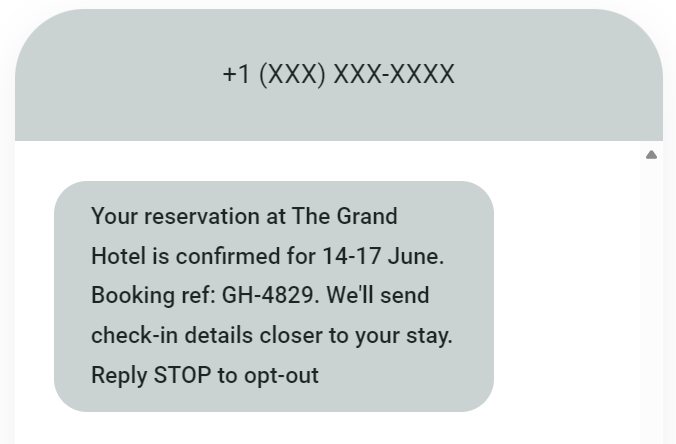
- Booking Confirmation: Sent immediately (within 5 minutes) after a reservation, this message provides instant reassurance and confirms essential details.
- Template Example: "Confirmed! Your booking at The Grand Hotel for 14-17 June is set. Ref: GH-4829. Check-in details to follow. Reply STOP to opt out."
- Pre-Arrival Information: 72-48 hours before check-in, guests appreciate practical details such as directions, parking information, or expected weather.
- Strategic Upselling/Cross-selling: Offering room upgrades, spa packages, airport transfers, or dining reservations can significantly increase ancillary revenue and enhance the guest experience.
- Template Example: "Enhance your stay at The Grand! Upgrade to a suite for just $50/night or add a spa package. Click here: [link]. Reply STOP to opt out."
- Reminders: A final reminder 24 hours before arrival, perhaps with a link to digital check-in or a quick packing list, helps reduce guest anxiety.
- Template Example: "Tomorrow’s the day! Check-in from 3 PM at The Grand Hotel. Any last-minute needs? Just reply. Reply STOP to opt out."
2. Arrival & Check-in: The Welcome Experience
The arrival process should be as seamless as possible, minimizing wait times and providing immediate access to amenities.
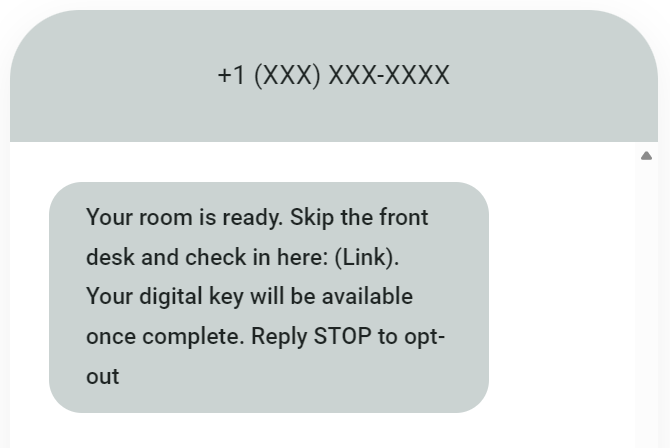
- Digital Check-in Instructions: On the day of arrival, a link for digital check-in can significantly reduce queues and provide a contactless option.
- Template Example: "Your room is ready! Skip the front desk and check in here: [link]. Your digital key will be available once complete. Reply STOP to opt-out."
- Room Ready Notification: Once the room is prepared, a prompt notification avoids unnecessary waiting.
- Personalized Welcome Message: A friendly text shortly after check-in, offering assistance or highlighting key amenities, makes guests feel valued.
3. During the Stay: Enhancing Comfort and Convenience
Throughout the stay, SMS can provide proactive service, resolve issues quickly, and promote on-site offerings.
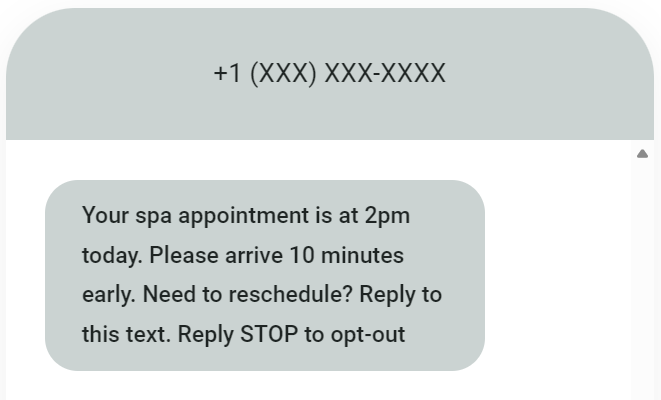
- Service Reminders & Alerts: Timely reminders for pre-booked activities like spa appointments or restaurant reservations.
- Template Example: "Hi [Name], your spa appointment is confirmed for 2 PM today. Please arrive 10 mins early. To reschedule, reply [RESCHEDULE]. Reply STOP to opt out."
- Proactive Service: Offering housekeeping services, towel changes, or providing quick access to concierge services.
- Template Example: "Dear [Name], remember to drop off beach towels for cleaning by 11 AM today. Need anything else? Just reply. Reply STOP to opt out."
- Exclusive Offers: Promoting last-minute dining specials, happy hour deals, or local tour discounts.
- Guest Support: Providing a direct line for inquiries or minor requests, reducing calls to the front desk.
4. Post-Stay & Re-engagement: Building Lasting Relationships
The guest journey doesn’t end at checkout. Post-stay communication is vital for fostering loyalty and securing future bookings.
- Thank You & Feedback Request: Sent 24 hours after checkout, this expresses gratitude and invites guests to share their experience, crucial for online reputation management.
- Template Example: "We loved having you at The Grand! How was your stay? Review us at [link] for a chance to win 10% of your booking value back. Reply STOP to opt out."
- Review Reminders: A follow-up text 3-7 days later can boost review rates.
- Loyalty Program Invitations: Encouraging enrollment in loyalty programs with exclusive benefits.
- Winback Campaigns & Anniversary Offers: Targeting past guests who haven’t rebooked within a certain period (e.g., six months) or celebrating booking anniversaries with special offers.
- Template Example: "Miss you at The Grand! Get 10% off your next stay until [Date]. Book now: [link]. Reply STOP to opt out."
- Template Example: "Happy Anniversary, [Name]! Enjoy a complimentary room upgrade & a meal for two on your next visit. Claim at [link]. Reply STOP to opt out."
Best Practices for High-Impact Hotel SMS Marketing
Even with compelling message templates, the success of hotel SMS marketing hinges on adherence to best practices:
- Hyper-Personalization and Context: Go beyond merely using a guest’s name. Leverage data from their booking, preferences, and stay activities to send messages that are genuinely relevant. As highlighted by Omnisend’s Agnė Ganchev, "Segmentation enables the deep personalization your hotel guests appreciate, such as contextual offers and information based on their booked activities."
- Strategic Automation and Segmentation: Implement automated workflows triggered by specific guest actions (e.g., booking, check-in, service requests). Segment your audience effectively to ensure each message reaches the most receptive group.
- Impeccable Timing: The "when" is as crucial as the "what." Confirmations must be instant, while upsells and reminders require careful timing to be effective without being intrusive. Andrius Šerniovas, Conversion Specialist at Omnisend, advises, "Our research shows that the best times to send marketing texts are 9 AM to 12 PM and 5 PM to 9 PM. However, optimal send times go out the window for confirmations, which should always occur within five to 10 minutes."
- Clear Call-to-Actions (CTAs): Every marketing text should guide the recipient towards a specific action, whether it’s clicking a link, replying to a message, or visiting a specific location on property.
- Conciseness and Clarity: SMS has character limits. Messages must be direct, easy to understand, and devoid of jargon.
- Compliance and Trust: Adhere strictly to regulations like the Telephone Consumer Protection Act (TCPA) in the US and the General Data Protection Regulation (GDPR) in Europe. This means obtaining explicit opt-in consent from every subscriber and providing a clear, easy way to opt-out (e.g., "Reply STOP to opt out"). Violations can result in significant fines and damage brand reputation.
- A/B Testing and Analytics: Continuously test different message variations, timings, and offers to understand what resonates best with your audience. Monitor key metrics like open rates, click-through rates, and conversion rates to refine your strategy.
Building a Robust SMS Subscriber List Ethically and Effectively
A strong SMS marketing strategy begins with a quality list of opted-in subscribers. Hotels have several natural avenues for list building:
- Point-of-Booking Opt-ins: Integrate an opt-in checkbox during the online reservation process, clearly stating the benefits of receiving SMS communications (e.g., "Receive exclusive offers and real-time updates via text").
- Website and App Sign-ups: Use pop-ups, banners, or dedicated landing pages on your hotel’s website and mobile app to encourage sign-ups, perhaps offering a small incentive like a discount on their next stay.
- In-Property Promotions: Utilize QR codes on check-in counters, in-room materials, or restaurant menus that guests can scan to opt-in.
- Value Proposition: Always articulate the clear benefits of subscribing. Guests are more likely to opt-in if they understand the value they will receive, such as exclusive deals, early access to promotions, or convenient service updates. A list of 500 opted-in, high-intent SMS subscribers is invariably more valuable than thousands of generic phone numbers.
Operationalizing SMS Marketing: Tools and Implementation
Implementing a sophisticated SMS marketing strategy requires a dedicated platform. Solutions like Omnisend offer comprehensive features tailored for hotels, enabling them to:
- Define Objectives: Clearly outline what you aim to achieve with SMS (e.g., increase direct bookings, improve guest satisfaction, reduce front desk calls).
- Choose a Platform: Select a robust SMS marketing tool with capabilities for automation, segmentation, analytics, and compliance.
- Develop Opt-in Strategies: Integrate opt-in points across all relevant guest touchpoints.
- Design Automated Workflows: Build flows for each stage of the guest journey, personalizing messages based on triggers and guest data.
- Monitor and Optimize: Regularly review campaign performance and refine strategies based on data-driven insights.
Broader Implications for the Hospitality Industry
The adoption of advanced SMS marketing carries profound implications for the hospitality industry:
- Enhanced Brand Reputation: Proactive, personalized communication builds trust and portrays the hotel as modern, attentive, and guest-focused. This positively impacts online reviews and overall brand perception.
- Significant Operational Efficiencies: Automating routine communications frees up staff to provide more personalized, high-touch service, enhancing the overall guest experience.
- Increased Profitability: By driving direct bookings and maximizing upsell/cross-sell opportunities, hotels can significantly improve their profit margins and reduce reliance on third-party booking channels.
- Sustainable Guest Loyalty: Consistent, value-driven SMS communication transforms one-time visitors into loyal, repeat guests and powerful brand advocates.
- Data-Driven Decision Making: The rich data collected from SMS campaigns provides invaluable insights into guest preferences and behavior, informing broader marketing strategies, service enhancements, and operational improvements.
In conclusion, SMS marketing is no longer a peripheral marketing tactic but a central pillar of modern hotel operations and guest engagement. By leveraging its unparalleled immediacy, personalization capabilities, and high engagement rates, hotels can create truly memorable and seamless guest journeys, optimize revenue streams, and build enduring relationships that secure their competitive edge in a rapidly evolving market. Its transformative power makes it an indispensable tool for any hotel aiming to thrive in the digital age.