The rapid evolution of Large Language Models (LLMs) has transitioned the primary challenge of artificial intelligence from model capability to system reliability. While building a Retrieval-Augmented Generation (RAG) pipeline has become a streamlined process thanks to orchestration frameworks like LangChain and LlamaIndex, ensuring the accuracy and safety of these systems remains a significant hurdle for enterprise deployment. As organizations move beyond experimental prototypes, the industry is witnessing a shift toward sophisticated evaluation frameworks designed to quantify the "black box" of LLM outputs. This transition is driven by the inherent failures of traditional Natural Language Processing (NLP) metrics and the critical need to mitigate hallucinations, context omission, and irrelevant data retrieval.
The Structural Necessity of RAG Evaluation
A standard RAG system functions through two distinct yet interdependent components: the retriever and the generator. The retriever is tasked with scouring a knowledge base to find relevant document chunks, while the generator synthesizes these chunks into a coherent, factually grounded response. System failure can occur in either half of this equation. A suboptimal retriever may pull irrelevant or incomplete data, leading to "context sparsity." Conversely, a flawed generator might possess high-quality context but choose to ignore it, resulting in hallucinations—outputs that are linguistically fluent but factually untethered from the provided source material.
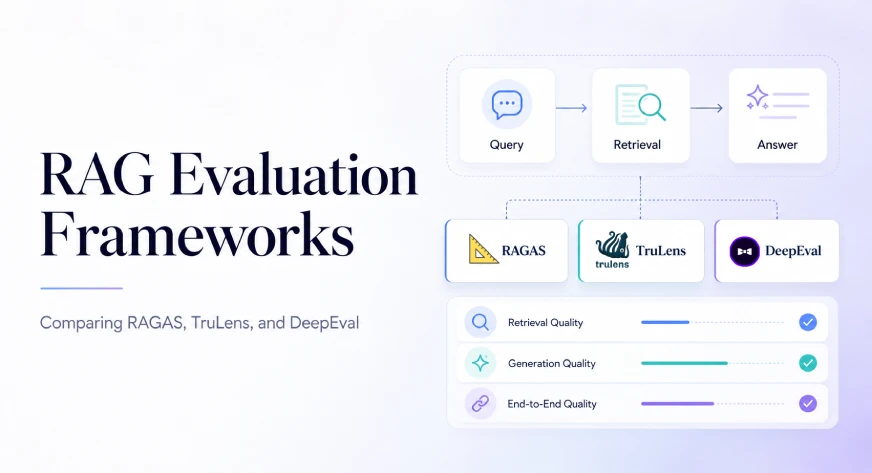
For years, developers relied on metrics such as BLEU (Bilingual Evaluation Understudy) or ROUGE (Recall-Oriented Understudy for Gisting Evaluation) to assess model performance. However, these metrics were designed for machine translation and summarization, measuring literal word overlap rather than semantic accuracy or factual grounding. In a RAG context, a model could provide a perfectly accurate answer that shares zero word-overlap with a reference text, or it could provide a hallucinated answer that happens to use similar vocabulary. This disconnect has necessitated the rise of specialized frameworks: RAGAS, TruLens, and DeepEval.
The Evolution of Information Retrieval Metrics
To understand modern evaluation frameworks, one must first look at the traditional Information Retrieval (IR) metrics they incorporate. These metrics—Precision@K, Recall@K, Mean Reciprocal Rank (MRR), and Normalized Discounted Cumulative Gain (NDCG)—form the mathematical backbone of retrieval assessment.
Precision@K measures the density of relevant information within the top "K" results returned by the retriever. For instance, if a system retrieves five document chunks and only three are relevant to the query, the Precision@5 is 0.6. High precision is vital because excessive "noise" or irrelevant data can confuse the LLM generator, increasing the likelihood of errors.
Recall@K, by contrast, measures the system’s ability to find all pertinent information within the entire knowledge base. If four relevant chunks exist in the database and the retriever only finds three, the Recall@5 is 0.75. In the enterprise setting, there is often a "Precision-Recall Trade-off." Increasing the number of retrieved chunks (K) typically improves Recall but degrades Precision, forcing developers to find a balance that optimizes both cost and accuracy.
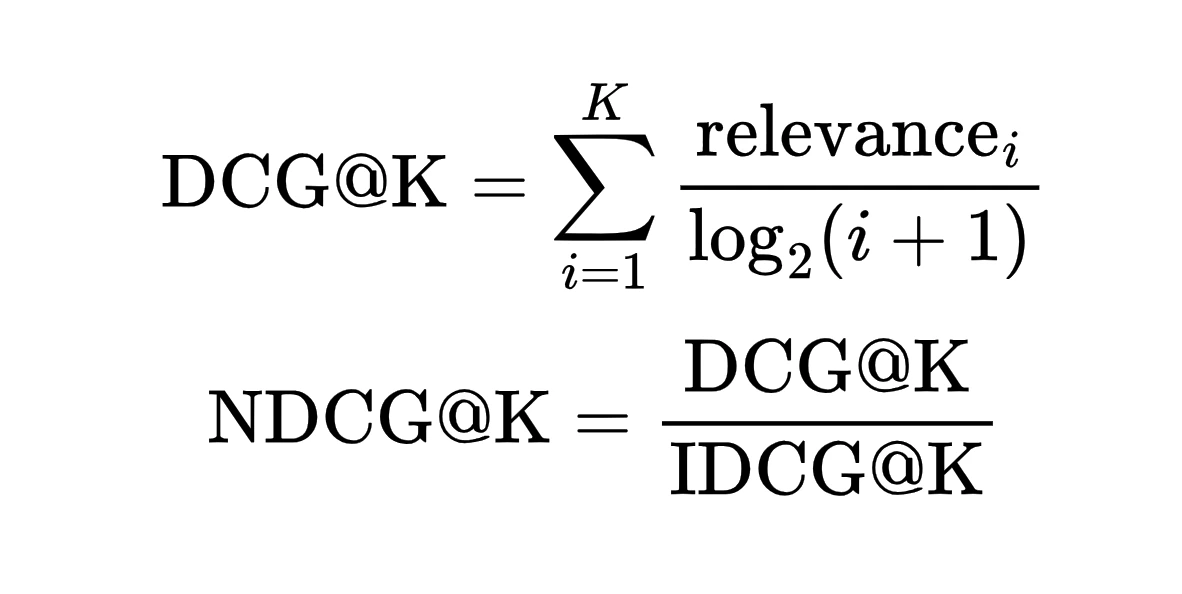
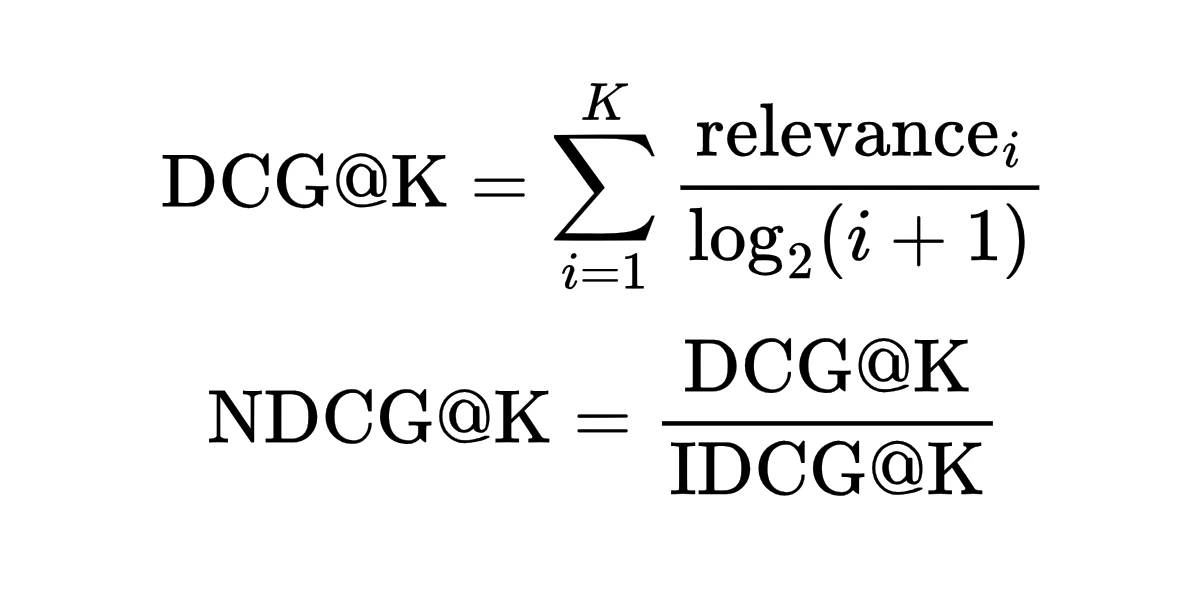
Mean Reciprocal Rank (MRR) and Normalized Discounted Cumulative Gain (NDCG) introduce the concept of ranking quality. MRR focuses on the position of the first relevant chunk, acknowledging that LLMs exhibit a "lost in the middle" phenomenon where they pay more attention to information at the beginning or end of a prompt. NDCG provides a more nuanced view by accounting for graded relevance, penalizing systems that place highly relevant information lower in the search results.
RAGAS: The Benchmark for Rapid Iteration
RAGAS (Retrieval-Augmented Generation Assessment) has emerged as a leading Python-based framework, particularly favored for its "reference-free" evaluation capabilities. Developed to address the bottleneck of manual data labeling, RAGAS utilizes an "LLM-as-a-judge" philosophy. By employing a more capable model (such as GPT-4) to grade the performance of a smaller or task-specific model, RAGAS allows teams to score their systems without requiring a pre-written "ground truth" answer for every query.
The framework focuses on three core metrics: Faithfulness, Answer Relevancy, and Context Precision. Faithfulness measures the extent to which the generated answer is derived solely from the retrieved context, serving as a direct check against hallucinations. Answer Relevancy assesses how well the response addresses the original user prompt, while Context Precision evaluates the quality of the retriever’s output.
One of the most significant contributions of RAGAS to the developer ecosystem is its synthetic test set generation. Manually creating hundreds of high-quality question-and-answer pairs for testing is a labor-intensive process that can take weeks. RAGAS automates this by sampling chunks from a knowledge base and using an LLM to generate realistic questions and hard-to-distinguish "distractor" variants. This allows engineering teams to benchmark their systems against a robust dataset within hours of document ingestion.
TruLens: Real-Time Observability and the RAG Triad
While RAGAS excels at one-off benchmarking, TruLens is designed for the long-term observability required in production environments. Developed by the team at TruEra, TruLens focuses on what it calls the "RAG Triad": Context Relevance, Groundedness, and Answer Relevance.
TruLens distinguishes itself through its instrumentation approach. Rather than acting as a post-hoc analysis tool, TruLens "wraps" the RAG application, logging every internal step of the process—from the initial query to the specific vector database call and the final synthesis. This creates a transparent audit trail. The framework includes a built-in dashboard that allows developers to visualize these logs, making it easier to identify exactly where a system failed.
In a production setting, TruLens acts as a continuous monitoring layer. If a company updates its embedding model or shifts from a flat-index to a hierarchical-index search, TruLens can immediately flag if the "Groundedness" (the degree to which the answer is supported by the context) begins to drift. This real-time feedback loop is essential for maintaining trust in AI systems that handle customer-facing or high-stakes data.
DeepEval: Unit Testing for the AI Deployment Pipeline
DeepEval takes a different philosophical approach by treating RAG evaluation as a fundamental component of the software engineering lifecycle. It integrates directly with Pytest, the standard testing framework for Python, allowing developers to write "unit tests" for their LLM outputs.
In the DeepEval ecosystem, an evaluation is not just a score; it is a pass/fail assertion. A developer might set a threshold of 0.7 for "Faithfulness." If a code change—such as a prompt adjustment or a new document being added to the database—causes the faithfulness score to drop to 0.65, the CI/CD (Continuous Integration/Continuous Deployment) pipeline will automatically fail, preventing the flawed update from reaching production.
DeepEval offers a wide array of metrics, including G-Eval, which allows for custom-defined evaluation criteria. This flexibility is crucial for specialized industries like legal or medical tech, where "correctness" may involve specific formatting or the inclusion of mandatory disclaimers. By framing AI quality as a testing problem, DeepEval bridges the gap between data science experimentation and rigorous software engineering.
Comparative Framework Analysis
| Feature | RAGAS | TruLens | DeepEval |
|---|---|---|---|
| Primary Use Case | Fast automated benchmarking | Production observability | CI/CD unit testing |
| Ground Truth | Not required | Not required | Optional |
| Integration Style | Library-based (LangChain/LlamaIndex) | Wrapper/Instrumentation | Pytest-style assertions |
| Visual Tools | Minimal (Tables/Logs) | Full Streamlit Dashboard | Web-based platform |
| Philosophy | "Reference-free scoring" | "The RAG Triad" | "Unit testing for LLMs" |
Strategic Implementation and Industry Implications
The choice of framework depends largely on the maturity of the AI project. For teams in the prototyping phase, RAGAS provides the lowest barrier to entry and the fastest route to a performance baseline. As the project moves toward a release candidate, DeepEval ensures that the system maintains its quality through automated regressions. Once the system is live, TruLens provides the necessary oversight to catch "edge case" failures that only appear with real-world user interaction.
The broader implication of these tools is the professionalization of the AI industry. The "vibes-based" evaluation era—where developers manually checked five or ten prompts and assumed the system worked—is coming to an end. Regulatory frameworks like the EU AI Act are increasingly demanding transparency and proof of accuracy in AI systems. By adopting standardized evaluation frameworks, organizations can provide documented evidence of their system’s reliability, reducing legal and brand risks.
Addressing the Limitations of LLM-Based Evaluation
Despite the advancement of these frameworks, challenges remain. The "LLM-as-a-judge" approach introduces its own set of biases. Evaluator models can be "position-biased" (preferring certain parts of a response) or "length-biased" (favoring longer responses regardless of accuracy). Furthermore, the cost of using high-end models like GPT-4 to evaluate thousands of rows of data can be significant.
To mitigate these pitfalls, industry experts recommend a hybrid approach. Automated frameworks should be used for high-volume, daily testing, while human-in-the-loop (HITL) evaluations should be conducted periodically to "calibrate" the automated judges. By labeling a small "gold dataset" of 200 to 300 samples, developers can calculate the correlation between the automated scores and human judgment, ensuring the framework remains a reliable proxy for quality.
Conclusion
As RAG architectures become the standard for enterprise knowledge management, the ability to measure output quality is as important as the ability to generate it. RAGAS, TruLens, and DeepEval represent a new generation of tooling that brings scientific rigor to the often-unpredictable world of LLMs. By separating the evaluation of the retriever from the generator and providing clear, actionable metrics, these frameworks enable developers to build AI systems that are not just impressive in demos, but reliable in the real world. The future of AI development lies in this transition from "building" to "validating," ensuring that every response generated is grounded, relevant, and accurate.