rifanmuazin
Google’s recently unveiled “preferred sources” feature, while presented as a novel advancement, actually builds upon existing functionalities within its search ecosystem. This tool, designed to empower users by allowing them to designate specific websites as favored sources within AI Overviews and the emerging AI Mode, has roots in the “Top Stories” section of search results. This earlier iteration primarily served to highlight timely and newsworthy content, often favoring established news publications. The expansion of this preference mechanism into AI-driven search experiences marks a significant shift, offering broader potential benefits to a wider array of websites.
The core functionality of “preferred sources” lies in its ability to personalize the search experience at a deeper level. When a user actively selects a website as a preferred source, that site will be visually identified with a distinct label within AI Overviews and AI Mode. This visual cue signifies to the user that the information presented from this source is curated based on their expressed trust and preference. While the exact algorithms governing how these preferences influence AI-generated summaries remain proprietary, the implication is clear: favored websites are more likely to be consulted and cited by Google’s AI when answering user queries. This represents a direct pathway to increased visibility and a potential boost in traffic for those sites that successfully encourage user adoption of this feature.
Understanding the Mechanics of Preferred Sources
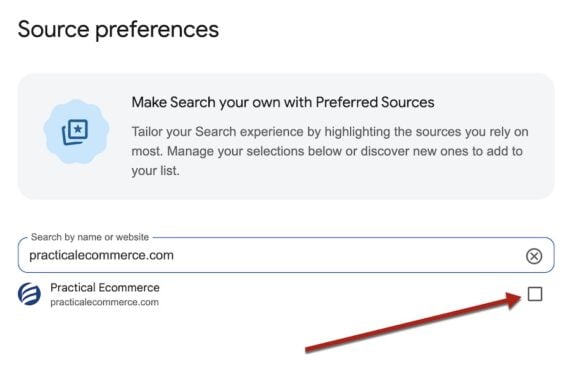
The mechanism for designating a preferred source is relatively straightforward, though its implementation requires a degree of user guidance. Google provides a unique URL for each domain, formatted as https://google.com/preferences/source?q=yourdomain.com. When a logged-in Google user clicks this link, they are presented with a prompt to add the specified website as a preferred source. This prompt necessitates an explicit action: the user must check a box next to the domain name to confirm their selection. This explicit opt-in process underscores Google’s commitment to user control and data privacy, ensuring that source preferences are deliberately chosen rather than passively assigned.

The effectiveness of this feature hinges on website owners actively communicating its existence and benefits to their audience. Encouraging users to add a site as a preferred source involves more than just sharing the link. It requires clear instructions and a compelling rationale. For instance, a website might explain: “Help us shape your search experience! Click this link to add [Your Website Name] as a preferred source in Google. Simply click the link and then check the box next to our domain.” This proactive approach is crucial for overcoming the unintuitive nature of the opt-in process and maximizing the adoption rate.
The Strategic Importance of Preferred Sources
The introduction of “preferred sources” aligns with Google’s overarching strategy to evolve search towards a more personalized and user-centric experience. In a statement accompanying the announcement of preferred sources, Google emphasized: “When you come to Search, you’re looking for information you can trust from the sources, websites, and creators you value most.” This statement underscores a fundamental shift in search engine philosophy, moving beyond mere keyword matching to a more nuanced understanding of user intent and the credibility of information providers.
Being designated as a preferred source offers tangible benefits:
- Enhanced Visibility: Content from preferred sources is more likely to be featured or prominently displayed within AI Overviews and AI Mode, increasing its exposure to users seeking direct answers.
- Increased User Engagement: The visual indicator of a preferred source can foster a sense of familiarity and trust, encouraging users to click through to the website for more in-depth information.
- Strengthened Ecosystem Trust: By allowing users to curate their information sources, Google reinforces its commitment to a diverse and trustworthy information landscape. This can lead to a more robust and reliable search environment for everyone.
A Timeline of Google’s Personalized Search Initiatives
The concept of personalized search within Google is not a recent development. Its evolution can be traced through several key milestones:

- Early Personalization (Pre-2010s): Google began incorporating basic personalization signals, such as search history and location, to tailor results. This was often subtle, with minor reordering of search results based on past user behavior.
- “Top Stories” and Knowledge Graph (Early 2010s): The introduction of “Top Stories” in search results for breaking news and the development of the Knowledge Graph aimed to provide richer, more direct answers, often surfacing information from authoritative sources. This laid the groundwork for more structured content presentation.
- RankBrain and AI Integration (Mid-2010s onwards): Google’s increasing reliance on machine learning, notably with RankBrain, allowed for a more sophisticated understanding of query intent and content relevance. This paved the way for more complex AI-driven features.
- Featured Snippets and Direct Answers (Late 2010s): The widespread adoption of featured snippets, which directly answer a user’s question at the top of the search results page, demonstrated Google’s commitment to providing immediate value.
- AI Overviews and AI Mode (Early 2020s): The most recent advancements, AI Overviews and AI Mode, represent a significant leap in AI’s role in search. These features aim to synthesize information from multiple sources into comprehensive, AI-generated responses. The “preferred sources” feature is a direct response to the need for users to have more control over the information presented within these advanced AI functionalities.
This chronological progression highlights Google’s consistent drive to refine the search experience, moving from simple relevance ranking to a more nuanced and user-empowered system. The “preferred sources” feature is a natural extension of this trajectory, empowering users to actively participate in shaping the AI-generated search landscape.
Supporting Data and Industry Reactions
While specific, publicly released data on the adoption rates of Google’s “preferred sources” feature is not yet available, the underlying principle of user preference influencing search visibility is well-established. Studies on user behavior consistently show that trust and familiarity play a significant role in content consumption. For instance, a 2023 report by Statista indicated that over 70% of consumers trust online reviews and recommendations from sources they recognize and value. This sentiment naturally extends to how users interact with search engines.
Industry observers have largely viewed the “preferred sources” feature as a positive development for website owners who can successfully engage their audience. Experts in search engine optimization (SEO) have noted that this feature provides a new avenue for building direct relationships with users and encouraging loyalty. For content creators, particularly those in niche markets or with highly specialized knowledge, the ability to be flagged as a preferred source can significantly amplify their reach and authority.
However, some concerns have been raised regarding potential implications for smaller websites or those less adept at digital marketing. If the adoption of preferred sources becomes a significant ranking factor, it could exacerbate existing inequalities in online visibility, potentially making it harder for newer or less established sites to gain traction. The onus will be on Google to ensure that the algorithms governing AI Overviews and AI Mode continue to prioritize diverse and high-quality information, even from sources that may not have a large user base actively designating them as preferred.
Broader Impact and Future Implications
The “preferred sources” feature is more than just a minor tweak to Google Search; it represents a fundamental shift in how users can interact with and influence the information they receive. By granting users the power to actively curate their preferred information channels, Google is fostering a more transparent and user-controlled search environment.
For businesses and content creators, this feature presents a significant opportunity to cultivate deeper audience relationships. Websites that can effectively communicate the value of being a preferred source and guide their users through the opt-in process are likely to see tangible benefits in terms of increased visibility and organic traffic. This could lead to a more direct and engaged relationship between content providers and their audience, bypassing some of the traditional complexities of search engine algorithms.
Looking ahead, the success and evolution of “preferred sources” will likely depend on several factors:
- User Adoption and Engagement: The long-term impact of this feature will be determined by how widely users embrace it and how consistently they utilize it to personalize their search experience.
- Google’s Algorithmic Adjustments: Google will undoubtedly continue to refine how preferred sources influence AI Overviews and AI Mode, potentially incorporating other signals of authority and trustworthiness.
- Competition and Innovation: The broader search landscape is constantly evolving. Competitors may introduce similar user-centric personalization features, driving further innovation in this space.
In conclusion, Google’s “preferred sources” feature, while not entirely unprecedented, marks a significant step in the evolution of personalized search. It empowers users with greater control over the information they consume, while simultaneously offering website owners a valuable tool for increasing visibility and fostering audience loyalty. As AI continues to transform the search experience, features like “preferred sources” will play an increasingly crucial role in shaping a more user-centric and trustworthy online information ecosystem.