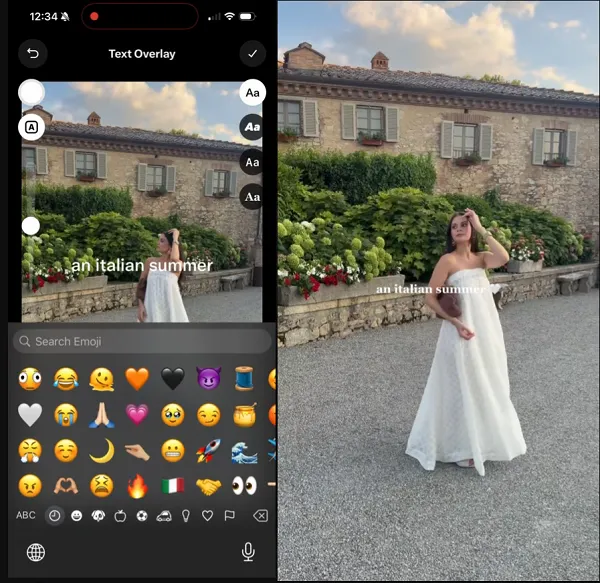
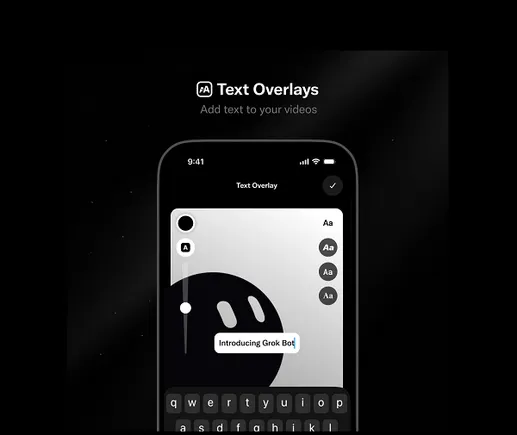
X, the platform formerly known as Twitter, announced on Friday the rollout of a new feature for its iOS application, allowing users to incorporate text and emoji overlays directly onto their video uploads. This update marks a significant, albeit incremental, step in X’s ongoing efforts to bolster its video editing capabilities, bringing them closer in line with the advanced functionalities long offered by competing social media platforms. The introduction of these direct-in-app editing tools is designed to empower users with more versatile content creation options, fostering a richer and more engaging video experience within the platform.
The announcement, disseminated via X’s official channels and demonstrated by X engineer Allegra Jacchia, showcased the straightforward functionality of the new overlay option. Users can now seamlessly add custom text and a variety of emojis to their video clips, positioning them strategically on screen to enhance visual storytelling or provide contextual information. While seemingly a minor addition in the grander landscape of sophisticated video editing suites, this feature represents a notable enhancement for X’s native tools, which have historically lagged behind the comprehensive offerings of platforms like TikTok, Instagram, and Snapchat. For creators on X, this means a reduced dependency on third-party applications for basic yet impactful visual augmentations, streamlining the content production workflow for iOS users.
The Genesis of X’s Video Ambitions
The current drive to improve video capabilities on X is not a spontaneous development but rather a continuation of a strategic pivot articulated by the platform’s leadership. Dating back to early 2024, former X chief executive Linda Yaccarino emphatically championed a vision for X to evolve into a "video-first platform." This strategic imperative was largely a response to a discernible surge in video engagement among X’s user base, reflecting a broader industry trend toward video consumption. Yaccarino repeatedly underscored this ambition, signaling a concerted effort to prioritize video content and its consumption across the platform.
The rationale behind this shift was multifaceted. In an increasingly visual and dynamic digital landscape, video content has emerged as a dominant force, captivating audiences and driving unprecedented levels of engagement. For X, embracing a video-first approach was seen as crucial for user retention, attracting new demographics, and unlocking new revenue streams through advertising and creator monetization. The goal was to transform X from a predominantly text-based microblogging service into a multimedia hub capable of competing with established video-centric platforms.
A Chronology of Video Initiatives and Their Outcomes
X’s journey toward becoming a video-first platform has been marked by a series of initiatives, some met with limited success.
May 2023: X announced a slate of "X Original" video programming. This ambitious venture involved commissioning celebrity-led video projects featuring prominent personalities such as Khloe Kardashian and Tucker Carlson. The strategy was to attract high-profile creators and premium content, thereby drawing larger audiences and establishing X as a destination for exclusive video.
Mid-to-Late 2023: Alongside the original programming, X also introduced an updated video editor, aiming to provide more native creation tools for its users. This update was intended to make it easier for individuals to produce and upload video content directly on the platform, reducing friction in the creative process. Features introduced during this period were incremental, focusing on basic editing functionalities.
Early 2024: Despite the significant investment in "X Original" programming, most of these shows reportedly "faded away, quietly slinking into the ether of the platform with little audience response." This outcome suggested that merely injecting high-budget content might not be sufficient to alter user behavior or platform perception without a robust underlying video ecosystem and user-friendly creation tools.
Ongoing: The rise in video consumption on X, while significant, has been attributed less to X’s specific initiatives and more to broader market trends. The global explosion of video content creation and consumption across social media has naturally led to increased video engagement on X. Moreover, X’s algorithm has been observed to actively amplify video posts, a deliberate strategy to increase time spent on the app and capitalize on the prevailing video trend. However, critics argue that the platform has not fundamentally transformed its core identity or user experience to truly embody a "video-first" ethos.
The introduction of text and emoji overlays for iOS video uploads, while welcome, underscores this ongoing journey. It addresses a fundamental capability that should have been present much earlier, highlighting the distance X still needs to cover to match the comprehensive video features available on other leading social media applications.
Industry Benchmarks and the Competitive Landscape
The addition of text and emoji overlays, while new for X, is a standard and long-established feature on nearly all major social media platforms that prioritize video. Platforms like TikTok, Instagram Reels, Snapchat, and YouTube Shorts have set a high bar for in-app video editing, offering a vast array of tools that go far beyond basic text and emoji overlays.
TikTok, for instance, pioneered many of the short-form video editing trends, including an extensive library of text styles, animated effects, stickers, filters, sound effects, and music integration. Its intuitive editor allows for precise timing of overlays, transitions, and multi-clip editing, making it a powerful tool for casual and professional creators alike.
Instagram Reels quickly followed suit, integrating similar robust editing capabilities, including custom text fonts, colors, animations, interactive stickers (polls, quizzes), and seamless audio syncing with its expansive music library. These features are deeply embedded in the creative workflow, enabling users to produce highly polished and engaging content entirely within the app.
Snapchat, known for its pioneering role in ephemeral content, has always offered a rich suite of visual overlays, including augmented reality (AR) lenses, bitmojis, geo-filters, and dynamic text options, allowing for highly personalized and interactive video messages.
Even professional-grade mobile editing apps like CapCut, often used in conjunction with these social platforms, provide an even more granular level of control over text animation, layering, special effects, and audio mixing.
The delayed introduction of such a fundamental feature on X highlights its historic focus on text-based communication and the significant technical and strategic catch-up required to compete effectively in the video domain. Users today expect sophisticated, intuitive, and feature-rich editing tools directly within the platforms they use, and X’s new offering, while a step forward, merely scratches the surface of these expectations.
Inferred Intentions and Strategic Implications
While X has not issued a detailed press release outlining the strategic thinking behind this specific feature, the intentions can be logically inferred from its stated ambitions and industry trends.
Enhanced Creator Empowerment: By providing native text and emoji overlays, X aims to empower its creators to produce more visually appealing and informative video content without leaving the application. This reduces friction in the creation process, potentially encouraging more users to upload videos directly to X and spend more time on the platform.
Increased Engagement: More engaging video content naturally leads to higher viewer retention and interaction. Text overlays can provide context, highlight key points, add humor, or direct viewer attention, thereby enriching the overall viewing experience and increasing the likelihood of likes, comments, and shares.

Closing the Feature Gap: This update is a direct response to the glaring feature disparity between X and its competitors. It signals X’s commitment to gradually build out a more competitive suite of video tools, acknowledging the industry standard for in-app video editing.
Monetization Potential: A more robust video ecosystem is critical for X’s long-term monetization strategy. Engaging video content attracts more users and extends session durations, which in turn creates more opportunities for advertising impressions. Furthermore, improved creator tools can foster a more vibrant creator economy on X, potentially leading to new revenue sharing models or premium content subscriptions.
Reinforcing "Video-First" Vision: Despite the slow pace, each video-related update, no matter how small, serves to reinforce the platform’s declared "video-first" ambition. It’s a continuous message to users and advertisers that X is serious about video, even if the execution is iterative.
Broader Impact and Future Outlook
The introduction of text and emoji overlays for iOS video uploads carries several implications for X as a platform, its creators, and its competitive standing.
For Creators: This feature offers immediate practical benefits. Content creators, particularly those on iOS, will find it easier to add quick annotations, captions, or expressive elements to their videos without needing to export to external editing software. This could be especially useful for breaking news, live commentary, or quick updates where speed and simplicity are paramount. It could also encourage a wider range of users, including those less tech-savvy, to experiment with video creation. However, professional creators who rely on advanced editing might still prefer dedicated video editors for more complex tasks.
For X as a Platform: This update represents an important, albeit incremental, step in X’s journey to become a more video-centric platform. It addresses a basic functionality that has been a significant gap. While it won’t single-handedly transform X into a video powerhouse, it contributes to building a more comprehensive toolkit. The challenge for X remains in not just adding features, but in integrating them seamlessly into a compelling user experience that differentiates it from established video platforms. The platform still needs to consider broader aspects like extensive music libraries, advanced filters, AR effects, multi-clip editing, and robust analytics for creators to truly foster a thriving video ecosystem.
Competitive Landscape: The move signals X’s continued intent to challenge the dominance of platforms like TikTok and Instagram in the short-form video space. However, X’s approach appears to be a gradual catch-up rather than a disruptive innovation. The platform will need to accelerate its development of video features and refine its overall video strategy to carve out a significant niche in an already saturated market. The perception among users that X is still "behind" in video editing capabilities persists, and overcoming this will require consistent, impactful updates.
Advertising and Monetization: More visually appealing and engaging videos can translate into higher advertising inventory and better performance for advertisers. As videos become more dynamic and interactive with overlays, they can capture viewer attention more effectively, leading to improved click-through rates and brand recall. This is crucial for X’s financial health, particularly as it seeks to diversify its revenue streams beyond traditional advertising.
In conclusion, X’s introduction of text and emoji overlays for iOS video uploads is a welcome development that addresses a long-standing deficiency in its creator tools. It aligns with the platform’s strategic ambition to become "video-first" and acknowledges the prevailing trends in social media consumption. While it’s a significant improvement for X’s internal capabilities, it also highlights the considerable ground the platform still needs to cover to genuinely compete with the robust, feature-rich video ecosystems of its established rivals. The success of this and future video initiatives will depend on X’s ability to not only add features but also to foster a creative environment that truly resonates with a broad spectrum of video creators and consumers.