

The digital marketing landscape in 2025 has reached a critical inflection point where the traditional methods of tracking user behavior are no longer sufficient to sustain high-growth conversion rates. As major browsers continue to phase out third-party cookies and privacy regulations like GDPR and CCPA become more stringent, enterprises are pivoting toward the collection of zero-party data—information that customers intentionally and proactively share with a brand. Within this context, the website poll, long dismissed as a disruptive pop-up, has been reimagined as a sophisticated instrument for qualitative research and behavioral analysis.
Industry experts at Invesp, a leading firm in conversion rate optimization (CRO), suggest that the efficacy of a poll is determined not by its presence, but by its timing, phrasing, and alignment with behavioral data. While the average website conversion rate often hovers between 2% and 5%, the remaining 95% of traffic remains an enigma to many marketers. Strategic polling seeks to decode this silent majority by asking targeted questions at precise moments in the user journey, transforming vague feedback into actionable business intelligence.
The Strategic Shift Toward Behavioral Research
The modern approach to website polling marks a departure from the “gut-feeling” methodology that characterized early digital marketing. Historically, marketers would deploy polls based on assumptions about what users might find confusing. In 2025, the process is increasingly data-driven, beginning with a comprehensive analysis of existing user behavior before a single question is drafted.
Before launching a poll, professional optimizers conduct a series of research activities, including heuristic evaluations, analytics assessments, and the review of session replay videos. This sequence ensures that the poll serves to validate a hypothesis rather than simply fish for random insights. For example, if session recordings reveal that users are lingering on a checkout page without completing a transaction, a poll can be deployed specifically on that page to ask, “What is preventing you from completing your order today?” This targeted inquiry moves beyond general satisfaction metrics and addresses specific conversion barriers.
Khalid Saleh, a prominent figure in the CRO industry and founder of Invesp, emphasizes that polls are not a replacement for deep qualitative research like one-on-one interviews, but rather a tool to sharpen those insights. “Polls give you a few data points from many people, and that is their power,” Saleh noted. By aggregating small bits of information from a large sample size, companies can determine if a trend identified in a small focus group holds true across their entire visitor base.
Chronology of a Successful Polling Campaign
The deployment of an effective poll follows a logical progression that begins long before the user sees a dialogue box.
- Phase One: Quantitative Analysis. Marketers identify “leaks” in the conversion funnel using tools like Google Analytics 4. High exit rates on specific pages or low click-through rates on primary Call-to-Action (CTA) buttons serve as the initial red flags.
- Phase Two: Qualitative Observation. Using heatmaps and session replays, researchers observe how users interact with the problematic pages. This phase identifies the “what”—the specific physical actions users are taking.
- Phase Three: Hypothesis Formation. Based on the observations, the team forms a theory. If users are scrolling past a pricing table, the hypothesis might be that the pricing is unclear or the value proposition is missing.
- Phase Four: Poll Design and Targeting. The poll is crafted to test the hypothesis. It is targeted toward a specific segment (e.g., returning visitors on mobile devices) to ensure the feedback is relevant.
- Phase Five: Validation and Implementation. The responses are analyzed to see if they confirm the hypothesis. If a significant percentage of users cite a lack of shipping information as a barrier, the company can then implement a permanent site change to address this.
Segmenting the Buyer’s Journey
A critical component of modern polling is the recognition that not all visitors are at the same stage of the purchasing cycle. Asking a first-time visitor on the homepage for a product review is not only ineffective but also intrusive. Conversely, asking a repeat customer what originally motivated them to choose the brand can provide invaluable “hook” data.
Digital marketers now segment their polling strategy into five distinct stages of the buyer’s journey:
- Awareness Stage: Visitors are just realizing they have a problem or need. Polls here focus on how they found the site and what they hope to achieve.
- Interest Stage: Users are actively researching solutions. Questions here target the specific features or information they are looking for.
- Desire Stage: The visitor is comparing the brand against competitors. Polls at this stage aim to uncover “Fears, Uncertainties, and Doubts” (FUDs).
- Action Stage: This occurs during the checkout or sign-up process. Polls are used to identify immediate friction points that cause cart abandonment.
- Post-Purchase Stage: This involves existing customers. Research here focuses on satisfaction and the likelihood of referral.
By using platforms like HubSpot or specialized CRO tools, companies can create funnel-type dashboards that segment traffic by these stages, allowing for hyper-targeted polling that feels like a natural part of the user experience rather than an interruption.
Categorizing Data-Driven Questions
The sophistication of 2025 polling is further evidenced by the categorization of questions into six specific functional areas: Motivators, Barriers, Hooks, Missing Content, Feedback, and Satisfaction.
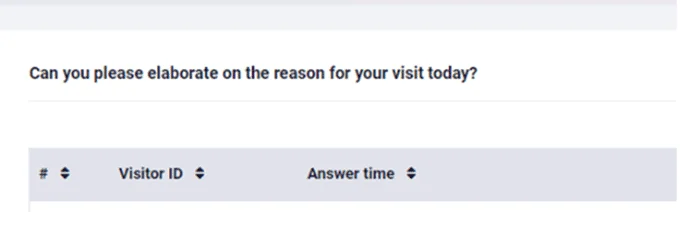
Motivators help brands understand the underlying reason for a visit. In one case study, an e-commerce client observed users scrolling aimlessly on landing pages. By deploying a poll asking, “What brought you to our site today?”, the company discovered that users were looking for a specific secondary service that was buried in the navigation. Surfacing that service led to an immediate lift in engagement.
Barriers are the psychological or technical hurdles preventing a conversion. When Google Analytics shows a high exit rate on a funnel page, barrier-focused polls can ask, “Is there anything preventing you from completing your purchase?” Common responses often include concerns about security, shipping costs, or technical glitches that were previously undetected by the internal team.
Hooks are the persuasive elements that successfully convert a visitor. By polling returning customers about why they chose a specific product over a competitor’s, brands can identify their unique selling propositions (USPs). This data is then used to rewrite headlines and marketing copy to emphasize the features that truly resonate with the audience.
Uncovering Missing Content is essential for maintaining an informative user interface. Usability tests often reveal that participants cannot find specific information. A poll can validate if this is a widespread issue by asking, “Were you able to find all the information you were looking for today?” This often reveals that critical data—such as sizing charts or warranty details—is not as visible as the design team assumed.
Industry Implications and the Rise of Zero-Party Data
The shift toward intentional polling is a direct response to the “privacy-first” era of the internet. As consumers become more protective of their data, they are simultaneously more willing to provide it if they believe it will lead to a better, more personalized experience. This is the essence of zero-party data.
Data from recent industry reports suggests that 73% of consumers are willing to share more personal information if it makes their shopping experience easier. However, this trust is fragile. If a website uses intrusive, irrelevant polls, the bounce rate can increase by as much as 20%. Therefore, the professionalization of polling is not just about conversion; it is about brand reputation.
The broader implications for the digital economy are significant. Companies that master the art of the “thoughtful poll” are finding themselves less dependent on expensive, third-party data sets. They are building proprietary databases of customer preferences and pain points that competitors cannot easily replicate. This creates a “feedback loop” where the website constantly evolves based on direct user input, leading to a sustainable competitive advantage.
Conclusion: Polls as a Mirror of Truth
In conclusion, the website poll has evolved from a simple feedback mechanism into a cornerstone of modern Conversion Rate Optimization. By integrating polls with quantitative data and behavioral analysis, businesses in 2025 are able to move past the “what” of user behavior and deeply understand the “why.”
As the digital landscape continues to fragment, the ability to collect direct, honest feedback from users remains one of the most powerful tools in a marketer’s arsenal. When executed with precision and respect for the user’s time, polls do not function as noise; they act as a mirror, reflecting the reality of the user experience and providing a roadmap for meaningful improvement. The organizations that thrive in this era will be those that stop guessing and start asking, using data to lead the way toward a more intuitive and user-centric web.







