
 rifanmuazin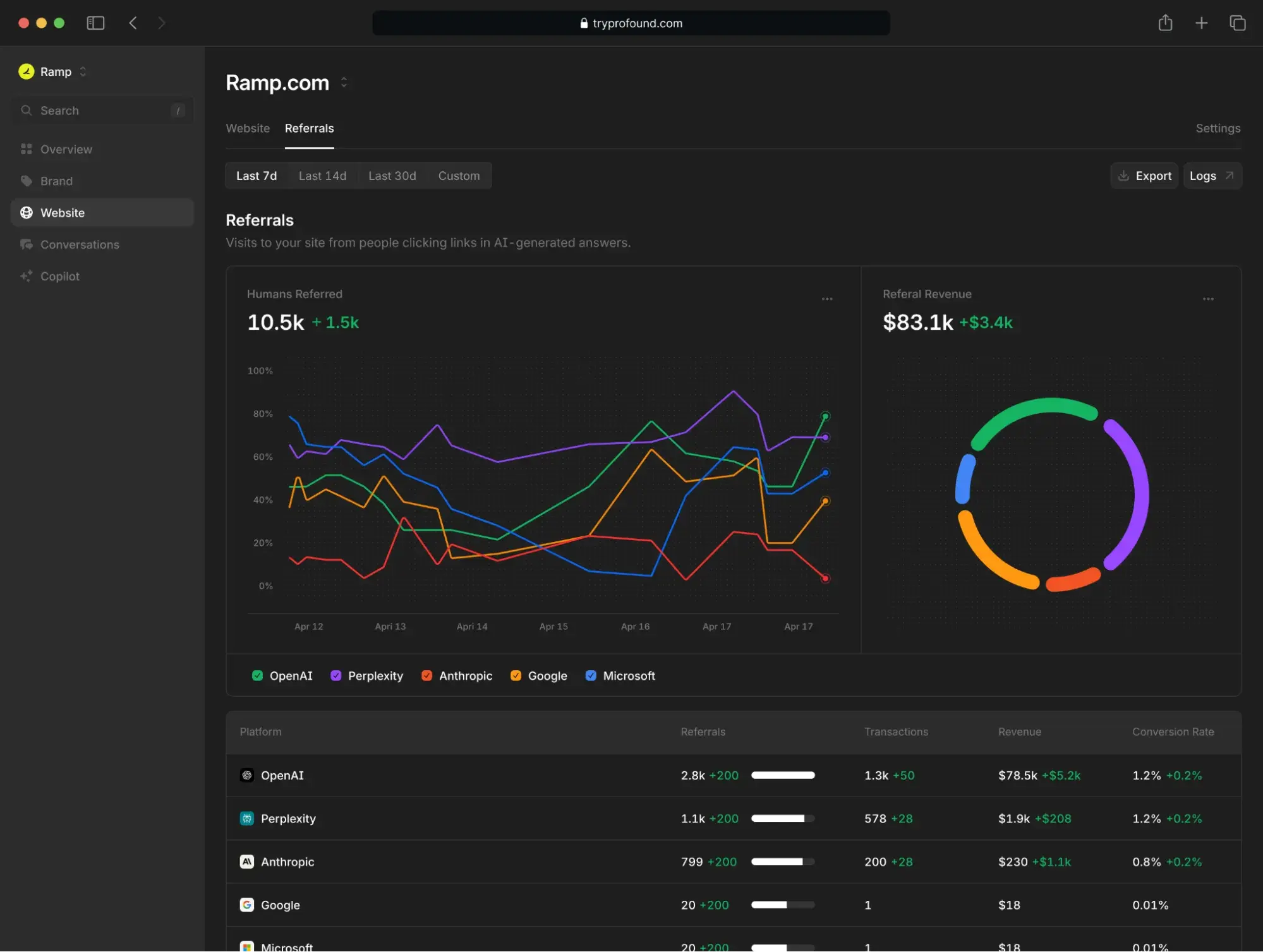
The digital landscape is undergoing a profound transformation, driven by the rapid ascendancy of generative artificial intelligence. As users increasingly turn to AI-powered answer engines like ChatGPT, Gemini, and Perplexity for synthesized responses rather than traditional lists of links, the imperative for brands to optimize their visibility in this new environment has become paramount. This shift has given rise to Answer Engine Optimization (AEO), a specialized discipline that demands new tools for effective measurement and strategy. AEO rank trackers are emerging as indispensable investments for marketers seeking to gauge their brand’s presence, influence, and sentiment within AI-generated answers. These sophisticated tools move beyond conventional SEO metrics, focusing instead on critical indicators such as citations, mentions, share of voice, and the overall sentiment surrounding a brand within AI-curated content.
The Evolution of Search: From Keywords to Conversational AI
To fully appreciate the significance of AEO, it is essential to understand the journey of information retrieval on the internet. In its nascent stages, the web relied heavily on directories and simple keyword matching. The advent of sophisticated search engines like Google, powered by algorithms such as PageRank, revolutionized access to information by organizing web pages based on relevance and authority, presenting results as ranked lists of "blue links." This era defined traditional Search Engine Optimization (SEO), where the primary goal was to secure top positions on the Search Engine Results Pages (SERPs) for specific keywords, driving traffic through clicks and impressions.
Over the past decade, search began to evolve towards semantic understanding, attempting to grasp user intent rather than just keywords. Features like knowledge panels, featured snippets, and "People Also Ask" sections started to provide direct answers, reducing the necessity for users to click through to a website. This marked an early phase of what some termed "zero-click search."
The most recent and impactful evolution, however, has been the widespread deployment of large language models (LLMs) and generative AI in consumer-facing applications. Platforms like OpenAI’s ChatGPT, Google’s Gemini, Anthropic’s Claude, and Perplexity AI do not merely present a list of links; they synthesize information from various sources across the web, generating coherent, narrative responses. This fundamental architectural difference in how information is presented necessitates a wholly new approach to optimization and, crucially, to measurement. The shift from a "search engine" to an "answer engine" paradigm has redefined the rules of digital visibility.
Understanding Answer Engine Optimization (AEO)

Answer Engine Optimization (AEO) is the strategic process of optimizing content and brand presence to appear prominently and favorably within AI-generated responses. Unlike SEO, which primarily targets website rankings in a list, AEO aims for inclusion and positive representation within the synthesized narratives produced by AI models. This means focusing on the factors that AI engines prioritize when constructing answers: source authority, relevance, factual accuracy, sentiment, and the overall informational value of content.
The goal of AEO is not just to be found, but to be referenced and trusted by AI, leading to direct citations, explicit brand mentions, and a strong share of voice within conversational AI interactions. As AI models become increasingly integrated into daily information seeking—from voice assistants to integrated AI in web browsers—a brand’s AEO performance will directly impact its awareness, reputation, and even lead generation in ways distinct from traditional web traffic. Industry analysts predict that a significant portion of future online interactions will occur within AI interfaces, making AEO an unavoidable frontier for any brand.
The Indispensable Role of AEO Rank Trackers
Given the unique nature of AI-generated answers, traditional SEO rank trackers are fundamentally ill-equipped to measure AEO success. An SEO tool might tell you where your website ranks for "best CRM for small businesses," but it cannot tell you if your brand is mentioned or cited in ChatGPT’s answer to the same query. This is where AEO rank trackers become indispensable. They are purpose-built to navigate the complexities of AI responses, providing metrics that reflect brand visibility in this new format.
AEO rank trackers systematically monitor AI engines to detect when and how a brand appears in their synthesized responses. They consider a range of signals that are distinct from those tracked by SEO tools:
- Citations: These are explicit links or direct attributions to a specific source (e.g., "According to HubSpot’s blog…"). A citation signifies that the AI engine treated the content as a credible and authoritative source, often linking back to the original material. This is the highest form of AEO visibility, implying strong trust from the AI.
- Mentions: A simple mention occurs when an AI engine names a brand without providing a direct link or explicit attribution (e.g., "…popular CRMs include Salesforce and HubSpot."). While not a direct link, a mention still indicates that the brand has sufficient presence and relevance in the broader information ecosystem to surface in the AI’s narrative. It contributes to brand awareness and recall.
- Share of Voice (SoV): This metric quantifies how frequently a brand is cited or mentioned in AI answers compared to its competitors for a given set of prompts. A high SoV indicates strong competitive advantage in the AI space.
- Sentiment Analysis: AI answers can carry a positive, neutral, or negative sentiment towards a brand. AEO trackers analyze the linguistic context surrounding brand mentions to assess this sentiment, which is crucial for reputation management and understanding brand perception.
- Average Position: Similar in concept to SEO’s average position, this metric indicates where a brand’s citation or mention typically appears within the structure of an AI-generated answer (e.g., early in the response, towards the end, or as part of a list). A higher average position suggests greater prominence.
According to recent market trends, the adoption of generative AI tools has skyrocketed, with millions of users interacting with these platforms daily. This widespread usage underscores the growing importance of AEO. Without dedicated AEO rank trackers, businesses operate blind, unable to assess their performance in an increasingly significant channel for information dissemination and brand discovery.
Divergence from Traditional SEO Tracking

The fundamental difference between AEO and SEO tracking lies in the nature of their respective outputs. Traditional SEO tools are designed for a "list-based" internet, where search engines return a ranked sequence of webpages. Their metrics—keyword rankings, organic clicks, impressions, click-through rates (CTR)—are all tied to a specific page’s position within that list.
AI answer engines, conversely, operate on a "synthesis-based" model. They ingest vast amounts of information, process it, and generate a unique, coherent narrative. This narrative is not a list of pages but a comprehensive answer that may or may not include explicit references to source material. Therefore, the signals measured by AEO trackers are entirely different:
- SEO: Focuses on where a website appears in a list and how many people click on that link.
- AEO: Focuses on whether a brand is included in a synthesized answer, how it is referenced (citation vs. mention), the context (sentiment), and its prominence (share of voice, average position).
This distinction is not merely academic; it has profound strategic implications. A brand could rank #1 for a specific keyword in traditional search but be entirely absent from an AI’s answer to the same query. Conversely, a brand might not rank highly in traditional search but be consistently cited as an authority by AI engines due to its comprehensive and trustworthy content. Relying solely on SEO metrics in the age of generative AI provides an incomplete, and potentially misleading, picture of a brand’s overall digital visibility.
Strategic Imperatives: What to Seek in an AEO Rank Tracker
Selecting the right AEO rank tracker is a critical decision that hinges on understanding the evolving capabilities of these tools. Not all trackers are created equal, and feature gaps can significantly impact the depth and utility of the insights derived. When evaluating platforms, marketers should prioritize several must-have features:
- Multi-Engine Coverage: The AI landscape is fragmented, with several prominent answer engines (ChatGPT, Gemini, Perplexity, Claude, Copilot, Grok). A robust AEO tracker must monitor visibility across multiple, if not all, relevant platforms to provide a comprehensive view of brand presence.
- Granular Citation and Mention Analysis: The ability to distinguish between explicit citations (with links) and simple mentions (without links) is vital. Furthermore, the tool should provide details about the specific URLs, content types, and even sections of content that are being referenced.
- Sentiment Tracking: Understanding the emotional tone surrounding brand mentions in AI answers is crucial for brand management. A tracker should be able to identify positive, neutral, or negative sentiment.
- Share of Voice (SoV) & Competitor Benchmarking: AEO is inherently competitive. The ability to compare a brand’s citation rate, mention frequency, and sentiment against direct competitors for the same prompts offers invaluable strategic insights.
- Historical Data and Trend Analysis: Tracking performance over time allows marketers to identify trends, measure the impact of content strategies, and adapt to changes in AI models or algorithms.
- Prompt Management and Segmentation: The ability to define, organize, and refresh prompts is essential. Advanced tools may offer geo-targeting, language segmentation, or even persona-level prompt parameters to understand how visibility varies across different user contexts.
- Integration Capabilities: Seamless integration with existing marketing tools (e.g., CRM, content management systems) can streamline workflows, allowing for data-driven content creation and personalized prompt suggestions.
These features are not merely abstract checkboxes; they translate directly into actionable workflows. For instance, multi-engine coverage ensures a holistic view, while citation analysis empowers content teams to reverse-engineer competitor success. Sentiment tracking allows PR and brand teams to proactively address negative perceptions, and historical data provides the basis for long-term strategy adjustments. When evaluating, it is advisable to leverage free trials to run a consistent set of prompts across different tools and compare the depth, accuracy, and usability of the results.
Transforming Insights into Actionable Content Strategy
The true power of an AEO rank tracker lies not just in data collection but in its capacity to inform and refine content strategy. Once data is flowing, marketers can transition from observation to proactive optimization.
A highly effective starting point is reverse-engineering competitor visibility. AEO trackers enable direct comparisons of citation rates and mention frequencies between a brand and its rivals for identical prompts. This competitive intelligence is invaluable. Marketers should identify prompts where a competitor is consistently cited while their own brand is not. The next step involves a deep dive into what is being cited: the specific URLs, content formats (e.g., long-form guides, research reports, comparison pages, expert interviews), and source categories (e.g., industry blogs, academic papers, product reviews) that the AI engine is drawing upon.
Common patterns often emerge from this analysis:
- Data-Rich Content: AI models frequently favor content that includes original research, statistics, case studies, or comprehensive data sets, as this information is perceived as authoritative and factual.
- Comprehensive Guides & Definitive Resources: Content that thoroughly covers a topic, providing detailed explanations, step-by-step instructions, or exhaustive comparisons, tends to be highly valued by AI for synthesis.
- Third-Party Validation & Endorsements: Mentions or citations in reputable industry publications, analyst reports, or expert reviews can significantly boost a brand’s authority in the eyes of an AI.
- Clarity and Conciseness: While comprehensiveness is key, AI models also prioritize content that is well-structured, easy to understand, and directly answers specific questions.
Turning this analysis into an action plan involves mapping identified gaps to specific content initiatives. This could entail publishing new comparative analyses, creating definitive guides based on proprietary data, refreshing outdated reports with current information, or strategically pursuing inclusion in authoritative third-party roundups. The objective is not to simply mimic competitors but to understand the underlying value proposition that the AI engine is rewarding and then create even superior content using a brand’s unique expertise and data. This proactive approach ensures that content is not just optimized for human readers but also for the intelligent systems that increasingly mediate information discovery.
Selecting the Right AEO Tool for Your Organization
Choosing the optimal AEO rank tracker goes beyond a simple feature comparison; it requires an alignment with a team’s operational workflows, budget constraints, and strategic priorities. Before committing to a platform, organizations should conduct an internal assessment by asking:
- What is our primary goal for AEO? (e.g., brand awareness, lead generation, reputation management, competitive intelligence).
- Which AI engines are most relevant to our audience? (e.g., Is ChatGPT sufficient, or do we need comprehensive coverage including Gemini, Perplexity, Claude?).
- What is our existing tech stack? (Are integrations with our CRM, CMS, or other marketing tools crucial?).
- What is our budget for AEO tools, and how does it compare to our overall marketing spend?
- Who will be using this tool, and what is their technical proficiency? (Ease of use and reporting clarity are important).
- How frequently do we need to refresh data and monitor performance?
A weighted scorecard approach can be highly effective here. Teams can list five to seven key criteria based on their answers to the above questions, assign a weight to each criterion based on its importance, and then rate each prospective tool on a scale (e.g., 1-5). This quantitative method helps to mitigate bias and surface the best fit, even when product demos can be highly persuasive. Utilizing free trials, as previously suggested, offers invaluable hands-on experience that no demo can fully replicate.
Leading AEO Rank Tracker Solutions in the Market
The AEO tool landscape is dynamic and rapidly evolving, with new platforms and features emerging regularly. However, several prominent solutions offer distinct advantages:
-
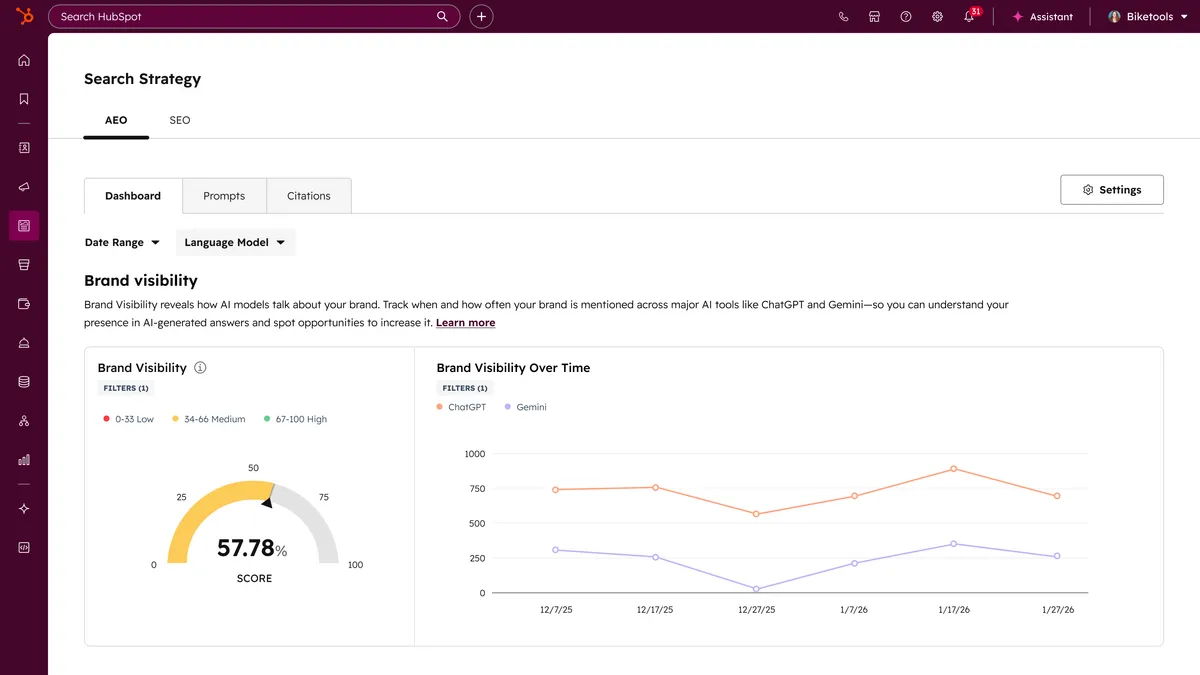
HubSpot AEO: Best suited for teams seeking integrated visibility tracking and content execution within a unified platform. HubSpot AEO tracks brand visibility, citations, share of voice, and sentiment across major AI engines like ChatGPT, Perplexity, and Gemini. Its strength lies in its deep integration with HubSpot’s CRM and Marketing Hub, allowing CRM data to inform prompt suggestions and connect AEO insights directly to content creation and customer journey mapping. This offers a holistic approach where AEO is not a siloed activity but an integral part of broader marketing efforts. HubSpot typically offers free trials, allowing users to track a set number of prompts.
-
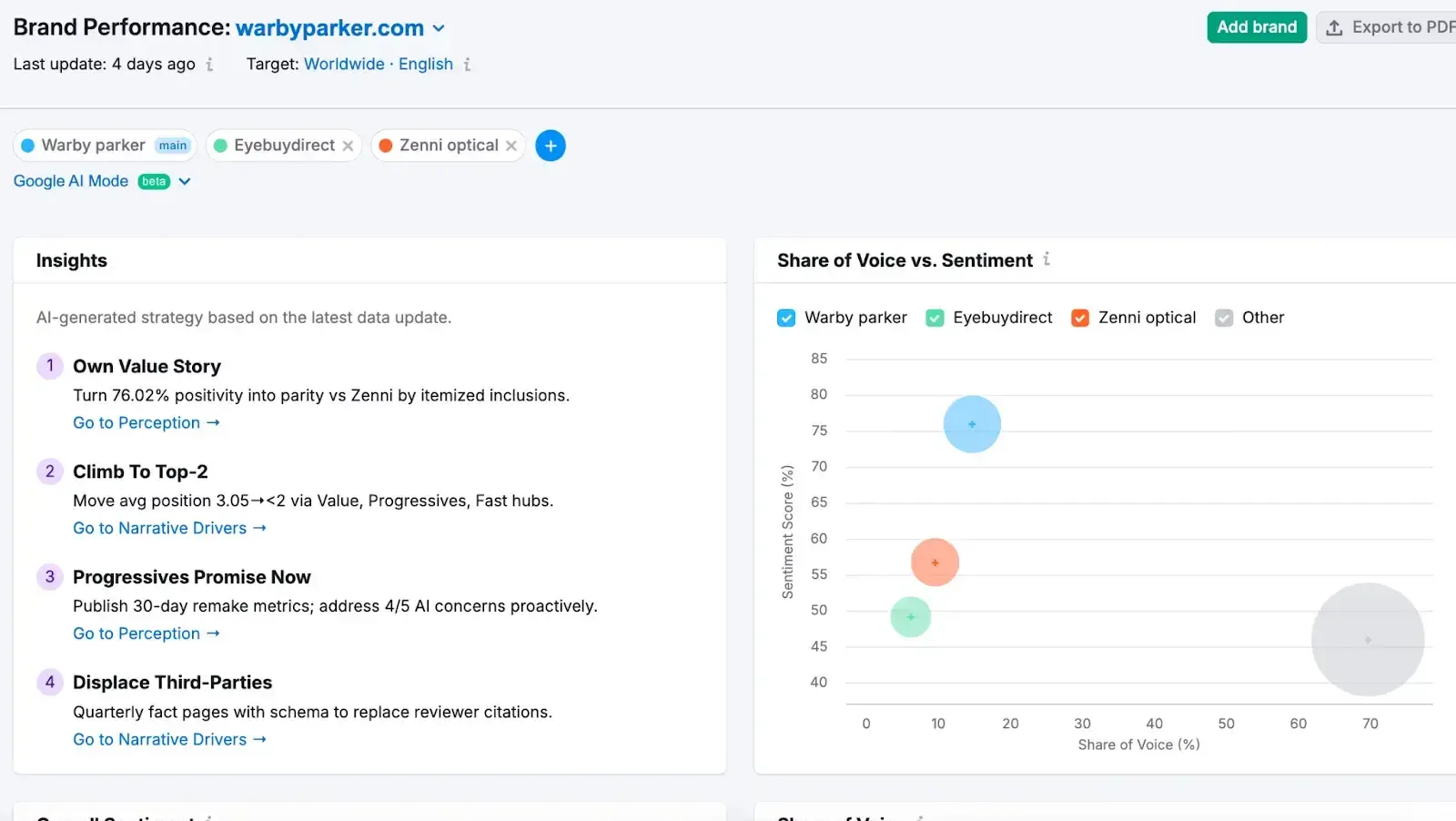
Semrush AI Visibility Toolkit: An excellent choice for SEO teams already entrenched in the Semrush ecosystem, looking to extend their capabilities into AEO. Semrush’s toolkit tracks brand mentions and sentiment across a wide array of platforms including ChatGPT, Google AI Mode and AI Overviews, Gemini, and Perplexity. Its "Average Position" metric provides a familiar concept for SEO professionals, indicating where a site’s citation typically appears within AI-generated responses. For existing Semrush users, this toolkit reduces tool sprawl and leverages familiar UI/UX.
-
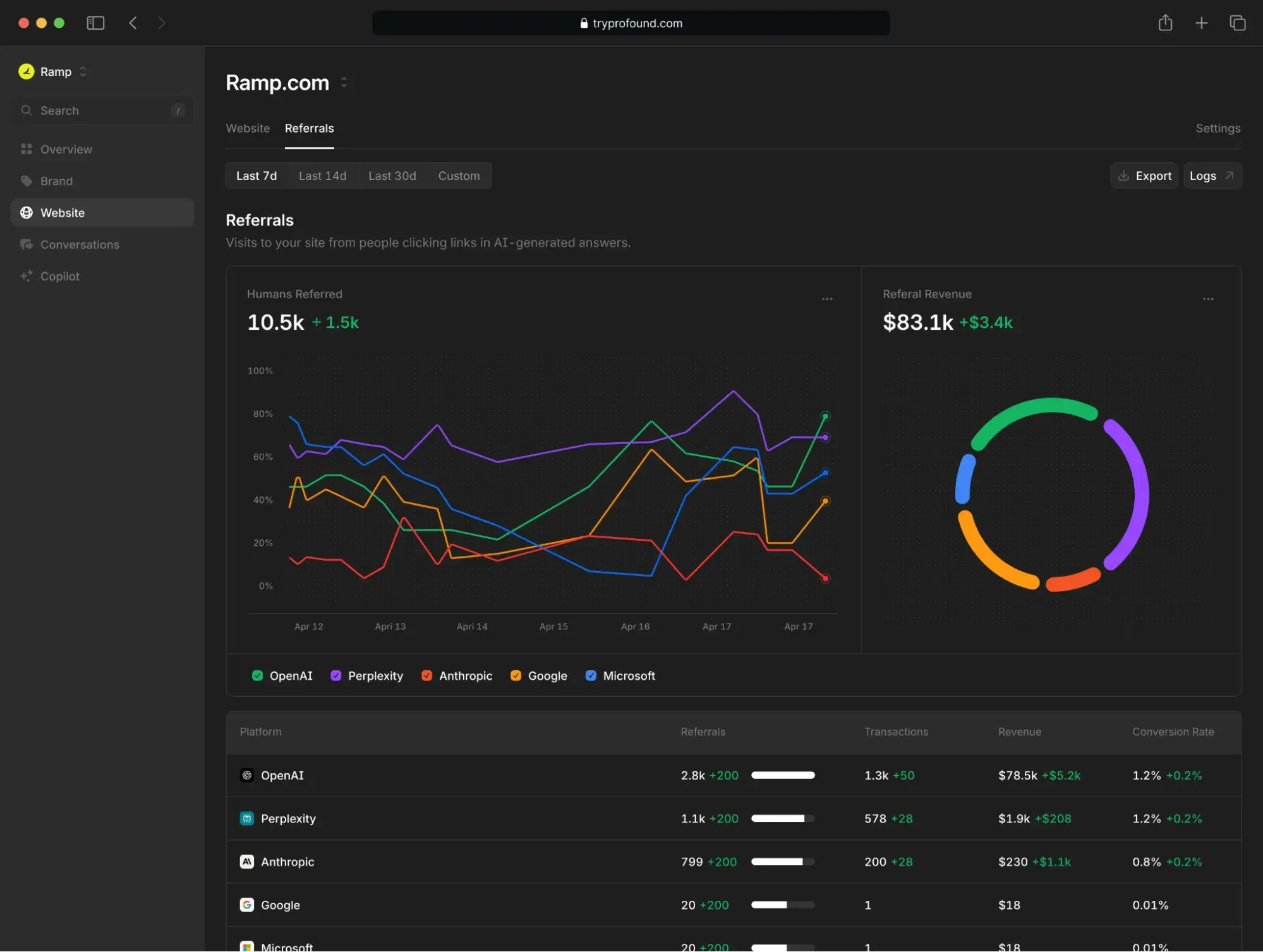
Profound: Positioned for enterprise teams requiring extensive analytics and broad AI engine coverage. Profound monitors up to ten answer engines, including ChatGPT, Gemini, Claude, Perplexity, Copilot, Grok, and DeepSeek. Its advanced features like "query fanout" and "prompt volumes" cater to organizations with complex data needs and high-volume tracking requirements. Profound also offers an "Average Position" metric and provides deep insights into referral traffic from AI sources, making it a powerful tool for large-scale operations focused on detailed performance attribution.
-
Otterly: Ideal for lean teams or those new to AEO tracking, offering a robust set of features without the complexity or cost of enterprise solutions. Otterly covers key engines such as ChatGPT, Perplexity, Google AI Overviews, and Copilot, with additional engines available as add-ons. It provides essential metrics like average brand position, sentiment tracking, and even offers an audit feature evaluating numerous factors influencing generative engine optimization. Its tiered pricing structure allows for scalability as a team’s AEO needs grow.
These examples represent a cross-section of the market, each with its own strengths. The final choice should always align with an organization’s specific strategic objectives, operational scale, and budgetary considerations, evaluated through the lens of the "must-have" features and a rigorous scorecard approach.
Frequently Asked Questions About AEO Rank Trackers
Do AEO rank trackers replace traditional SEO tools?
No, they are complementary. AEO and SEO tools measure fundamentally different aspects of digital visibility. SEO tools track where your website’s "blue link" appears in a ranked list on a traditional search engine results page, along with metrics like clicks and impressions. AEO trackers, conversely, measure citations, mentions, share of voice, and sentiment within AI-generated narrative responses. Most organizations will require both sets of tools to achieve a complete and accurate picture of their overall search visibility across the evolving digital landscape. Understanding how to find SERP features opportunities with SEO tools can complement the insights gained from AEO data.
How often should I refresh prompts and measurements?
A proactive approach involves reviewing prompt performance weekly to identify any sudden shifts in visibility, such as a new competitor appearing in answers or a drop in your brand’s citation rate following an AI model update. The prompt list itself should be reviewed and refreshed monthly. This ensures that the tracked queries remain relevant to your target buyers, whose questions and information needs can evolve with market changes, product cycles, and seasonal trends.
Can I measure persona-level visibility with AEO trackers?
Yes, some advanced AEO trackers offer capabilities for persona-level visibility through controls for geo-targeting, language, and audience segmentation. This allows marketers to understand how AI answers, and thus brand visibility, might differ based on a user’s location, language preferences, or inferred profile context. This feature is particularly valuable for businesses targeting diverse regional markets or distinct buyer personas, especially those investing in local SEO strategies, where AI answers can vary significantly by geography. It’s an important capability to confirm during the evaluation phase if granular audience insights are critical for your strategy.
What’s the simplest way to start if I have a limited budget?
For organizations with limited budgets or those just beginning to explore AEO, a highly recommended starting point is to utilize free AEO assessment tools. HubSpot’s AEO Grader, for example, provides a baseline AI visibility score without requiring a paid subscription. This offers an initial snapshot of a brand’s current standing in AI answers, helping to identify immediate opportunities and build a case for investing in a full-fledged AEO tracker. This initial assessment can provide crucial data points to justify further investment in dedicated AEO strategies and tools.
The rise of generative AI marks a new epoch in information retrieval and brand interaction. As AI answer engines become an increasingly dominant channel for content consumption, AEO is no longer a niche concern but a strategic imperative. Investing in sophisticated AEO rank trackers and integrating their insights into broader marketing and content strategies will be critical for maintaining competitive advantage and ensuring enduring brand visibility in this rapidly evolving digital frontier.









