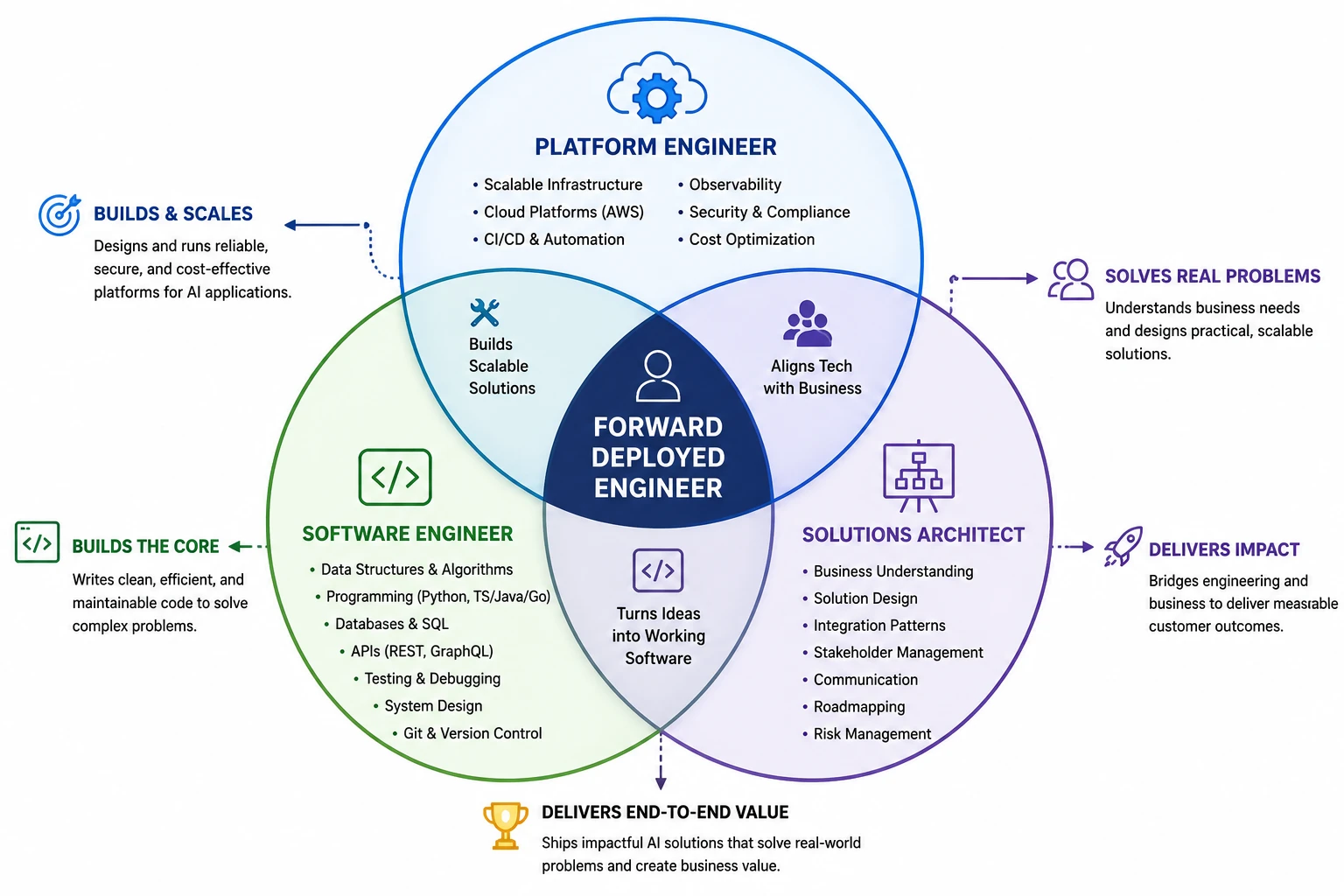
The landscape of professional software engineering is undergoing a fundamental transformation as the "Forward Deployed Engineer" (FDE) emerges as the most critical link in the global technology value chain. A forward deployed engineer is a software professional who embeds directly within a customer’s team and technical infrastructure to build, integrate, and maintain production systems, moving beyond the traditional model of developing generic products from a centralized corporate headquarters. While consultants typically provide strategic recommendations and solutions architects design high-level frameworks, the FDE is distinguished by the delivery of working, production-grade code that remains operational within the client’s ecosystem long after the initial implementation phase.
The surge in demand for this role is rooted in a sobering reality of the modern corporate environment. According to the MIT NANDA State of AI in Business 2025 report, approximately 95% of enterprise generative AI pilots failed to produce any measurable business impact. Analysis of these failures revealed that the primary bottleneck was not the sophistication of the artificial intelligence models themselves, but rather the complexities of deployment. This "deployment gap"—the space between a powerful model and a functional, integrated business tool—has birthed the FDE as a high-leverage niche in the engineering world.
Defining the Role: The Startup CTO for the Enterprise
To understand the FDE, one must look to the precedents set by Palantir Technologies, the firm that largely pioneered the title. Palantir differentiates between a traditional product engineer, who focuses on "one capability for many customers," and an FDE, whose mandate is "one customer across many capabilities." In practice, an FDE operates much like a startup Chief Technology Officer (CTO). They work within small, agile teams and take full ownership of the end-to-end execution of high-stakes projects, often involving sensitive data and mission-critical infrastructure.
The workflow of an FDE typically evolves through five distinct phases. It begins with "Scoping and Discovery," where the engineer identifies the specific business problems that technology can solve. This is followed by "Integration," where the FDE navigates legacy architectures and data schemas to connect new tools with existing systems. The third phase is "Production-Grade Development," which involves writing the actual code that will run the system. "Scaling and Optimization" follows, ensuring the solution can handle enterprise-level loads. Finally, the "Handover and Maintenance" phase ensures the client’s internal team can manage the system, though the FDE often remains a point of contact for deep technical evolutions.
The 2026 AI Catalyst: A Two-Sided Knowledge Gap
The year 2026 has marked a turning point for the FDE role, largely driven by the rapid adoption of frontier AI models. Industry analysts describe the current market as suffering from a "two-sided knowledge gap." On one side, the client’s internal engineers possess deep domain expertise, understanding the intricate data schemas, compliance constraints, and legacy architectures that define their business. On the other side, engineers at AI labs understand the nuances of model behavior in production—including prompting patterns, retrieval-augmented generation (RAG) design, and the specific failure modes that only emerge at scale.
Neither side is currently equipped to ship complex AI systems in isolation. Traditional documentation is often insufficient for the nuances of non-deterministic AI outputs, and customer success managers lack the technical depth to rewrite backend integration logic. The FDE serves as the bridge, possessing the technical pedigree to manipulate frontier models and the communication skills to navigate a client’s corporate hierarchy. In May 2026, major frontier AI labs formalized this reality by pivoting their business strategies to include massive "Forward Deployment" wings, effectively transforming from software providers into high-end technical partners.
Comparative Analysis: FDE vs. Solutions Architect vs. AI Engineer
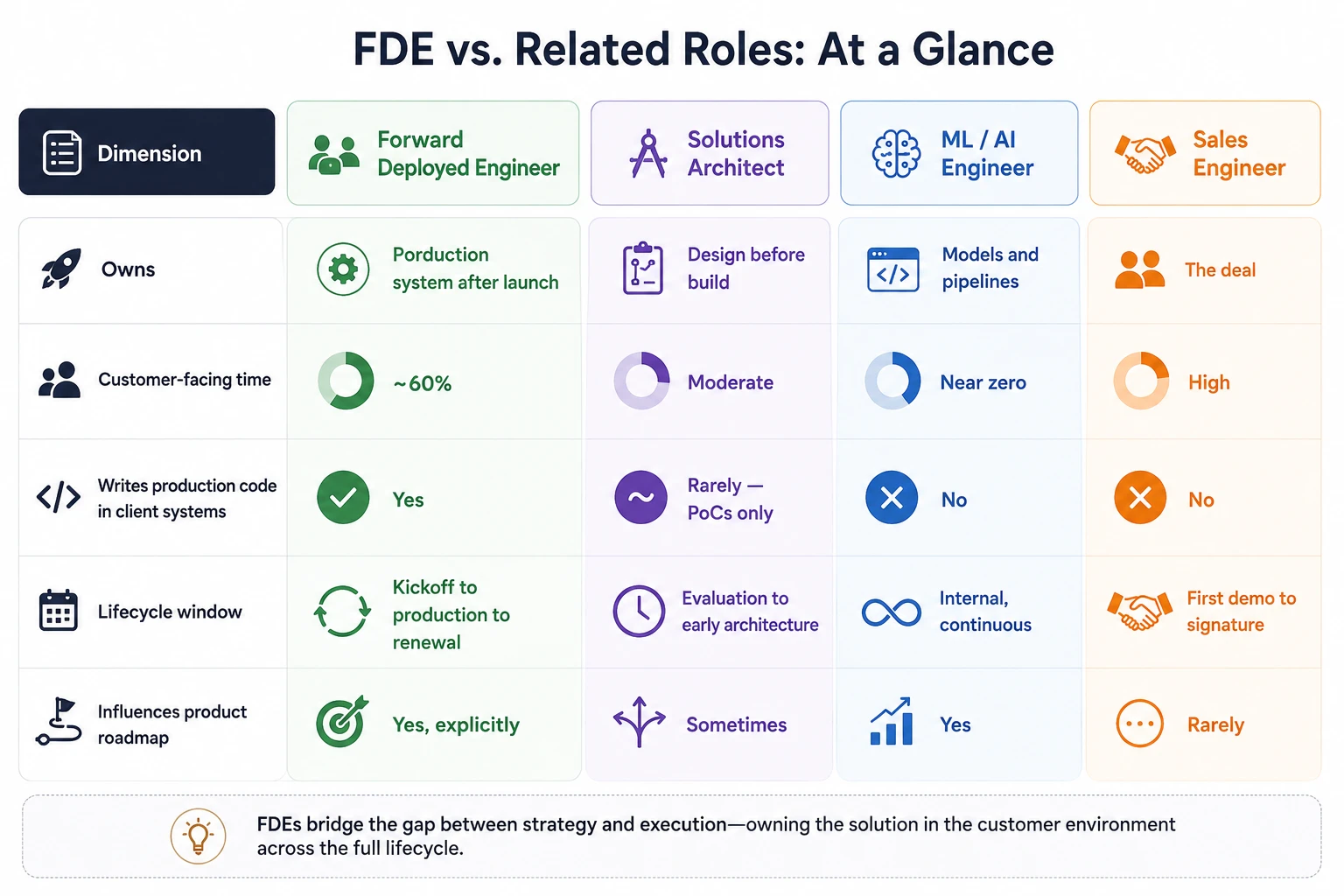
A critical distinction must be made between the FDE and related roles to understand the specific value proposition of forward deployment. The primary differentiator is the ownership of the system post-shipment.
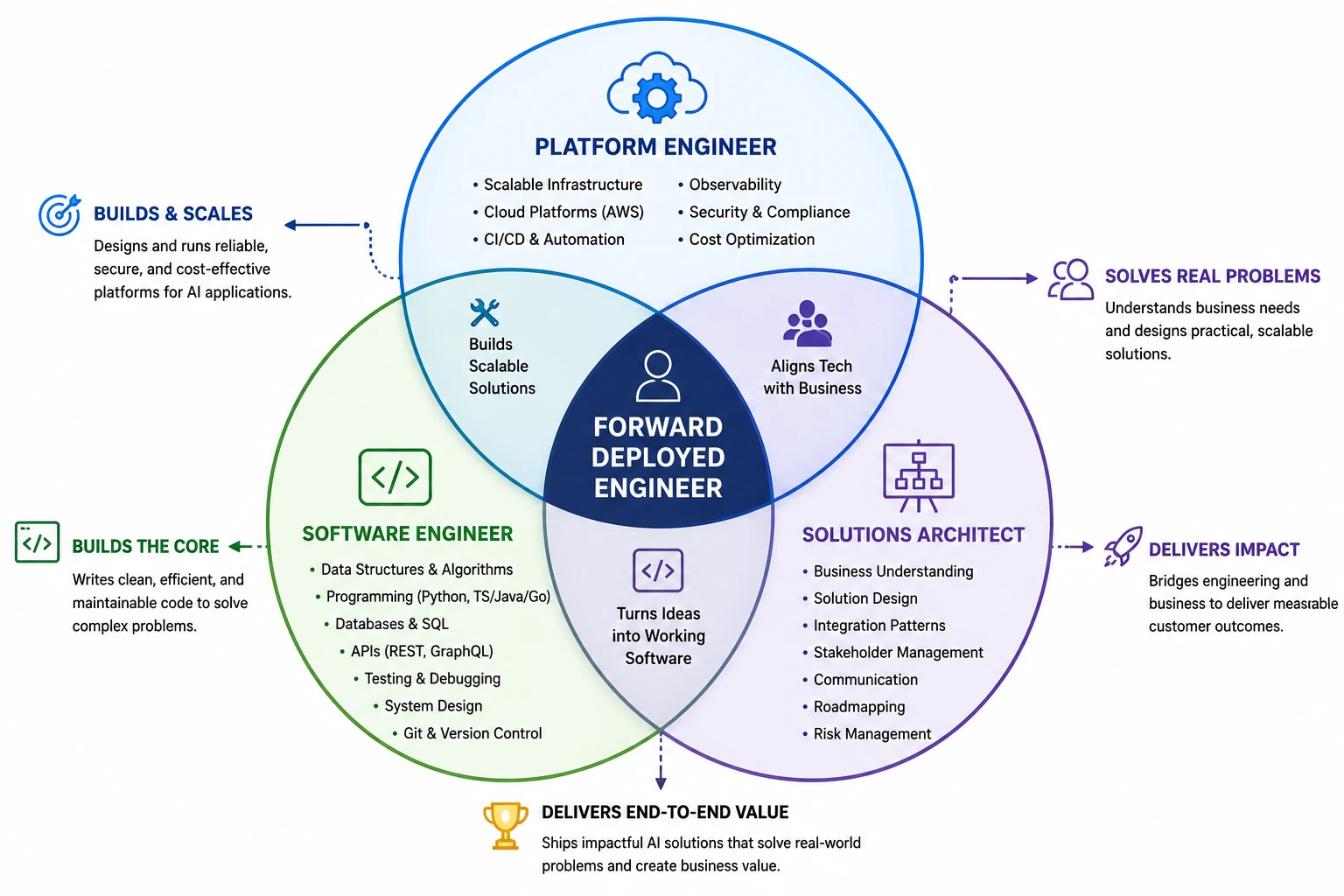
A Solutions Architect typically focuses on the pre-sales or early implementation phase, building "Proofs of Concept" (PoCs) or "Minimum Viable Products" (MVPs). Once the architecture is approved, the Solutions Architect often moves to the next client. In contrast, the FDE is responsible for the "last mile" of production. They write the code that handles edge cases, ensures security compliance, and manages real-world data drift.
When compared to a standard AI Engineer, the difference lies in the environment. An AI Engineer usually works on the core model or a generic application interface within their own company’s walls. The FDE works "in the wild," dealing with the "messy" reality of client data that hasn’t been cleaned and infrastructure that may be decades old. While industry data suggests that internal AI engineer roles will always outnumber FDE roles, the FDE is increasingly viewed as the "special forces" of the engineering world—deployed only when the stakes are highest and the technical hurdles most daunting.
Economic Landscape: Compensation and Market Demand
The compensation for FDEs in 2026 reflects the scarcity of talent capable of balancing deep technical proficiency with client-facing diplomacy. In the United States, total compensation (TC) for FDEs at frontier labs has reached unprecedented levels. Entry-to-mid-level roles in San Francisco or New York typically command base salaries between $160,000 and $280,000. However, when including equity and performance bonuses, mid-level TC often ranges from $350,000 to $450,000, while senior or "staff" FDEs can earn upwards of $600,000.
A notable shift in 2026 compensation structures is the weight of equity. At the top of the market, equity now constitutes roughly 55% to 70% of total compensation, a significant increase from the 35% to 45% range seen in 2024. This reflects the long-term value companies place on engineers who can successfully integrate their products into the world’s largest enterprises.
In India, the market is similarly robust, particularly in tech hubs like Bengaluru and Hyderabad. Junior FDEs with 0-2 years of experience can expect 18–28 Lakhs Per Annum (LPA), while those with 3-6 years of experience frequently command 28–55 LPA. Senior FDEs or those working remotely for global firms often see packages ranging from 55 to over 90 LPA. These figures significantly outpace traditional software development roles in the region, highlighting the premium placed on the FDE’s unique skill set.
The Technical Roadmap: Skills Required for 2026
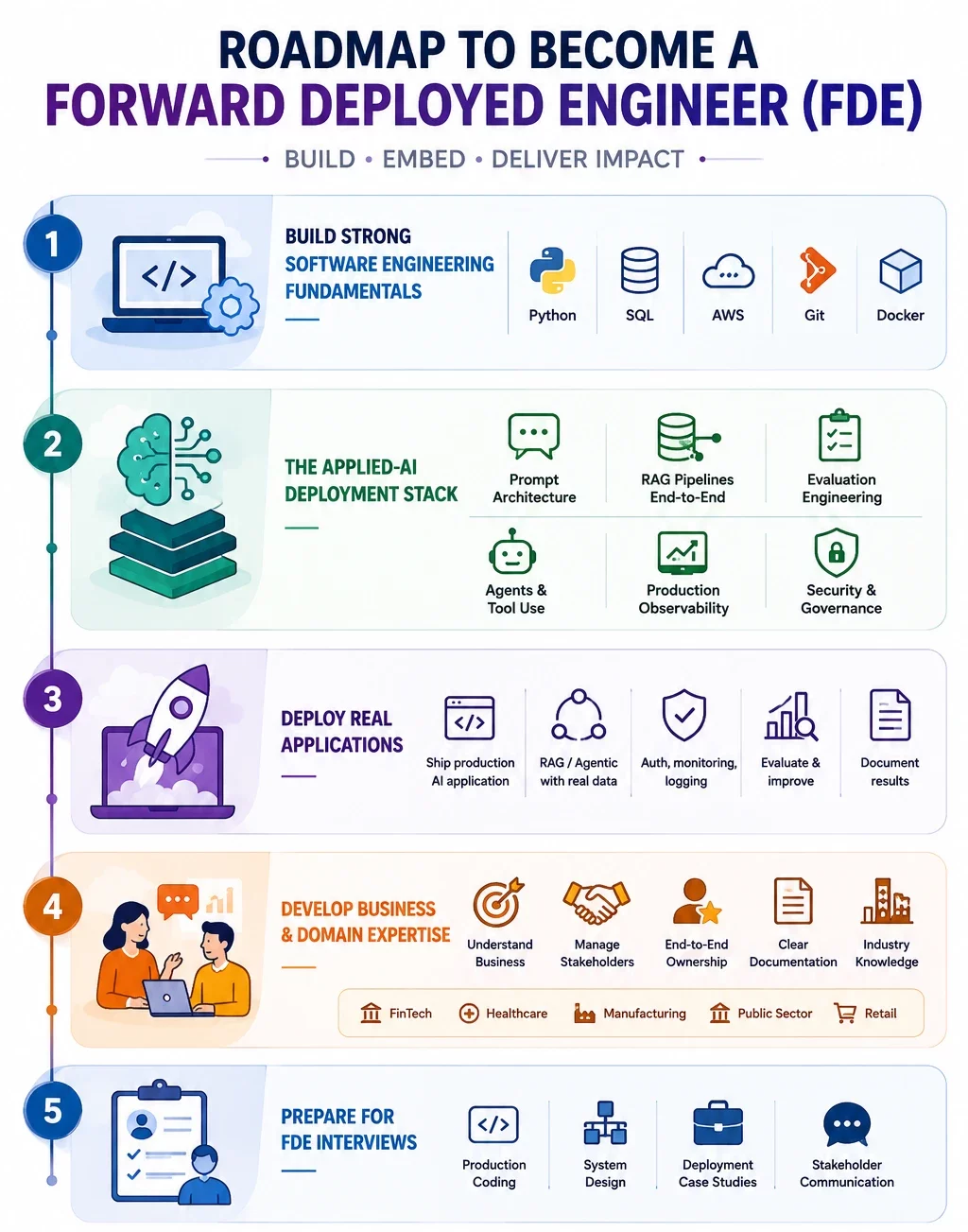
Becoming an FDE requires a non-traditional development path. While foundational software engineering remains the bedrock, the "Applied-AI Deployment Stack" has become the mandatory secondary layer of expertise.
- Foundational Excellence: Proficiency in Python is considered non-negotiable, often supplemented by TypeScript, Java, or Go. Engineers must possess advanced SQL skills and a deep understanding of REST and GraphQL APIs. Experience with Docker and at least one major cloud provider (AWS, Azure, or GCP) is essential for modern deployment.
- The AI Stack: In 2026, the market demands expertise in RAG (Retrieval-Augmented Generation), evaluation engineering, and the management of "agentic" workflows. This includes understanding production observability—monitoring how AI models behave in real-time—and implementing "Responsible AI" frameworks to mitigate bias and ensure security.
- The Human Element: Perhaps the most significant barrier to entry for many engineers is the requirement for "business translation." An FDE must be comfortable with ambiguity and undefined specifications. They must be able to translate a vague business requirement into a scoped technical plan and, conversely, explain technical limitations to non-technical stakeholders.
Industry Implications and Future Outlook
The rise of the FDE signifies a broader shift in the tech industry’s approach to value delivery. As AI becomes a commodity, the value is no longer just in the "intelligence" of the model, but in the "utility" of the integration. Companies like OpenAI, Anthropic, Scale AI, and Databricks are aggressively hiring FDEs because they recognize that their growth is capped by their customers’ ability to actually use their tools.
However, the role is not without its challenges. The "honest trade-offs" of an FDE career include significant travel—often 20% to 50% of the time—and the potential for "context switching" fatigue as engineers jump between different client environments. There is also the risk of "career fragmentation," where an engineer spends so much time fixing a client’s unique legacy problems that they lose touch with the development of core, scalable products.
Despite these risks, the FDE boom is a clear indicator of the next phase of the digital revolution. The structural gap between model capability and enterprise operationalization is the most significant economic challenge in tech today. Those who can close that gap—the Forward Deployed Engineers—are not just building systems; they are defining the practical application of artificial intelligence for the next decade. For the modern engineer, the deployment stack is becoming the most transferable and valuable asset in their professional portfolio. Start with one production system, one real user, and one honest evaluation; that is the entry ticket to the most consequential engineering role of 2026.