rifanmuazin
The landscape of brand discovery is undergoing a seismic shift, fundamentally altering how consumers and businesses engage with information and, consequently, with brands. This profound transformation, driven by the rapid evolution of artificial intelligence, demands a new strategic imperative: Generative Engine Optimization (GEO). No longer are buyers solely navigating traditional search results; they are increasingly interacting with AI platforms that synthesize information, answer complex queries, and even recommend brands directly. For marketers, this means a critical juncture where a brand is either prominently cited in an AI-generated response or becomes entirely invisible.
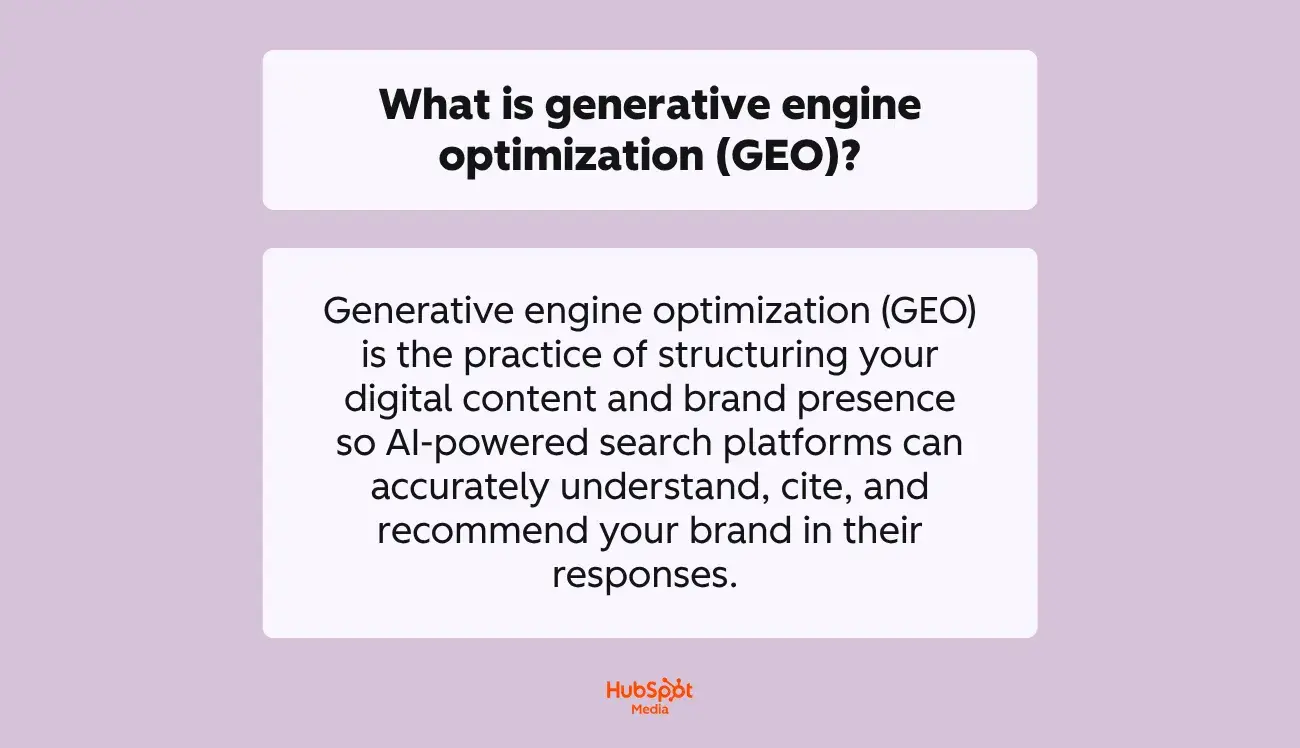
Generative Engine Optimization is defined as the meticulous practice of structuring a brand’s digital content and overall online presence to ensure AI platforms such as ChatGPT, Google AI Overviews, Perplexity, and Gemini can accurately understand, cite, and recommend it within their conversational responses. This discipline represents a significant evolution from traditional Search Engine Optimization (SEO), primarily by prioritizing structured data, semantic understanding, and machine-friendly content over conventional link-based ranking algorithms alone. Crucially, GEO is not a replacement for existing SEO investments but rather an amplification, leveraging foundational SEO efforts to thrive in the emergent AI-driven search ecosystem.
Despite the evident shift, many marketing teams find themselves hesitant, grappling with uncertainties surrounding AI visibility measurement, complex implementation processes, and the inherent risks associated with AI phenomena like hallucination. This article delves into the compelling and measurable benefits that generative engine optimization offers marketers today, substantiated by industry data, and outlines practical steps for immediate implementation.
The Paradigm Shift in Digital Discovery
The digital realm has rapidly transitioned from a keyword-centric search environment to one dominated by conversational AI. The widespread adoption of Large Language Models (LLMs) and generative AI tools has fundamentally reshaped how users seek information. Instead of receiving a list of ten blue links, users are increasingly presented with direct, synthesized answers, often curated from multiple sources. This "answer engine" paradigm means that brand visibility is no longer solely about ranking on a search results page but about being the authoritative source cited within the AI’s response.
Data underscores the urgency of this transition. According to HubSpot’s 2026 State of Marketing Report, a significant 49% of marketers acknowledge a decrease in web traffic from traditional search channels due to the prevalence of AI answers. However, a compelling 58% of marketers also report that AI referral traffic exhibits a much higher intent compared to conventional search traffic. This dichotomy highlights both the challenge of declining traditional visibility and the immense opportunity for engaging highly qualified prospects through GEO. The rapid pace of AI development means that this shift is not a distant future but a present reality, requiring immediate strategic adaptation.
Strategic Imperatives: GEO vs. Traditional SEO
Understanding the nuanced differences and powerful convergences between GEO and traditional SEO is paramount for modern marketing strategists. While both aim to increase organic visibility, their mechanisms and priorities diverge significantly. Traditional SEO primarily focuses on ranking web pages through factors like keywords, backlinks, site speed, and user experience, aiming for top positions in search engine results pages (SERPs). GEO, on the other hand, operates at a deeper semantic level, focusing on how AI models comprehend and represent a brand as an "entity."
GEO prioritizes:
- Structured Data and Schema Markup: Providing explicit metadata that helps AI understand the nature of content, products, services, and the brand itself.
- Entity Understanding: Ensuring AI models can unambiguously identify and connect information about a brand across diverse sources.
- Direct Answer Optimization: Crafting content that directly answers common questions, making it easy for AI to extract and cite.
- Brand Inclusion: Aiming for explicit mentions or recommendations within AI-generated summaries and conversations.
Despite these differences, GEO and SEO are not mutually exclusive. Robust SEO practices, which establish domain authority, content quality, and comprehensive coverage of topics, form the essential foundation upon which GEO strategies are built. A brand that consistently ranks well in traditional search and provides high-quality, authoritative content is inherently more likely to be trusted and cited by AI models. GEO amplifies this existing authority by making it machine-readable and contextually relevant for AI, converting traditional search success into AI answer engine visibility.
The shift also necessitates new measurement frameworks. While traditional SEO relies on metrics like organic rankings, click-through rates (CTR), and impressions, GEO requires tracking AI citation counts, sentiment analysis of brand mentions, share of voice within AI answers, and the position or prominence of brand inclusion. Industry analysts suggest that brands treating GEO and SEO as complementary strategies are best positioned to achieve increased AI search visibility, improved lead quality, and stronger brand inclusion.
The Measurable Advantages of Generative Engine Optimization
The benefits of a deliberate GEO strategy are not speculative; they are tangible and immediately impactful for marketers.
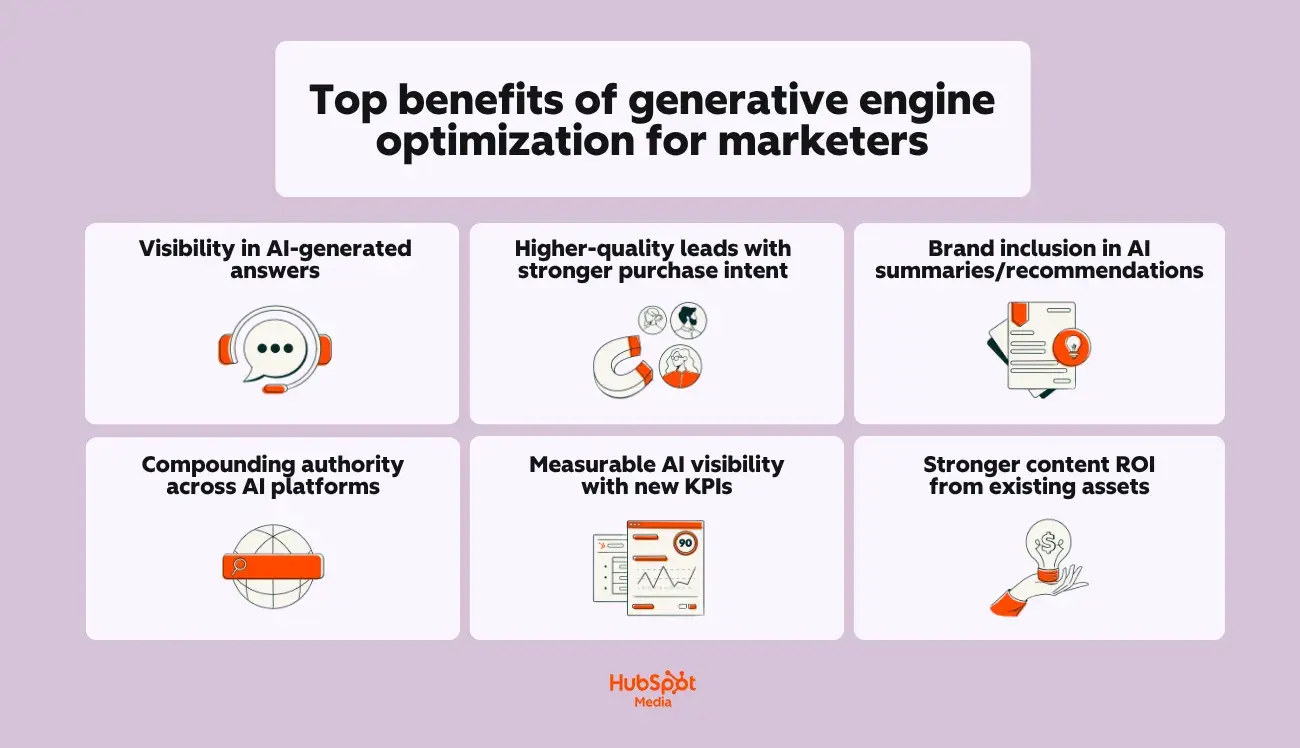
1. Enhanced Visibility in AI-Generated Answers:
The most immediate and impactful benefit of GEO is securing a presence within the AI-generated response itself. When a prospective customer queries an AI platform like ChatGPT or Perplexity with questions such as "What’s the best CRM for remote teams?" and a brand’s name appears directly in that answer, it signifies reaching the buyer at their moment of highest intent. This bypasses the traditional competition for clicks within a list of ten organic links, placing the brand directly into the user’s consideration set. As HubSpot’s 2026 State of Marketing Report indicates, nearly a quarter (24%) of marketers are actively exploring or updating their SEO strategy for generative AI in search. Furthermore, data shared by Semrush reveals that marketers already investing in GEO are capturing higher-intent traffic that converts at 4.4 times the rate of traditional organic search, underscoring GEO as a measurable revenue advantage available now.
2. Higher-Quality Leads and Accelerated Purchase Intent:
AI-referred traffic isn’t merely about increased volume; it’s about superior quality and outcomes. Visitors arriving via answer engines have often absorbed significant context about a product or service, compared alternatives, and formed an initial opinion before even navigating to a brand’s website. This pre-qualification means these leads arrive with stronger purchase intent, leading to more efficient sales processes and higher conversion rates. For marketing strategists focused on pipeline targets, this conversion advantage means GEO not only expands the top of the funnel but also significantly compresses the journey from initial discovery to final purchasing decision.
3. Reinforced Brand Authority and Trust through AI Inclusion:
Unlike traditional search engines that rank websites in a list, generative engines synthesize information from multiple sources to present a curated, comprehensive answer. When a brand is included in this synthesis, cited alongside or even ahead of competitors, it acts as a powerful signal of authority and trust to the user. This inclusion suggests that the AI, acting as a knowledgeable assistant, endorses or validates the brand’s relevance. However, such inclusion is not automatic. Brands earning these coveted mentions are those proactively supplying clear, factual, and well-structured content, including explicit definitions, comprehensive FAQs, detailed product specifications, and easily verifiable data points.
4. Compounding Entity Authority Across AI Platforms:
A significant, yet often underappreciated, benefit of GEO is the compounding nature of citation authority. Similar to how domain authority accrues in traditional SEO, consistent citations within one AI platform (e.g., ChatGPT) can strengthen a brand’s presence and credibility across other platforms like Perplexity, Gemini, and Google AI Overviews. This occurs because AI models often draw from overlapping training data and real-time retrieval sources. By building robust entity authority through consistent branding, structured data, comprehensive knowledge panels, and authoritative third-party mentions, brands can create a self-reinforcing "citation flywheel" that amplifies their visibility across the entire AI ecosystem.
5. New Metrics for a New Era: Quantifying AI Visibility:
One of the common concerns regarding GEO has been measurement uncertainty. Traditional metrics like rankings, impressions, and CTR do not fully capture how AI engines represent a brand. However, dedicated measurement frameworks have emerged. Key Performance Indicators (KPIs) crucial for GEO include AI citation count (how often a brand is mentioned), sentiment analysis of those mentions, share of voice in AI-generated answers, answer position (prominence within a response), and overall brand recognition by AI models. These new metrics provide a clear pathway to justify investment and demonstrate the tangible return on GEO strategies.
6. Maximizing Existing Content ROI:
A compelling aspect of GEO is that it doesn’t necessitate starting from scratch. The content that performs best in AI citations often already ranks well in traditional search. This means a brand’s highest-ROI GEO move is to optimize its existing, high-performing content. Restructuring existing blog posts, guides, and product pages with direct-answer formats, clear hierarchical headings, prominent factual claims, and specific statistics can unlock immediate AI visibility from assets in which the team has already invested significant time and resources.
Navigating the Complexities: Challenges in Generative Engine Optimization
While the benefits of GEO are clear, its implementation comes with a distinct set of challenges, fundamentally different from those encountered in traditional SEO. These obstacles are often less about content quality and more about technical intricacies, data management, and the unpredictable nature of AI.

1. Data Fragmentation and Inconsistent Entity Signals:
For AI models to accurately understand and cite a brand, its information must be consistent and machine-readable across every digital surface from which AI pulls data. This includes a brand’s website, social media profiles, Google Business Profile, industry directories, and more. Most marketing teams manage these platforms using disparate tools, leading to fragmented entity signals. When a LinkedIn company page provides different information than a Google Business Profile, or website schema contradicts visible content, AI models receive conflicting inputs. This reduces "entity confidence"—the AI’s internal certainty about a brand’s identity and offerings—thereby decreasing the likelihood of citation or increasing the risk of inaccurate representation. The fix lies in establishing a single source of truth for brand data and ensuring consistency across all digital touchpoints through centralized data management and regular audits.
2. Entity Clarity and Disambiguation:
AI engines don’t just match keywords; they aim to resolve specific entities. If a brand name is generic (e.g., "Summit," "Atlas"), shares a name with another company, or lacks distinct entity signals, generative models may struggle to differentiate it. This can lead to AI confusing a brand with another entity, providing irrelevant information, or simply failing to mention it. In traditional SEO, domain authority and link signals help disambiguate. In generative search, entity resolution is paramount. Brands must proactively build unique entity signals through consistent branding, rich contextual data, and explicit schema markup to ensure AI accurately identifies them.
3. Mitigating AI Hallucination and Misrepresentation:
Large language models, by design, predict statistically likely word sequences rather than retrieving verified facts. When encountering gaps in their training data or ambiguous signals, they can generate confident-sounding responses that are entirely fabricated—a phenomenon known as hallucination. For brands, this poses a significant risk: AI could misstate product features, invent partnerships, or even attribute false claims, leading to reputational damage and legal liabilities. While complete elimination of hallucinations is challenging, mitigation strategies include providing crystal-clear factual content, implementing robust schema markup, actively monitoring AI mentions for inaccuracies, and leveraging authoritative third-party sources to reinforce correct information.
4. Schema Markup Complexity and Implementation Barriers:
Structured data, specifically schema markup, acts as the crucial translation layer between a brand’s content and AI systems. However, many marketing teams find schema implementation technically intimidating. Common errors include mismatched schema types, stale data that contradicts visible page content, or missing entity connections, leaving AI models to guess. The complexity often results in incorrect or incomplete implementation, hindering AI’s ability to accurately understand and cite content. Simplifying schema implementation through user-friendly tools, providing clear guidelines, and validating markup using tools like Google’s Rich Results Test are essential.
5. Measurement Gaps and KPI Uncertainty:
As previously noted, traditional SEO metrics are insufficient for GEO. The absence of established, universally accepted KPIs for AI visibility creates uncertainty for marketing teams trying to justify investment. A brand can rank #1 in Google for a keyword but be entirely absent from the AI-generated answer that appears above the organic listings. This necessitates a shift to new metrics like AI citation count, sentiment, and share of voice. Developing custom tracking in analytics platforms like Google Analytics 4 (GA4) for AI referral traffic is crucial for connecting GEO efforts to tangible business outcomes.
6. Privacy, Compliance, and Data Governance:
GEO introduces privacy and compliance considerations largely absent from traditional SEO. AI models train on vast amounts of publicly available data. This means brand information, employee details, product specifications, and customer testimonials published on a brand’s site may be ingested, recombined, and surfaced in AI responses in ways that were not initially anticipated or authorized. For businesses in regulated industries (e.g., healthcare, finance), this raises serious questions about data accuracy obligations, liability for AI-generated claims, and compliance with evolving AI transparency regulations. Proactive data governance, including regular audits of public-facing information and clear policies on data usage, becomes imperative.
Every one of these challenges, while real, is solvable with the right strategic framework, appropriate tooling, and a systematic approach. Brands that view these obstacles as implementation problems rather than reasons for delay are those actively building a significant AI visibility advantage while competitors remain in deliberation.
A Practical Roadmap: Implementing GEO Effectively
Achieving generative engine optimization benefits does not require an immediate overhaul or a new technology stack. The most effective GEO implementations build directly upon existing SEO foundations. The fastest path to AI visibility leverages current content and infrastructure.
Step 1: Establish Your AI Visibility Baseline:
Before any optimization, it is critical to understand a brand’s current standing in the AI landscape. Many marketing teams lack awareness of how AI engines are representing their brand. Begin by utilizing tools like HubSpot’s AEO Grader, which measures brand visibility across five dimensions: sentiment, presence quality, brand recognition, share of voice, and market position. Supplement this with manual testing: query leading AI platforms (ChatGPT, Perplexity, Gemini) with 10-15 prompts that ideal buyers would typically ask. Document whether the brand appears, its characterization, and which competitors are cited instead. This initial audit often reveals the most urgent content and entity gaps.
Step 2: Restructure High-Value Content for AI Extraction:
AI engines process content differently than humans. They scan for direct, extractable answers, typically within the first 40-60 words of a section, prioritizing content structured with question-based headings, factual claims, and cited statistics. To achieve rapid, measurable impact, identify the five highest-traffic blog posts or landing pages and apply these modifications:
- Begin sections with a concise, direct answer to the heading’s question.
- Incorporate clear, descriptive subheadings formatted as questions.
- Embed specific data points, statistics, and verifiable facts.
- Utilize bulleted lists, tables, and comparison charts for easy data extraction.
- Add a dedicated FAQ section at the end of relevant pages.
Step 3: Implement Core Schema Markup on Priority Pages:
Structured data, particularly schema markup, is the crucial language AI engines use to understand content. While marking up an entire site immediately is unnecessary, prioritize three schema types that yield the most GEO value:
- Organization Schema: Provides essential brand information (name, logo, contact, social profiles).
- Product Schema: Details product names, descriptions, pricing, and reviews.
- FAQPage Schema: Explicitly marks up question-and-answer pairs, a prime source for AI responses.
Use JSON-LD in the document head for all implementations, as it is Google’s recommended format and cleanest for AI parsing. Validate every page using Google’s Rich Results Test before publishing.
Step 4: Set Up AI Referral Traffic Tracking in Google Analytics 4 (GA4):
Measurement uncertainty is a significant barrier. The fix is straightforward, taking approximately 10 minutes. Create custom channel groups in GA4 to segment traffic originating from AI referral sources. This allows marketers to isolate AI-referred sessions, measure their conversion rates independently from traditional organic traffic, and build a robust reporting infrastructure that links GEO efforts directly to pipeline outcomes. Track two parallel metric streams: AI visibility metrics (citation count, share of voice) and AI referral traffic performance (sessions, conversions). Both are critical, with HubSpot’s 2026 State of Marketing Report confirming SEO remains a top channel by ROI (27%).
Step 5: Build Entity Authority Beyond Your Domain:
AI platforms often prioritize third-party sources over brand-owned content when assembling responses, viewing independent validation as a sign of credibility. This means a well-optimized website alone may not suffice for citations if AI engines cannot find external corroboration of a brand’s claims. Prioritize strengthening external authority signals:
- Ensure comprehensive and consistent Google Business Profile and Knowledge Panel information.
- Secure mentions and citations from reputable industry directories, review sites, and authoritative publications.
- Engage in public relations efforts to generate third-party validation and expert commentary.
- Maintain accurate and up-to-date Wikipedia entries, where applicable.
Step 6: Integrate GEO into Your Existing Content Workflow:
The perception that GEO requires a parallel workflow is a significant barrier. In reality, GEO integrates directly into existing content production processes.
- Content Planning: Incorporate "AI answer potential" into keyword research and topic selection.
- Content Creation: Train writers to use direct answer formats, clear headings, and structured data principles.
- Content Editing: Add a GEO review step to ensure content is machine-readable and semantically rich.
- Content Publishing: Automate schema markup where possible and validate before launch.
Step 7: Monitor, Iterate, and Scale:
GEO is an ongoing process, not a one-time project. AI models continuously update their knowledge, competitors are also optimizing, and answer engine optimization trends evolve rapidly. Establish a monthly review cadence:
- Re-run AI visibility baselines using tools like HubSpot’s AEO Grader.
- Analyze AI referral traffic performance in GA4.
- Identify new citation opportunities and content gaps.
- Adjust content and schema based on performance data and AI model updates.
Early movers in GEO gain structural advantages that late adopters will struggle to overcome. The compounding nature of citation authority means consistent effort builds upon itself, creating a durable competitive edge.
Choosing the Right Tools for Your GEO Stack
Operationalizing GEO does not necessitate an enterprise-level budget. Many foundational actions, such as content restructuring, schema implementation, FAQ creation, and manual prompt testing, primarily require time investment. Where budget proves most valuable is in monitoring and automation. Dedicated generative engine optimization tools can automate citation tracking, competitive benchmarking, and content audit recommendations at a scale unattainable through manual efforts. Tools should be evaluated based on the specific GEO challenges a team faces, whether it’s content structuring, schema management, AI visibility tracking, or competitive analysis.
Marketers achieve increased AI search visibility, improved lead quality, and stronger brand inclusion by treating GEO as a vital complement to their foundational SEO strategy rather than a disconnected initiative. Starting with a baseline, restructuring top content, implementing core schema, tracking results, and iterating are the cornerstones of effective GEO. This framework is designed to transition teams from merely "thinking about GEO" to "measuring GEO impact" promptly.
Frequently Asked Questions (FAQ) About the Benefits of Generative Engine Optimization
How long does it take to see benefits from GEO?
Initial benefits from generative engine optimization can often appear within 2 to 4 weeks, significantly faster than the typical 3 to 6-month timeline for traditional SEO. This acceleration is largely due to AI models updating their knowledge bases more frequently than search engines recrawl the web, allowing structured improvements to existing content to be picked up quickly. The timeline can vary based on the scope of optimization: foundational schema implementation might show initial impact in 2-4 weeks, while comprehensive content restructuring might take 4-8 weeks to fully propagate across AI platforms.
Can small teams get value from GEO quickly?
Yes. The highest-ROI actions in GEO require time investment rather than large budgets. A small team, even a single marketer, can begin seeing results by restructuring existing content and implementing basic schema, neither of which incurs direct costs beyond labor. A realistic week-one plan for a small team might include using a free AEO grader, identifying 3-5 top-performing blog posts, restructuring them with direct answers and FAQs, and implementing basic Organization or FAQPage schema. Consistent execution on these fundamentals is more crucial than extensive tooling.
How do I reduce the risk of AI hallucinations about my brand?
While eliminating AI hallucinations entirely is impossible due to the probabilistic nature of LLMs, their frequency and impact can be substantially reduced. Strategies include providing exceptionally clear, factual, and consistent information across all digital properties, implementing robust and accurate schema markup to explicitly define brand attributes, actively monitoring AI mentions for inaccuracies, and ensuring that all claims are verifiable through authoritative, third-party sources. Creating dedicated "about us" and "company facts" pages with structured data can also help reinforce accurate information.
Should I update my existing content or create new content for GEO?
Prioritize updating existing content first, as it is both faster and typically yields higher ROI. Pages that already rank well in traditional organic search are prime candidates for GEO optimization because AI engines disproportionately cite content that demonstrates existing authority. Restructuring a top-ranking page for AI extraction (e.g., adding direct-answer openings, FAQ schema, specific statistics, and temporal markers) unlocks AI visibility from an asset already invested in. New content creation should focus on identified "citation gaps"—queries where buyers are asking AI platforms questions for which the brand currently has no relevant content. When creating new content for GEO, prioritize formats like comprehensive guides, definitive definitions, and detailed product comparisons, all optimized for direct answers. An effective approach often involves a 70/30 split: 70% of GEO effort on optimizing existing high-performers, and 30% on creating new content for uncovered citation opportunities.
What’s the best way to align GEO with sales and service?
GEO generates the most business value when integrated with a brand’s CRM and overall revenue operations, rather than being siloed within the content team. Aligning GEO across marketing, sales, and service involves educating sales teams on how buyers discover the brand through AI, providing service teams with resources to address AI-related queries or misrepresentations, and integrating AI-referred lead data directly into the CRM for better attribution and follow-up. This ensures every customer-facing team understands how buyers evaluate the brand through AI, multiplying the benefits of GEO across the entire customer journey.
GEO is the Future of Content Marketing
Generative Engine Optimization is not a future trend; it is the current reality of brand visibility. It enables brands to appear prominently in both traditional search results and the increasingly influential conversational answers provided by AI. The measurable benefits are compelling: higher-intent leads, stronger brand inclusion in critical buyer decisions, and a compounding visibility advantage that significantly rewards early adopters.
However, the challenges of GEO are equally real, encompassing newer measurement frameworks, the technical effort required for schema markup, and the inherent risks of AI hallucination and entity ambiguity. Yet, every one of these obstacles is surmountable with the right tooling, a systematic approach, and a commitment to continuous adaptation. Brands that are pulling ahead are those that embrace this shift, proactively structure their content, systematically track their AI visibility, and integrate GEO into their core marketing operations.
The time for deliberation is over. The brands poised for success in the AI era are those that act decisively, transforming their digital presence to meet the demands of this new discovery paradigm.