Nila Kartika Wati
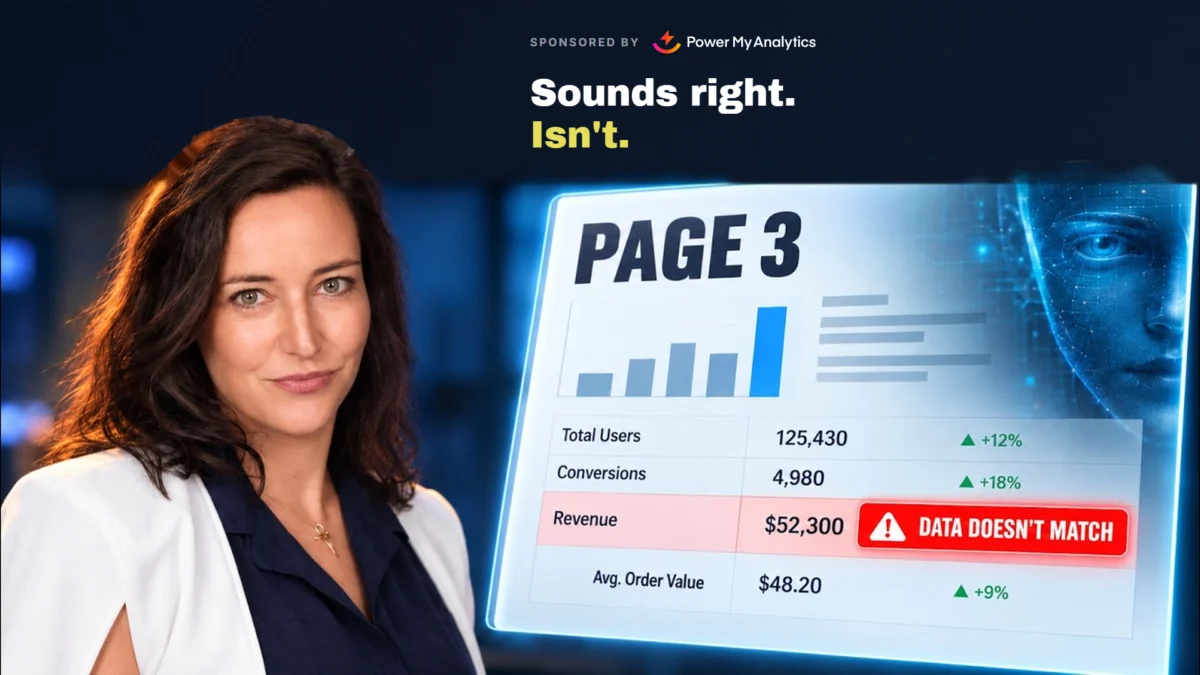
The rapid integration of generative artificial intelligence into marketing workflows has created a paradoxical challenge for data analysts: while AI tools can process vast amounts of information with unprecedented speed, they frequently deliver "confident hallucinations" when tasked with interpreting complex performance metrics. This phenomenon, highlighted during a recent MeasureU industry briefing, suggests that the primary obstacle to effective AI-driven marketing is not the limitation of the algorithms themselves, but rather the fragmented and unstructured nature of the data being provided to them.
Industry experts Antoinette “Tony” Scott and Morgan Jones of Power My Analytics argue that most marketing teams are currently handing AI the equivalent of a single page from a multi-page map and expecting it to navigate a cross-country journey. This "MapQuest Problem," a metaphor for the disjointed state of modern marketing data, underscores a critical infrastructure gap that exists between raw data collection and strategic AI analysis. Without a dedicated "ontology layer"—a framework that encodes business context and hierarchy into data—AI remains a sophisticated calculator rather than a reliable strategic partner.
The Evolution of Data Fragmentation: From 1998 to 2024
To understand the current crisis in AI data analysis, one must look at the trajectory of information management over the last three decades. In the late 1990s, services like MapQuest revolutionized navigation by providing printed, turn-by-turn directions. However, if a driver lost several pages of those directions, the remaining information became a "fragment of the middle"—accurate in its description of a specific road, but useless for reaching a final destination.
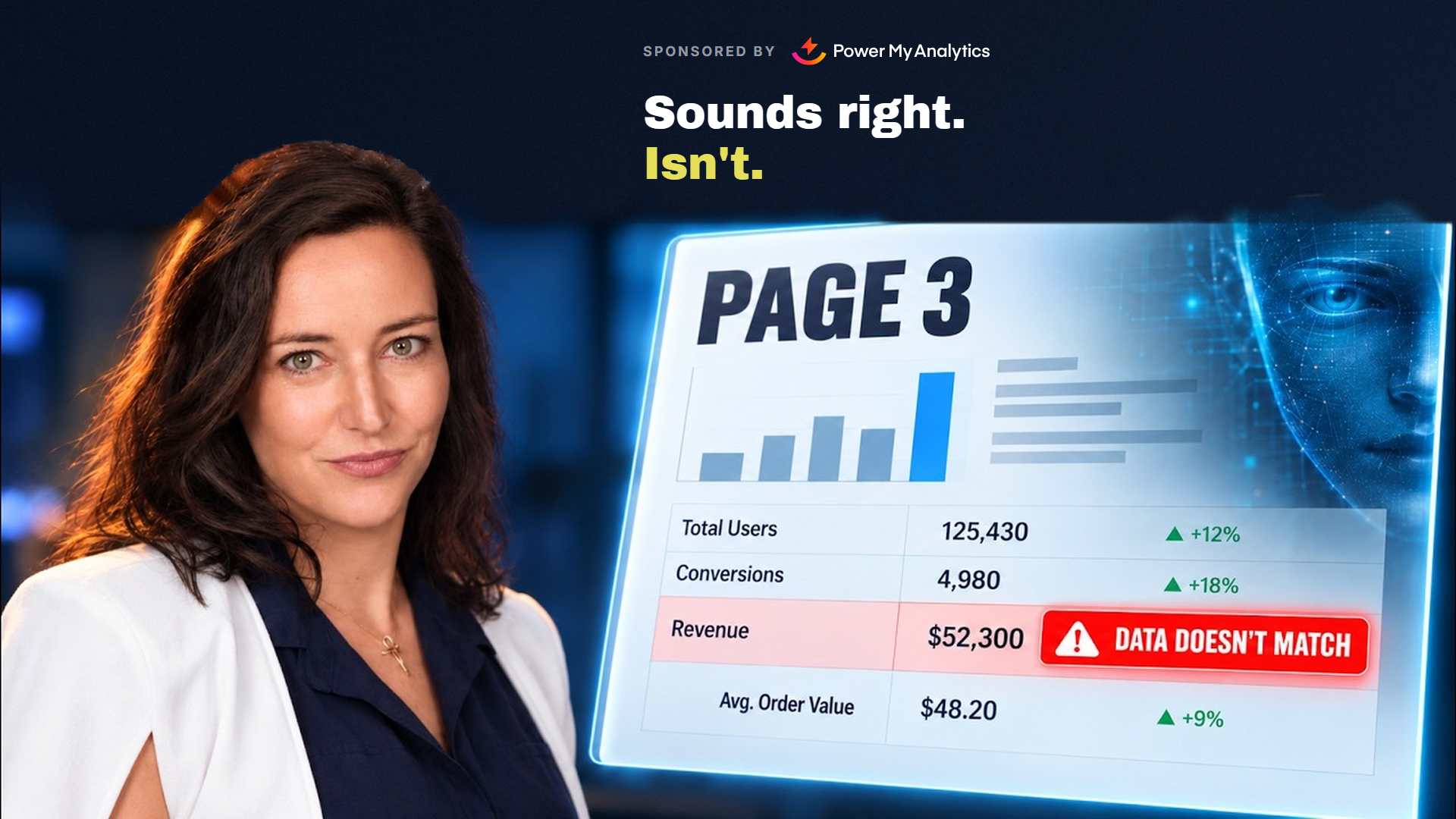
While GPS technology eventually solved this for physical navigation by providing real-time, holistic context, marketing data has followed an inverse path. As the digital ecosystem expanded, data became increasingly siloed. Today, a single marketing campaign might generate data across Google Analytics 4 (GA4), Meta Ads, LinkedIn, and internal Customer Relationship Management (CRM) systems like Salesforce or HubSpot.
Each of these platforms operates as a "page three" fragment. They offer high-precision metrics within their own ecosystems but lack the origin (business goals) and destination (bottom-line profitability) necessary for holistic analysis. When this fragmented data is fed into a Large Language Model (LLM) like ChatGPT or Claude, the AI attempts to bridge the gaps using logic that may not align with the specific nuances of the business, leading to decisions based on incomplete or misinterpreted information.
The Technical Deficit: Data Lakes versus Data Swamps
The current industry trend has seen a massive migration of marketing data into "data lakes"—vast repositories intended to centralize information for AI processing. However, data experts warn that a data lake without governance quickly devolves into a "data swamp."
In a data swamp, metrics are agnostic. An AI pulling from an unmanaged repository cannot inherently distinguish between a "revenue" metric in a Google Ads dashboard (which may be based on projected value) and a "revenue" metric in a CRM (which reflects actual cash received). Furthermore, naming conventions often vary wildly; a "Summer 2024 Brand Video" campaign in one system might be labeled "S24_V_Brand" in another.

Research indicates that the cost of poor data quality is significant. According to a 2023 Gartner study, organizations lose an average of $12.9 million annually due to poor data quality. In the context of AI, this cost is compounded by the speed at which AI can misallocate budgets or recommend flawed strategies based on those inaccuracies.
The Ontology Layer: A Framework for AI Readiness
The solution proposed by Power My Analytics involves the implementation of an "ontology layer." In computer science, an ontology is a way of showing the properties of a subject area and how they are related, by defining a set of concepts and categories that represent the subject. For marketing, this means encoding business context directly into the data structure before it reaches the AI.
There are three essential components required to make marketing data "AI-ready":
1. Standardization and Consistency
AI requires a "Rosetta Stone" to translate disparate metrics into a single language. This involves standardizing campaign naming conventions and attribution windows across all platforms. If the data looks different in every system, the AI will "stitch" together a coherent-sounding narrative that is factually incorrect.

2. Hierarchy and Prioritization
Not all data points carry equal weight. An ontology layer informs the AI that a primary conversion (such as a completed sale) is more significant than a secondary conversion (such as a newsletter sign-up). Without this hierarchy, the AI treats every metric as equal, potentially optimizing for low-value engagement over high-value revenue.
3. Business Context and Benchmarks
This is the most critical and often overlooked layer. It includes the specific goals of the brand, historical benchmarks, and audience behavior patterns. It transforms the AI from a tool that reports "what happened" into a tool that understands "what it means."
Case Study: The Danger of Confident Misalignment
The necessity of business context was illustrated by Morgan Jones, CEO of Power My Analytics, during an analysis of product pricing. In this instance, an AI was tasked with evaluating a price increase. The AI initially reported that the price hike was a failure because unit sales had decreased.
From a purely mathematical perspective, the AI’s logic was sound: higher prices led to fewer units sold. However, the AI lacked the "ontology" of the business’s ultimate goal: profit maximization. Once Jones provided the Cost of Goods Sold (COGS) and retrained the AI to prioritize profit over volume, the conclusion flipped. The AI realized that while unit sales were down, the increased margin per unit resulted in significantly higher total profit. Consequently, the AI recommended further price testing to find the ceiling of profitability—a strategic insight that was invisible without the proper context.

The Shifting Role of the Marketing Analyst
The rise of AI has led to widespread speculation regarding the obsolescence of human data analysts. However, the current data landscape suggests the opposite. While AI can "drive the car," human analysts are required to "build the road."
The role of the analyst is shifting from manual data entry and basic reporting to "data architecture." Professionals who understand how to structure data, create hierarchies, and encode business context are becoming more valuable as the demand for AI-ready data increases. The human element remains essential for defining the "why" behind the "what," ensuring that the AI’s speed is directed toward the correct objectives.
Practical Applications of Data Ontology
The implementation of an ontology layer is already taking shape through several practical applications:
- Brand Name Mapping: For agencies managing dozens of clients, an ontology layer allows the system to automatically categorize accounts by brand, preventing the AI from conflating data from different clients.
- Budget Pacing Alerts: By providing the AI with a timeline and a set budget, the system can move beyond reporting spend to predicting when a campaign will exceed or fall short of its allocated funds.
- Campaign Goal Context: By tagging campaigns as "Awareness," "Consideration," or "Conversion," analysts ensure that the AI evaluates success based on the intended objective rather than applying a blanket "conversion rate" standard to all activities.
Broader Impact and Future Implications
The move toward structured data ontology is a prerequisite for the next phase of marketing automation: "write access" for AI. Currently, most AI tools are restricted to "read-only" analysis. The next evolution will involve AI systems that can proactively adjust bids, pause underperforming creatives, and shift budgets in real-time.

The risks associated with granting an AI write access without a robust ontology layer are immense. If an AI lacks the context of a campaign’s goal, it could inadvertently shut down a highly successful brand awareness campaign because it isn’t generating direct sales. The financial implications of such errors could be devastating for mid-to-large-scale enterprises.
As the industry moves toward 2025 and 2026, the competitive advantage will likely shift to those organizations that have invested in their data infrastructure. The "MapQuest Problem" serves as a final warning for the digital age: having the most powerful engine in the world is of no use if you only have one page of the directions. Success in the era of AI-driven marketing will be defined by the ability to keep all six pages of the data map inside the car, fully structured and contextualized for the journey ahead.


 Neng Nana

 Nana Muazin