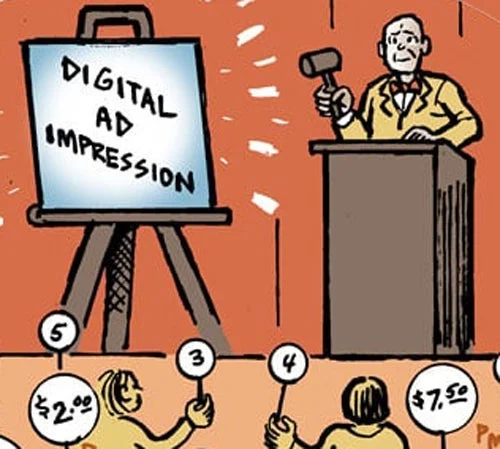
The pervasive opacity of programmatic advertising, a long-standing industry challenge, is beginning to face a concerted effort towards greater clarity. In a significant move to illuminate the intricate "black boxes" of digital ad auctions, the Media Rating Council (MRC) has released a comprehensive set of new standards aimed at enhancing transparency. These standards, launched last week, are accompanied by a voluntary certification program for platforms that commit to adhering to them. The initiative seeks to establish a consistent framework for understanding how ad auctions operate, rather than dictating a single operational model or algorithm.
Ron Pinelli, the MRC’s Senior Vice President of Digital Research and Standards, articulated the core purpose of this endeavor: "The standards create a consistent framework for explaining how auctions work, and push platforms to disclose their ‘key decision variables’ for determining results, as well as any changes to their auction rules." This means platforms will be required to reveal crucial details about their auction mechanics, moving away from the current environment where advertisers and publishers often operate with incomplete knowledge of the underlying processes.
Addressing the Opacity Challenge
Programmatic advertising, while revolutionizing ad buying and selling, has long been criticized for its lack of transparency. The complex ecosystem, involving numerous intermediaries and proprietary technologies, has made it difficult for participants to fully understand how ad impressions are bought, sold, and priced. This opacity can lead to inefficiencies, distrust, and concerns about fair competition and value for money.
The MRC’s new standards are designed to directly address these concerns by mandating the disclosure of essential auction parameters. To qualify for the new transparency certification, platforms must provide a detailed list of how their auctions function. This includes specifying whether they employ first-price, second-price, or modified second-price auction models. Crucially, they must also reveal if factors beyond the bid price itself, such as demand source priority or seller-defined rules, influence which bid ultimately wins an impression.
A Collaborative Effort for Fair Play
The genesis of these standards can be traced back to a proactive initiative by Omnicom Media Group (OMG), a major agency holding company. OMG, in collaboration with the MRC, spearheaded the formation of a steering team to guide the development of these new guidelines. The project, which began in earnest in 2024, garnered significant support from a broad spectrum of industry players, including nearly 70 companies and organizations. Participants represent a diverse cross-section of the digital advertising landscape, encompassing major technology platforms like Meta, TikTok, and X; leading publishers; prominent ad agencies; and influential ad tech vendors such as The Trade Desk and Hearst. Key industry trade organizations, including the 4A’s, ANA, WFA, and the IAB Tech Lab, also contributed to the effort.
Ben Hovaness, Chief Media Officer at Omnicom-owned OMD Worldwide, has been a driving force behind this initiative. His deep interest in programmatic ad auction theory and his surprise at the industry’s historical lack of standardized auction disclosures spurred him to action. Hovaness has been diligently collecting official auction rule disclosures from major platforms like Google, Meta, and Amazon since 2014 for Omnicom’s Council on Accountability and Standards in Advertising. In 2023, he brought this project to the MRC with the explicit goal of establishing the industry’s first robust standard for auction rules and change disclosures.
"It always seemed unreasonable to ask advertisers or agencies to place a bid in an auction where the rules are unknown," Hovaness stated in an interview with AdExchanger. He emphasized that this lack of transparency not only erodes trust between advertisers and sellers but also degrades the advertiser-agency relationship. Hovaness drew a parallel to traditional auction environments, noting, "If you go to Sotheby’s or Christie’s, you get a term sheet at the door that says exactly how the auction works, how much the auction house is taking – all the associated fees and rules. That is how you run a good auction with high integrity."
Empowering Buyers and Sellers with Knowledge
The implications of increased transparency extend beyond mere disclosure. Hovaness believes that a clearer understanding of auction rules will empower both buyers and sellers to scrutinize each other’s practices more effectively, fostering greater accountability. Furthermore, Pinelli from the MRC highlighted that disclosing auction logic will equip both sides with the insights needed to optimize their pricing and bidding strategies. This improved understanding can lead to more efficient media spend for advertisers and potentially higher yields for publishers.
Key Requirements for Transparency Certification
While the MRC standards allow platforms to maintain proprietary elements within their auction logic, they must be disclosed. The core requirements represent a baseline for eliminating inconsistent and, in some cases, intentionally deceptive practices from ad auctions.
Publisher and Seller Disclosures:
- Publishers and Supply-Side Platforms (SSPs) are now required to reveal their use of reserve prices or floor prices.
- Crucially, these pricing floors must be applied uniformly to all buyers, preventing discriminatory pricing strategies.
Platform Auction Mechanics:
- Platforms must disclose the type of auction they conduct: first-price, second-price, or a modified version.
- Transparency is required regarding any factors beyond the bid price that influence the winning bid. This could include elements like demand-source priority or specific seller-defined rules.
Embracing Industry Standards:
A significant aspect of the MRC’s new standards is their encouragement of the adoption of updated industry specifications, particularly those promoted by the IAB Tech Lab. Some of these specifications have faced slow adoption or sparked considerable debate within the industry.
-
Video Placement Standardization: Platforms are mandated to use only the new
video.plcmtfield for labeling and decisioning on online video ads. This replaces older, deprecated specifications likevideo.placement, aiming to create a clear distinction between "instream" and "outstream" video ad placements. The IAB Tech Lab introducedvideo.plcmtin 2023 to address confusion, but many platforms have continued to use older or both sets of specifications. The MRC’s push aims to achieve universal standardization on the new, more precise field. -
Universal Transaction IDs (TIDs): The MRC standards now mandate the universal use of Transaction IDs (TIDs), aligning with the IAB Tech Lab’s OpenRTB specification. This move comes after a period of contention, notably a public dispute involving Prebid.org and The Trade Desk regarding the default disabling of TIDs. While Prebid eventually allowed publishers to revert to universal TIDs, its absence from the MRC’s list of contributors is noteworthy. The MRC’s stance on TIDs aims to improve auction integrity by providing a consistent method for tracking transactions across different platforms.
-
Global Placement IDs (GPIDs): The new standards also require publishers and SSPs to include a Global Placement ID (GPID) in every bid request. A GPID is a unique identifier for each ad placement, providing greater specificity and clarity. This requirement is presented as a compromise, balanced by a provision that mandates Demand-Side Platforms (DSPs) to submit multiple bids per auction. This multi-bidding provision offers publishers enhanced visibility into bidding competition without resorting to bid duplication or obscuring TIDs.
Industry Reactions and Adoption Challenges
The MRC’s initiative has been met with a mix of anticipation and scrutiny. While many industry stakeholders acknowledge the critical need for greater transparency, the voluntary nature of the certification and the absence of some major players present potential hurdles.
Notable absences from the list of direct contributors to the MRC’s new transparency standards include dominant ad-buying and selling platforms like Google and Amazon. Both companies have faced criticism in the past for their opaque auction practices. Neither company provided comments to AdExchanger prior to publication regarding their non-participation.
Pinelli of the MRC acknowledged this reality, stating, "We can’t compel any organization to [participate]." He added that many organizations that did not participate directly did provide feedback during the public comment period. He emphasized that participation in the certification program is voluntary, and platforms will undergo annual reevaluations to ensure ongoing compliance. The transparency accreditation is distinct from other MRC accreditations, allowing platforms to pursue it independently.
The absence of Prebid.org, a significant player in the open-source programmatic ecosystem, is also a point of interest. Prebid declined to comment on its nonparticipation. However, the MRC has indicated that the new standards are designed to benefit all parties, including publishers, by providing more insight into bidding dynamics.
The Road Ahead: Broader Impact and Future Initiatives
The MRC’s Transparency Steering Team is already looking beyond the initial rollout of these standards. Future plans include developing solutions specifically for mid- and long-tail publishers who may lack the resources to navigate the full MRC accreditation process. Additionally, the team is working on new standards for incrementality measurement, another critical area for advertisers seeking to understand the true impact of their ad spend.
Encouraging widespread adoption of these new standards remains a key challenge. Hovaness urged advertisers, particularly larger brands, to leverage their relationships with sell-side platforms. "If there’s enough advertiser interest," he suggested, "then this is going to move ahead." The collective voice of advertisers demanding greater transparency and understanding of auction mechanics is likely to be a powerful catalyst for change.
The introduction of these MRC standards represents a significant step towards demystifying programmatic ad auctions. By establishing a clear framework for disclosure and incentivizing adherence through a voluntary certification, the MRC aims to foster a more equitable, efficient, and trustworthy digital advertising ecosystem. The success of this initiative will ultimately hinge on the industry’s willingness to embrace these new guidelines and the continued commitment of organizations like the MRC to champion transparency and accountability in the complex world of digital advertising.