
 rifanmuazin
This week’s release of new services for merchants highlights a significant surge in technological advancements aimed at streamlining operations, enhancing customer engagement, and driving sales across the digital landscape. From sophisticated AI-powered tools to robust B2B platforms and integrated cross-channel marketing solutions, the latest offerings underscore a concerted effort to equip businesses with the capabilities needed to thrive in an increasingly competitive and dynamic e-commerce environment. The innovations span crucial areas such as agentic marketing, shoppable media, modernized payment systems, optimized product descriptions, AI-driven commerce, and predictive behavioral intelligence.
Revolutionizing B2B Commerce with OS Group’s New Marketplace
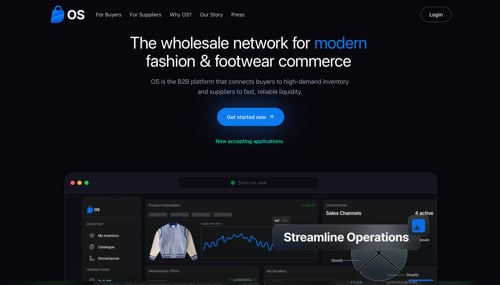
In a move set to redefine wholesale procurement for the fashion and footwear industry, OS Group has launched its proprietary B2B e-commerce marketplace. This innovative platform aims to provide qualified retailers and business buyers with a centralized and efficient channel for acquiring high-demand sneakers and streetwear. The marketplace facilitates immediate wholesale purchase and fulfillment, granting businesses access to globally recognized brands such as Nike, Adidas, and ASICS.
Historically, the B2B fashion wholesale market has been characterized by intricate supply chains, reliance on trade shows, and often opaque pricing structures. OS Group’s platform addresses these challenges by digitizing and centralizing the procurement process. By offering immediate access to a curated selection of sought-after products, the marketplace promises to reduce lead times, enhance inventory management for retailers, and provide a more transparent and accessible sourcing experience. This development is particularly timely as businesses increasingly seek to optimize their inventory strategies and respond swiftly to evolving consumer trends in the secondary consumer markets. The ability to source directly from a trusted network also mitigates risks associated with counterfeit goods and ensures product authenticity, a growing concern in the resale market.
Ampd Pioneers Agentic Shoppable Media for a Frictionless Shopper Journey
Ampd, a leading agentic technology provider, has unveiled its groundbreaking agentic shoppable media, a solution designed to create a seamless and direct connection between brand media and e-commerce transactions. This innovation allows shoppers to be routed directly to their preferred online retailer, already logged in and poised for purchase.
The significance of this development lies in its ability to eliminate friction points in the online shopping journey. Traditionally, a consumer might see an advertisement, express interest, and then face multiple steps to find the product on a retailer’s site, potentially abandoning the purchase in the process. Ampd’s agentic approach streamlines this by ensuring that when a shopper clicks on a shoppable media asset, they are taken to a pre-authenticated environment within their chosen retail ecosystem. Furthermore, the platform empowers brands to manage fair-share gross merchandise value (GMV) allocations across various retail partners, such as Amazon, Walmart, and Target, from a single link. This not only simplifies campaign management for brands but also maximizes the probability that consumers land on a preferred retail platform, thereby enhancing brand loyalty and optimizing retail partnerships. This technology represents a significant step towards truly personalized and frictionless commerce, where the path from discovery to purchase is almost instantaneous.

Airship Enhances AI Agent Fleet for Advanced Campaign Management and Cross-Channel Experiences
Airship, a prominent player in mobile-first customer experience platforms, has announced a substantial expansion and enhancement of its AI Agent Fleet. This upgrade introduces conversational interfaces for its AI agents, designed to automate and accelerate various aspects of marketing and customer engagement.
The newly enhanced AI Agent Fleet includes three key agents: Campaigns AI Agent, Native Experience AI Agent, and Journeys AI Agent. The Campaigns AI Agent is engineered for the automation and acceleration of marketing campaigns, allowing marketers to strategize and deploy initiatives with greater speed and efficiency. The Native Experience AI Agent empowers users to build rich app and web experiences directly from text descriptions or image uploads, significantly reducing the technical barrier to creating engaging digital content. The Journeys AI Agent focuses on the creation and refinement of complex, multichannel customer journeys, ensuring a cohesive and personalized experience across all touchpoints.
This expansion signifies a strategic move towards leveraging AI to democratize sophisticated marketing capabilities. By providing conversational interfaces, Airship is making powerful tools accessible to a broader range of users, enabling them to optimize campaigns, personalize customer interactions, and build compelling digital experiences without requiring extensive technical expertise. The ability to generate native app and web experiences from simple prompts, for instance, could dramatically shorten development cycles and allow for more agile content updates in response to market feedback.
Clarvos Empowers Small Businesses with Agentic Workflow for Campaign Launch
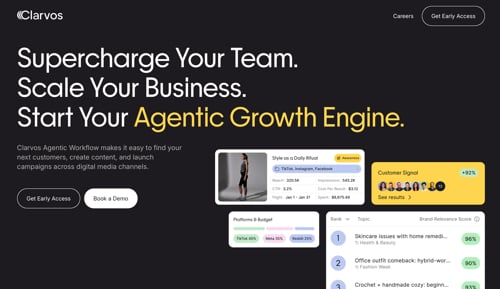
Clarvos, a nascent force in marketing technology, has launched its agentic marketing workflow platform, specifically designed to assist small and medium-sized businesses (SMBs) in planning, creating, and executing marketing campaigns. The platform’s core innovation lies in its ability to coordinate campaign strategy, creative generation, and activation across major digital advertising channels like Google, Meta, and TikTok.
The Clarvos Agentic Workflow utilizes AI to simulate customer responses, evaluate various campaign options, and guide users through the setup process. This is particularly beneficial for SMBs that often face resource constraints and may lack dedicated marketing teams or deep expertise in complex advertising platforms. By automating critical aspects of campaign management and providing AI-driven insights, Clarvos aims to level the playing field, enabling smaller businesses to compete more effectively with larger enterprises. The platform’s capacity to predict customer reactions and optimize campaign parameters before launch can lead to more efficient ad spend and higher return on investment, a crucial factor for businesses operating on tighter budgets. The integration across multiple advertising platforms also offers a consolidated approach to digital marketing, reducing the complexity of managing disparate tools and strategies.
Joybuy Leverages Competera for Automated European Market Operations
Joybuy, the new retail venture from JD.com, is collaborating with Competera, a leading retail pricing platform, to streamline and automate its market operations across Europe. This partnership introduces a centralized system that enables Joybuy to monitor competitive pricing shifts in real-time.
The implementation of Competera’s platform provides Joybuy with daily market insights, allowing its teams to identify pricing discrepancies and adjust their strategies before peak shopping hours commence. In the complex and diverse European e-commerce landscape, dynamic pricing and competitive intelligence are paramount. Joybuy’s adoption of this system reflects a commitment to data-driven decision-making and a proactive approach to market positioning. By automating the process of competitive analysis and price adjustment, Joybuy can ensure its offerings remain attractive and competitive across various European markets, potentially leading to increased sales and improved market share. The ability to react swiftly to market dynamics is a significant advantage, particularly in fast-moving consumer goods sectors where price sensitivity can heavily influence purchasing decisions. This collaboration underscores the growing trend of e-commerce giants leveraging specialized AI and data analytics platforms to optimize their global operations.
DropsyneX Debuts AI-Powered E-commerce System for Global Expansion
DropsyneX, a B2B cross-border e-commerce platform, has announced its global expansion alongside the launch of its new, comprehensive e-commerce system. This integrated solution encompasses live commerce capabilities, robust merchant services, and advanced global logistics.
The DropsyneX system is designed as a one-stop shop for businesses looking to engage in international e-commerce. Key features include a global warehouse network, intelligent inventory and warehouse management, and virtual livestream commerce. The platform’s AI-powered livestream commerce tool is particularly noteworthy, promising automated product promotion, enhanced conversion rates, and reduced reliance on manual operational teams. This development addresses several pain points for businesses involved in cross-border e-commerce, including the complexities of international shipping, inventory management across multiple regions, and the need for engaging sales channels. The AI-driven livestream functionality can create more dynamic and interactive shopping experiences, potentially boosting sales and brand visibility in new markets. By integrating logistics, inventory management, and sales channels, DropsyneX aims to simplify the process of scaling an e-commerce business internationally.
Yobi Partners with Microsoft to Unlock Predictive Behavioral Intelligence
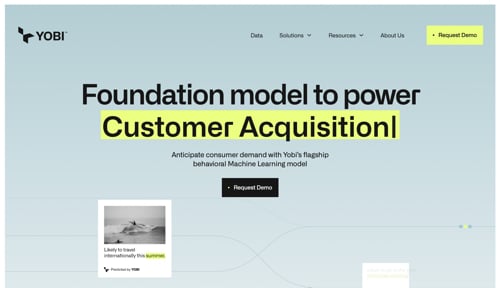
Yobi, a specialist in behavioral AI, has forged a strategic partnership with Microsoft to enhance predictive consumer intelligence for enterprises. This collaboration leverages Microsoft Azure to power Yobi’s consented consumer database, which provides organizations with ethical access to behavioral datasets for building predictive AI models.
The Yobi model analyzes real-world consumer data, including purchase history, store visit patterns, and marketing conversion rates, to gain a deep understanding of consumer intent and predict future behavior. By integrating with Microsoft Azure, Yobi can offer enterprises a scalable and secure platform for utilizing this valuable intelligence. Businesses can now personalize their outcome modeling around key metrics that align with their strategic priorities, leading to more targeted marketing efforts, optimized product development, and improved customer retention. The emphasis on "consented" consumer data is crucial in today’s privacy-conscious environment, ensuring that predictive insights are derived ethically and transparently. This partnership signifies a move towards more sophisticated and responsible use of AI in understanding and influencing consumer behavior, enabling businesses to anticipate needs and deliver highly relevant experiences.
Zendrop Introduces MCP Server to Connect AI Assistants with Live Store Data
Zendrop, a leading dropshipping and e-commerce fulfillment platform, has launched a Model Context Protocol (MCP) server. This innovative tool grants AI assistants, including popular models like Claude, ChatGPT, OpenClaw, and Gemini, direct access to a merchant’s live store data.
The MCP server allows merchants to define granular permissions, specifying what an AI assistant can read or write, ranging from catalog browsing to order management. This granular control, coupled with built-in rate limiting for high-volume stores, ensures both functionality and security. The MCP server is designed to be compatible with any AI assistant that supports the MCP standard, making it a versatile solution for merchants. This integration represents a significant advancement in the practical application of AI in e-commerce operations. By enabling AI assistants to interact directly with store data, merchants can automate a wider range of tasks, from generating product descriptions to managing customer inquiries and even processing orders, all through natural language commands. This development has the potential to drastically reduce manual workload and enhance operational efficiency for dropshippers and e-commerce businesses.
PayPal Integrates Payment Links into Canva for Seamless Creator Monetization
PayPal has expanded its payment solutions by making payment links directly available within Canva, the popular graphic design platform. This integration empowers creators to transform their designs into direct checkout experiences.
Canva users can now generate PayPal payment links or QR codes and embed PayPal checkout options—including PayPal, Venmo, and PayPal Pay Later—into their digital and printed designs. This feature allows for seamless payment acceptance across various channels, including social media platforms, email, messaging apps, and in-person interactions. The move is a significant boon for freelance designers, small businesses, and content creators who rely on platforms like Canva to produce marketing materials and visual assets. By simplifying the payment process, PayPal and Canva are enabling creators to monetize their work more effectively and directly. This integration removes a common hurdle for freelancers and small businesses, streamlining the transition from design creation to revenue generation. It exemplifies a growing trend of embedding financial services directly into creative and productivity tools, making commerce an integral part of the content creation workflow.
Yuma AI Launches "Ask Yuma" for Conversational E-commerce Support Management
Yuma AI, a dedicated platform for e-commerce customer support, has introduced "Ask Yuma," a conversational interface that empowers merchants to manage their support automation through natural language commands.
Integrated across the Yuma dashboard, "Ask Yuma" provides direct access to a merchant’s support tickets, automations, knowledge base, performance metrics, integrations, and brand voice guidelines. This intuitive interface allows customer experience teams to build, investigate, and optimize their automation strategies in real-time simply by conversing with Yuma. The introduction of "Ask Yuma" signifies a move towards more accessible and user-friendly AI-powered customer support solutions. For e-commerce businesses, efficient and effective customer support is critical for customer satisfaction and retention. By enabling management through natural language, Yuma AI is reducing the technical complexity often associated with configuring and optimizing support automation tools. This can lead to faster issue resolution, more consistent customer service, and improved operational efficiency for support teams.
Katana Launches Unified Platform for Multi-Channel Brands, Enhancing Inventory Management
Katana, a cloud-based inventory management software provider, has launched a comprehensive, unified platform designed for brands selling across multiple sales channels. This launch coincides with the introduction of Katana’s native Amazon FBA integration, a key feature for brands operating on the popular e-commerce giant.
The new platform offers seamless daily or weekly synchronization between Amazon FBA stock and Katana’s inventory management system. It also supports multi-marketplace integration and features a sophisticated product mapping system, enabling businesses to maintain accurate inventory levels across all their sales channels. Katana also provides native integrations with popular platforms such as Shopify, WooCommerce, QuickBooks, and Xero. This holistic approach to inventory management is crucial for brands seeking to scale their operations efficiently. By consolidating inventory data from various sources into a single, accessible platform, Katana helps businesses avoid overselling, reduce stockouts, and optimize their supply chain. The native Amazon FBA integration is particularly significant, as it directly addresses a critical need for businesses that rely heavily on Amazon for sales and fulfillment.
Visa Introduces Intelligent Commerce Connect for AI-Powered Business Transactions
Visa has unveiled Intelligent Commerce Connect, a new service designed to facilitate business participation in the rapidly evolving landscape of AI-powered commerce. This platform aims to streamline secure payment initiation, tokenization, spend controls, and authentication for businesses engaging in agent-driven transactions.
Through a single integration via the Visa Acceptance Platform, Intelligent Commerce Connect enables agents to initiate payments securely. It leverages Visa Intelligent Commerce APIs, allowing for the processing of agent purchases using Visa cards, and also integrates with other networks’ APIs, supporting payments with both Visa and non-Visa cards. This development is a direct response to the emergence of agentic commerce, where AI agents are increasingly acting on behalf of consumers or businesses to make purchases. Intelligent Commerce Connect provides the necessary infrastructure to support these new transactional models in a secure and controlled manner. By offering a unified gateway for AI-powered transactions, Visa is positioning itself as a key enabler of future commerce, ensuring that businesses can adapt to and benefit from the integration of AI into the purchasing process. This could lead to more efficient procurement for businesses and new opportunities for personalized, AI-driven shopping experiences.
Blytz Emerges as an Intelligent Payments and Collections Platform
BlytzPay has launched Blytz, a new intelligent platform designed to revolutionize payments and collections. The Blytz ecosystem comprises three core components: BlytzPay, BlytzCollect, and BlytzCash, each addressing specific needs within the payment lifecycle.
BlytzPay focuses on facilitating text-first, bankless payments, aiming to simplify transactions for both consumers and businesses. BlytzCollect leverages AI-driven voice and BlytzPay’s text payment links to automate outreach and improve on-time payment rates, a critical function for managing accounts receivable. Complementing these services, BlytzCash expands payment options by allowing customers to pay in cash at a network of retailers, catering to a segment of the population that may not have traditional banking access or prefers cash transactions. This comprehensive approach to payments and collections addresses the diverse needs of modern businesses. By integrating multiple payment methods and utilizing AI for collections, Blytz aims to reduce payment friction, enhance cash flow, and improve overall financial management for its users. The emphasis on text-first communication and AI automation reflects a broader trend towards more efficient and customer-centric financial interactions.
Selro Launches AI-Powered Generator for E-commerce Product Descriptions
Selro, a multichannel e-commerce management platform, has introduced an AI-powered product description generator. This new feature is integrated directly into the Selro platform, enabling users to create compelling product titles, descriptions, and summaries with ease.

The AI generator can produce content from existing product data, images, or even simple title snippets. It is designed to operate efficiently across large product catalogs and multiple sales channels, a significant advantage for businesses managing extensive inventories and diverse online presences. Generating high-quality product descriptions is a time-consuming but crucial aspect of e-commerce, directly impacting search engine optimization (SEO) and customer conversion rates. Selro’s AI-powered tool aims to automate this process, saving merchants time and resources while improving the quality and consistency of their product listings. This innovation allows businesses to enhance their online storefronts more effectively, potentially leading to increased visibility, better customer engagement, and ultimately, higher sales. The ability to generate descriptions across numerous channels from a single interface streamlines operations and ensures brand consistency.









