rifanmuazin
Selecting the optimal e-commerce platform as a YouTuber transcends mere feature sets or cost considerations. The paramount factor lies in the platform’s ability to seamlessly integrate with your YouTube channel and effectively support your unique sales strategies, whether that involves merchandise, digital downloads, coaching services, or comprehensive online courses. Some platforms prioritize user-friendliness for quick adoption, while others are engineered for the robust scaling of substantial online businesses. A select few are specifically designed for deep integration with YouTube itself, unlocking powerful tools such as the product shelf directly beneath your videos or a dedicated storefront linked to your channel’s profile. This comprehensive analysis delves into the top e-commerce platforms available to YouTubers, offering insights to guide creators from their initial merchandise launch to the establishment of a full-time online enterprise.
Key Takeaways for YouTubers in the E-commerce Landscape
The digital economy continues to evolve, and for content creators on platforms like YouTube, leveraging e-commerce is no longer an option but a strategic imperative. The core challenge for YouTubers lies in finding a digital storefront that not only showcases their products but also amplifies their brand and enhances audience engagement. This involves understanding the nuances of different platform functionalities, their pricing models, and, crucially, their compatibility with YouTube’s own monetization and integration features.
Quick Comparison: Top E-commerce Platforms for YouTubers in 2026
| Platform | Best For | Starting Price (USD) | YouTube Shopping Integration | Highlights |
|---|---|---|---|---|
| Shopify | Scalable, long-term e-commerce brands | $39 per month | Yes | Advanced features, massive app store |
| Spring | Print-on-demand merchandise | Free to start | Yes | Supports YouTube shelf and channel store |
| Sellfy | Digital products and light merchandise | $22 per month (annual billing) | No | Creator-focused stores with email tools |
| Gumroad | Fast digital sales and simple checkout | Free, 10% fee per sale | No | Low-friction setup, ideal for digital assets |
| Kajabi | Courses, memberships, and coaching | $149 per month (annual billing) | No | All-in-one creator business platform |
| WooCommerce | Advanced control with WordPress sites | Free plugin | No | Full flexibility for experienced users |
1. Shopify: Best for Building a Serious Brand
Starting price: $39 per month
YouTube Shopping integration: Yes, with Google Merchant Center setup
Built for: Scalable e-commerce businesses and full product catalogs
Shopify stands as the most sophisticated e-commerce platform on this list. While it serves a broad spectrum of online businesses, its robust features make it exceptionally powerful for YouTubers aiming to cultivate a substantial brand presence beyond their video content. During testing, the depth of functionality available within Shopify, once the initial setup is complete, was particularly impressive. The professional dashboard, comprehensive suite of tools—including abandoned cart recovery, product bundling, upsell capabilities, and advanced analytics—coupled with an expansive app store for further customization, provides creators with unparalleled flexibility.
The integration with YouTube Shopping, facilitated through Google Merchant Center, requires a slightly more involved setup process. However, once established, it unlocks direct access to the product shelf under videos, the dedicated channel store tab, product tagging in Shorts, and seamless integration with livestreams. For creators who are already generating sales and are ready to professionalize their operations, Shopify offers the architectural foundation for a long-term, scalable business. Its capacity to manage diverse product lines, complex marketing campaigns, and extensive customer data makes it the premier choice for ambitious YouTubers looking to build a lasting e-commerce empire. The platform’s continuous innovation, including recent updates focusing on enhancing creator tools and streamlining checkout experiences, further solidifies its position.
Why Use Shopify in 2026?
Shopify is the definitive platform for YouTubers treating their channel as a serious business, demanding a professional and scalable storefront. It is engineered for brands poised for growth, expansion across multiple channels, and eventual sale. For those committed to e-commerce beyond simple merchandise drops, Shopify provides the most comprehensive and future-proof solution.
Shopify is suitable for:

- Creators with established audiences looking to diversify revenue streams.
- Businesses planning to sell a wide range of products, including physical goods, digital products, and services.
- YouTubers aiming for sophisticated branding and a high-conversion customer experience.
- Those who require advanced marketing and sales features like upsells, cross-sells, and loyalty programs.
Shopify isn’t suitable for:
- Creators with very limited budgets who are only testing the waters.
- Those who need an immediate, no-setup-required solution for a single digital product.
- Individuals uncomfortable with managing a more complex backend interface.
2. Spring: Best for Simple Print-on-Demand Merchandise
Starting price: Free to start
YouTube Shopping integration: Yes
Built for: Creators launching their first merchandise lines
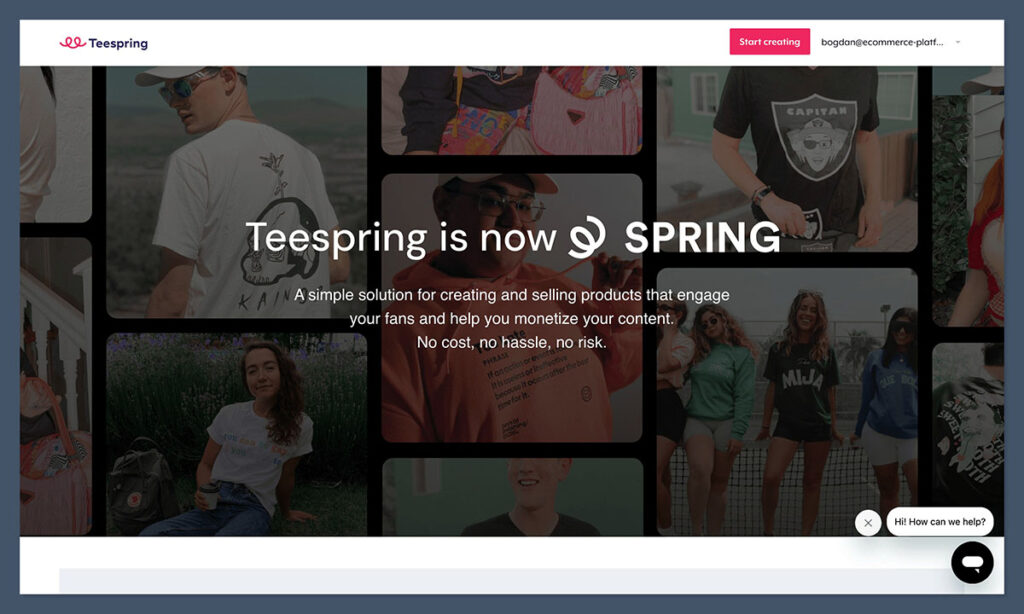
Spring, formerly known as Teespring, is a widely recognized platform within the YouTube merchandise ecosystem. Its primary appeal lies in its zero-cost entry point and direct integration with YouTube, enabling features like the product shelf, channel stores, and live stream merchandising. This makes it an exceptionally accessible option for YouTubers looking to monetize their audience with branded apparel and accessories without any upfront financial risk.
The platform excels in its simplicity. Creators are freed from the complexities of inventory management, manufacturing, and shipping logistics. The process involves uploading designs, selecting products, and Spring handles the rest, with creators earning a profit on each sale. This risk-free model allows for the easy testing of various design concepts and product ideas. While Spring may offer a more basic interface and design tools compared to some newer platforms, its extensive creator base and wide array of product options remain significant advantages. For YouTubers prioritizing ease of use and direct integration with their YouTube presence, Spring delivers a streamlined and effective solution for launching their initial merchandise campaigns. Recent platform updates have focused on enhancing the creator dashboard and expanding product categories, further solidifying its position as a go-to for print-on-demand.
Why Use Spring in 2026?
Spring remains the most straightforward pathway for YouTubers to offer merchandise directly on their channel, requiring no prior e-commerce expertise or financial investment. Its immediate compatibility with YouTube’s native shopping features makes it ideal for creators prioritizing speed and simplicity.
Spring is suitable for:
- New YouTubers seeking to launch their first merchandise line with minimal effort.
- Creators focused on physical products like t-shirts, hoodies, and mugs.
- Those who want a completely hands-off approach to production, fulfillment, and customer service for merchandise.
- Channels looking for direct integration with YouTube’s shopping features.
Spring isn’t suitable for:
- Creators primarily selling digital products, courses, or services.
- Those who desire extensive customization over their storefront’s design and branding.
- Businesses looking to build a comprehensive e-commerce brand with a wide range of non-merchandise products.
3. Sellfy: Best for Selling Digital Products with Branding Control
Starting price: $22 per month (billed annually)
YouTube Shopping integration: No
Built for: Digital product sales and light merchandise

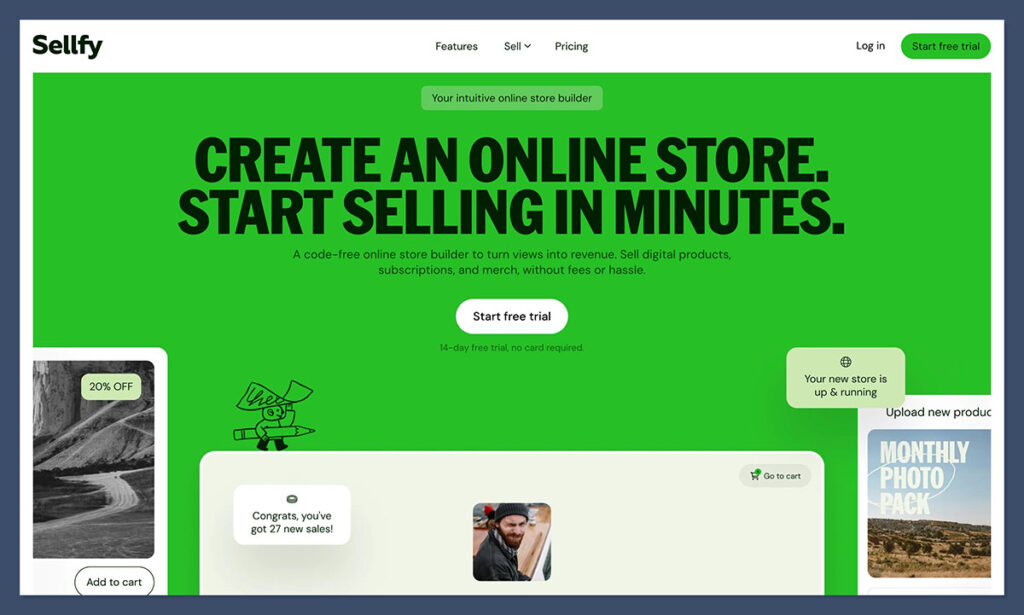
Sellfy presents itself as a user-friendly, creator-centric e-commerce platform well-suited for selling digital goods, physical items, and subscription-based content. Its streamlined setup process, intuitive editor, and polished storefront designs offer a more distinct "store-like" experience compared to some competitors, which is beneficial for creators seeking greater branding control. Unlike platforms that charge a percentage of each sale, Sellfy operates on a predictable monthly subscription model, offering financial clarity for creators anticipating consistent sales from their YouTube audience.
The platform includes integrated email marketing tools, discount code generation, and product upsell functionalities, eliminating the need for third-party integrations for basic campaign management. This consolidation of features streamlines marketing efforts and enhances the customer journey. While Sellfy does not directly integrate with YouTube Shopping, its robust features for digital product delivery, customization options, and clear pricing make it a compelling choice for YouTubers looking to establish a branded online presence for their digital offerings.
Why Use Sellfy in 2026?
Sellfy offers a compelling blend of design control and operational simplicity for YouTubers focused on selling digital products like templates, e-books, or software. It’s particularly advantageous for creators who have achieved consistent sales and wish to cultivate a more professional and branded online storefront.
Sellfy is suitable for:
- Creators selling digital products such as e-books, presets, software, or design assets.
- YouTubers who want a branded storefront with their own domain name.
- Those looking for built-in marketing tools like email marketing and discount codes.
- Creators selling a limited range of physical merchandise alongside digital products.
Sellfy isn’t suitable for:
- Creators who need direct integration with YouTube’s native shopping features.
- Businesses requiring highly advanced e-commerce functionalities like complex inventory management or wholesale options.
- Users who prefer a pay-per-sale model over a monthly subscription.
4. Gumroad: Best for Selling Digital Products Fast
Starting price: Free to start, 10% platform fee per sale
YouTube Shopping integration: No
Built for: Instant digital product delivery
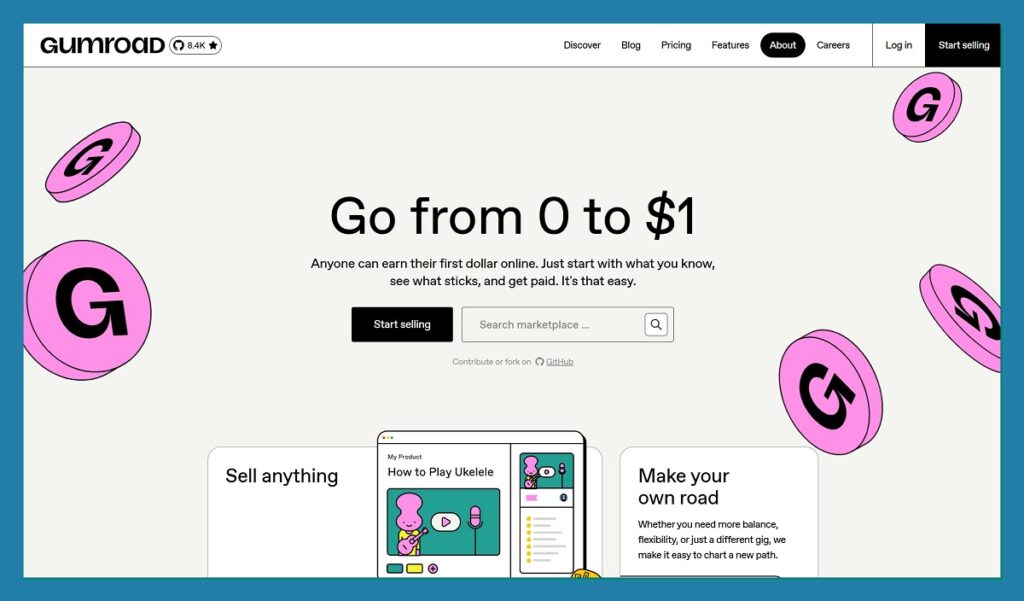
Gumroad is arguably the most expedient platform for launching digital product sales. The process is remarkably simple: upload your file, assign a title and price, and begin selling within minutes. This low-friction approach is ideal for YouTubers whose audiences are highly engaged and ready to purchase immediately. Linking directly from a video description allows for near-instantaneous sales.
While Gumroad is not designed for extensive store branding or long-term e-commerce scaling, it excels as a tool for quickly testing product ideas or launching smaller digital offerings. The 10% transaction fee is a trade-off for the zero-maintenance setup and immediate accessibility. For creators prioritizing speed and ease of use for their digital content, Gumroad provides an unparalleled starting point. Its popularity among digital creators stems from its straightforward functionality and ability to convert audience interest into sales with minimal delay.
Why Use Gumroad in 2026?
Gumroad provides the most effortless entry point for YouTubers venturing into selling digital content. Its speed, simplicity, and lack of advanced features make it perfect for creators who want to bypass complex setups and focus on delivering their products to an eager audience. It is an excellent tool for validating product ideas or capitalizing on immediate audience demand.
Gumroad is suitable for:
- Creators launching their first digital product, such as an e-book, sample pack, or template.
- YouTubers who want to quickly test a new product idea without upfront costs.
- Those prioritizing a frictionless checkout process for their audience.
- Creators who are comfortable with a percentage-based fee structure for each sale.
Gumroad isn’t suitable for:
- Creators looking to build a robust, branded online store.
- Businesses selling a high volume of physical products.
- YouTubers who need integrated marketing tools or advanced analytics.
5. Kajabi: Best for Courses, Coaching, and Memberships
Starting price: $149 per month (billed annually)
YouTube Shopping integration: No
Built for: Course creators, coaches, and knowledge-based businesses
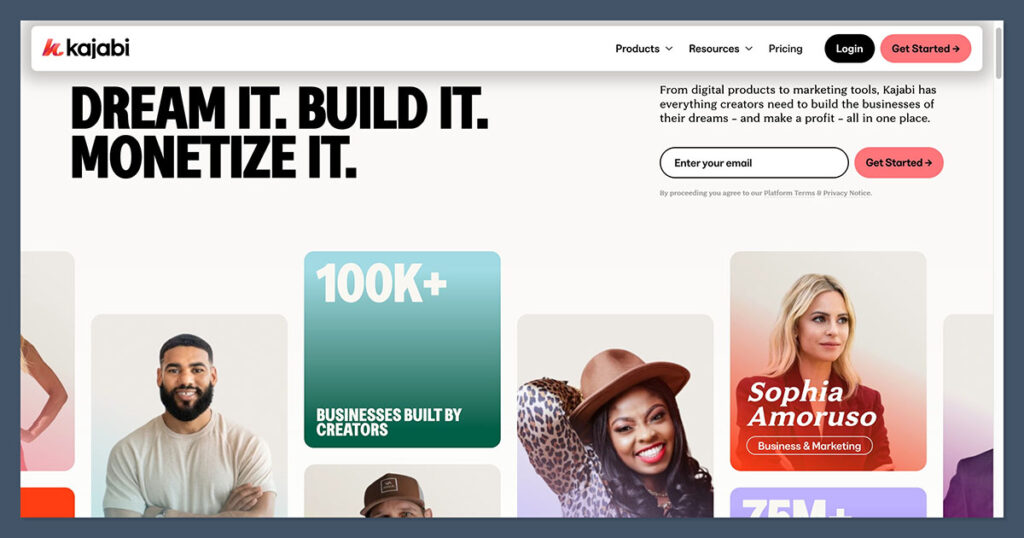
Kajabi is positioned as a premium, all-in-one platform for YouTubers focused on building a business around education, personal development, or community building—rather than solely physical or digital products. It is engineered to facilitate the creation and sale of online courses, the management of coaching programs, the operation of membership sites, and the cultivation of private online communities, all from a single, centralized dashboard.
The platform’s strength lies in its integrated approach. Instead of requiring creators to piece together disparate tools for email marketing, landing pages, video hosting, and payment processing, Kajabi consolidates these functionalities. This unified ecosystem simplifies operations and enhances the creator’s ability to deliver value. The onboarding process is clear, the templates are professionally designed, and the email marketing automation tools are powerful yet accessible. While Kajabi represents a significant investment, it is exceptionally worthwhile for creators whose monetization strategy centers on delivering transformative experiences. It is not a platform for merchandise; rather, it is for creators selling outcomes—such as fitness regimens, intensive digital bootcamps, or in-depth video courses.
Why Use Kajabi in 2026?
Kajabi is the premier choice for YouTubers aiming to transform their channel into a knowledge-based enterprise, offering courses, coaching, or premium community access. Its comprehensive suite of tools allows for content delivery, audience engagement, and long-term relationship building, all within a single, cohesive platform, thereby eliminating the need to manage multiple software solutions.
Kajabi is suitable for:
- Educators and coaches looking to package their expertise into online courses or programs.
- Creators building subscription-based membership communities.
- YouTubers offering one-on-one or group coaching services.
- Those who value an integrated platform for marketing, sales, and content delivery.
Kajabi isn’t suitable for:
- Creators whose primary focus is selling physical merchandise.
- Individuals seeking a low-cost or free solution for simple digital product sales.
- Users who prefer highly specialized tools for each aspect of their business.
6. WooCommerce: Best for WordPress Users Who Want Full Control
Starting price: Free plugin (additional costs for hosting, extensions, and themes)
YouTube Shopping integration: No
Built for: Custom e-commerce on WordPress websites
WooCommerce serves as the de facto e-commerce solution for users operating within the WordPress ecosystem. As an open-source, highly flexible, and extensively customizable platform, it offers unparalleled control over the online store—though this comes with a greater degree of responsibility for the user. For YouTubers who already maintain a WordPress website or blog, integrating WooCommerce keeps their content and e-commerce operations unified within the same digital environment.
During evaluation, WooCommerce proved to be a powerful tool, but it demands a certain level of technical proficiency. Users are responsible for managing plugins, themes, hosting, and ongoing updates. However, this hands-on approach grants complete dominion over the checkout process, product types, search engine optimization (SEO) strategies, and marketing integrations. WooCommerce is particularly advantageous for creators who publish content across multiple platforms, such as blog posts or tutorials, and wish to seamlessly embed e-commerce functionality within that existing content framework. It’s important to note that direct integration with YouTube Shopping is not supported by WooCommerce.
Why Use WooCommerce in 2026?
WooCommerce is the optimal solution for creators already invested in the WordPress platform or those who prioritize maximum customization and granular control over their online store. It enables complete design autonomy, centralizes content and e-commerce management, and allows for tailored functionality through extensive plugin options, making it a natural fit for WordPress-centric creators.
WooCommerce is suitable for:
- YouTubers who already have a WordPress website and want to consolidate their online presence.
- Creators who require a high degree of customization for their store’s design and functionality.
- Individuals comfortable with managing their own hosting and website maintenance.
- Those who need to integrate e-commerce deeply with their blog or website content.
WooCommerce isn’t suitable for:
- Creators who prefer a simple, hosted e-commerce solution without the need for website management.
- Beginners with limited technical experience in website development.
- YouTubers seeking direct integration with YouTube Shopping features.
How to Choose the Best E-commerce Platform as a YouTuber
The selection of an e-commerce platform should be dictated by what you sell and your preferred sales methodology, as not all platforms cater to the same creator needs.
- For merchandise directly beneath your videos: Spring offers a swift setup and native YouTube integration.
- For building a brand that extends beyond YouTube: Shopify provides unparalleled scalability and comprehensive e-commerce capabilities.
- For selling digital downloads or assets: Begin with Gumroad for its immediate ease of use, and transition to Sellfy as your needs for branding and control grow.
- For offering coaching or online courses: Kajabi is the ideal platform to consolidate all your business tools into a single hub.
- For creators already integrated with a WordPress site: WooCommerce allows you to maintain a cohesive ecosystem for your content and commerce.
Regardless of the platform chosen, the most critical step is to commence selling. The ability to upgrade or switch platforms exists as your channel and audience expand. What proves effective at 1,000 subscribers may not suffice at 100,000, and this evolution is natural. It is advisable to start with the most straightforward tool that aligns with your current objectives, rigorously test your offerings, and actively solicit feedback. The sooner you can place a product before your viewers, the more rapidly you will ascertain what resonates and what does not.
Our Testing Methodology
The evaluation of these e-commerce platforms spanned six weeks, with a specific emphasis on their suitability for YouTubers rather than general e-commerce applications. Each platform was assessed from a creator’s perspective, encompassing the entire process from store setup, integration with YouTube channels where feasible, product uploading, to the end-to-end buyer experience.
| Criteria | What We Evaluated |
|---|---|
| YouTube integration | Native Product Shelf support, channel store availability, Shorts and livestream tagging, and setup complexity. |
| Creator fit | How well the platform accommodates the typical YouTuber mix of merchandise, digital products, and memberships. |
| Pricing transparency | Actual costs at 10, 100, and 1,000 sales per month, including platform fees, payment processing, and necessary add-ons. |
| Setup and ease of use | Time from signup to first live product, clarity of the dashboard, and quality of the onboarding process. |
| Branding and storefront control | Design customization options, domain name integration, and the overall professionalism of the storefront. |
| Scalability | The platform’s capacity to support a creator’s growth from 1,000 to 100,000 subscribers without requiring a forced migration. |
| Support and operations | Fulfillment handling, quality of customer service, and tax compliance, including Merchant of Record status where applicable. |
Platforms that did not meet at least two of these criteria were excluded from this list, even if they performed well in general e-commerce reviews. The primary objective throughout this process was to answer a singular question: if a YouTuber were to start today, which platform would offer the most direct route to sustainable revenue without hindering future growth potential?
Final Verdict: Which Platform Should You Choose?
There is no single platform that universally excels for every creator. The optimal choice is contingent upon your product offerings, the size of your channel, and the level of operational involvement you are prepared to undertake.
- Best for scaling a real e-commerce brand: Shopify. If your ambitions extend beyond the YouTube audience, Shopify is meticulously designed to evolve with you into a comprehensive commerce business, boasting the most extensive feature set on this list.
- Best for a first merchandise drop with zero cost: Spring. It remains the most straightforward method for offering merchandise directly on your videos, requiring no upfront investment and featuring native YouTube integration.
- Best for selling digital products: Gumroad for initial launches, Sellfy as you mature. Gumroad enables live sales in minutes; Sellfy offers improved profit margins and a dedicated storefront once sales become consistent.
- Best for courses, coaching, and memberships: Kajabi. If your YouTube content serves as a funnel to paid programs rather than physical products, Kajabi centralizes all necessary components in one location.
- Best for creators already on WordPress: WooCommerce. This platform provides complete control, limitless customization, and integrates content and commerce within the same operational ecosystem.
For most YouTubers beginning their e-commerce journey today, Spring for merchandise, complemented by Gumroad for swift digital product sales, will likely yield the best initial results. Migration to other platforms is always an option later, so prioritize the platform that minimizes friction in launching your first product this week.
Frequently Asked Questions
How many subscribers do I need before I can sell products on YouTube?
You can link products from your video descriptions to your store at any subscriber count. To access native YouTube Shopping features, such as the product shelf and channel store, a minimum of 10,000 subscribers is generally required, along with a monetized channel and eligibility in a supported country. Platforms like Spring offer earlier access for direct integration.
Does YouTube take a cut of my e-commerce sales?
No. YouTube does not take a commission on products sold through your integrated e-commerce store, regardless of the platform used. You retain the full profit margin you set. YouTube’s revenue share applies only to content monetization, such as ads and channel memberships, not to your direct product sales.
Can I use more than one e-commerce platform simultaneously?
Yes, and many YouTubers do. It is common to utilize Spring for merchandise, Gumroad for quick digital downloads, and Kajabi for a premium course. The primary drawback is the fragmentation of analytics and the management of multiple dashboards. For those starting out, it is advisable to focus on one platform until a clear need for expansion arises.
What is the difference between YouTube Shopping and a regular store link in the description?
A store link in the description directs viewers off YouTube to your external website. YouTube Shopping, conversely, displays your products natively beneath videos, within the channel store tab, on Shorts, and during livestreams, keeping viewers within the YouTube ecosystem. This native integration typically leads to higher conversion rates due to reduced friction, but it necessitates the use of a supported platform like Shopify or Spring.
Do I need an LLC to sell merchandise on YouTube?
Technically, no. You can operate as a sole proprietor in most regions, and platforms like Spring often act as the Merchant of Record for their catalog products, handling tax documentation. However, many creators establish an LLC or equivalent business entity once sales become substantial to separate personal and business finances and mitigate liability. It is advisable to consult with a local accountant for guidance.
Which platform is cheapest for a creator with under 10,000 subscribers?
Free-to-start platforms such as Spring and Gumroad incur no costs until a sale is made, positioning them as the most risk-averse options for smaller channels. Platforms like Shopify and Kajabi require monthly fees irrespective of sales volume, making them more suitable for channels with predictable revenue streams. The absolute cheapest option depends on the product: Gumroad is cost-effective for occasional digital products, while Spring is the most economical for low-volume merchandise.
Can I switch platforms later without losing customers?
Generally, yes. Customer lists, product designs, and digital files can typically be migrated manually. However, subscription or membership billing history is usually not transferable, requiring active members to re-subscribe on the new platform. Most creators manage this transition with promotional discounts and clear communication. Shopify and Kajabi offer dedicated migration support services.
Do I need to handle shipping and customer service myself?
This depends on your chosen platform and services. Spring and many print-on-demand integrations available through Shopify manage manufacturing, shipping, and customer support. Spring also functions as the Merchant of Record, overseeing tax calculations and remittance. If your priority is to focus on content creation, opt for a platform that assumes operational responsibilities.