

The landscape of professional communication is undergoing its most significant transformation since the advent of the internet, as the marketing and sales sectors grapple with the rapid integration of generative artificial intelligence. While the surge in AI adoption as a copywriting tool has been swift, a critical debate has emerged regarding the efficacy of machine-generated prose versus human-driven creative strategy. To understand the current trajectory of the industry, a comprehensive analysis of the methodologies employed by five of the world’s most prominent copywriters—Bob Bly, Kim Krause Schwalm, David Deutsch, Lorrie Morgan, and Anita Siek—reveals a complex paradigm where AI is viewed not as a replacement, but as a sophisticated, albeit flawed, “thinking partner.”
The Chronology of Disruption: From GPT-2 to the Generative Era
The integration of AI into the creative arts did not occur in a vacuum. The timeline of this transition began in earnest with the 2019 release of OpenAI’s GPT-2, which demonstrated a nascent ability to mimic human syntax. However, it was the public launch of ChatGPT in November 2022 that served as the catalyst for industry-wide disruption. Within months, marketing agencies reported a 40% to 60% increase in the use of AI for drafting social media posts, email subject lines, and SEO-driven blog content.
By mid-2023, the “AI gold rush” saw a proliferation of specialized tools built on top of Large Language Models (LLMs), promising to slash production times for long-form sales letters. However, by early 2024, a counter-movement began to take shape. Industry leaders noted a “homogenization” of digital content, leading to what psychologists term “algorithm aversion”—a phenomenon where consumers become instinctively repelled by content they perceive as machine-generated. This historical context sets the stage for the current “hybrid” era, where top-tier professionals are establishing rigorous boundaries for AI usage.
The Professional Consensus: Five Pillars of AI Integration
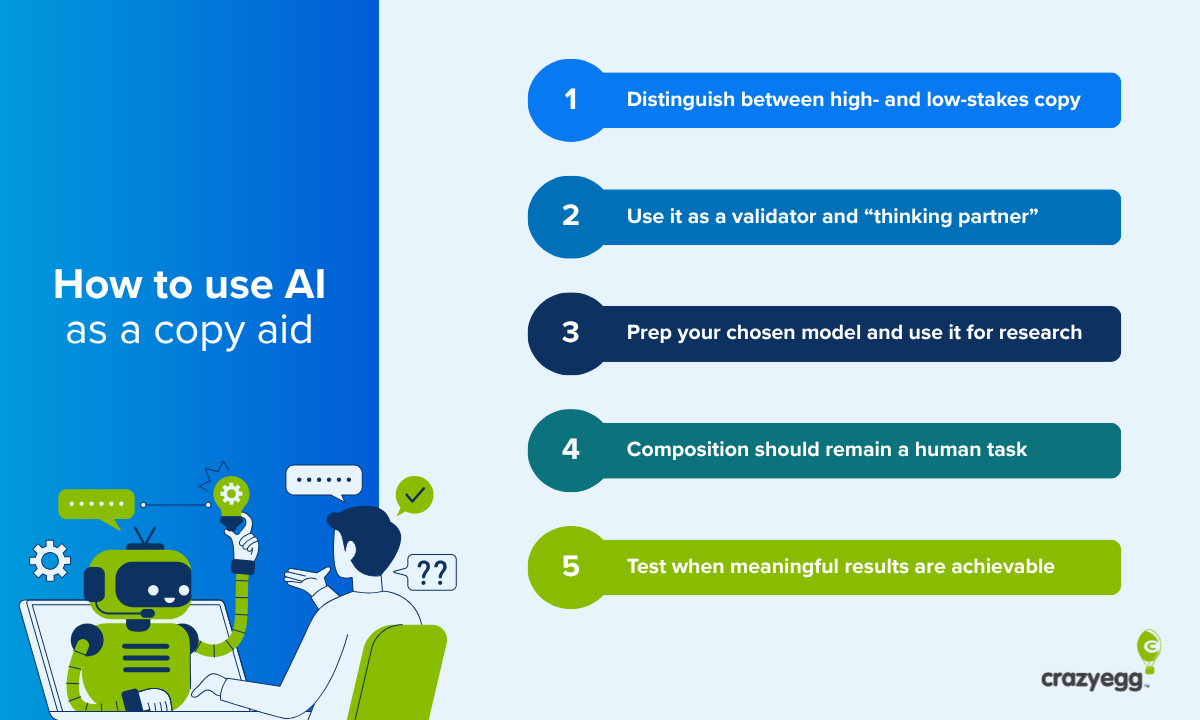
Through a series of detailed evaluations and testing phases, the industry’s “A-list” copywriters have converged on a set of fundamental rules that govern the ethical and effective use of AI in high-stakes marketing. These principles serve as a roadmap for businesses attempting to balance efficiency with conversion rates.
1. The Differentiation of Stakes
A critical distinction has emerged between “high-stakes” and “low-stakes” copy. High-stakes copy—such as direct-mail brochures, high-ticket VSLs (Video Sales Letters), and core brand manifestos—is directly tied to revenue generation. For these assets, the experts argue that human input remains non-negotiable. Conversely, low-stakes copy, such as routine newsletters or high-volume social media updates, is increasingly delegated to AI models to free up human bandwidth for strategic thinking.
2. The Shift from Creator to Validator
Top-tier writers are increasingly using AI as a “validator.” Instead of asking a model to “write a sales letter,” they use it to pressure-test existing ideas. This involves asking the AI to find flaws in an argument, suggest counter-objections a customer might have, or provide alternative perspectives that a human writer might have overlooked due to cognitive bias.
3. Rigorous Contextual Preparation
The efficacy of an AI output is directly proportional to the quality of the “pre-training” provided by the user. This involves feeding the model specific writing frameworks, such as Eugene Schwartz’s “Stages of Awareness” or the AIDA (Attention, Interest, Desire, Action) formula. Experts emphasize that the winning businesses are those that teach their AI tools to follow a proprietary strategy rather than relying on the model’s default settings.
4. The Human Voice as a Competitive Advantage
As AI-generated content saturates the market, the “human touch”—characterized by vulnerability, unique lived experiences, and nuanced humor—has become a premium commodity. The consensus among the interviewed experts is that AI is currently incapable of replicating the “wobbliness” of a human voice or the emotional resonance of a personal story.
5. Data-Driven Iteration
In environments where statistical significance can be achieved, such as high-volume email marketing, AI’s ability to generate dozens of variants for A/B testing is unparalleled. This allows human copywriters to act as “creative directors,” selecting the most promising machine-generated variants and refining them based on real-world performance data.
Expert Analysis: Perspectives from the Vanguard
Bob Bly: The Case for Human Superiority in Storytelling
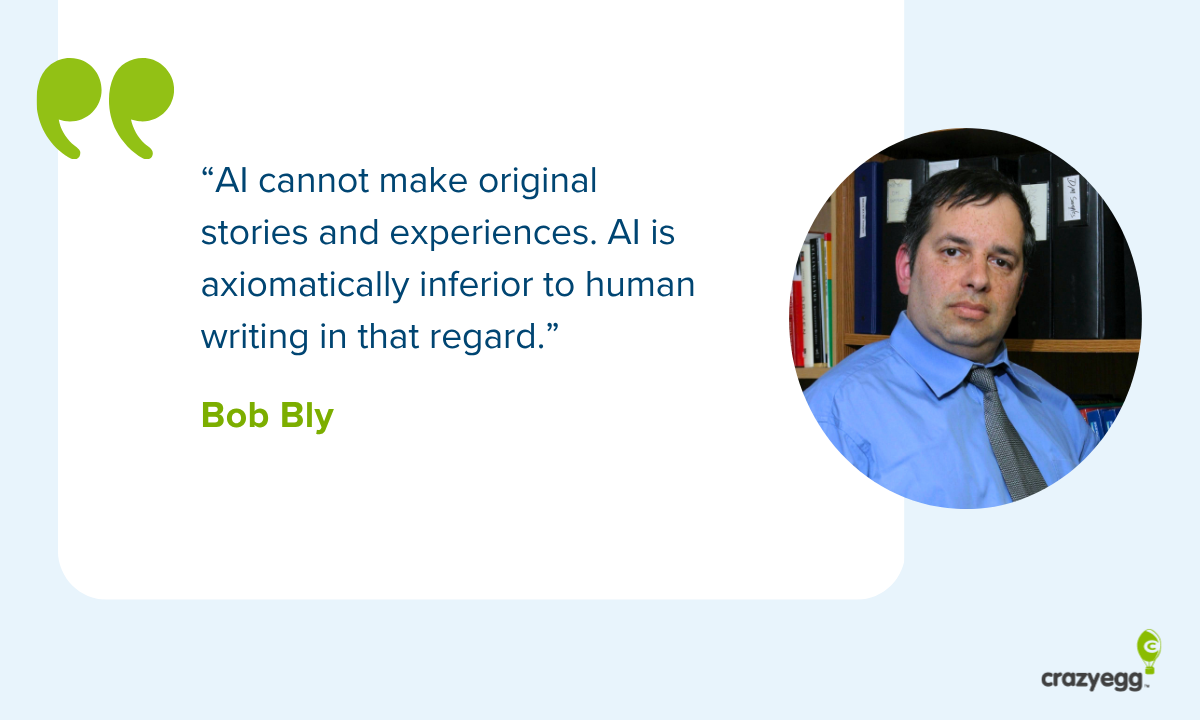
Bob Bly, a legendary figure in direct response and author of The Copywriting Handbook, maintains a cautious stance. Bly argues that while AI can assist in the “meat on the legs” phase of an idea—such as identifying specific economic consequences of a geopolitical event for a financial newsletter—it remains an inferior writer. “AI cannot make original stories and experiences,” Bly notes, pointing out that storytelling is the bedrock of persuasion. For Bly, AI is a research assistant that must never be allowed to hold the pen for the final draft of a revenue-critical asset.
Kim Krause Schwalm: The Evolution of Prospect Research
Kim Krause Schwalm, known for her record-breaking controls in the health and finance niches, utilizes AI to automate the “grunt work” of marketing. Her “Prism exercise,” a method for developing deep prospect avatars, has been enhanced by AI’s ability to synthesize data from forums and surveys. However, she warns that the resulting copy is often “clinical” and lacks the emotional “hook” necessary to convert a skeptical reader.

David Deutsch: Protecting the Cognitive Muscle
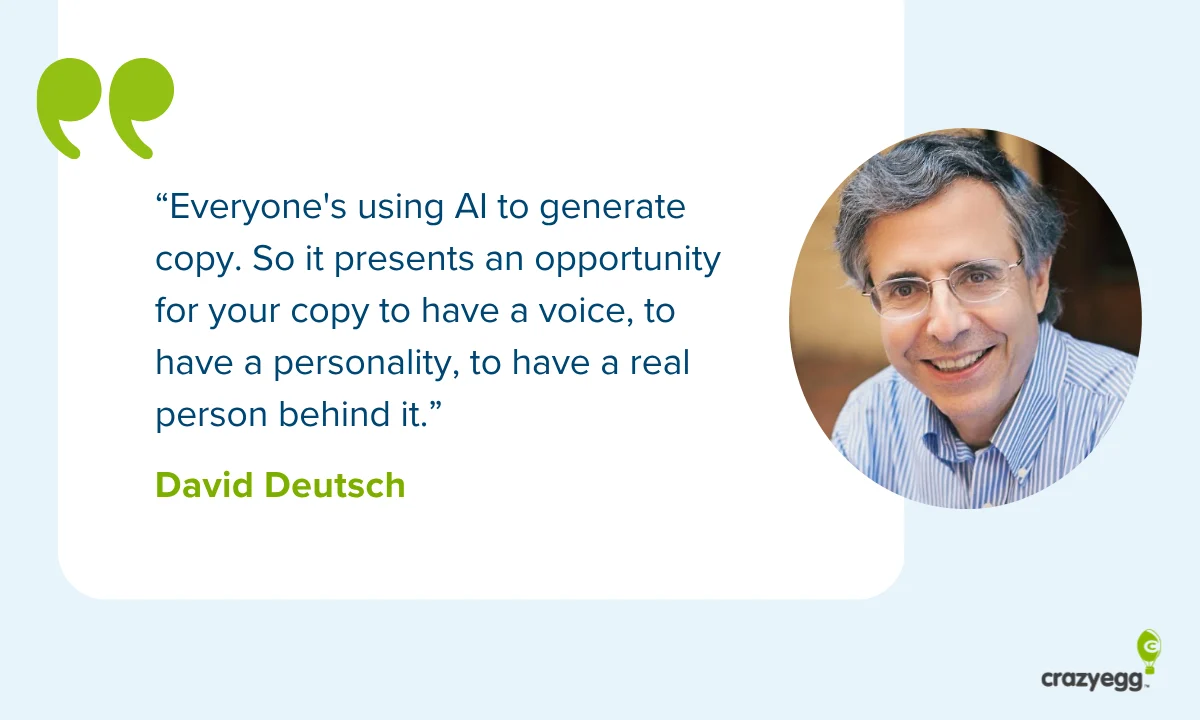
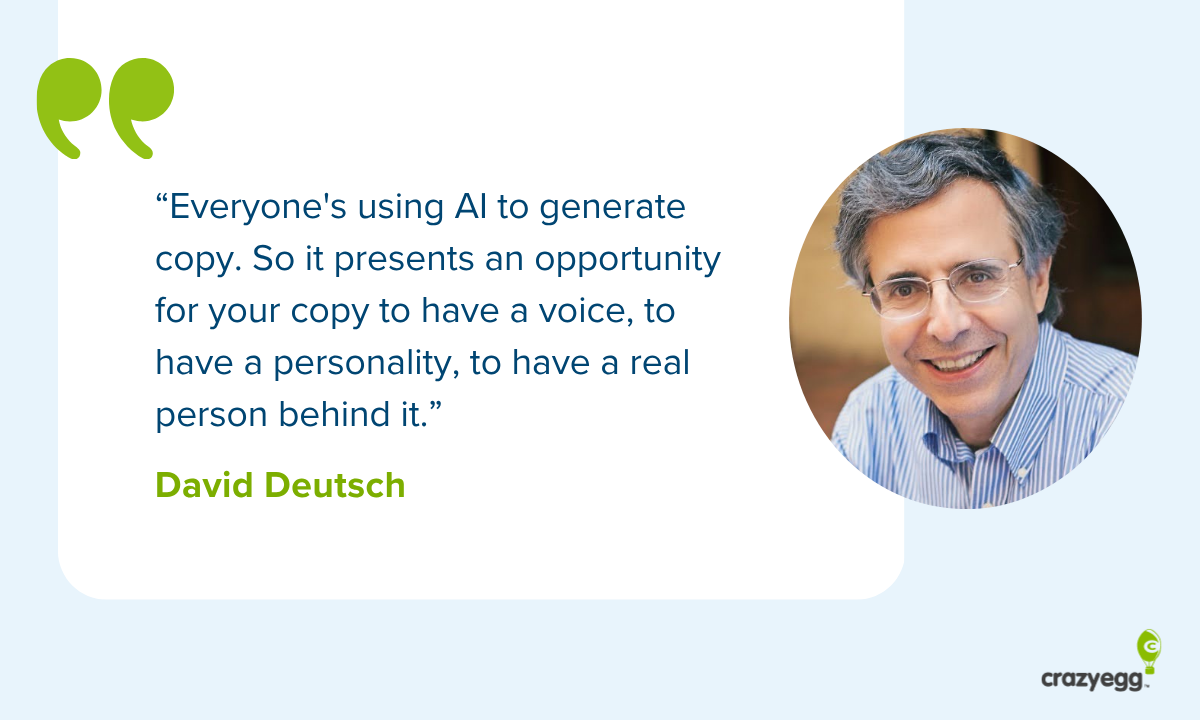
David Deutsch, whose copy has generated over $1 billion in sales, views AI as a double-edged sword. While he utilizes AI for high-volume testing, he expresses concern over “cognitive decline” in the industry. Deutsch advocates for a “human-first” approach where the writer generates the core ideas before asking the AI for a critique. “Don’t just ask AI for ideas,” Deutsch warns. “Say, ‘Here are my ideas. I want you to critique these.’”
Lorrie Morgan: Combating the “Frictionless Optimism” of Machines
Lorrie Morgan, mentored by industry giants like Gary Halbert, highlights a specific flaw in AI: its “relentless positivity.” Because AI models are programmed to be helpful and polite, they often fail to capture the frustration, doubt, and grit that characterize the human experience. Morgan argues that readers trust writers who have “actually been through something,” a quality that AI, by its very nature, cannot possess.
Anita Siek: The Intersection of Psychology and Systems
Anita Siek, founder of Wordfetti, represents the new guard of copywriters who view AI as a strategic amplifier. By building custom tools like “FETTIBot,” trained on nearly a decade of proprietary intellectual property, Siek demonstrates how AI can be used to scale a specific human methodology. Her approach focuses on “human-centered” AI use that prioritizes behavioral psychology over simple word generation.
Supporting Data: The Economic and Productivity Impact
Recent industry data supports the nuanced approach advocated by these experts. According to a 2024 report by the Content Marketing Institute:
- 72% of marketers use generative AI for content creation, yet only 7% trust it to produce high-quality final drafts without significant human editing.
- Productivity gains are real but uneven; while “first-draft” speed has increased by an average of 50%, the time spent on “fact-checking and tone-polishing” has risen by 30%.
- Companies that integrate human oversight into their AI workflows report a 25% higher conversion rate than those that rely on “pure” AI outputs.
Broader Implications and the Path Forward
The rise of AI in copywriting is forcing a re-evaluation of what constitutes “value” in the creative economy. As the cost of generating “serviceable” copy drops toward zero, the value of strategic thinking, psychological insight, and brand-specific voice is skyrocketing.
The broader implication for the workforce is clear: the role of the copywriter is evolving from a “writer of words” to a “strategist of systems.” Professionals who can bridge the gap between human emotional intelligence and machine efficiency will likely dominate the market. However, the risk of “content pollution”—a sea of indistinguishable, AI-generated marketing—remains a threat to brand integrity.
In conclusion, the future of copywriting is not a binary choice between man and machine. It is a hybrid model where AI handles the heavy lifting of data synthesis and variant generation, while the human expert provides the “soul,” the strategy, and the final emotional resonance. As the technology continues to evolve, the most successful practitioners will be those who use AI to sharpen their own thinking, rather than using it as a substitute for thought.







