

Instapage, a long-standing leader in landing page technology and conversion rate optimization (CRO), has officially announced its transition into a comprehensive, end-to-end AI-powered marketing platform. This strategic pivot marks a significant evolution for the company, which first entered the market in 2012 as a specialized landing page builder. By integrating generative artificial intelligence across the entire marketing lifecycle—from initial page design to automated lead follow-up—Instapage aims to address the growing demand for “lean” marketing operations that require high-output capabilities without proportional increases in headcount or software expenditures.
The announcement comes at a critical juncture for the MarTech (marketing technology) industry. As businesses grapple with tightening budgets and a saturated digital landscape, the traditional model of “stitching together” disparate tools for analytics, email, and web design is increasingly viewed as an operational bottleneck. Instapage’s new suite, which includes AI-driven page generation, email automation, and “AI Collections,” is designed to eliminate these frictions by providing a unified ecosystem where data and creative assets flow seamlessly between stages.
The Evolution of Instapage: From Builder to Ecosystem
To understand the significance of this transition, it is necessary to examine the company’s trajectory over the past decade. Founded in 2012, Instapage initially carved out a niche by offering a “pixel-perfect” drag-and-drop builder that allowed marketers to bypass traditional IT and development bottlenecks. By 2018, the company had expanded its scope to include sophisticated personalization and experimentation tools, positioning itself as a leader in the CRO space.
The shift toward AI began several years ago when Instapage started embedding machine learning into its experimentation and copywriting features. However, the latest release represents a fundamental change in architecture. Rather than treating AI as a “bolted-on” feature for specific tasks, the platform now utilizes generative models to handle the heavy lifting of structural design and communication strategy.
According to industry data, the average marketing team uses between 12 and 20 different tools to manage their digital presence. This fragmentation leads to “data silos,” where information gathered on a landing page does not easily translate into personalized email follow-ups or long-term lead nurturing. Instapage’s new direction seeks to consolidate these functions, leveraging AI to act as the connective tissue between the landing page and the customer’s inbox.
Generative Page Design: Solving the “Blank Page” Problem
At the heart of the new platform is the AI Page Generation tool. For years, the primary barrier to entry for high-converting marketing campaigns has been the “blank page” syndrome—the difficulty of translating a conceptual marketing goal into a functional, aesthetically pleasing layout with persuasive copy.
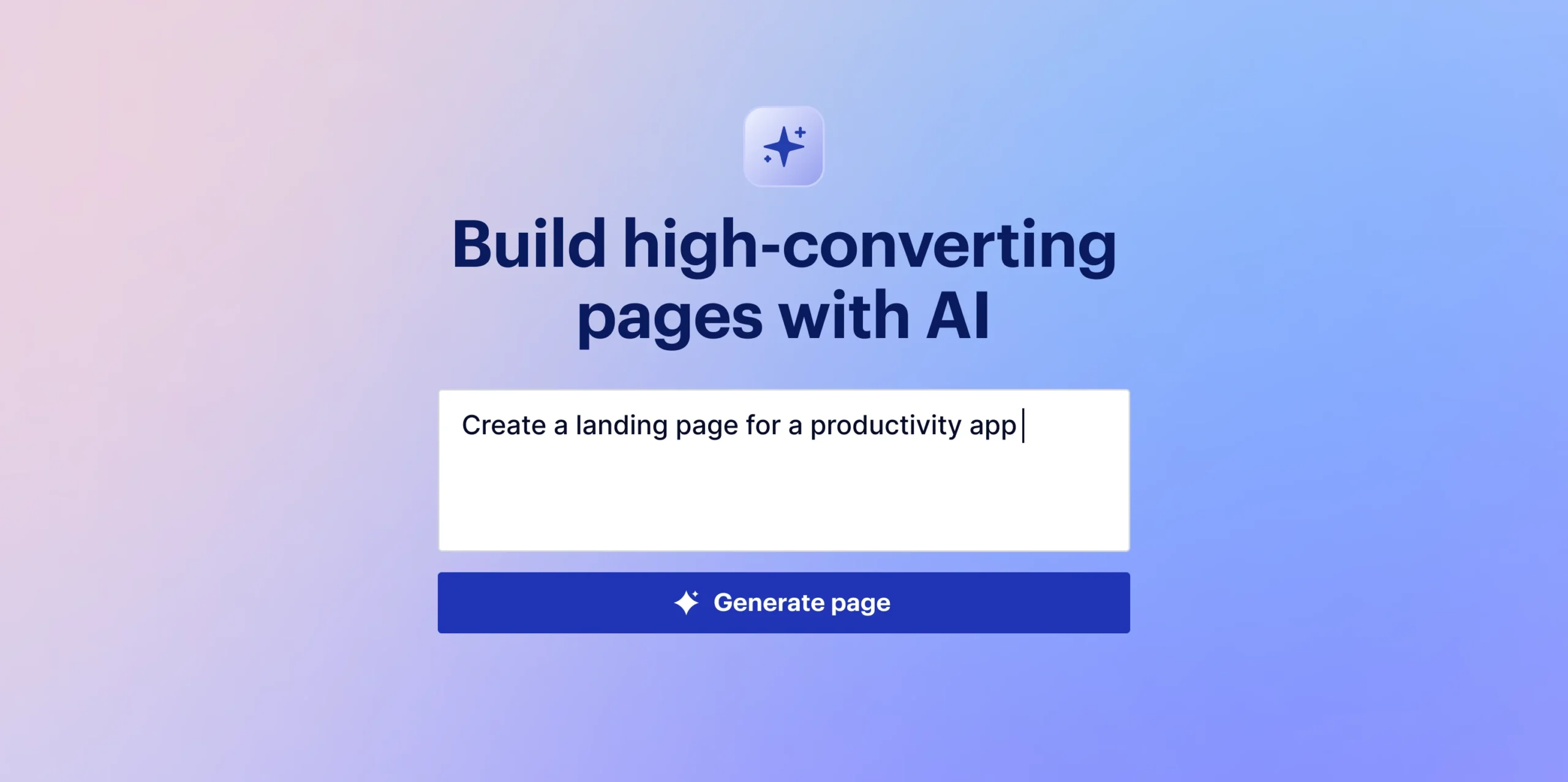
Instapage’s AI-driven approach allows users to describe their campaign goals in natural language. The system then generates a complete, conversion-ready page in seconds. Unlike many standalone AI generators that produce static or rigid templates, Instapage’s output remains fully editable within their proprietary visual builder. This hybrid approach addresses a major pain point in the current AI landscape: the “regeneration trap.”
In many competing systems, if a user wishes to change a layout or move a section after an AI has generated it, they must often re-prompt the AI and generate an entirely new page. This process is not only time-consuming but also “token-heavy,” leading to increased costs and unpredictable results. Instapage’s model allows the AI to handle the initial structural “heavy lifting,” while giving the human marketer full creative control to refine details using the drag-and-drop interface. This ensures that the final product adheres to brand guidelines while benefiting from AI-optimized layouts known to drive higher conversion rates.
Closing the Loop with AI-Powered Email Automation
A landing page is only as effective as the follow-up it triggers. Recognizing this, Instapage has integrated an AI-powered email generation and automation suite directly into the platform. This feature is designed to solve the “momentum gap” that occurs when a lead is captured but not contacted until hours or days later.
The integrated system allows marketers to set up automated triggers based on lead behavior. When a user submits a form on a landing page, the AI can immediately draft and send a tailored response based on the specific context of that lead’s interaction. Users can select the goal of the email, the target audience, the desired tone, and the length of the message. The AI then synthesizes this information to create a coherent follow-up sequence.

This integration eliminates the need for manual lead exports to third-party email service providers (ESPs), a process that often results in data loss or delays. By keeping the leads, the pages, and the emails within a single AI-managed environment, businesses can maintain a higher “speed to lead,” which research suggests can increase conversion chances by up to 391% if the response occurs within the first five minutes.
Scaling Marketing Operations in a Lean Economy
The broader economic context of 2024 and 2025 has placed unprecedented pressure on marketing departments. With the “growth at all costs” era transitioning into an era of “efficient growth,” teams are being asked to do more with less. Instapage’s focus on AI Collections and scaling features is a direct response to this trend.
AI Collections allow users to manage and update groups of pages simultaneously, using AI to ensure consistency across hundreds of variations. This is particularly relevant for large-scale PPC (pay-per-click) campaigns where unique landing pages are required for dozens of different keywords. Historically, managing such a volume of content required a large team of designers and copywriters. With Instapage’s new suite, a single marketer can oversee a vast network of pages, using AI to perform bulk optimizations and performance checks.
Market Analysis and Industry Implications
The move by Instapage reflects a wider trend in the software-as-a-service (SaaS) industry: the shift from “Point Solutions” to “Platform Plays.” As AI becomes commoditized, the value for businesses no longer lies in having access to a single AI writing tool, but in having AI integrated into a workflow that produces measurable business outcomes.
Industry analysts suggest that the “Great Consolidation” of MarTech is underway. Companies that provide a unified experience—where AI understands the relationship between the ad, the page, and the email—will likely outperform those that require manual integration. Instapage’s decision to position itself as an “end-to-end” platform suggests they are betting on this unified future.
Furthermore, the emphasis on “pixel-perfect” control alongside AI generation highlights a growing realization in the tech sector: AI is a powerful co-pilot, but human oversight remains essential for brand integrity. By allowing users to manually tweak AI-generated designs without “starting over,” Instapage is catering to professional marketers who require precision, rather than just “good enough” content.
Official Stance and Rollout Timeline
While the company has expressed confidence in the transformative power of these tools, they have also adopted a measured approach to the rollout. Official statements from the company emphasize that while the platform is designed to be faster and more efficient, the core focus remains on “conversion-ready” output rather than just speed.
“Most platforms bolt AI onto one part of the workflow,” the company noted in its briefing. “Instapage is different. AI runs through the entire marketing workflow in one platform… What once took weeks, required a developer, or was simply out of reach for most teams is now possible.”
The new AI features are currently being rolled out, with select tools available in beta. The company has invited users to experience the platform through a 14-day free trial, allowing businesses to test the AI’s capabilities in real-world scenarios. For those who do not yet see the features in their dashboard, Instapage has established a direct support channel to provide early access, signaling a phased approach to ensure platform stability and user feedback integration.
Conclusion: The Future of AI-Driven Marketing
As 2026 approaches, the marketing landscape is expected to be defined by the ability to personalize at scale. The manual creation of every digital touchpoint is becoming an obsolete strategy in a world where consumers expect instant, relevant interactions. Instapage’s transition into an AI-powered marketing platform is a significant marker of this shift.
By combining the creative flexibility of its legacy builder with the predictive and generative power of modern AI, Instapage is attempting to redefine what a “marketing tool” should be. No longer just a place to host a page, the platform is evolving into an intelligent engine that assists in the entire journey from a visitor’s first click to their eventual conversion. For businesses looking to maintain a competitive edge in an increasingly automated world, the integration of these technologies represents not just a luxury, but a fundamental operational necessity.







