As the adoption of generative artificial intelligence accelerates across global industries, organizations are increasingly confronting the technical and financial challenges associated with "token bloat." While the latest generation of large language models (LLMs) boasts massive context windows—some exceeding one million tokens—the efficiency of these models remains heavily dependent on the quality and conciseness of the input. Prompt compression has emerged as a critical discipline within AI engineering, offering a systematic way to reduce the volume of information sent to models without compromising the accuracy of their outputs. This transition from "brute force" prompting to "lean" information architecture represents a significant milestone in the maturation of AI deployment strategies.
The Problem of Context Overload in Modern AI
The surge in Retrieval-Augmented Generation (RAG) and autonomous AI agents has led to a phenomenon where models are frequently inundated with more data than necessary. A typical prompt in a production environment may include exhaustive system instructions, multiple retrieved documents, extensive chat histories, and complex tool descriptions. This surplus of information creates a three-fold problem for enterprises: escalating API costs, increased latency in response times, and a degradation in model performance often referred to by researchers as the "Lost in the Middle" effect.
Technical benchmarks have consistently shown that when relevant information is buried deep within a long context window, the model’s ability to retrieve and utilize that specific data point diminishes. By implementing prompt compression, developers can distill the input to its essential components, ensuring that the model’s attention mechanism is focused on the most relevant variables.
A Chronology of Context Management
The necessity for prompt compression has evolved alongside the hardware and software capabilities of the AI industry.
- The Early Era (2020–2022): Early models like GPT-3 had limited context windows (roughly 2,048 to 4,096 tokens). Developers were forced to use manual truncation and simple summaries to fit data into the model.
- The Expansion Phase (2023): The introduction of models with 32k, 128k, and eventually 1M+ context windows led to a temporary abandonment of brevity. However, organizations quickly realized that "infinite" context did not equal infinite accuracy or affordability.
- The Optimization Era (2024–Present): Sophisticated techniques such as LLMLingua and Selective Context were developed. These methods use smaller, specialized models to calculate the information entropy of tokens, allowing for the mathematical removal of "low-value" text before it reaches the expensive primary model.
Taxonomy of Prompt Compression Techniques
Prompt compression is not a singular action but a spectrum of methodologies ranging from simple text editing to complex algorithmic filtering.
Manual and Structural Refinement
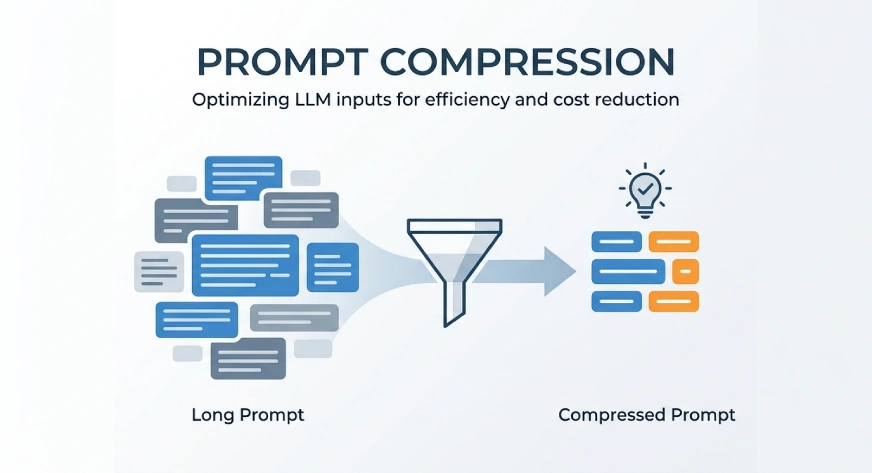
At the most basic level, manual prompt rewriting involves the removal of "filler" words and redundant instructions. For instance, a system prompt instructing a model to "Please take a moment to carefully look over the provided text and then generate a summary" can be compressed to "Summarize the provided text."
Structural compression takes this further by converting natural language into machine-readable formats like JSON, YAML, or key-value pairs. Industry data suggests that converting a 200-word customer profile into a structured YAML block can reduce token usage by up to 40% while simultaneously improving the model’s data extraction accuracy.
Linguistic and Token-Level Filtering
More advanced techniques involve sentence-level and phrase-level filtering. Sentence-level filtering uses relevance scoring—often powered by embeddings—to rank the importance of various sentences within a document relative to the user’s query. Only the top-scoring sentences are included in the final prompt.
Token-level filtering is the most aggressive form of text-based compression. It removes individual words that do not contribute significantly to the semantic meaning of the sentence. While this can result in text that is difficult for humans to read, LLMs are often capable of reconstructing the intended meaning from the fragmented input. However, experts warn that "negative" words like "not," "never," or "unless" must be protected, as their removal can invert the logic of a prompt.
Advanced Algorithmic Approaches
Two of the most potent methods currently used in high-scale production environments are Extractive and Abstractive compression.
- Extractive Compression: This method selects verbatim sections of the source text that are deemed most critical. It is the preferred method for legal and medical applications where the exact wording of a source document must be preserved.
- Abstractive Compression: This involves using a smaller, cheaper LLM (such as GPT-3.5 Turbo or a local Llama-3-8B model) to summarize the long context into a dense, information-rich paragraph. This summary is then fed into the larger, more capable model (like GPT-4o or Claude 3.5 Sonnet) for final reasoning.
The Strategic Importance of Query-Aware and Coarse-to-Fine Models
In RAG systems, query-aware compression has become the gold standard. Instead of compressing a document in isolation, the system evaluates the document’s content specifically through the lens of the user’s current question. If a user asks about "warranty periods," the compression algorithm will purge sections of the manual dedicated to "installation" or "troubleshooting," even if those sections are informative in a general sense.
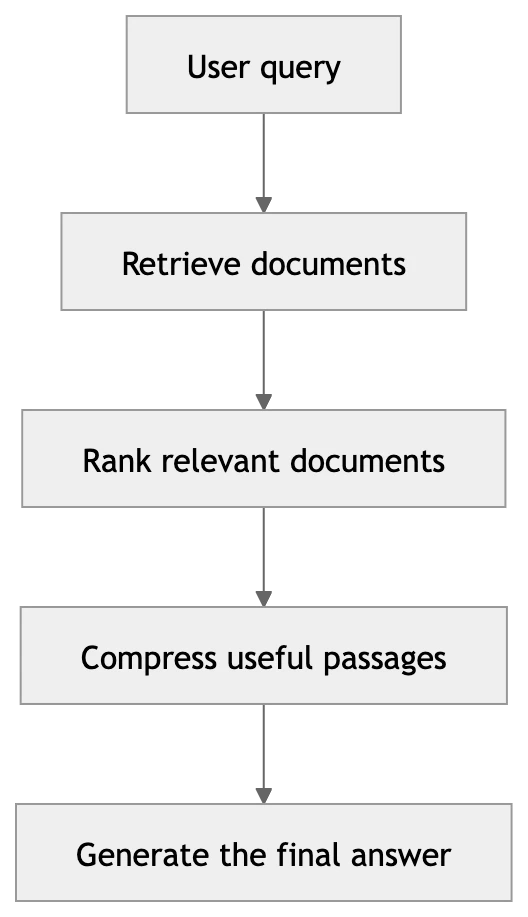
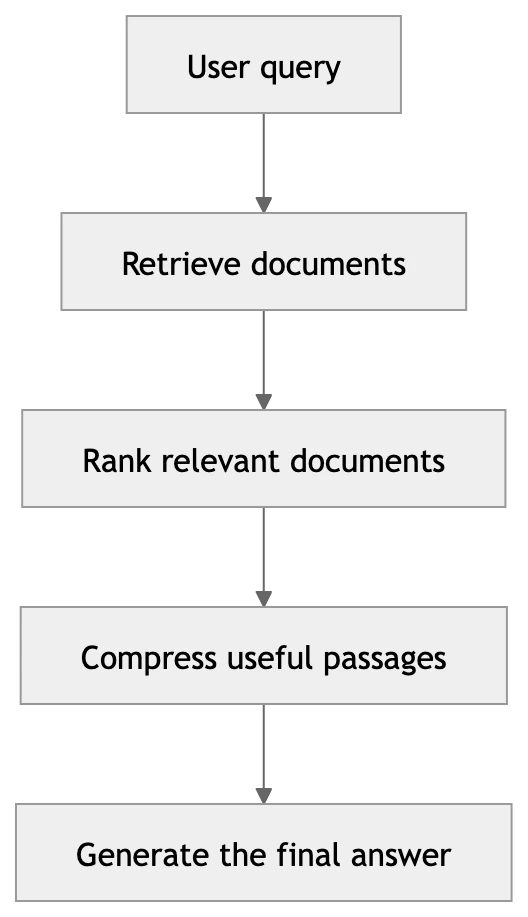
Coarse-to-fine compression represents a multi-stage pipeline. The system first discards irrelevant documents (coarse), then identifies key paragraphs within the remaining documents, and finally applies token-level filtering to those paragraphs (fine). This tiered approach provides the highest level of control and safety for enterprise AI agents.
Quantifying the Impact: Metrics and Performance
The success of a compression strategy is measured through a combination of efficiency and quality metrics.
- Token Reduction Rate: Calculated as
1 - (Compressed Tokens / Original Tokens). Many enterprises aim for a 50% to 80% reduction in RAG-heavy workflows. - Compression Factor: The ratio of original to compressed tokens (e.g., a 4x compression factor).
- Semantic Integrity: This is often measured using an "Answer Accuracy" benchmark. Developers run the same 100 queries against both the original and compressed prompts; if the compressed version maintains 98% or higher accuracy, the compression is considered successful.
Financial analysis reveals the stakes of these metrics. For a high-volume customer service bot processing 100,000 queries a month, a 50% reduction in prompt tokens can result in thousands of dollars in monthly savings and a noticeable decrease in user wait times.
Implementation Workflow for Enterprise AI
Technical leads are encouraged to follow a standardized workflow when integrating compression into their AI stacks:
- Identification of Protected Elements: Define "anchors" that cannot be compressed, such as safety guidelines, specific numerical data, and legal disclaimers.
- Redundancy Elimination: Use scripts to identify and remove duplicate information across retrieved documents.
- Relevance Filtering: Implement a reranker or an embedding-based filter to remove sections that do not align with the user’s intent.
- Iterative Testing: Start with conservative "lossless" compression and gradually move toward more "lossy" abstractive methods, monitoring for "hallucination" spikes.
- Fallback Logic: In instances where the compression confidence is low, the system should default to the original, uncompressed prompt to ensure reliability.
Industry Analysis: The Trade-off Between Cost and Precision
While the benefits of prompt compression are clear, it is not without risks. Industry analysts point out that aggressive compression can lead to the loss of "nuance." In creative writing or complex legal reasoning, the "filler" words sometimes provide the necessary context for the model to understand tone or subtle conditions.
Furthermore, compression itself requires computational power. If an organization uses an LLM to compress a prompt for another LLM, they must ensure that the cost of the "compressor" model does not outweigh the savings gained on the "target" model. The emergence of "Soft Prompt Compression," which uses learned vectors instead of natural language, offers a glimpse into a future where prompts may be entirely machine-readable, bypassing human language altogether to maximize efficiency.

Conclusion
Prompt compression is no longer a niche optimization but a foundational requirement for sustainable AI development. As models become more integrated into daily business operations, the ability to communicate with them in a concise, high-density manner will separate efficient, high-performing systems from those burdened by latency and high overhead. By balancing linguistic refinement with algorithmic filtering, developers can ensure that their AI remains focused, accurate, and economically viable in an increasingly token-driven economy.
Frequently Asked Questions
How does prompt compression affect model hallucinations?
If implemented correctly, prompt compression can actually reduce hallucinations by removing irrelevant or contradictory information that might confuse the model. However, if "negative" words or crucial conditions are accidentally filtered out, the risk of incorrect outputs increases.
Can prompt compression be used with any LLM?
Yes. Most techniques, including manual, structural, and extractive compression, are model-agnostic. Some advanced methods like soft prompt compression require access to the model’s internal architecture, which is generally only available in open-source models.
What is the average token saving in a RAG system?
While results vary, many RAG implementations see a 40% to 60% reduction in tokens by simply removing irrelevant document sections and using query-aware filtering.