
 rifanmuazin
In an increasingly competitive digital landscape, the difference between a successful marketing campaign and a costly failure often hinges on a single percentage point in conversion rates. As businesses move away from intuitive "gut-feeling" design toward data-driven methodologies, the role of rigorous experimentation has become the cornerstone of performance marketing. While A/B testing has long served as the industry standard for comparing simple variations, a more sophisticated approach known as Multivariate Testing (MVT) is emerging as the preferred tool for organizations seeking to understand the complex interactions between multiple web elements. By allowing marketers to analyze how various components—such as headlines, imagery, and call-to-action (CTA) buttons—work in concert, MVT provides a level of granular insight that traditional split testing cannot achieve.

The Shift from Simple Splits to Complex Interactions
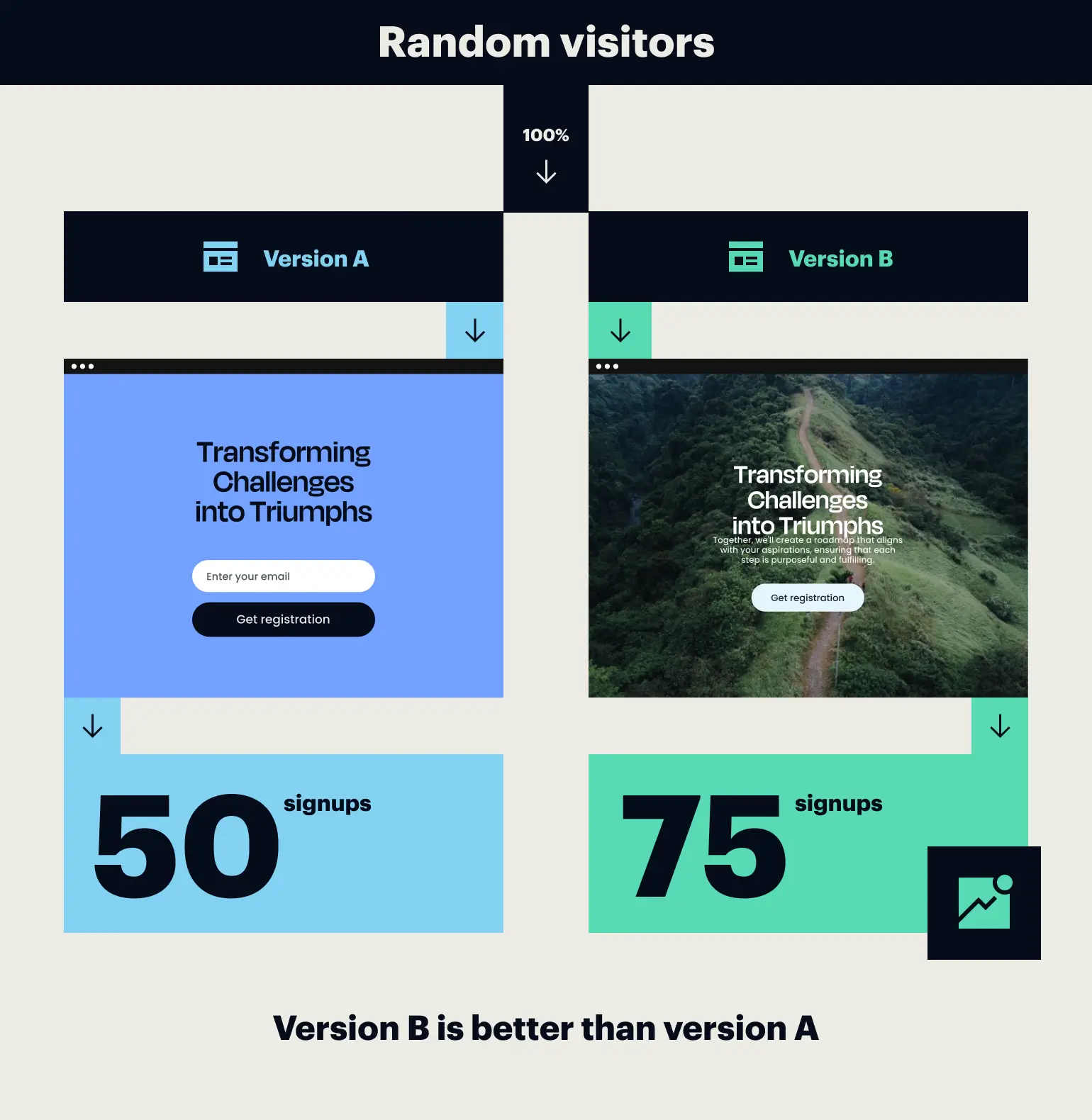
The fundamental premise of digital experimentation is the identification of variables that influence user behavior. For years, A/B testing—or split testing—was the primary vehicle for this exploration. In a standard A/B test, an audience is divided into two groups: one sees the original version (the control), and the other sees a version with a single modification (the variant). This method is highly effective for isolated changes, such as testing whether a red "Buy Now" button outperforms a green one.
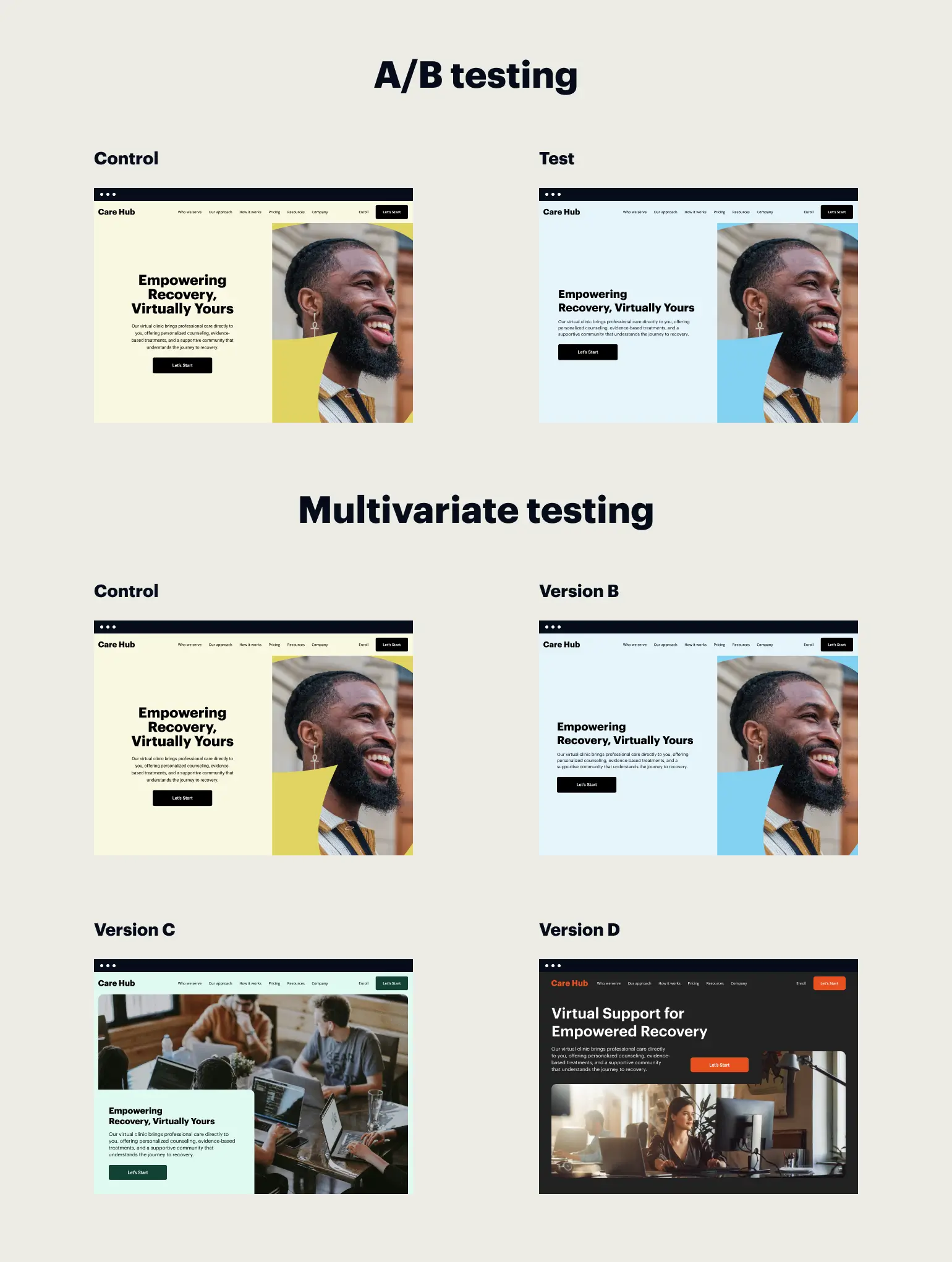
However, modern web design is rarely about isolated elements. User experience is a holistic journey where the headline affects the perception of the image, and the image dictates the urgency felt when reading the CTA. This is where Multivariate Testing becomes essential. MVT allows for the simultaneous testing of multiple variables to determine which specific combination yields the highest conversion rate. Rather than asking "Which button works best?" MVT asks, "Which combination of headline, hero image, and button color creates the most persuasive environment for the user?"
Understanding the Mechanics: The MVT Framework
The technical execution of a multivariate test is significantly more complex than a standard split test. It requires a systematic modification of selected variables and a robust analytical framework to interpret the data. Common elements subjected to MVT include headlines, subheadlines, featured images, web forms, CTA button placement, and even font sizes or navigation link styles.
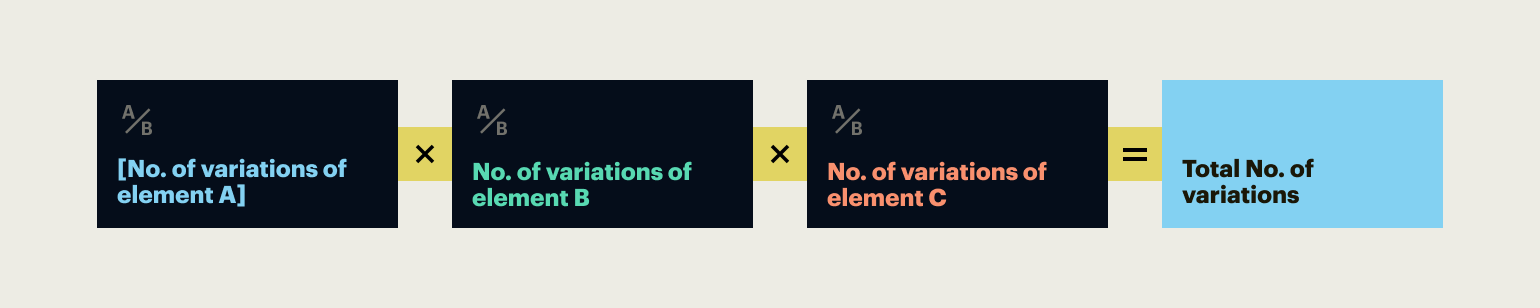
To calculate the scale of a multivariate experiment, marketers use a specific formula: the total number of variations is the product of the number of versions for each element. For instance, if a marketer wishes to test three different headlines and two different hero images, the result is six unique combinations ($3 times 2 = 6$). If they add two different CTA button colors to that same test, the number of combinations jumps to twelve ($3 times 2 times 2 = 12$).
Industry experts categorize MVT into several methodologies, the most prominent being the "Full Factorial" and "Fractional Factorial" methods. The Full Factorial approach is the most comprehensive, as it tests every possible combination of variables across the entire audience. While this provides the most accurate data regarding interaction effects, it requires a massive amount of traffic to reach statistical significance. Conversely, the Fractional Factorial method only tests a subset of combinations, using mathematical models to predict the performance of the untested versions. While less resource-intensive, it carries a slightly higher margin of error.
Chronology of Optimization: From Static Pages to Dynamic Testing
The evolution of web optimization has followed a clear chronological path, reflecting the increasing sophistication of tracking technology and consumer expectations.

- The Static Era (1990s – Early 2000s): Web pages were largely static. Marketing decisions were made by creative directors based on aesthetic preference rather than user data.
- The Rise of Analytics (Mid-2000s): The introduction of tools like Google Analytics allowed marketers to see where users were dropping off, leading to the first primitive A/B tests.
- The Optimization Boom (2010s): SaaS platforms made A/B testing accessible to small businesses. The industry saw a massive shift toward "Conversion Rate Optimization" (CRO) as a dedicated discipline.
- The Multivariate and AI Era (2020 – Present): With the explosion of big data, companies began utilizing MVT to refine complex user journeys. Today, machine learning is increasingly used to automate these tests, adjusting page elements in real-time based on user demographics.
Data-Driven Success: Real-World Applications of MVT
The efficacy of multivariate testing is best illustrated through empirical evidence from industry leaders. Two notable cases—AliveCor and Groove—demonstrate how testing specific elements and entire page structures can lead to substantial revenue growth.
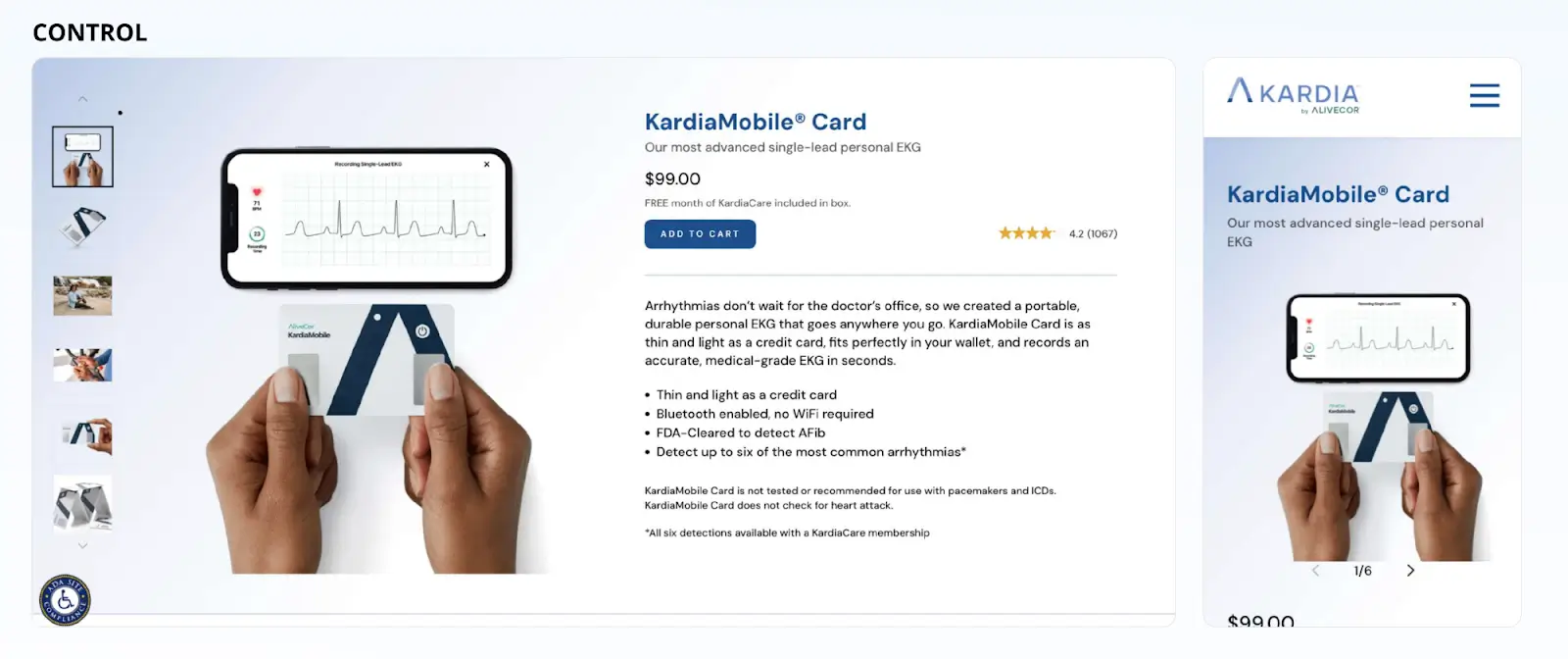
AliveCor, a medical device company, sought to introduce its new KardiaMobile Card without cannibalizing the sales of its existing product line. The company hypothesized that visitors would interact more with products that featured prominent visual cues. They conducted a test involving "New" badges of different sizes and placements. By analyzing the interaction between the badge and the product title, the company observed a 25.17% increase in conversion rates and a 29.58% rise in revenue per user. This success was not merely the result of adding a badge, but of finding the specific visual balance that guided the user’s eye toward the new offering without overwhelming the page.
In another instance, the customer support platform Groove utilized a "copy-first" approach to revamp its landing pages. Instead of testing small button changes, they tested entire narratives and layouts. By moving from a feature-heavy design to a benefit-led narrative and testing various combinations of headlines and section arrangements, Groove successfully increased its conversion rate from 2.3% to 4.3%. This nearly doubled their lead generation, proving that MVT can be applied to high-level conceptual changes just as effectively as minor UI tweaks.
The Traffic Paradox: Limitations and Requirements
Despite its power, MVT is not a universal solution. The primary hurdle for many organizations is the "Traffic Paradox." Because MVT splits the audience into many more groups than an A/B test, the sample size required to reach a statistically significant conclusion is exponentially higher.

For a company with 10,000 monthly visitors, a simple A/B test provides 5,000 data points per variation. However, a 12-variation MVT would provide only about 833 data points per variation. In many cases, this is insufficient to account for random variance, leading to "false positives" where a variation appears to be winning simply due to chance. Consequently, MVT is generally reserved for high-traffic websites or for pages that sit at the top of the marketing funnel where visitor volume is highest.
Comparative Analysis: A/B Testing vs. Multivariate Testing
To assist digital strategists in choosing the right methodology, industry analysts often compare the two based on several key metrics:

- Experiment Complexity: A/B testing is low-complexity and easy to deploy, whereas MVT requires high-level planning and technical setup.
- Testing Speed: A/B tests typically reach a conclusion faster because they require smaller sample sizes. MVT is a "long game" strategy.
- Interaction Insights: This is where MVT shines. A/B testing cannot tell you if Headline A works better specifically when paired with Image B; it can only tell you that Headline A is better than Headline B on average.
- Cost and Resources: MVT is generally more expensive due to the need for more creative assets (multiple images, multiple headlines) and more sophisticated tracking software.
Official Responses and Industry Outlook
Leading software providers in the optimization space, such as Instapage, have responded to these industry needs by developing tools that simplify the testing process. By integrating A/B and multivariate capabilities directly into landing page builders, these platforms have lowered the barrier to entry for mid-sized enterprises.
Industry analysts suggest that the next frontier of MVT lies in "Personalized Multivariate Testing." Instead of finding one winning combination for all users, AI-driven platforms will identify which combination works best for specific segments. For example, a returning visitor from a mobile device in London might see a different combination of elements than a first-time visitor from a desktop in New York.
Conclusion: The Strategic Integration of Testing
The consensus among digital marketing professionals is that MVT and A/B testing should not be viewed as competitors, but as complementary tools in a broader optimization toolkit. A/B testing is ideal for "radical redesigns" or testing major, singular hypotheses. Once a winning layout is established via A/B testing, MVT should be employed to "fine-tune" the page, optimizing the smaller interactions that squeeze every possible bit of value out of the traffic.
As the cost of digital advertising continues to rise, the ability to maximize the value of every visitor through scientific experimentation is no longer a luxury—it is a necessity for survival. Multivariate testing represents the pinnacle of this scientific approach, offering a roadmap for brands to move beyond subjective design and toward a truly optimized user experience. Organizations that master the balance of traffic, math, and creative variation will undoubtedly lead the next generation of digital commerce.








