
 rifanmuazin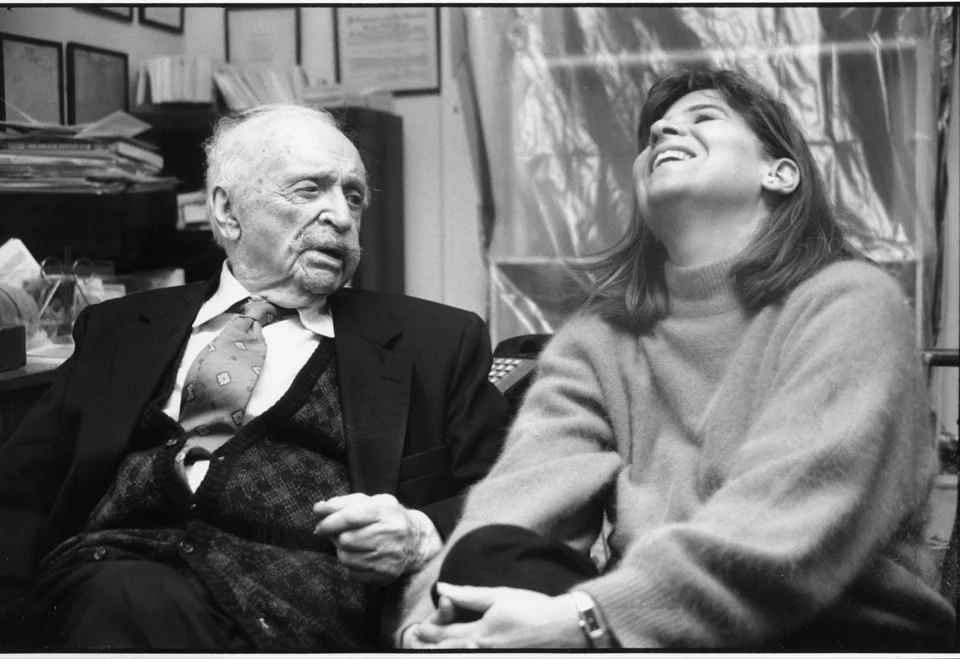
The Museum of Public Relations has officially introduced “Ask Eddie,” a sophisticated Large Language Model (LLM) designed to serve as a “historic persona” of Edward Bernays, the man widely regarded as the “father of public relations.” This digital tool allows practitioners, educators, and students to engage in real-time dialogue with the synthesized wisdom of Bernays, who died in 1995 at the age of 103. By leveraging advanced artificial intelligence, the project aims to make the dense, foundational theories of public relations more accessible to a modern audience that often finds 20th-century academic texts challenging to navigate.
The initiative represents a significant milestone in the preservation of industry history, transforming static archives into a dynamic, interactive resource. Developed in collaboration with the global communications firm Edelman and with the formal blessing of the Bernays family, “Ask Eddie” is hosted on the Museum of Public Relations’ website. It is available to the public free of charge, marking a democratization of high-level strategic insight that was previously buried in out-of-print books and physical archives.
The Architecture of a Living Archive
The “Ask Eddie” LLM is not a general-purpose AI like ChatGPT, which draws from the entirety of the internet. Instead, it is a “closed corpus” model. This means its knowledge base is strictly limited to the specific materials used to train it: more than one million words of Bernays’ own writings and a decade’s worth of video recordings captured during the final years of his life.
Shelley Spector, the founder and CEO of the Museum of Public Relations, played a pivotal role in the creation of this corpus. Between 1985 and 1995, Spector conducted extensive interviews with Bernays at his home in Cambridge, Massachusetts. These recordings, which capture Bernays reflecting on his century-long life and career, provide the phonetic and intellectual blueprint for the AI.
“I have spent multiple days with Bernays, interviewing him, but being able to talk to the historic persona now, when he is free to reflect on his life and his campaigns and what he has seen in crises, it gives me another opportunity to get to know him all over again in a deeper way,” Spector stated. She described the experience of hearing his reanimated voice as “eerie” but profoundly valuable for the PR community.
Because the model is a closed corpus, the digital Bernays does not possess knowledge of events that occurred after his death. It cannot comment on TikTok trends, modern social media algorithms, or the very AI technology that powers its existence, unless the user explains these concepts to it first. However, its value lies in its ability to synthesize Bernays’ core philosophies—such as the “engineering of consent”—and apply them to hypothetical modern scenarios based on his historical logic.
A Legacy Built on Psychology and Influence
To understand the significance of “Ask Eddie,” one must understand the influence Edward Bernays had on the 20th century. Born in Vienna in 1891 and the nephew of psychoanalyst Sigmund Freud, Bernays was the first to apply the principles of psychology and sociology to the field of public communication. He moved the industry away from simple “press agentry”—which relied on stunts and puffery—toward a scientific approach based on understanding human instincts and desires.
Bernays’ career was defined by campaigns that reshaped American culture. In the 1920s, he famously orchestrated the “Torches of Freedom” march for the American Tobacco Company, which reframed smoking as a symbol of women’s liberation, effectively doubling the market for cigarettes. He was also responsible for the “Hearty Breakfast” campaign, where he used medical endorsements to convince the American public that bacon and eggs were the ideal way to start the day—a cultural norm that persists a century later.
His seminal work, Crystallizing Public Opinion (1923), laid the groundwork for the profession. However, as Spector noted, the 700-page volume and his subsequent writings can be dense and difficult for modern readers to digest. “Ask Eddie” acts as a bridge, allowing users to ask direct questions like, “How should I handle a fast-paced news cycle?” and receive a response that synthesizes Bernays’ lifelong philosophy into actionable advice.
Chronology of the Project and Bernays’ Career
The development of the “Ask Eddie” tool is the culmination of nearly four decades of archival work and technological evolution.
- 1891: Edward Bernays is born in Vienna, Austria.
- 1919: Bernays opens his first “Counsel on Public Relations” office in New York.
- 1923: Publication of Crystallizing Public Opinion, the first textbook on PR.
- 1929: The “Torches of Freedom” campaign changes the social perception of female smokers.
- 1985–1995: Shelley Spector conducts extensive video and audio interviews with Bernays, documenting his reflections on the industry.
- 1995: Edward Bernays passes away at the age of 103.
- 1997: The Museum of Public Relations is founded, housing the Bernays archives.
- 2023: The Museum of Public Relations and Edelman begin conceptualizing an AI-driven “living archive” to mark the centenary of Crystallizing Public Opinion.
- 2024: “Ask Eddie” is officially launched to the public.
Technical Insights and User Interaction
The “Ask Eddie” interface provides both text and voice responses, using a synthesized version of Bernays’ voice that retains the cadence and sharp wit of his later years. When tested with inquiries about modern challenges, the AI demonstrates a consistent adherence to Bernaysian principles.
For instance, when asked how to manage the relentless pace of modern news, the persona responded: “The temptation is to chase every headline, but that scatters your influence. Instead, identify the underlying currents. What are people truly anxious about? What do they need to understand? Engineer your communications to address those deeper concerns. Speed matters, yes, but clarity and consistency matter more. If you’re simply responding frantically, you’ve already lost control of the narrative.”
This response highlights the model’s ability to prioritize strategy over tactics—a hallmark of Bernays’ original teachings. By focusing on “underlying currents” rather than “headlines,” the AI encourages users to look at the psychological drivers of public behavior rather than just the immediate technological medium.
Industry Reaction and Official Responses
The launch has been met with a mixture of fascination and academic interest within the communications sector. Richard Edelman, CEO of Edelman, has been a vocal supporter of the project, viewing it as a way to ground modern PR practitioners in the historical roots of their craft. The partnership between the museum and the world’s largest PR firm underscores the project’s institutional importance.
The Bernays family has also expressed their support, viewing the AI as a respectful tribute that keeps his intellectual contributions relevant. Anne Bernays, Edward’s daughter and a noted author, has previously spoken about her father’s complex legacy, and the “Ask Eddie” project is seen as a way to present his theories in a controlled environment that accurately reflects his intent.
Academic professionals have noted that “Ask Eddie” could revolutionize the way history is taught in journalism and communications schools. Rather than reading a summary of Bernays’ work in a textbook, students can now “interview” the source. This interactive element is expected to increase engagement with historical theory among Gen Z and Millennial students.
Broader Impact and Ethical Implications
The “Ask Eddie” project arrives at a time when the use of AI to “resurrect” historical figures is a growing trend in museums and education. Similar projects, such as the Shoah Foundation’s “Dimensions in Testimony,” use AI to allow people to ask questions of Holocaust survivors. These initiatives raise important questions about the “digital afterlife” and the accuracy of persona-based AI.
One of the primary risks of such technology is “hallucination,” where an AI might generate a response that the historical figure would never have actually said. To mitigate this, the Museum of Public Relations and Edelman opted for the closed corpus approach. By limiting the data to Bernays’ actual words, the developers have ensured a high degree of fidelity to his original thought processes.
Furthermore, the project serves as a case study for the future of archival science. Shelley Spector refers to the tool as a “living archive.” As more historical figures are digitized in this manner, the way humanity interacts with the past will shift from passive observation to active dialogue. The Museum of Public Relations has already indicated that “Ask Eddie” is just the beginning, with plans to develop additional personas of other PR pioneers in the future.
In an era of “fake news” and rapid disinformation, the return of Edward Bernays—even in digital form—offers a timely reminder of the power and responsibility inherent in public communication. As the AI itself suggests, those who simply respond to the noise have already lost control. By providing a tool that encourages deep strategic thinking, the Museum of Public Relations is ensuring that the foundational lessons of the 20th century continue to inform the communicators of the 21st.










