
 rifanmuazin
Perceived value represents the subjective worth a consumer assigns to a product or service based on its ability to satisfy specific needs and desires relative to its cost and available alternatives. In the contemporary marketplace, where functional parity between products is increasingly common, the ability of a brand to elevate its perceived value has become the primary driver of profit margins, customer loyalty, and long-term market sustainability. Unlike actual value, which is rooted in objective specifications, durability, and performance metrics, perceived value is an emotional and psychological construct. It is shaped by marketing messaging, brand reputation, social proof, and the overall customer experience. As industry experts often note, while actual value serves as the “floor” for a product’s viability, perceived value serves as the “ceiling” for its pricing potential.
Understanding the Dichotomy Between Perceived and Actual Value
To understand the mechanics of modern commerce, one must distinguish between what a product objectively delivers and what a customer believes it offers. Actual value is defined by tangible attributes: the ingredients in a beverage, the horsepower of an engine, or the storage capacity of a cloud server. Perceived value, however, is a marketing-driven assessment of worth.

A primary example of this phenomenon is the rise of Liquid Death, a canned water brand. From a purely objective standpoint, the actual value of Liquid Death is identical to any other purified water; it provides hydration and quells thirst. However, through aggressive “punk rock” branding, unique aluminum packaging, and a novelty factor, the brand has successfully convinced consumers to pay two to three times the price of traditional bottled water. The consumer is not merely paying for H2O; they are paying for the identity and experience associated with the brand.
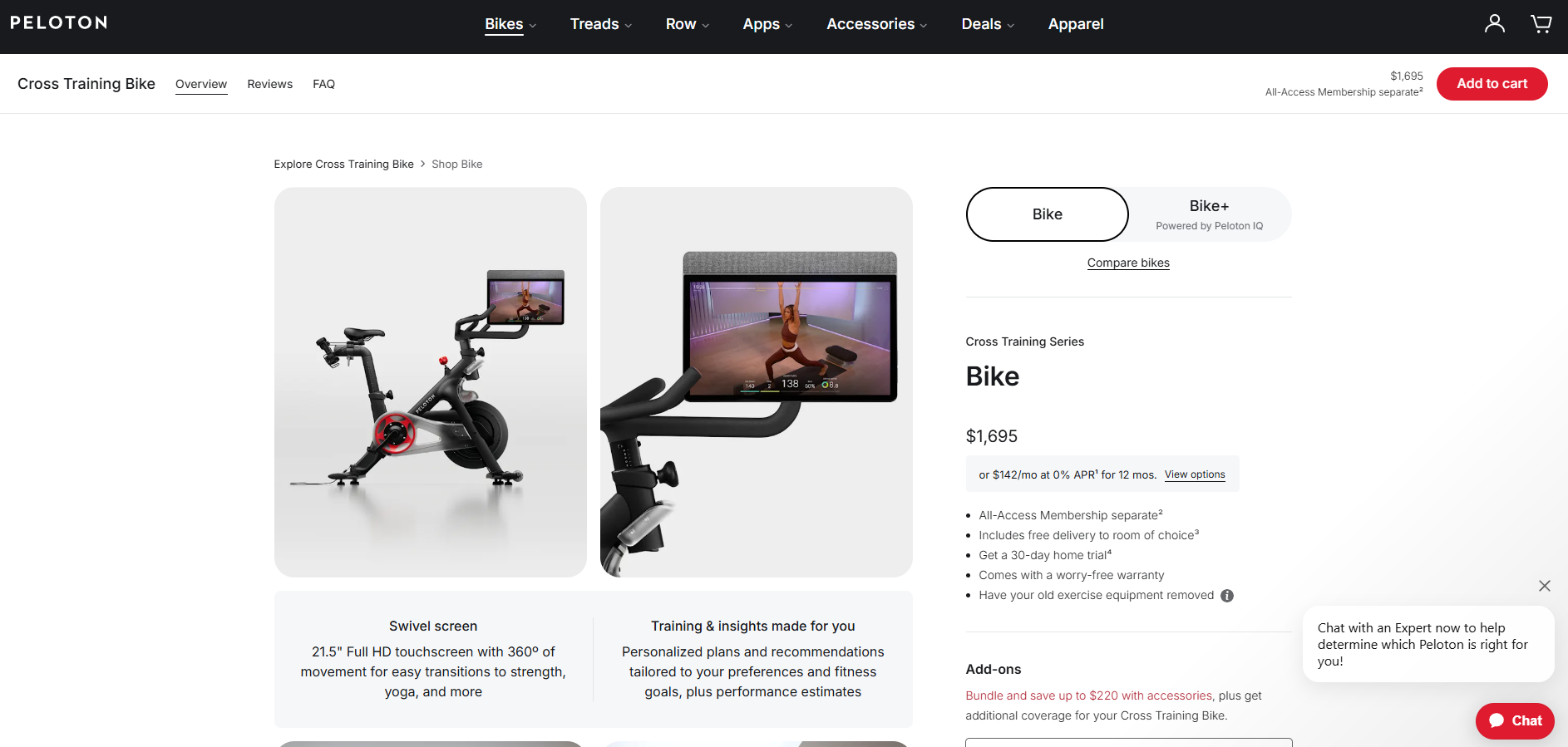
This distinction extends into the digital and fitness sectors as well. A standard stationary exercise bike available on major e-commerce platforms like Amazon may retail for $150 to $250. In contrast, a Peloton bike carries a price tag between $1,695 and $2,695, supplemented by a monthly subscription fee. Despite the massive price discrepancy, Peloton maintains a significant market share because its perceived value—derived from its community, live instruction, and status—far exceeds the utility of a basic exercise machine.
The Relationship Between Perceived Value and Perceived Price
In the psychological calculus of a purchase, perceived value is constantly weighed against perceived price. Perceived price is not merely the numerical figure on a tag but how the consumer feels about that figure within a specific context. This is often influenced by “anchoring” and environmental factors.

For instance, a $5 bottle of water is generally perceived as expensive and unfair in a local grocery store, where the reference price is often less than $1. However, that same $5 bottle is viewed as reasonable, or even a “deal,” within the confines of an international airport or a high-end music festival. The product’s actual value remains constant, but the shift in context alters the consumer’s expectations and their willingness to pay. If a price is perceived as too high relative to the category norm without a corresponding increase in perceived value, the consumer experiences “buyer’s remorse” or refuses the transaction. Conversely, if a price is too low, it can trigger suspicion regarding the product’s quality, effectively lowering its perceived value.
The Five Pillars of Consumer Value Perception
Market researchers categorize perceived value into several distinct types, each appealing to different consumer motivations:
- Functional Value: The most basic form of value, focusing on the product’s ability to perform its intended task efficiently and reliably.
- Social Value: The extent to which a product enhances a consumer’s status or helps them fit into a specific social group. Luxury goods and high-end electronics often lean heavily on this pillar.
- Emotional Value: The internal feelings a product evokes, such as nostalgia, excitement, or a sense of security.
- Epistemic Value: The value derived from a product’s ability to satisfy curiosity or provide a new experience. This is common in the travel, education, and “novelty” sectors.
- Conditional Value: Value that arises from specific circumstances, such as the need for snow tires in winter or emergency services during a crisis.
Methodologies for Measuring Perceived Value
Because perceived value is subjective, businesses must employ a mix of qualitative and quantitative data to measure it accurately. Relying solely on sales figures often masks the “why” behind consumer behavior.
The Van Westendorp Price Sensitivity Meter
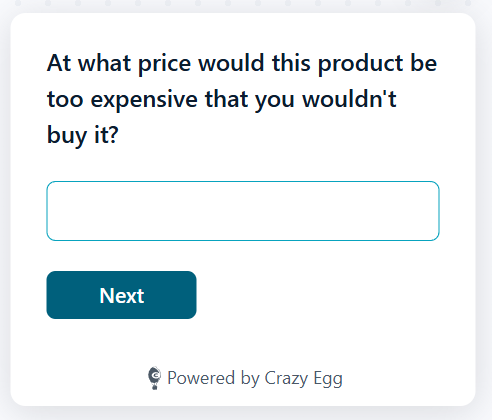
One of the most effective tools for gauging perceived value is the Van Westendorp Price Sensitivity Meter. This survey-based method asks potential customers four key questions:
- At what price would the product be so expensive that you would not consider buying it?
- At what price would the product be so low that you would feel the quality couldn’t be very good?
- At what price would you consider the product to be starting to get expensive?
- At what price would you consider the product to be a bargain—a great value for the money?
By mapping these responses, companies can identify the “Optimal Price Point” where the perceived value and price are in perfect alignment.
Behavioral Analytics and Web Tracking
In the digital age, consumer behavior on a website provides a window into value perception. Using tools like heatmaps and scroll maps allows businesses to see which features or pricing tiers attract the most attention. If a “Pro” plan receives high traffic but low conversions, it suggests a “value gap”—the perceived value does not yet justify the price in the eyes of the visitor.
Sentiment Analysis via Social Proof
Monitoring third-party forums such as Reddit, or review aggregators like G2 and Capterra, allows brands to see how they are evaluated against competitors. When users discuss a product as “expensive but worth it,” the perceived value is high. If they describe it as a “budget alternative,” the brand is positioned primarily on functional value rather than emotional or social value.
Strategic Levers to Increase Perceived Value
Increasing perceived value is an exercise in psychological signaling. Businesses can employ several strategies to raise the “ceiling” of what customers are willing to pay.
1. The Power of Branding and the “Halo Effect”
A strong brand reputation creates a “halo effect,” where consumers assume a new product is high-quality because of their previous positive associations with the company. For example, brands like Patagonia or Mercedes-Benz can command premium prices because their brand identity—centered on sustainability and engineering excellence, respectively—is deeply ingrained in the consumer consciousness.

2. Reducing Perceived Risk
Psychological studies, including research by Yu Wang et al. (2019), have demonstrated that perceived risk is a primary detractor from perceived value. To counter this, companies use “derisking” tactics such as:
- Money-Back Guarantees: Shifting the risk from the buyer to the seller.
- Social Proof: Showcasing testimonials and case studies to prove the product works for others.
- Trust Badges: Utilizing certifications or security seals to provide peace of mind.
3. Investing in Design and Presentation
Design acts as a silent ambassador for quality. Packaging, typography, and user interface (UI) design signal the level of care invested in the product. This is why a brand like Moleskine can charge upwards of $30 for a notebook that is functionally identical to a $5 version from a discount stationery store. The aesthetic “craft” elevates the item from a commodity to a lifestyle accessory.
4. Enhancing the Customer Experience (CX)
Data from the Qualtrics XM Institute (2025) indicates that 72% of consumers are willing to pay more for a superior experience. Conversely, a 2025 PwC survey found that nearly 30% of consumers would abandon a brand after a single bad experience. Improving the customer journey—through faster shipping, intuitive onboarding, or proactive customer support—directly inflates the perceived value of the offering.

Broader Implications and Market Impact
The shift toward value perception has profound implications for global commerce. As automation and AI make the production of goods cheaper and more efficient, the “actual value” of many products is trending toward zero. In this environment, the only way for companies to maintain profitability is to compete on perception.
This evolution is leading to a more “experience-centric” economy. Consumers are increasingly moving away from purchasing objects for their utility and toward purchasing objects for the stories they tell and the feelings they provide. For businesses, the message is clear: while the product must function to remain in the market, it is the perception of that product that determines the winner of the market. The most successful organizations of the next decade will not be those with the best specifications, but those who best understand the intricate, often irrational, psychological triggers that define value in the human mind.








