
 rifanmuazin
Paid search advertising generated a record-breaking $102.9 billion in revenue within the United States in 2024, solidifying its position as the primary engine of the digital marketing industry. This staggering figure, which represents nearly 40% of all digital advertising revenue, underscores a fundamental shift in how brands allocate capital to capture consumer intent. As the marketplace moves into 2025, the sector is characterized by a dual reality: unprecedented scale and increasingly thin margins caused by rising competition and escalating costs per lead. Industry analysts point to the "exact moment" utility of search—the ability to place a brand in front of a consumer at the precise second they signal intent—as the primary driver for this sustained investment, even as the technical requirements for success become more complex.
The Duopoly and the Diversifying Platform Landscape
The current paid search environment is dominated by two primary entities, though the landscape is beginning to fragment as specialized platforms gain traction. Google Ads remains the undisputed leader, commanding approximately 90% of the global search market. Its ecosystem extends beyond the traditional search engine results page (SERP), integrating YouTube, the Google Display Network, Gmail, and Google Maps into a cohesive advertising apparatus. Data from the 2024 fiscal year indicates that search continues to be the most lucrative segment of Google’s portfolio, providing the necessary liquidity for the company’s broader technological ventures.
Conversely, Microsoft Advertising has carved out a significant, high-value niche. While Bing’s standalone search share remains in the single digits, the Microsoft Advertising network leverages syndication across Yahoo, AOL, DuckDuckGo, and Ecosia. Furthermore, Microsoft’s recent expansion into the ad-supported tier of Netflix has provided advertisers with access to premium audiences that are currently unavailable through Google’s traditional search channels. This diversification has positioned Microsoft as a critical secondary platform for enterprise-level advertisers seeking to maximize reach in the US, UK, and Canadian markets.
Beyond the traditional "Big Two," Apple Search Ads has emerged as a powerhouse in the mobile application ecosystem. By placing ads at the top of App Store search results on iOS devices, Apple has created a high-conversion environment for app discovery. This segment has become vital for the "app economy," where direct-response marketing is the primary driver of user acquisition.
The Mechanics of the Millisecond Auction
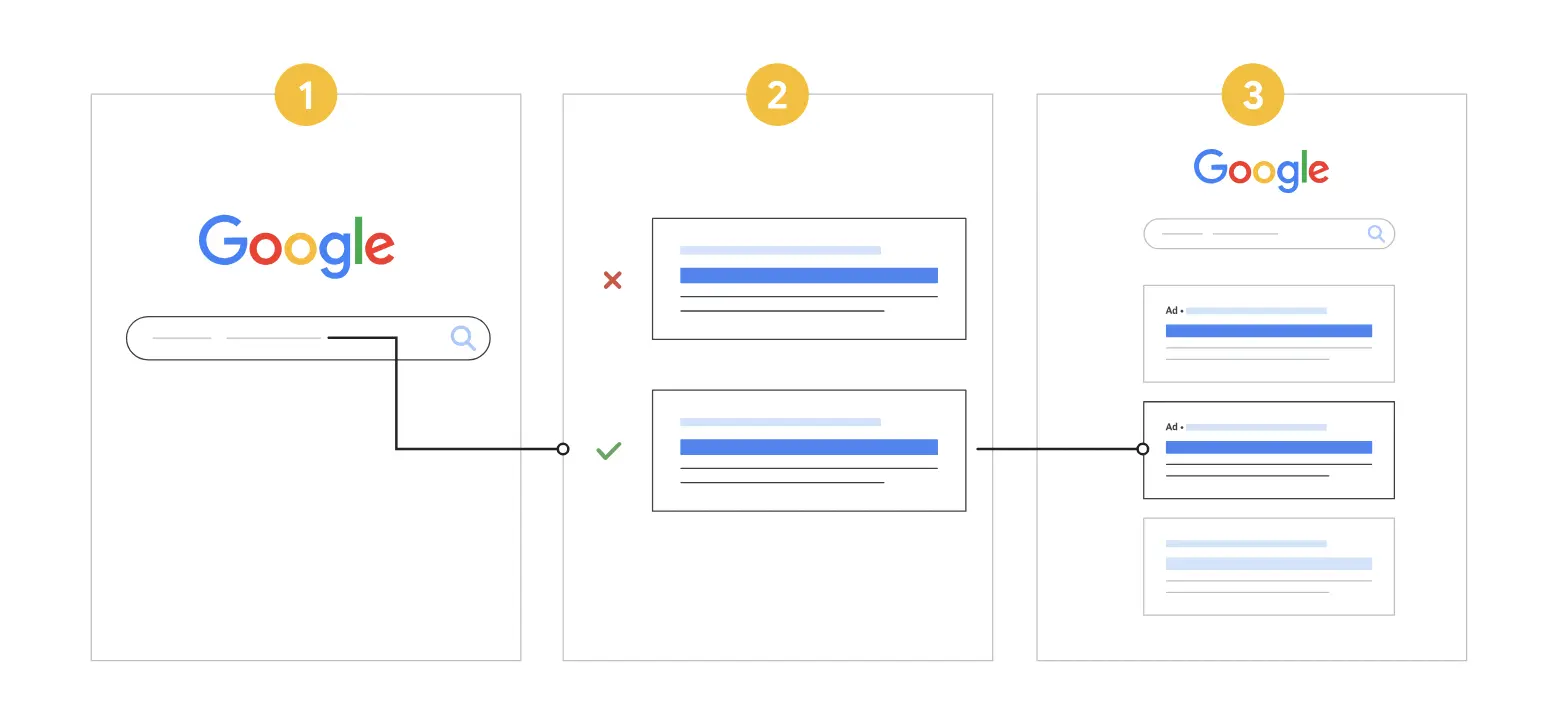
At the core of the $100 billion industry is a sophisticated, real-time auction system that operates in milliseconds. Every time a user enters a query, search engines execute an automated bidding process to determine which advertisements appear and in what order. This system has evolved from a simple "highest bidder wins" model into a multi-factor evaluation known as Ad Rank.

Ad Rank is calculated using several weighted variables:
- Maximum Bid: The highest amount the advertiser is willing to pay for a single click.
- Ad Quality: An assessment of how relevant the ad is to the user’s specific search query.
- Expected Click-Through Rate (CTR): A predictive metric based on historical performance.
- Landing Page Experience: A technical and contextual evaluation of the page the user visits after clicking the ad.
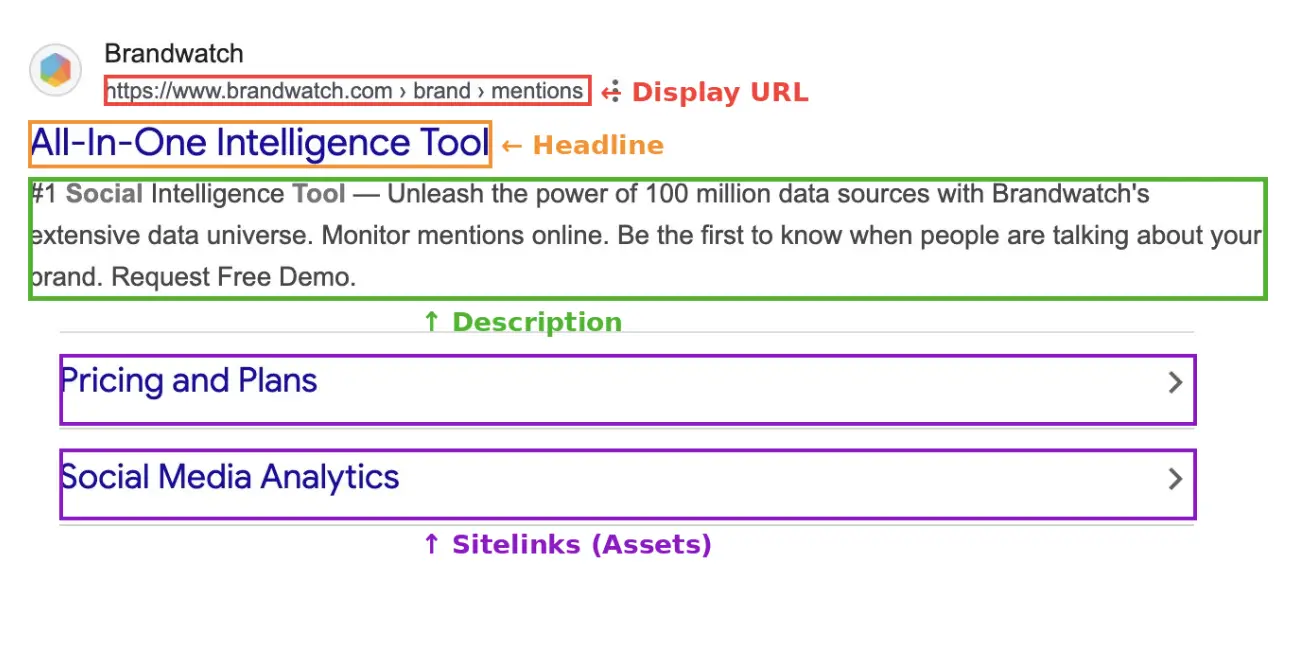
- Ad Assets and Format: The presence of additional information such as sitelinks, phone numbers, and location data.
This auction structure ensures that a well-optimized advertisement with a high-quality landing page can outrank a competitor who is bidding significantly more but providing a poorer user experience. This "relevance tax" on low-quality ads is what maintains the integrity of the search engine for the end user while forcing advertisers to maintain high creative and technical standards.
The AI Shift: From Manual Bidding to Performance Max
The 2024-2025 period marks the definitive transition from manual campaign management to AI-driven automation. Google’s Performance Max (PMax) and Responsive Search Ads (RSAs) have become the industry standard. RSAs allow marketers to input up to 15 headlines and four descriptions, leaving the search engine’s machine-learning algorithms to test and serve the most effective combinations based on user context.
Performance Max represents an even more radical shift, serving ads across Search, Display, YouTube, and Maps from a single campaign. While this automation has lowered the barrier to entry for smaller businesses, it has also created a "black box" effect, where advertisers have less visibility into exactly where their budget is being spent. This has led to a renewed focus on "audience signals" and "first-party data" as the primary levers for human intervention in an otherwise automated process.
The Economic Challenge: Rising Costs and the Conversion Crisis
Despite the massive revenue generated by search platforms, individual advertisers are facing an economic squeeze. Market data indicates that the average cost per lead (CPL) has risen from approximately $66.69 in 2024 to an estimated $70.11 in 2025. This increase is attributed to the saturation of high-intent keywords and the entry of well-funded venture-backed firms into competitive verticals like legal services, insurance, and enterprise software.
In response to these rising costs, the industry is shifting its focus from "pre-click" optimization (bidding and keywords) to "post-click" optimization (landing page experience). Journalistic analysis of conversion data suggests that while generic homepages typically convert at a rate of 2% to 4%, dedicated, message-matched landing pages can achieve rates of 10% to 15%.
Industry experts argue that the post-click experience is now the highest-leverage metric in a paid search strategy. As cost-per-click (CPC) rates remain high, the only way for a business to maintain a sustainable return on ad spend (ROAS) is to ensure that a higher percentage of the traffic they pay for actually converts into a customer. This has led to the rise of specialized landing page platforms and A/B testing tools that allow marketing teams to iterate on the user experience without requiring extensive developer resources.
Comparative Analysis: Paid Search vs. Organic Search (SEO)
The relationship between paid search and Search Engine Optimization (SEO) has evolved from a competitive dynamic to a symbiotic one. While paid search offers immediate visibility and precise targeting control, SEO remains the preferred method for building long-term authority and capturing informational queries.
Data suggests that the most successful digital strategies utilize both channels in tandem. Paid search is frequently used to test messaging and keyword viability; the insights gained from high-converting paid ads are then used to inform long-term content strategies for organic search. Furthermore, appearing in both the "Sponsored" and "Organic" sections of a SERP has been shown to increase overall brand trust and click-through rates, a phenomenon often referred to as "SERP dominance."

Broader Impact and Future Implications
The global forecast for paid search advertising remains bullish, with total spend expected to reach $355.10 billion by the end of 2025. However, this growth is occurring against a backdrop of increasing privacy regulations and the phasing out of third-party cookies. The transition to Google Analytics 4 (GA4) and the emphasis on server-side tracking are direct responses to this shifting privacy landscape.
The broader impact of this $100 billion industry extends to the very structure of the internet. As search engines prioritize paid placements and AI-generated answers, the "organic" space is shrinking, forcing businesses to become more sophisticated in how they capture attention. For small and medium-sized enterprises (SMEs), the increasing complexity of the auction and the high cost of entry pose a significant risk of being priced out of the market by larger incumbents.
In conclusion, paid search advertising in 2025 is no longer a simple matter of buying keywords. It is a high-stakes, data-driven discipline that requires a holistic understanding of auction mechanics, AI-driven automation, and, most importantly, the post-click user journey. As revenue continues to climb toward the $355 billion mark globally, the divide between those who can effectively convert traffic and those who merely pay for it will become the defining characteristic of digital marketing success. The "sponsored" tag at the top of a search result is merely the entry fee; the real profit is found in the seconds after the click.








